Chapter IIIA
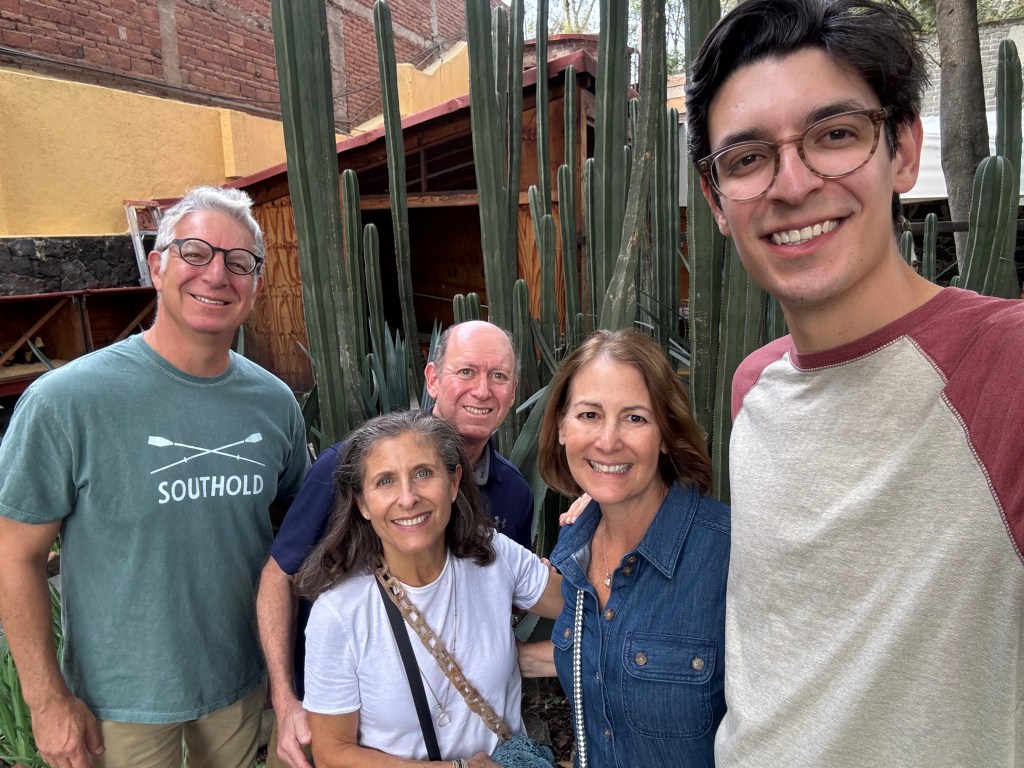
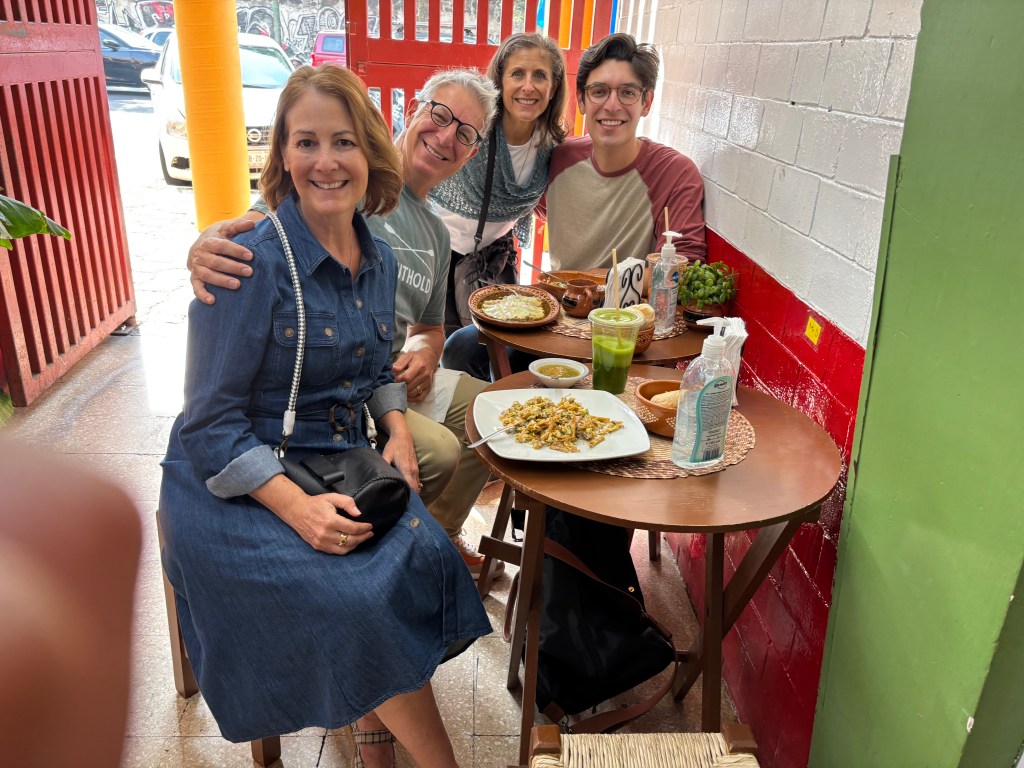
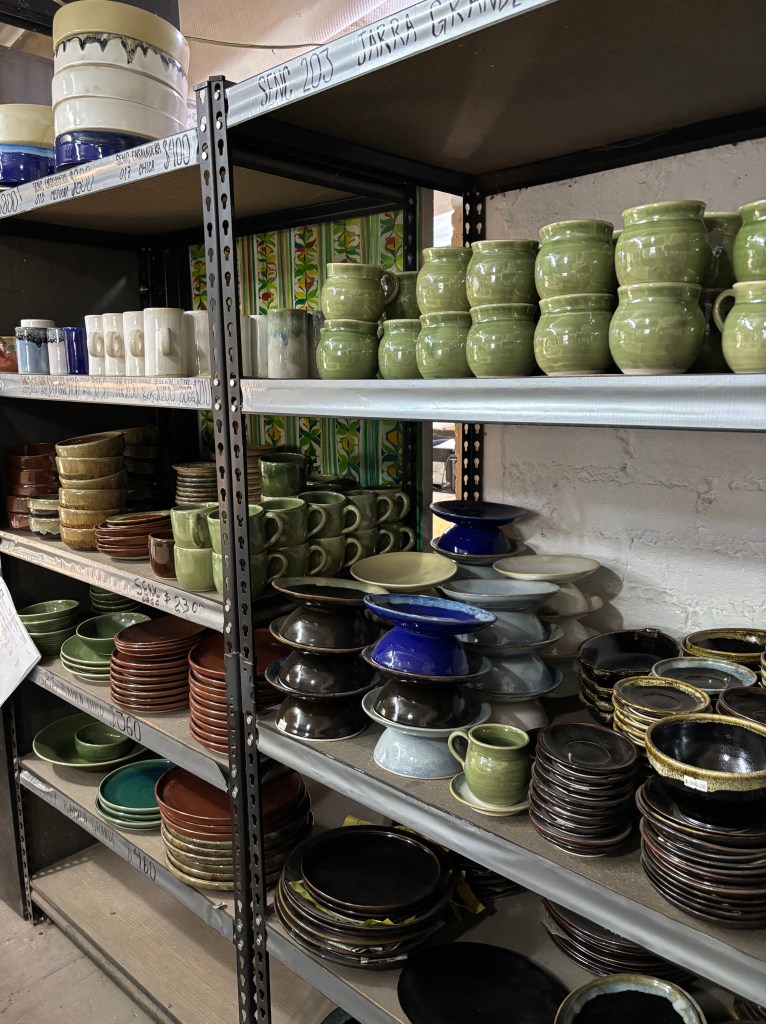
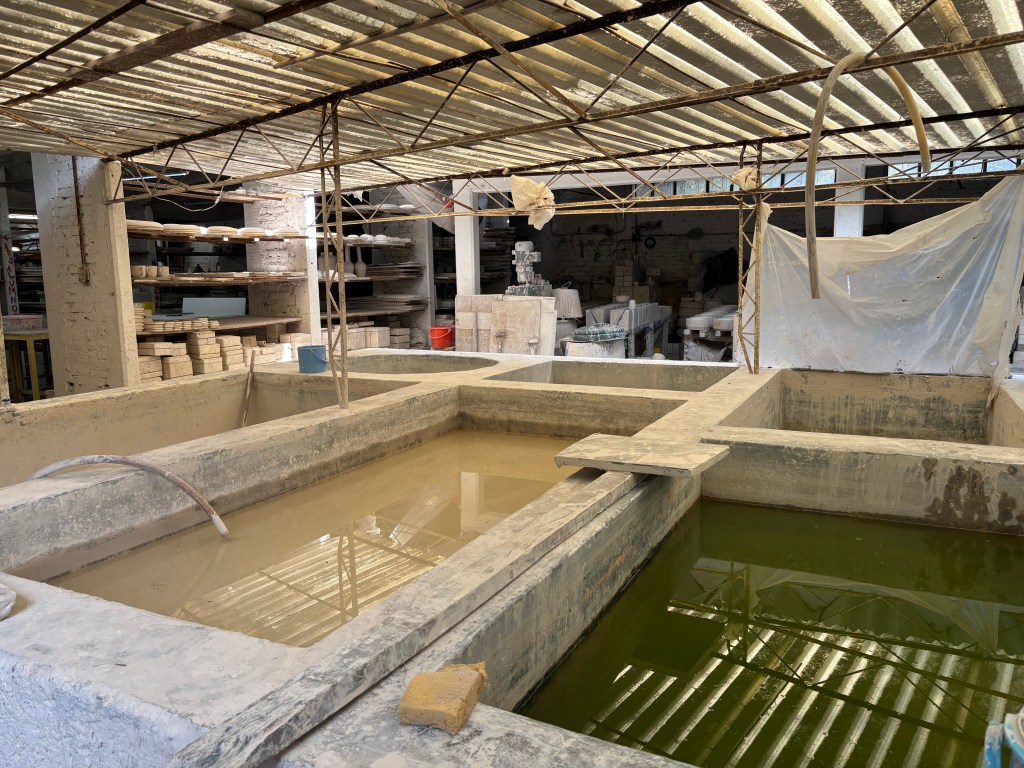
One of the most visited places in Mexico City is the neighborhood of Coyoacán. Wendy asked me if I wanted to “save” Coyoacán for their visit and it was certainly a highlight for me. Wendy, Jordan, Ian and I started out with a market breakfast and soon we were wandering the neighborhood, appreciating the architecture and the colorful buildings, beautiful greenery and parks. Wendy’s son Ian had read about a pottery studio so that was our first stop. The pottery was lovely and a guide showed us the studio, taking in the vats of glaze and the works in progress.
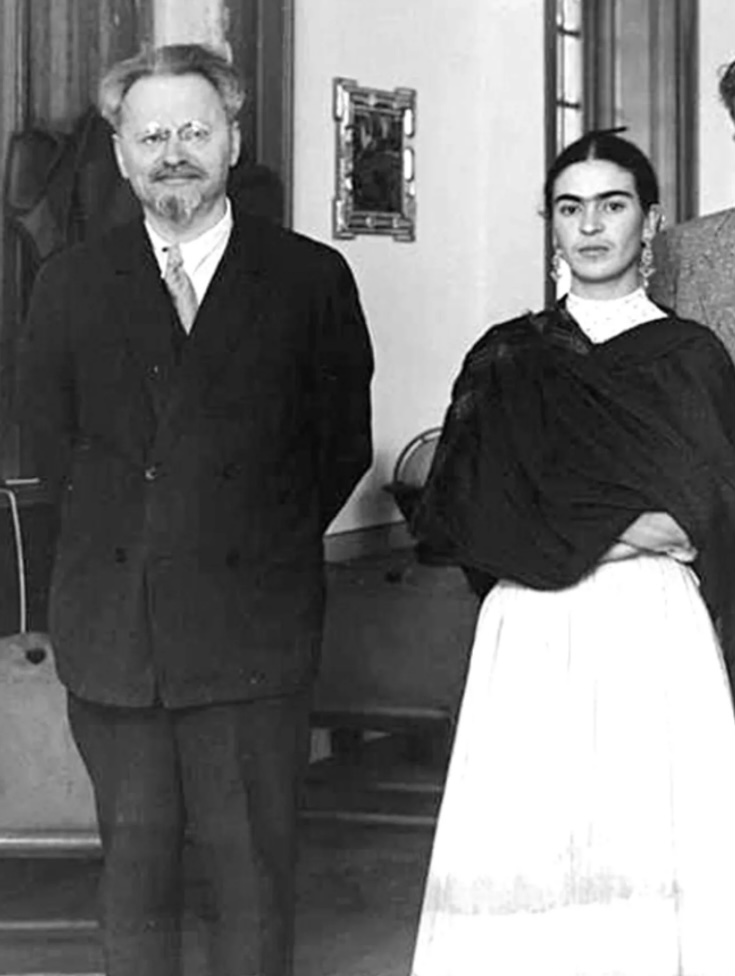
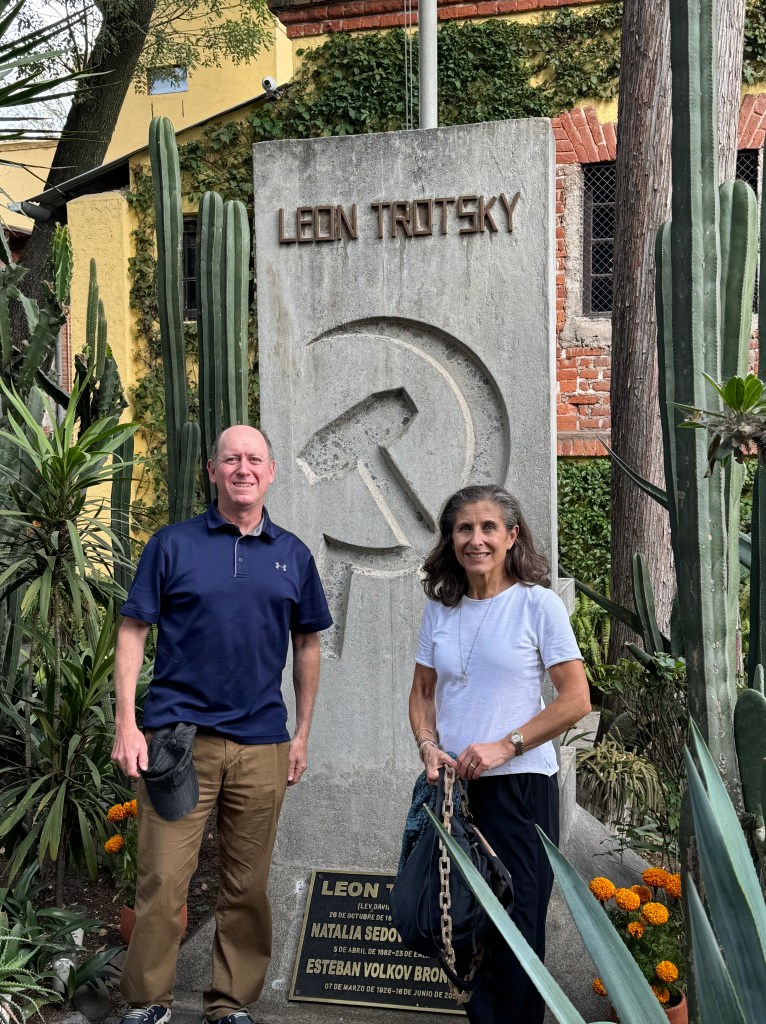
Unbeknownst to me, the exiled Soviet Bolshevik leader, Leon Trotsky (born Lev Davidovich Bronstein 1879-1940) was welcomed to Mexico in 1937 by fellow Communists, Frida Kahlo and Diego Rivera after he lost a power struggle with Lenin’s successor, Joseph Stalin. Trotsky even had an affair with Frida Kahlo, who hosted him upon his arrival from Europe. I think Trotsky moved out of Frida’s house after Rivera learned of the affair.
Trotsky had been exiled from the U.S.S.R. in 1929 and all his followers who remained in the Soviet Union were executed or “purged” on Stalin’s orders. Before Trotsky was welcomed to Mexico, he had spent time in Turkey, France and Norway. Trotsky lived out the rest of his life in Mexico City, from 1937 until he was assassinated in 1940. We visited his home, a short distance from Frida Kahlo’s Casa Azul. Our self-guided tour through the house and its interior courtyard was a museum dedicated to Trotsky. The historical timelines and many photographs really helped to put this significant time in Twentieth Century history in perspective for me. The tour suggested that the house was modest but we disagreed. The kitchen and living spaces were quite nice and the library of books was truly impressive. We also learned that there had been more than one attempt to kill Trotsky and in 1940 he was assassinated in the study at his Coyoacán home, where he is buried.
As is typical with me, I went down a rabbit hole with this assassination story. It turns out a Spanish Communist, Ramon Mercader (with many aliases and passports), who was in cahoots with Stalin, made friends with a nice Jewish Socialist from Brooklyn, Sylvia Ageloff and they ended up in Mexico City together. Sylvia’s sister, Ruth was a translator and secretary to Trotsky and Mercader was able to infiltrate himself at Trotsky’s house in Coyoacán, posing as a sympathizer to his ideas. One day, Mercader entered Trotsky’s study to show him a document. When the two men were alone, Mercader attacked Trotsky, who died the next day. Sylvia Ageloff was acquitted and lived a very private life thereafter in the U.S. Mercader served nineteen plus years in a Mexican prison. Upon his release, he was awarded the Hero of the Soviet Union medal and the Order of Lenin medal. Mercader continued to live in various Communist countries until he died in Cuba in 1978. I am grateful for the internet which helps me synthesize all my sightseeing and my notes.
Casa Azul, the Frida Kahlo Museum
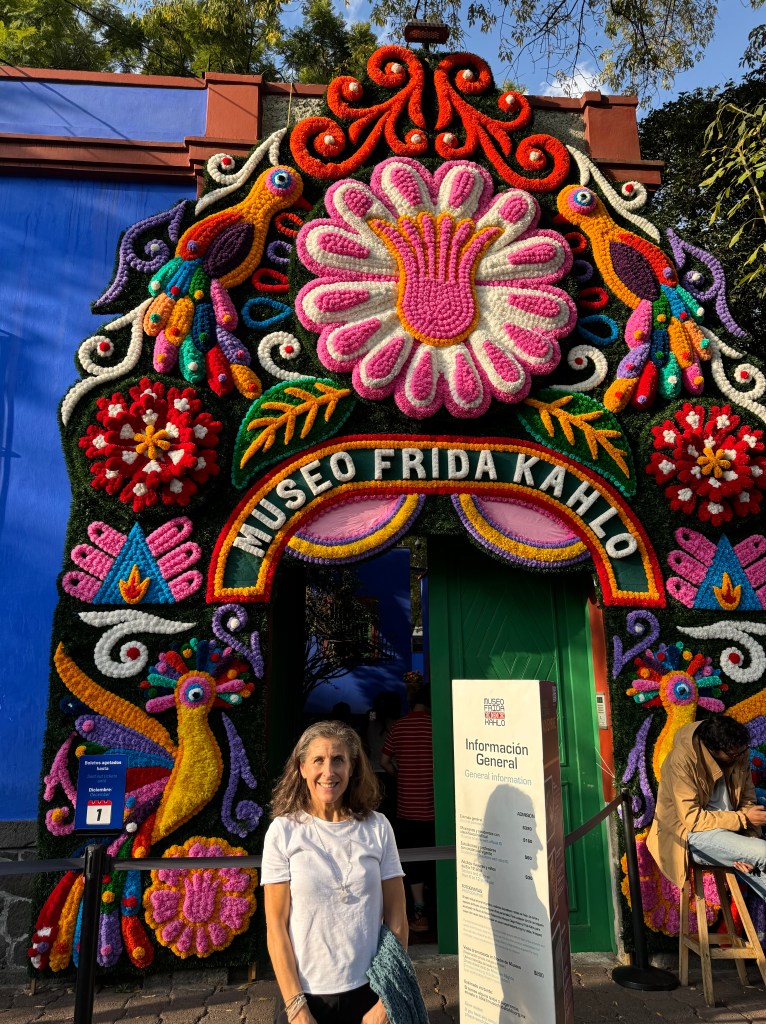
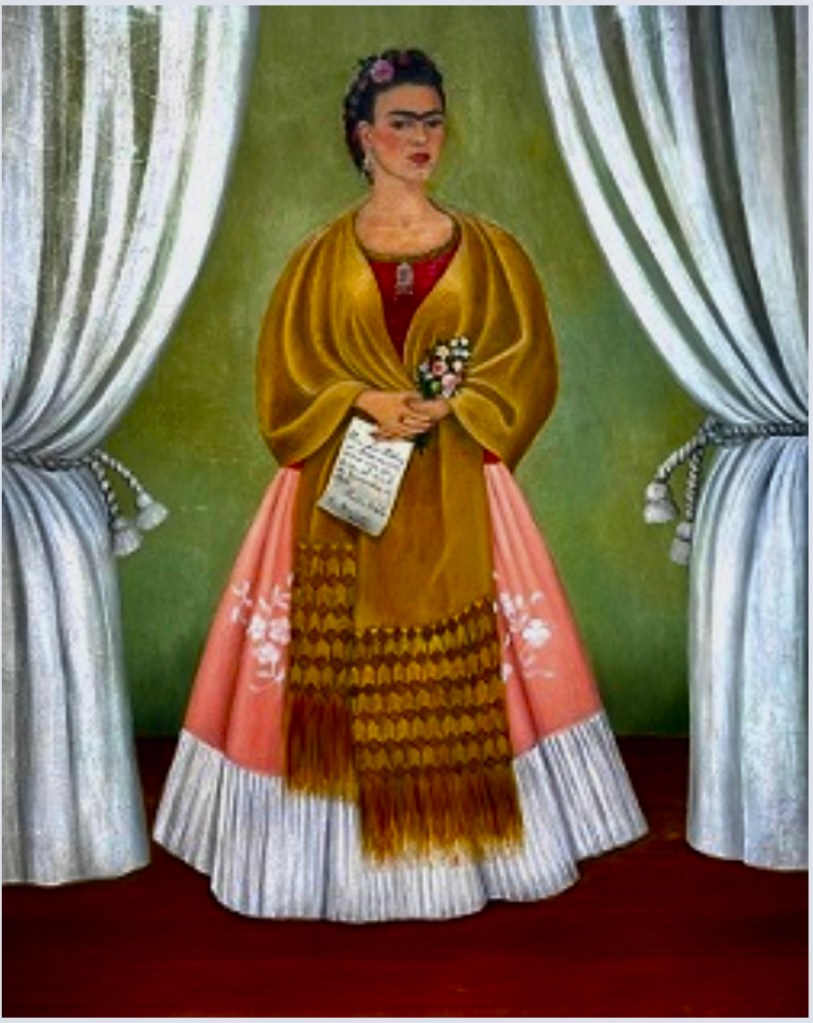
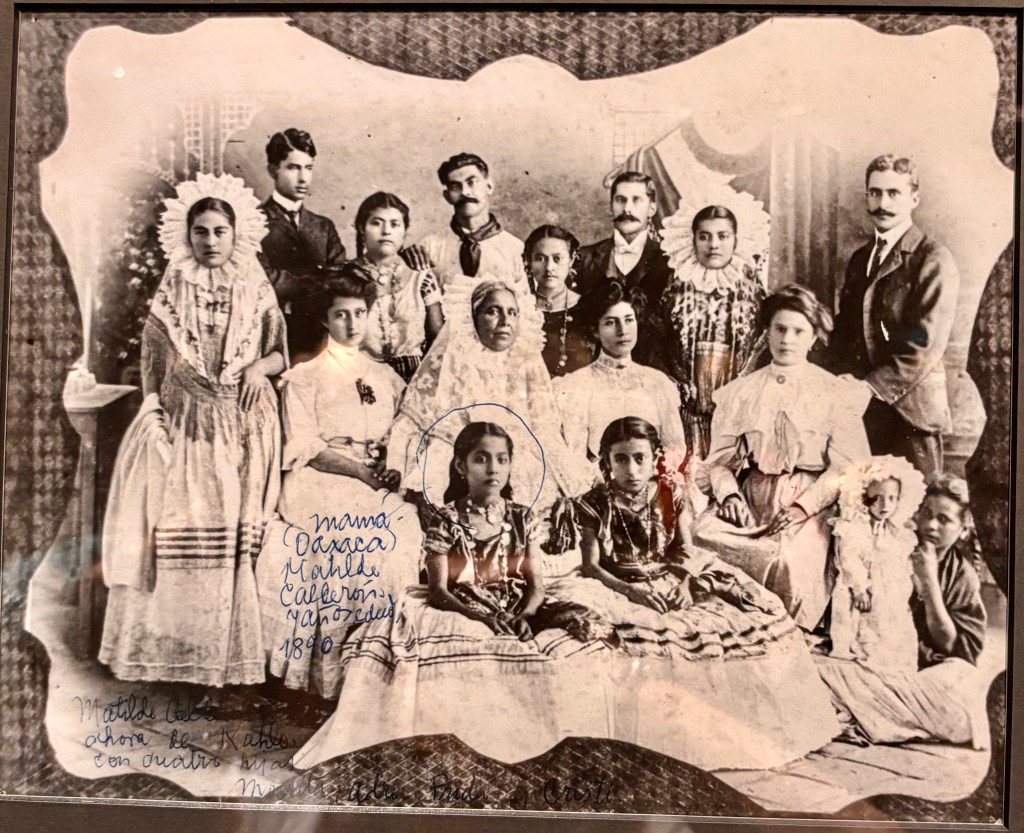
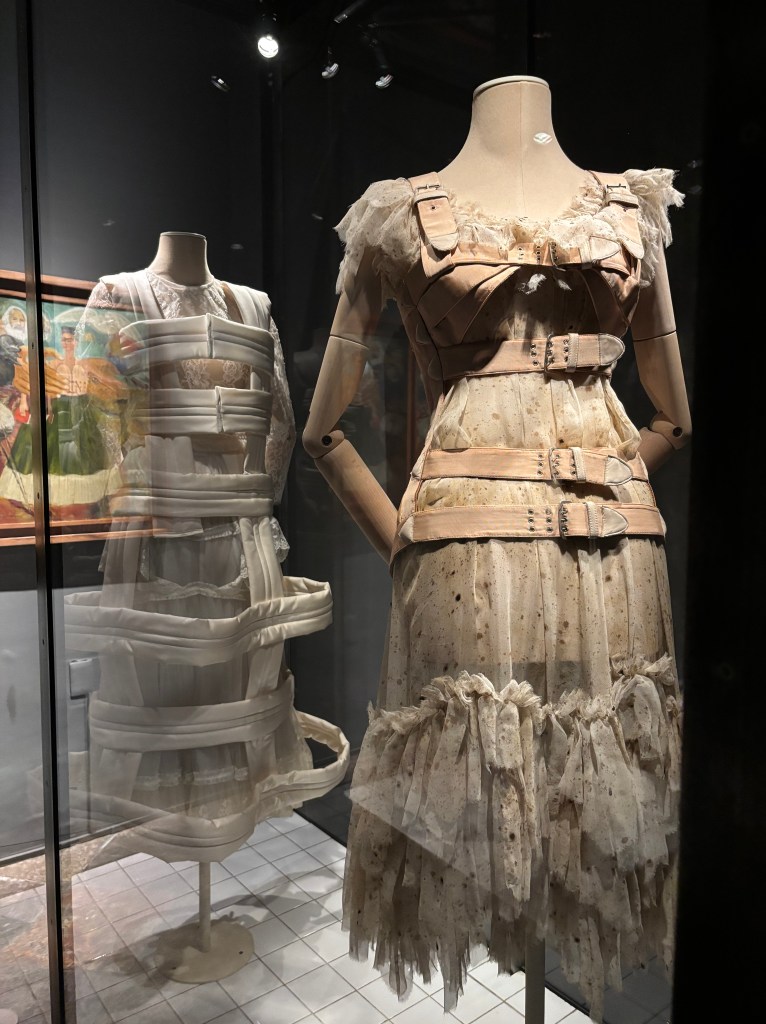
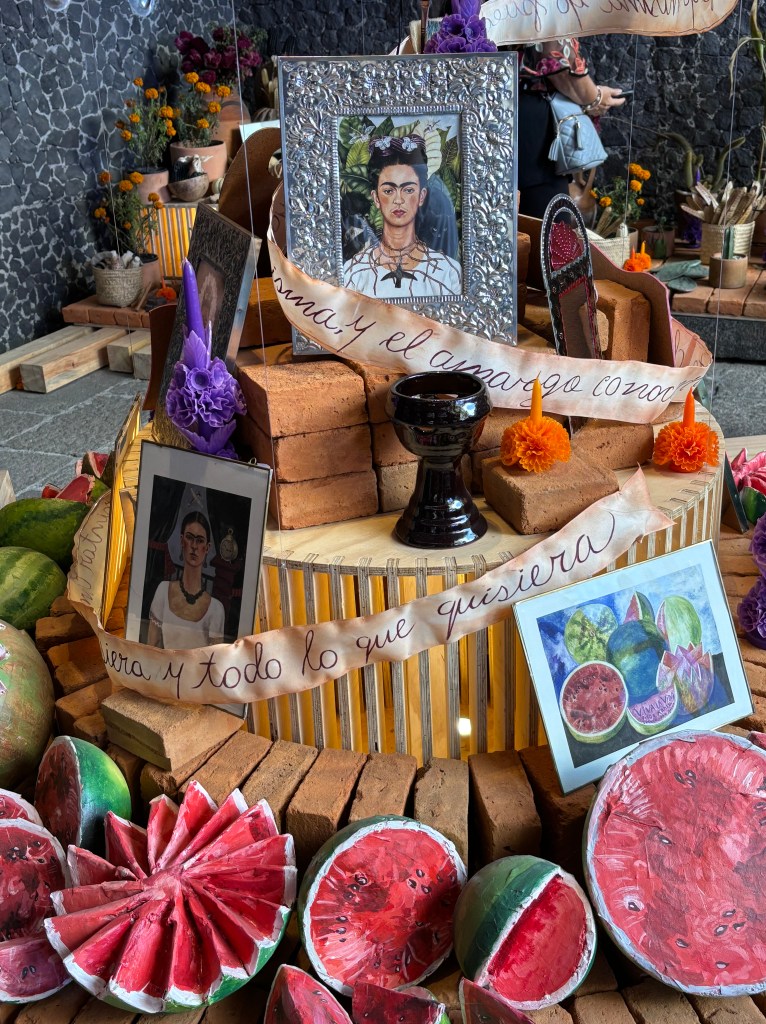
Frida Kahlo’s home in Coyoacán was exceptional, as was she. Frida’s childhood home is a tribute to this magnificent woman who lived a dramatic life of artistic creativity and Communist politics while enduring chronic pain. Frida Kahlo (1907-1954) is recognized for her iconic looks from photographs and the many self-portraits she painted (and her unibrow). We learned that Frida suffered tremendous pain, both from polio and the injuries she sustained when she was young (eighteen years old); Frida was a passenger on a bus that collided with a streetcar. Because Frida was confined to bed, her living space at Casa Azul was set up with a daybed and a bed for sleep. A mirror was placed overhead so Frida could paint herself from a supine position; that explains the myriad of self-portraits. And as for Frida’s peasant attire, there are a few reasons. One is a tribute to the Indigenous styles of her mother’s Oaxacan family but also because Frida needed to wear special corsets and the layers of her traditional dress covered the hardware that was supporting her.
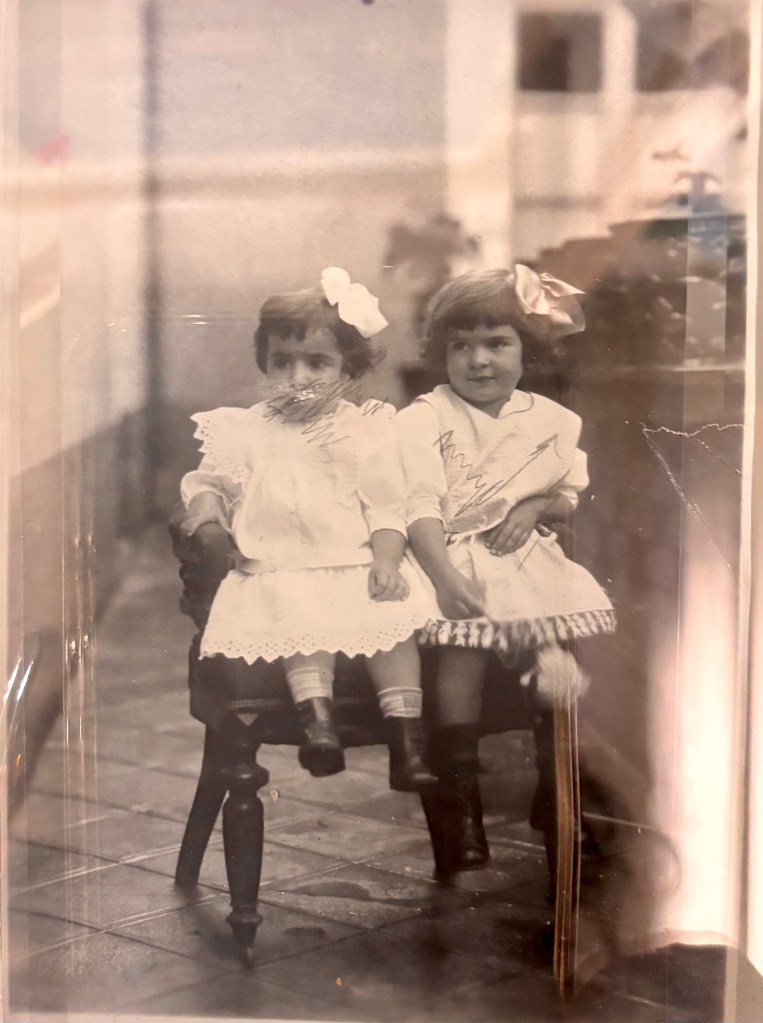
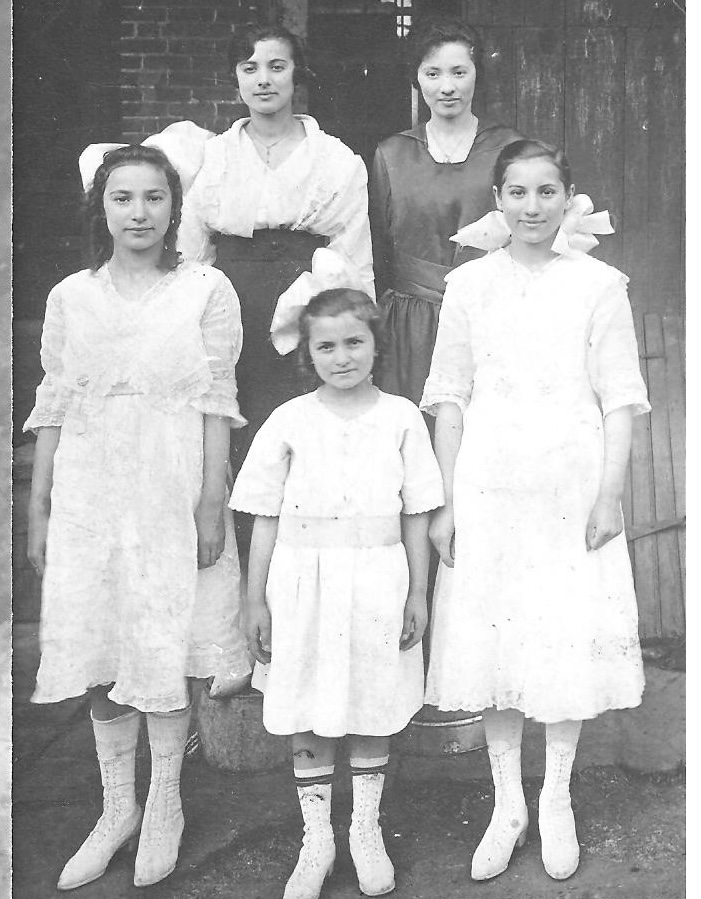
Frida’s father was a photographer. I got a kick out of her childhood photos because they were not dissimilar to those of my grandmother and her sisters.
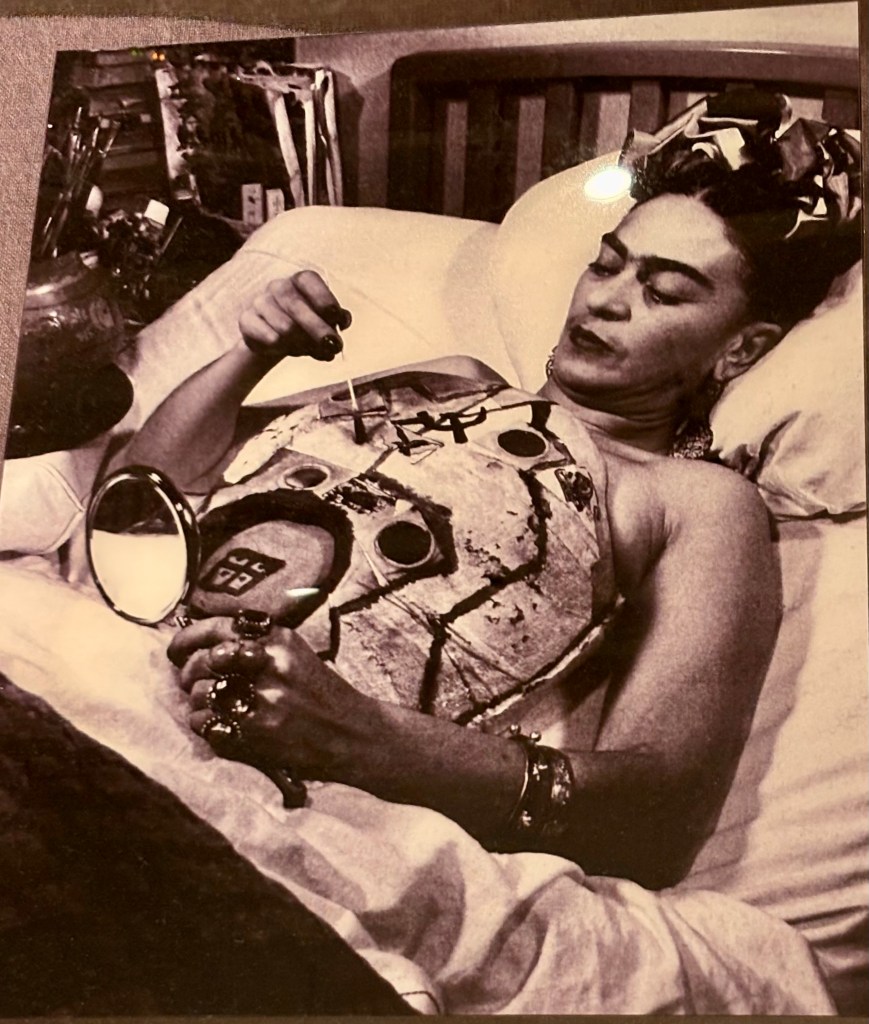
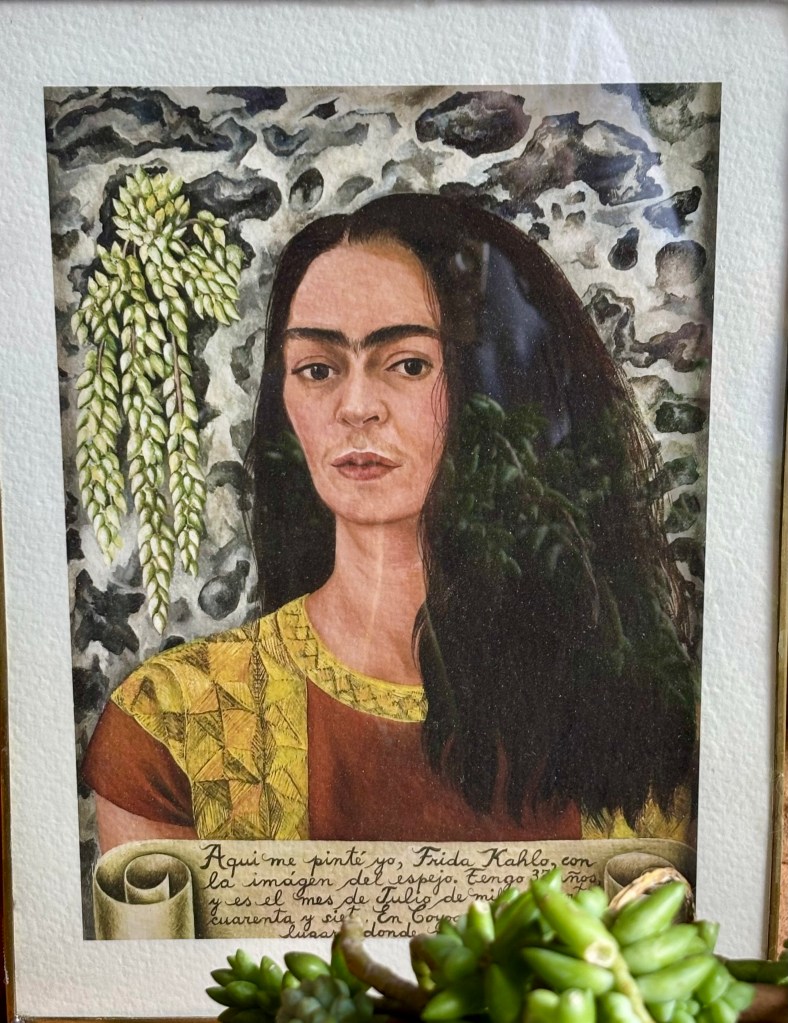
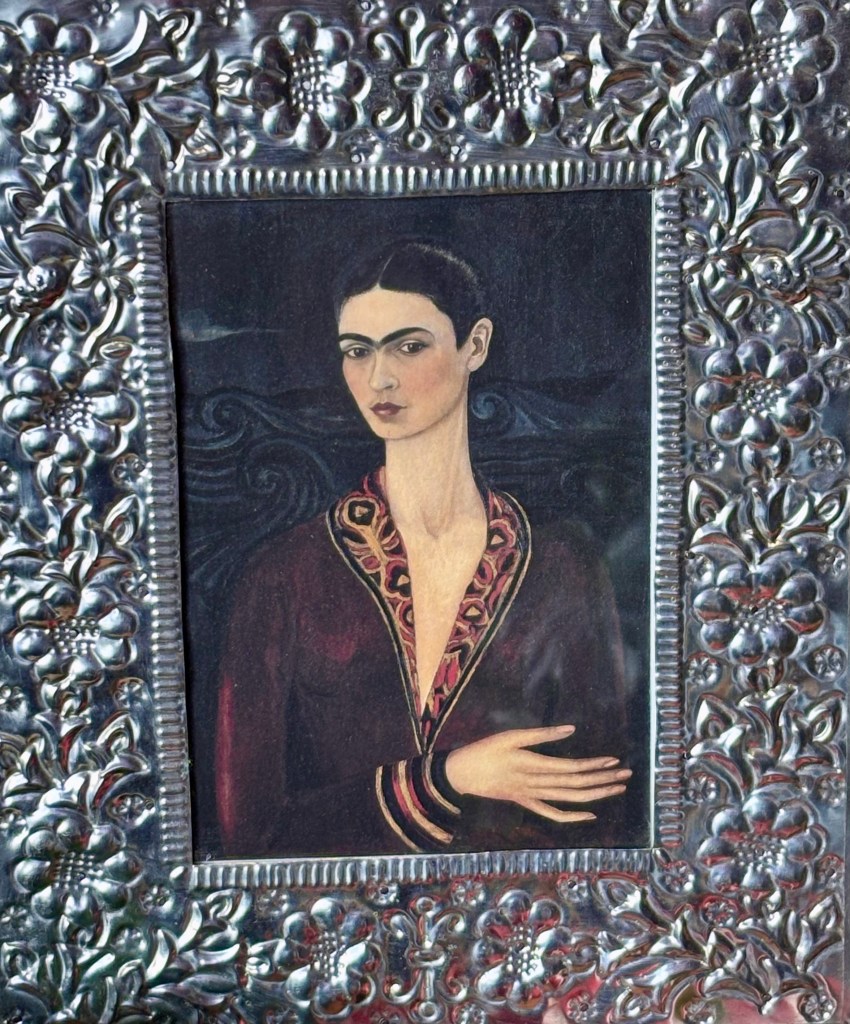
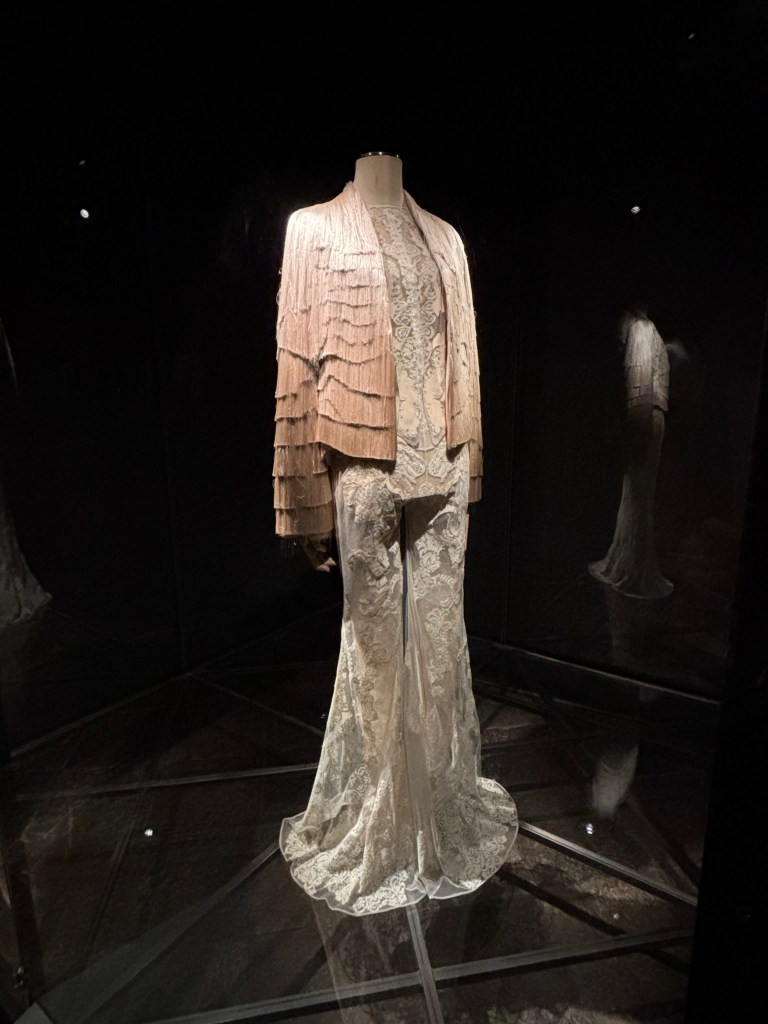
Casa Azul had a special fashion exhibit of clothing that was found many years after Frida’s death and also included designer clothing inspired by Frida’s style.
In 2004 some of Frida’s clothing was found in her Casa Azul bathroom.
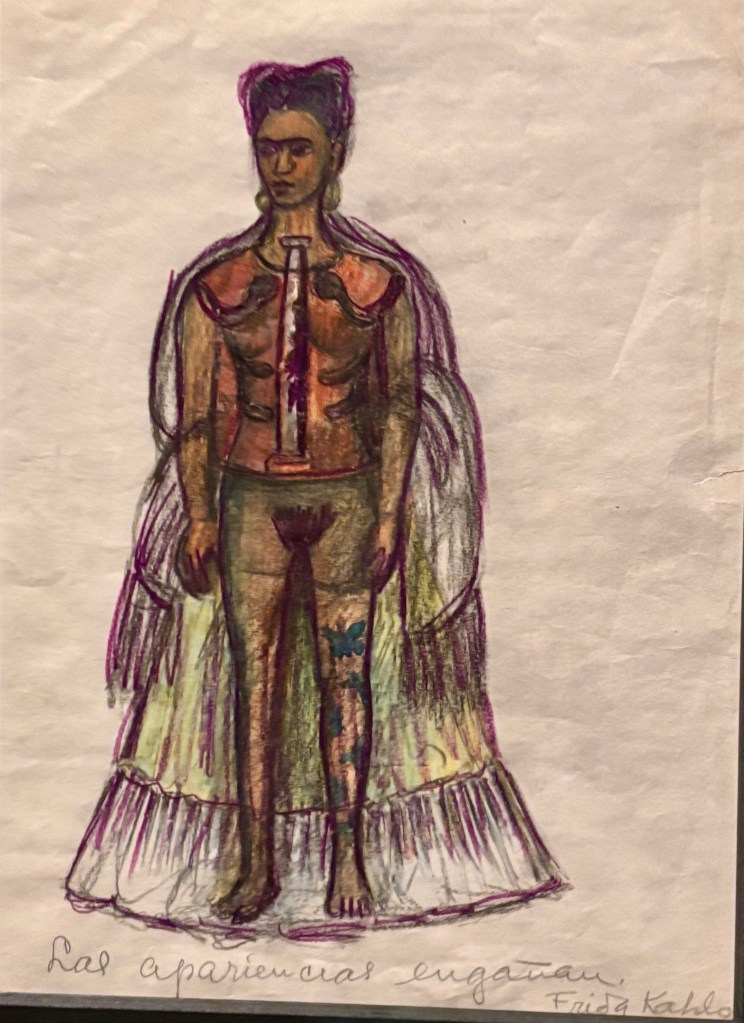
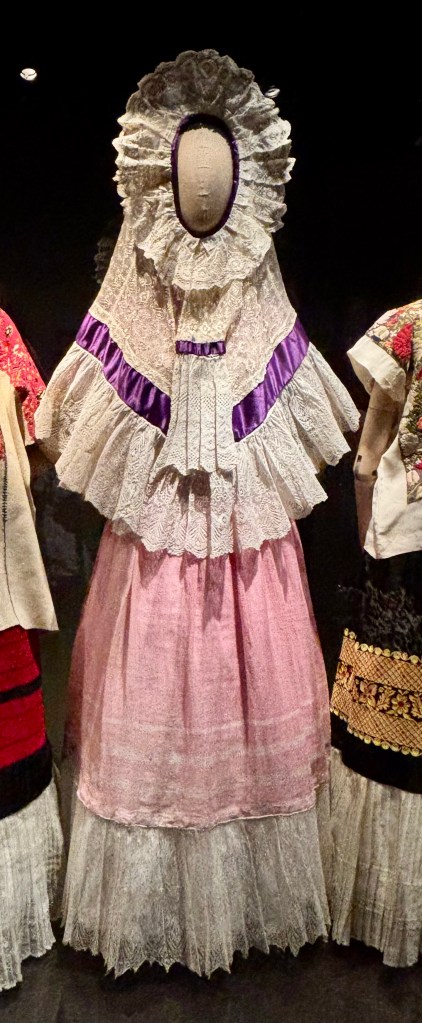
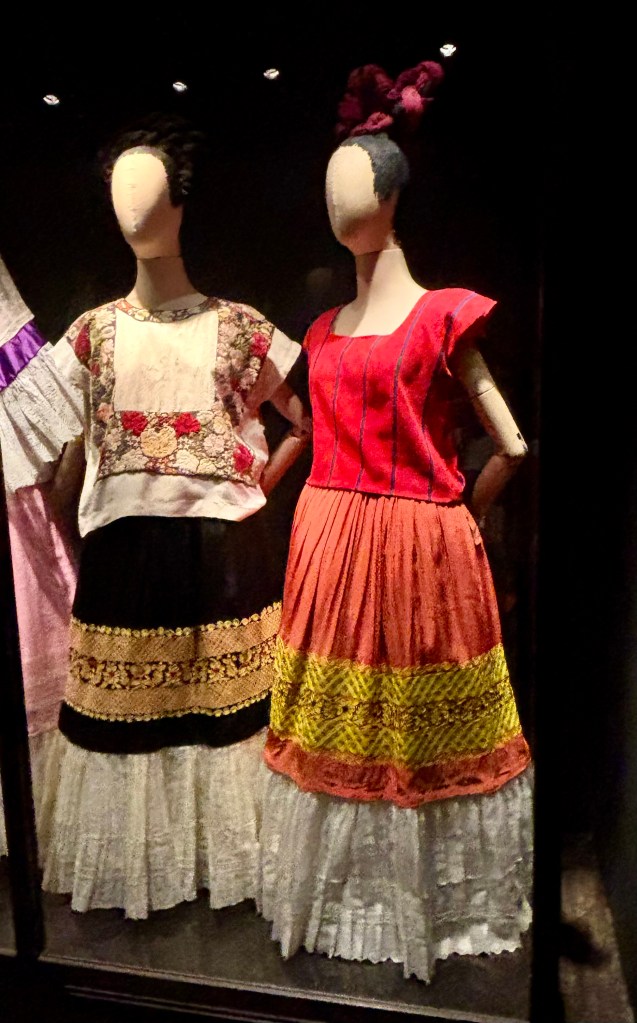
A style icon to this day, Frida’s wardrobe has inspired couture collections.
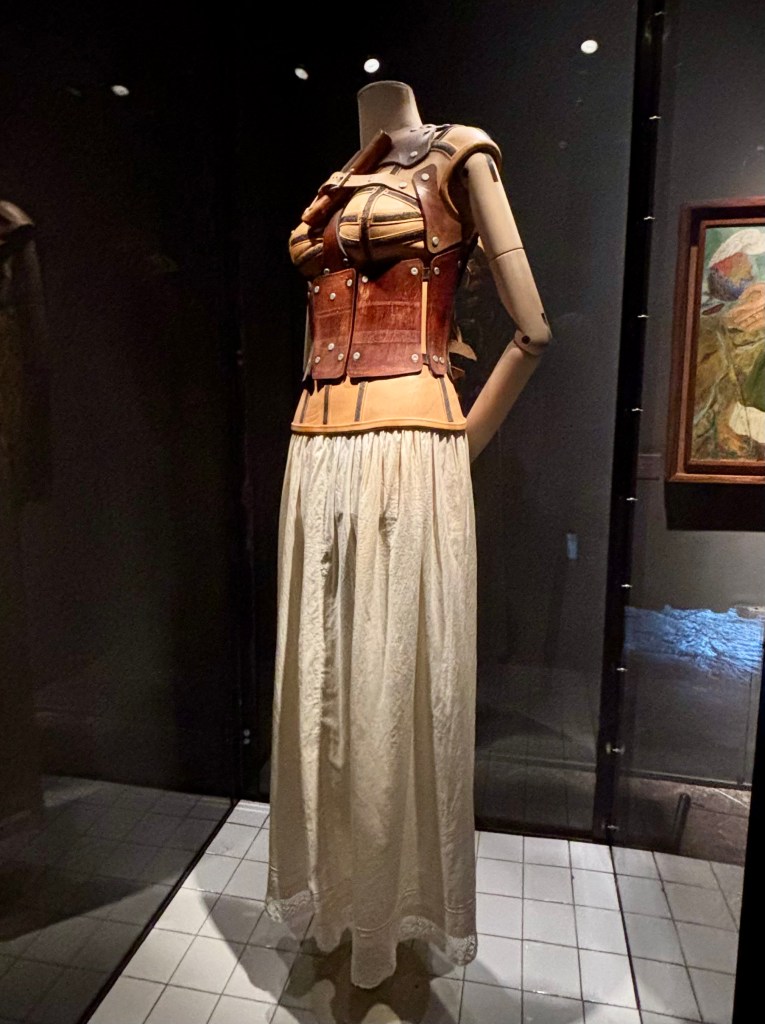
Enjoy this festive season and hasta luego!
Next post (Chapter IIIB) will be all about Lana and Brandon, George and Matthew, food tours and Thanksgiving.

