June 5-11
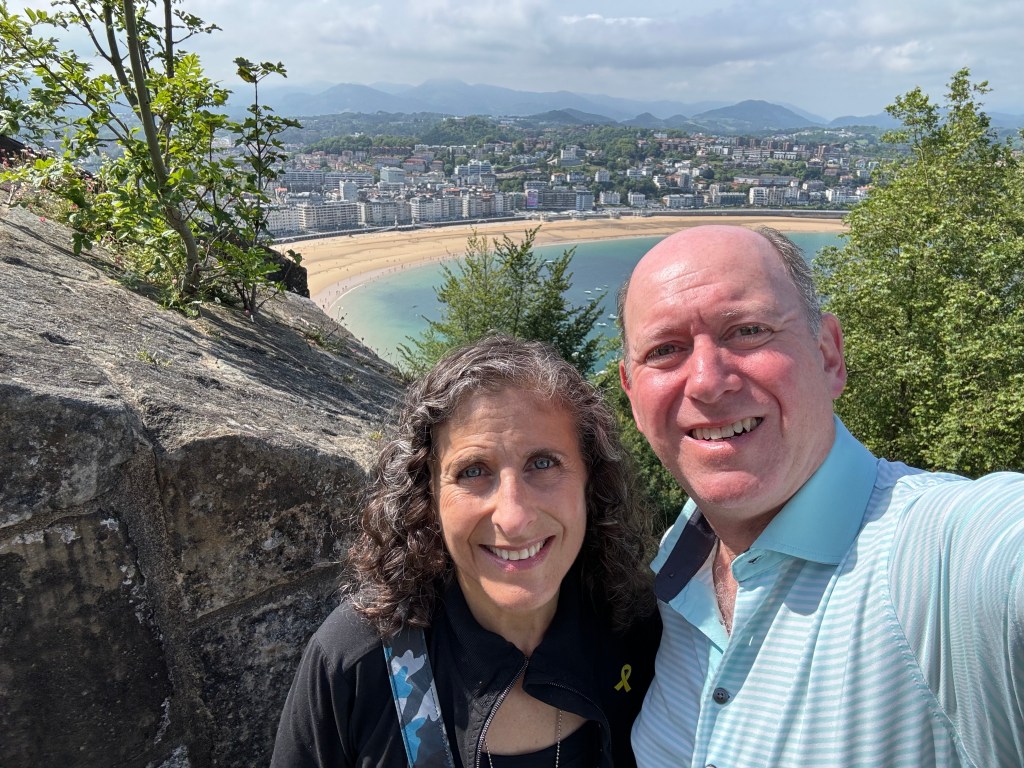
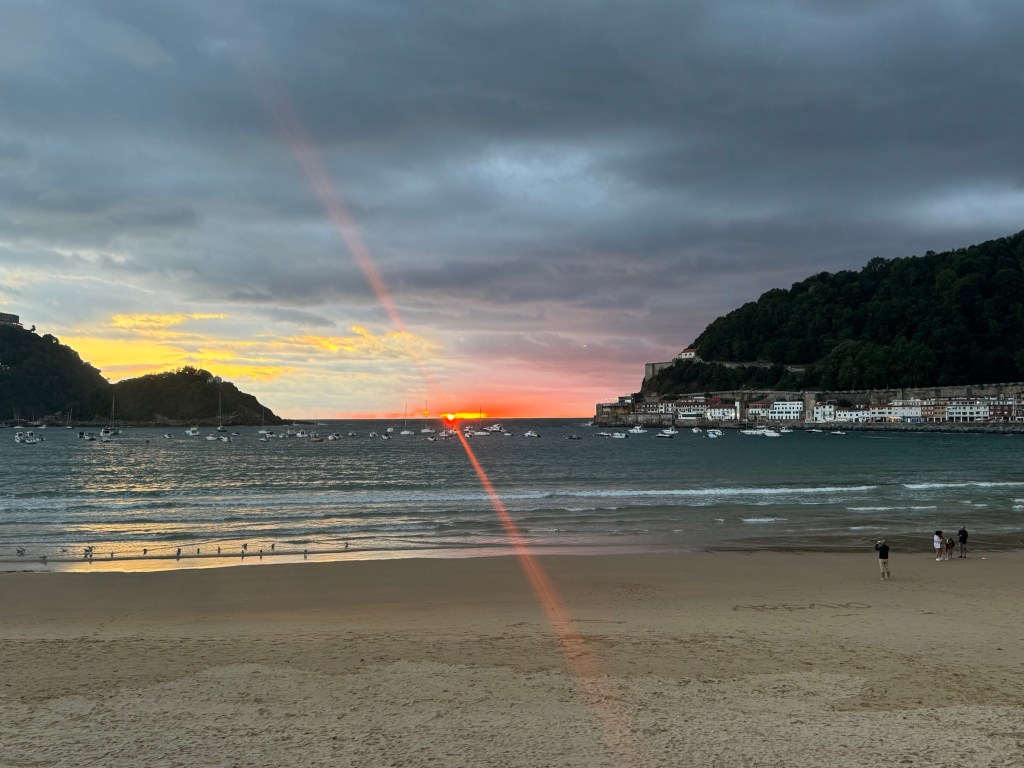
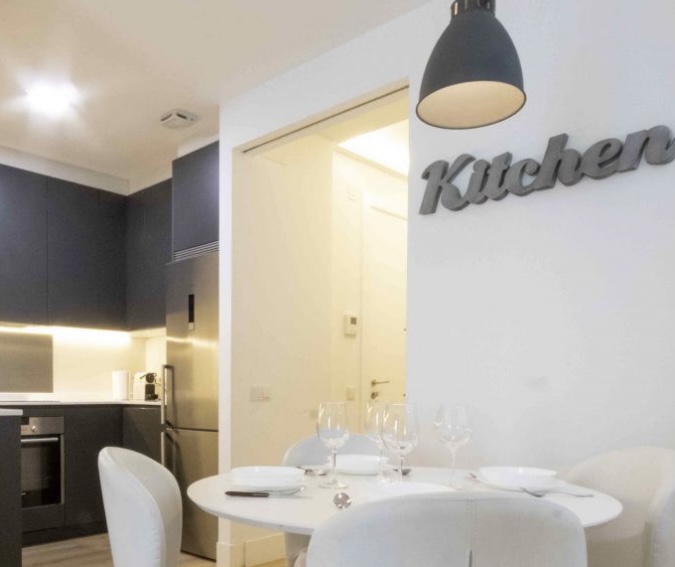
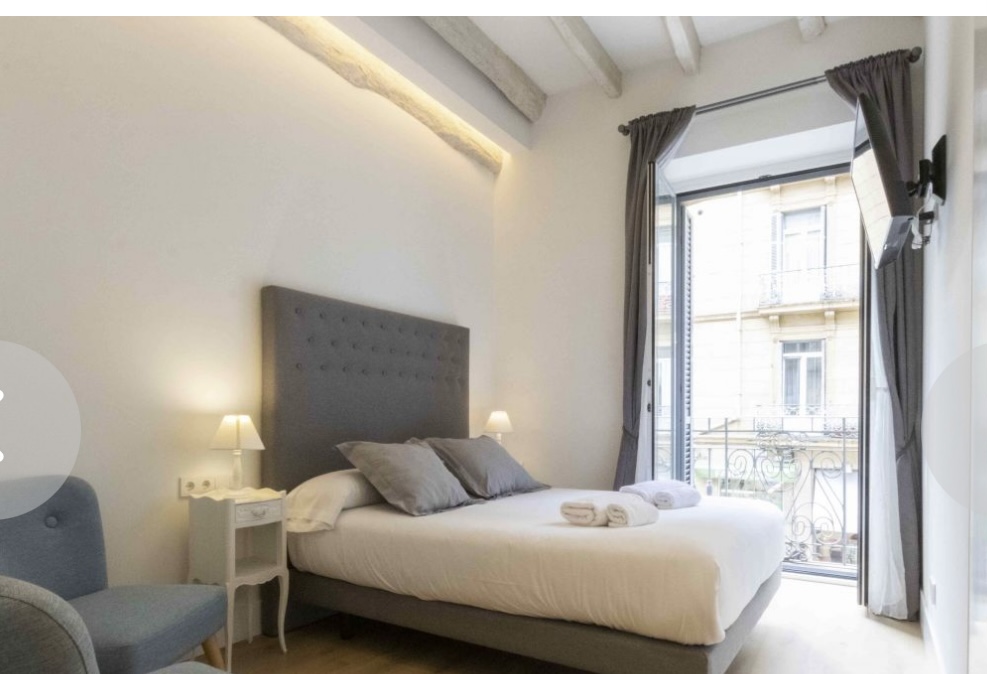
Way back in Paris (fall 2023) we often had conversations about “where to next” with people we met along the way. Our new friend Lisa, a film producer living in Paris, had just returned from judging at the annual San Sebastián International Film Festival. Lisa raved about the city and especially about its cuisine. Thereafter, anytime we mentioned San Sebastián to anyone, those who knew of it also sang its praises. We added it to our bucket list and last week, we flew from Tel Aviv to Madrid to Bilbao. One taxi ride later, we arrived, picked up keys to an adorable and recently renovated apartment and settled in for the next three weeks.

We immediately set out to discover the landscape. We are two blocks from the beach and we explored the promenade and enjoyed our first taste of pintxos (much more about that coming up). We are also twelve miles from the Basque coast of France (think Biarritz).
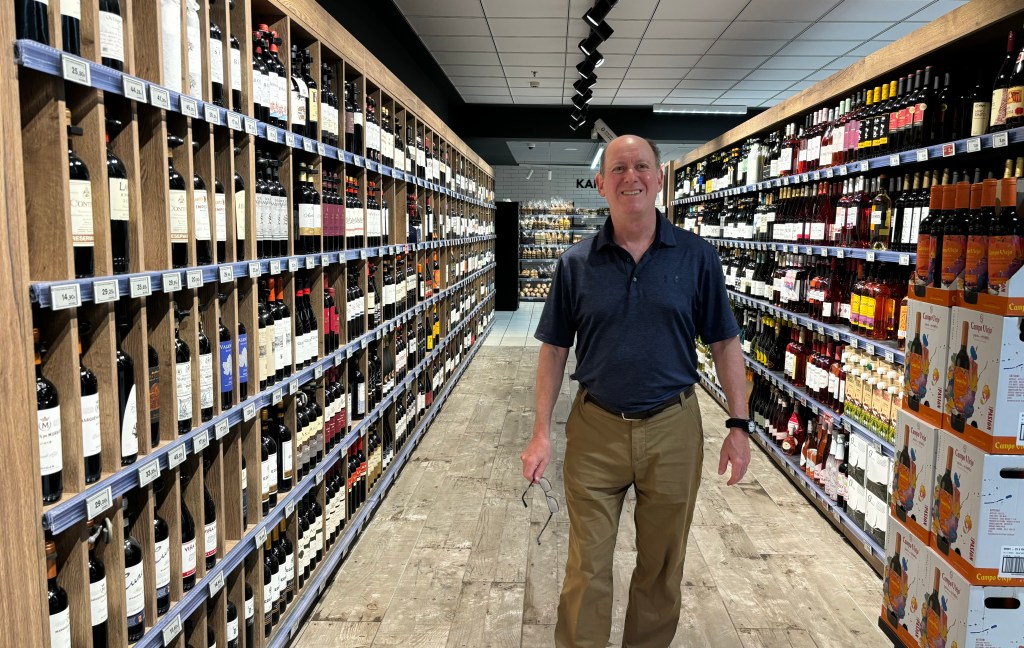
Our outing included some shopping: food for the apartment, of course, but alas, Andy’s suitcase never showed up, so little by little, we are clothes shopping (for Andy for a change and adding a bit of European style to his wardrobe).
It’s interesting that both Tel Aviv and San Sebastián are beachfront cities. That’s pretty much where the comparison ends!
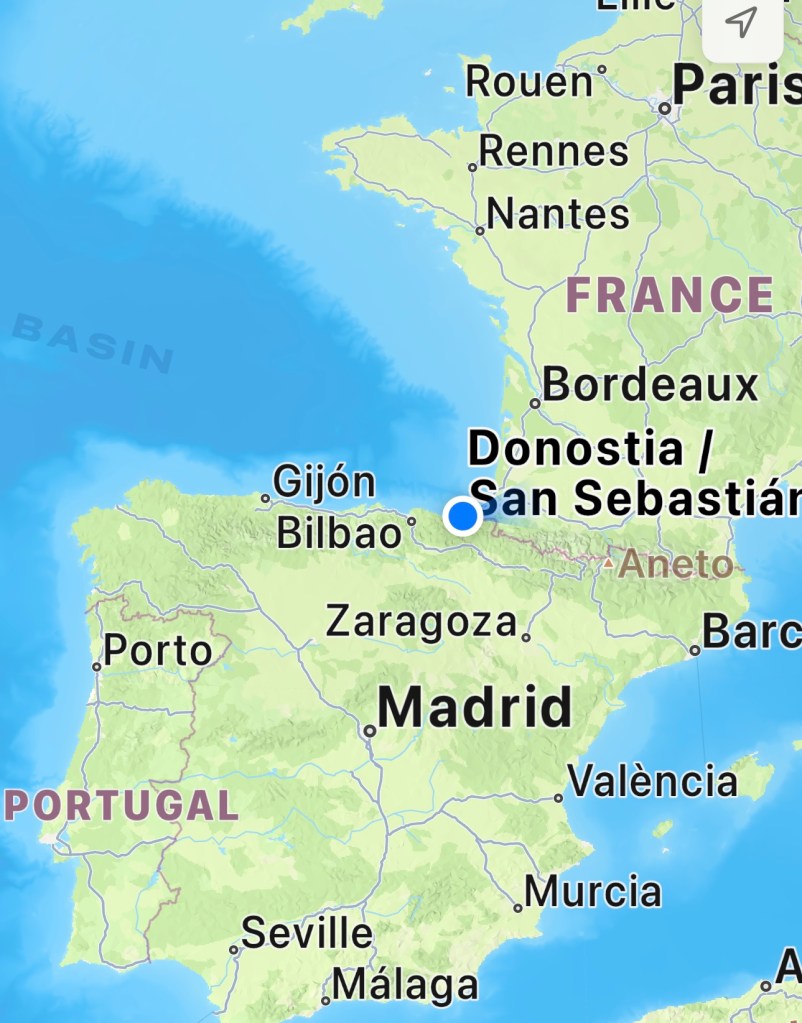
We are in the Basque region, the Northeast corner of Spain and quite close to the Southwest French border.
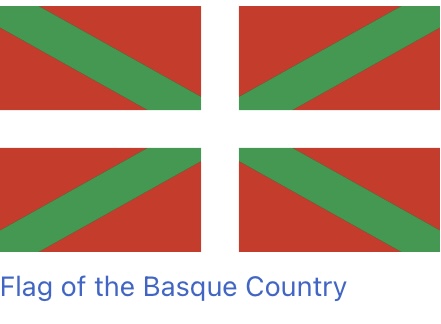
Donostia (Basque) also known as San Sebastián (Spanish) was founded in 1180 but its history goes back before the Roman Empire. Its language is considered Paleo-European, that is to say, not Indo-European. So poor Andy, who has been using the Duolingo app to learn Spanish, is in a region of Spain where natives speak Basque, which is nothing like Spanish! “Lucky” for Andy, everything here is written in both Basque and Spanish. For that, we can thank or blame Francisco Franco (1892-1975), former Dictator and Caudillo of Spain (1939-1975), whose Nationalist policies outlawed Basque, making Castilian Spanish the law. In addition to Basque, languages such as Catalan and Galician were also suppressed. Franco actually forbade writing in Basque during his reign. And while I am on the subject of Franco (I did not know much Spanish history after its period of exploration and its Golden Age, the 15th to 17th centuries), he also enforced traditional Catholic values, encouraged women to stay home (he outlawed birth control). At least women had gained the right to vote in 1933 but how free are elections in a single-party system? Franco’s rise to power was the result of the Nationalists overthrowing the Second Spanish Republic. Picasso painted his famous Guernica after Germans helped the Spanish Nationalists by bombing this Basque town in 1937. Franco kept Spain out of World War II but was more aligned with the Axis powers. He was also a monarchist and in 1969, Franco brought the Spanish royals back from exile. King Juan Carlos served both with and after Franco. Spain became a constitutional monarchy after Franco’s death (and yes, Chevy Chase, he is still dead) and the Basques were able to teach their language and culture after almost forty years of suppression.
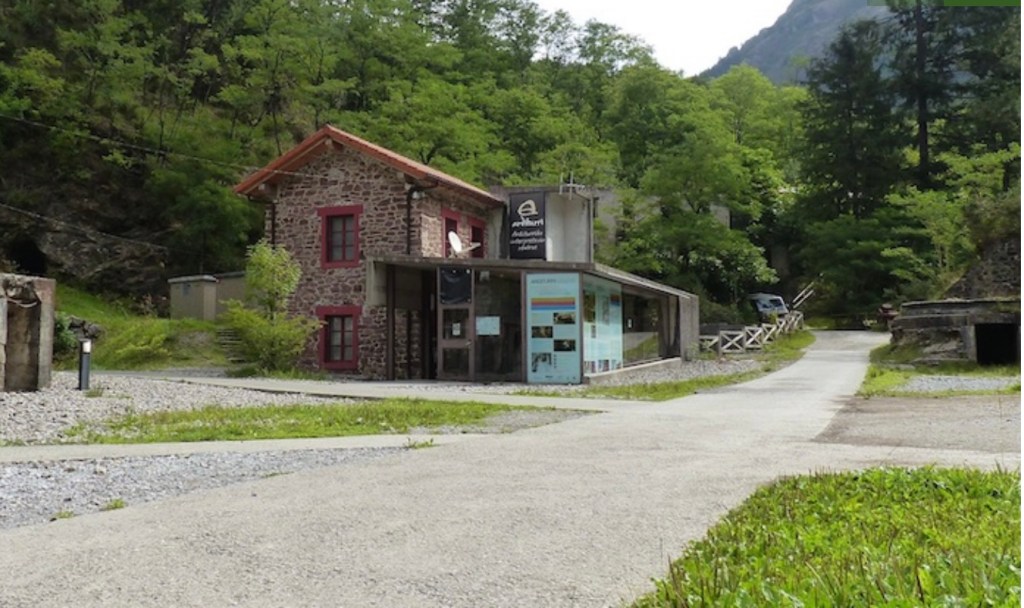
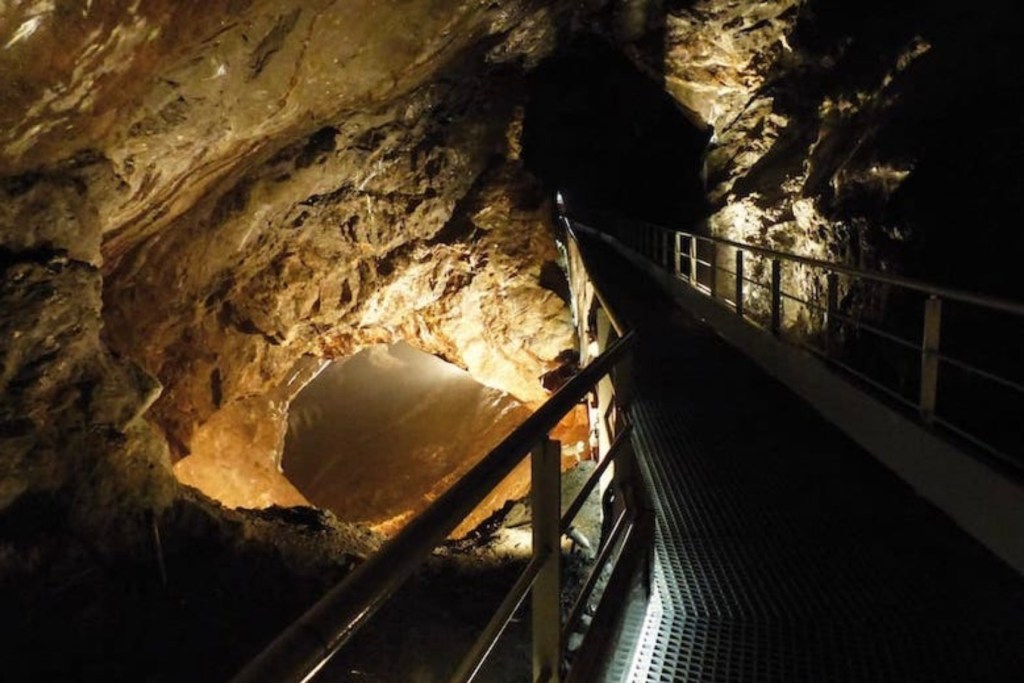
The Romans occupied the Basque region from 77-19BCE and were known to mine silver, iron, lead and fluorite. We already visited Arditurri, a Roman Archaeological Mining Site and now a National Park in Gipuzkoa, about twelve miles from San Sebastián. Here, there are mining caves going back more than 2,000 years and were active until 1984.
The three major cities in Basque:
Bilbao, know for mining, industry, finance and now, a Guggenheim Museum (that we certainly have on our itinerary).
Vitoria, the region’s de facto capital, known for Wellington’s Victory over France during the Penninsular War (one of the Napoleonic Wars). Beethoven dedicated his Opus 91 to commemorate the battle here. The Holy See (a group I didn’t know about until I read The Da Vinci Code) started in Vitoria. By the way, there was a Jewish population pre-Inquisition. The Jews of Vitoria collected taxes and practiced medicine. Three hundred Jews in 1290 grew to nine hundred (about 6% of the total population) at the time of the Inquisition. Most of the Jews fled to Bayonne in France; however, the Jewish cemetery is now a public garden, created by the Jews of Bayonne, France in 1952, after 460 years.
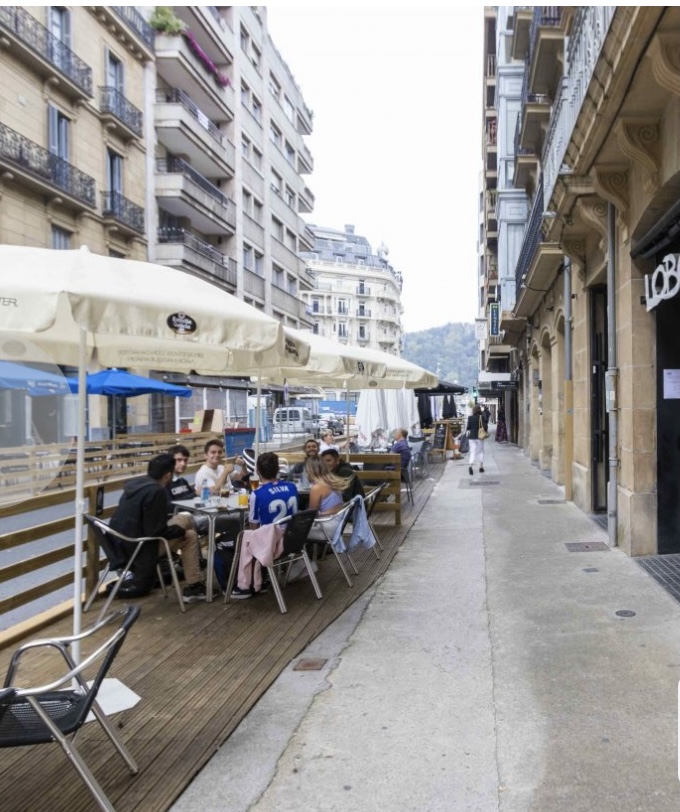
San Sebastián – tourism. The city we are enjoying is the perfect tourist spot. The beaches that reach out to the Bay of Biscay are accessible to all. No wonder Spanish royals and Caudillo Franco came here on holiday. Queen Maria Cristina (1858-1929) built a beautiful home here and spent forty summers in San Sebastián. She was known as the “Honorary Mayoress” and helped popularize the city. Today, San Sebastián is filled with tourists who enjoy the beaches and there are many pedestrian streets (lots of shopping). And like many European cities, there is a strong bicycle culture. Our first bike excursion took us 26 miles, to and from Arditurri National Park. The weather is much cooler than I expected (that has not stopped the sunbathers) and as with many coastal cities, rain comes and goes (in other words, don’t believe The Weather Channel). There is a very lively bar scene with indoor and outdoor options where local beer and wine are enjoyed (not much of a cocktail culture here).

Food tour!

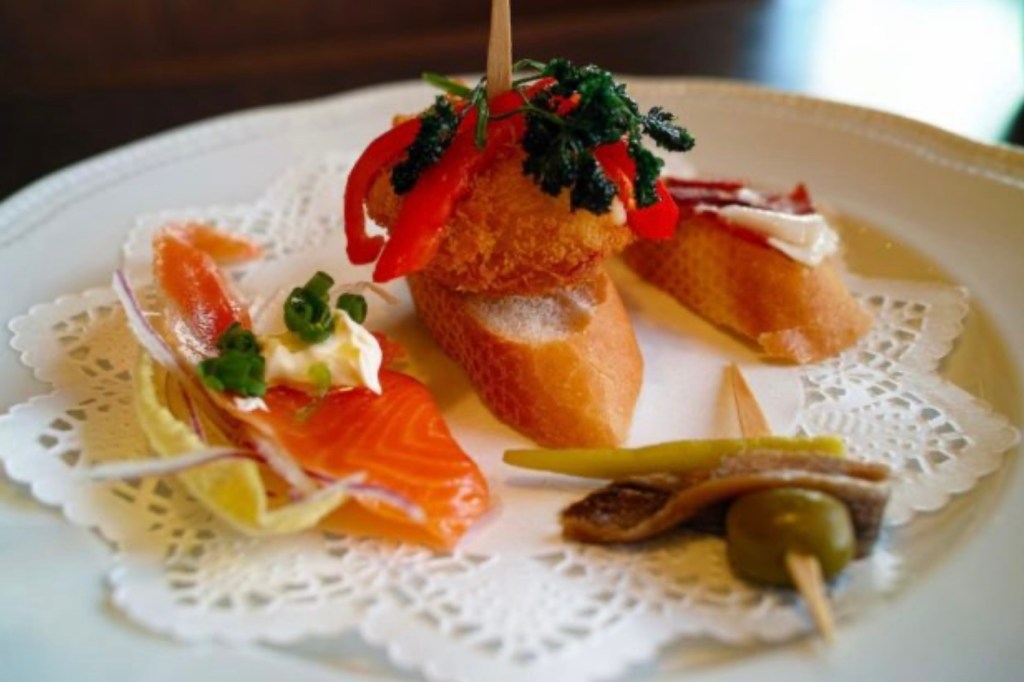
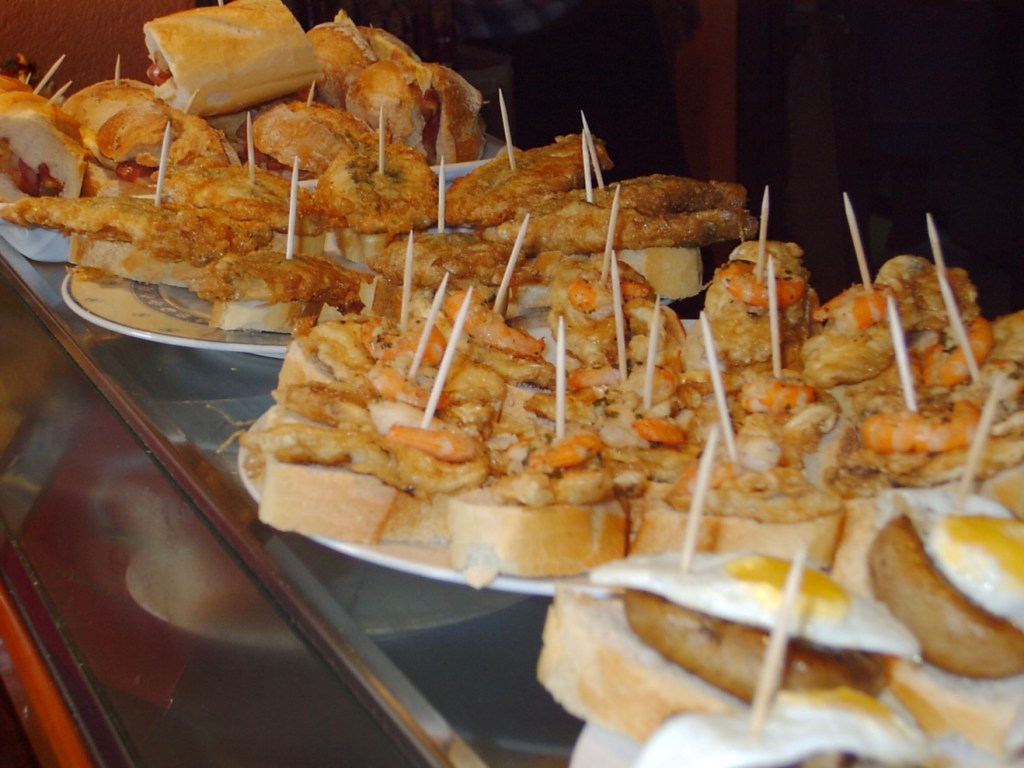
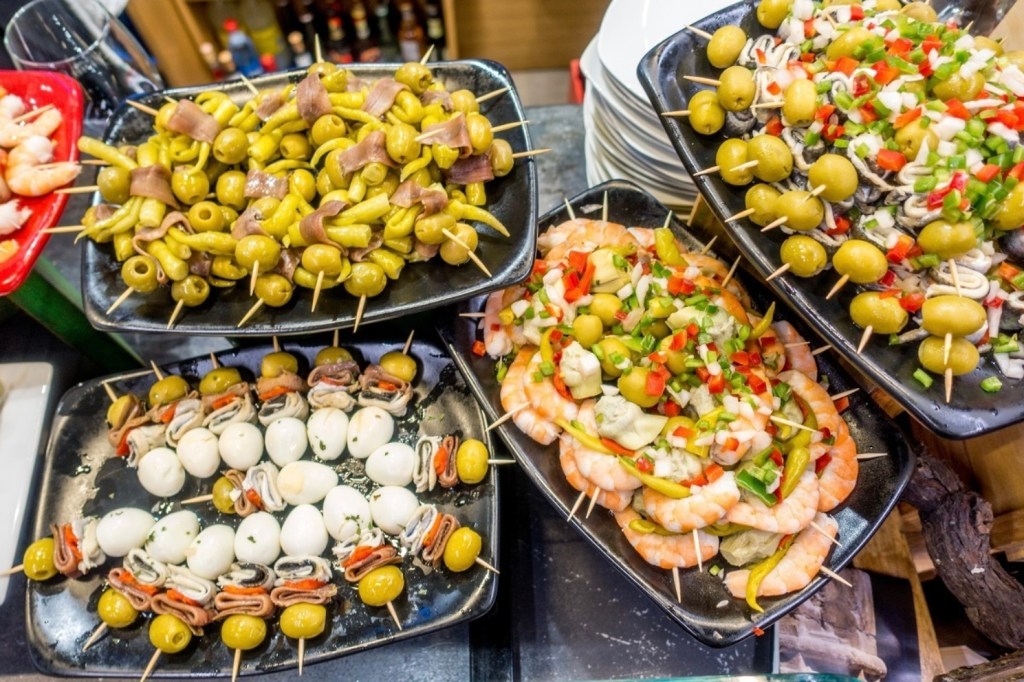
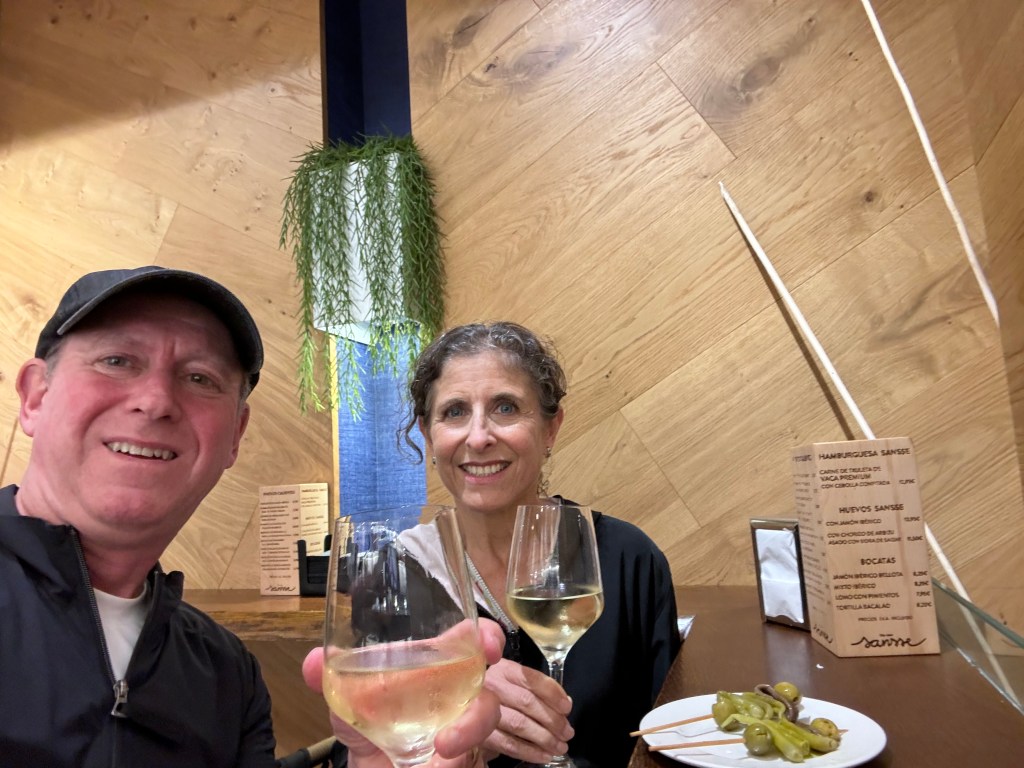
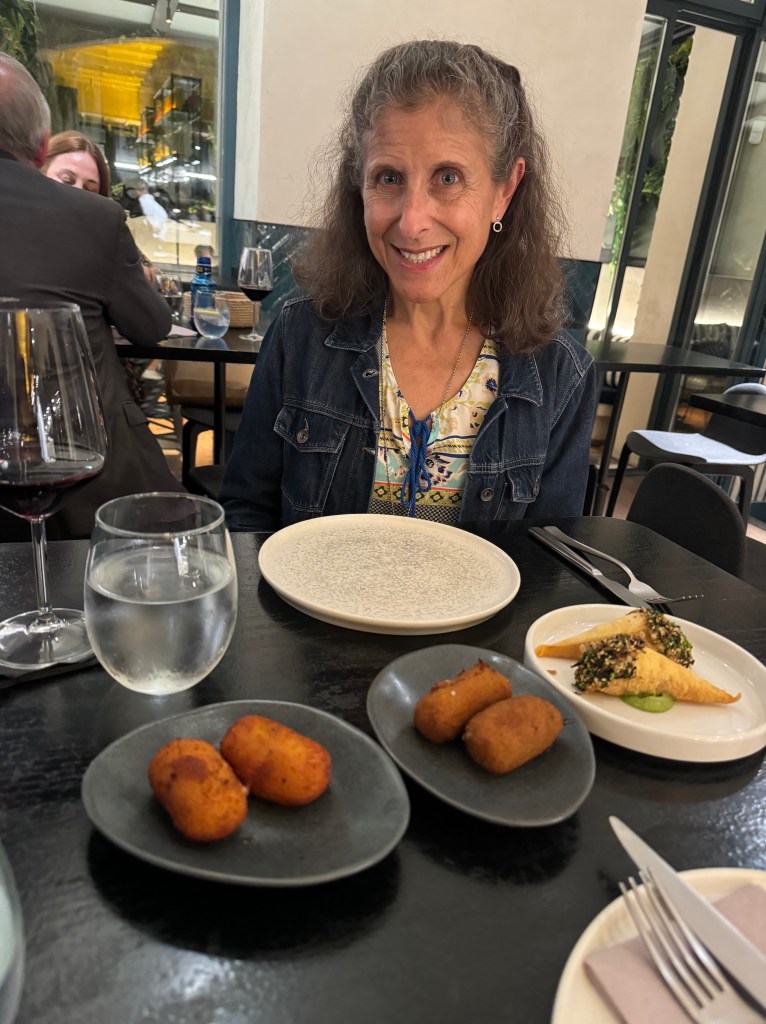
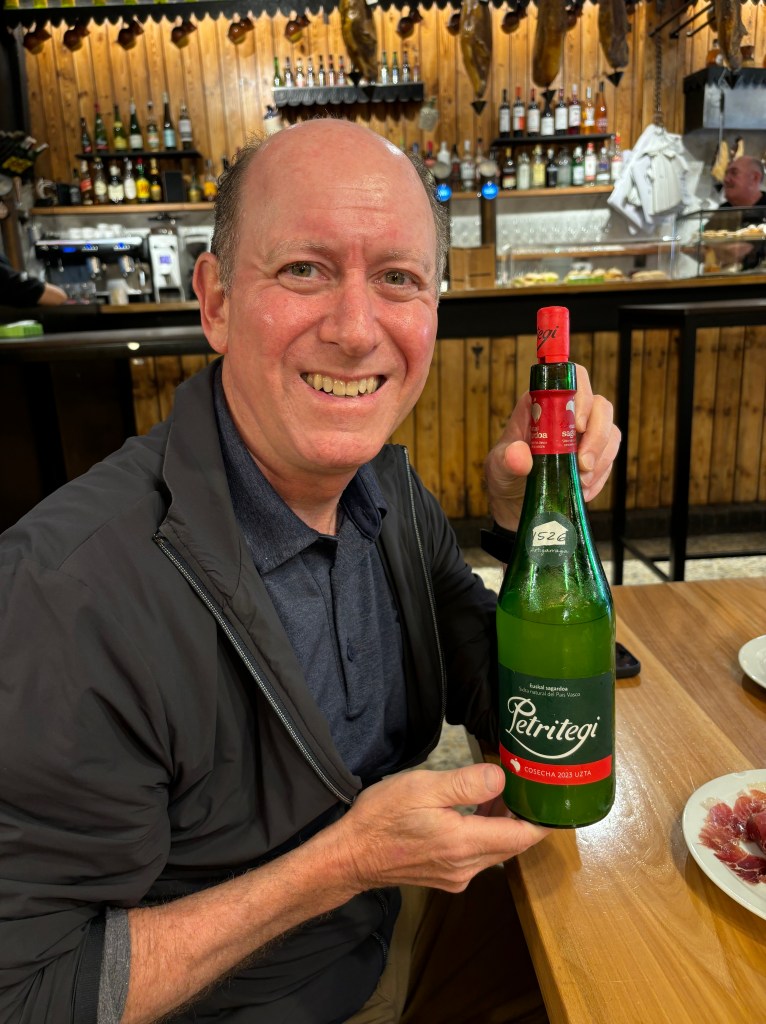
We thought it would be a good idea to have a food tour soon after arriving. We went to six spots and enjoyed many varieties of pintxos. Whereas in other parts of Spain, these petite tastings are known as tapas, pintxos comes from the Basque region. Apparently, the word refers to the wooden toothpick on which bite-sized appetizers are served. This made it easy for beach goers to bring snacks with them. Now, the tradition is to go pintxos / bar hopping: one or two appetizers per spot, along with a local wine such as txakoli (a light sparkling wine), Rioja, sagar-ardoa cider (an apple “wine”) or beer. Some pintxos include anything with Iberian ham or shellfish, olives, grilled foie gras with mushrooms, croquettes stuffed with creamy mushrooms and Spanish tortillas (like Jewish potato kugel in Spanish) 😋. I think one meal per day will include this cuisine while we are here! In fact, we can celebrate Shavuot, this week by enjoying delicious Basque cheesecake. Chag Shavuot Sameach!
On a somber note, I share that there are Basque Country people actively demonstrating against Israel. On our second day in San Sebastián, we woke up to posters plastered throughout the city announcing a pro-Palestinian rally. We practically walked into a tent-city in front of the Buendia Pastor Cathedral and that evening we heard (but stayed away) from the event. The following night, there was a pro-Palestinian march during our food tour. Spain has publicly expressed solidarity with a Palestine and in this region, with its separatist history and memories of Guernica, the people protest. Interestingly, Picasso’s Guernica is an anti war painting and Israel did not start this war (I’m just saying). We were happy to learn that four Israeli hostages were rescued on Saturday but sad to learn that one of the rescuers lost his life while saving these innocent victims.
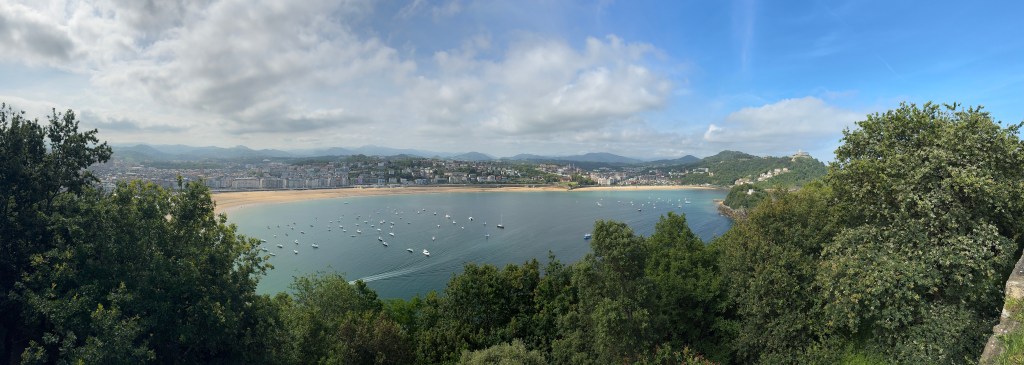
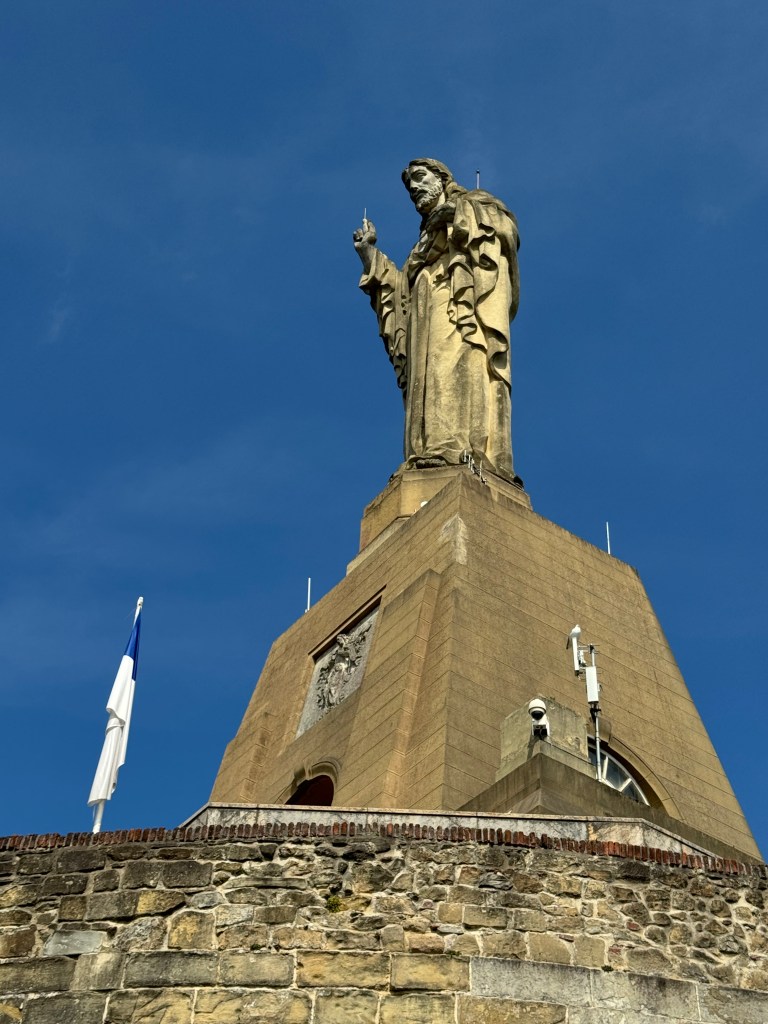
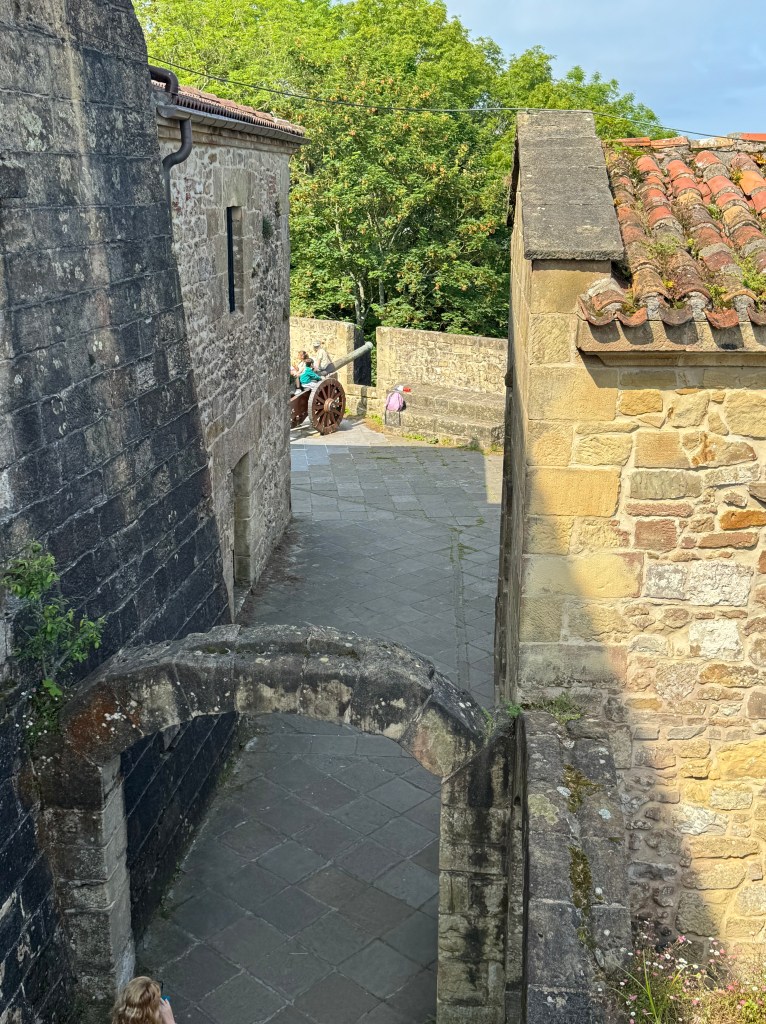
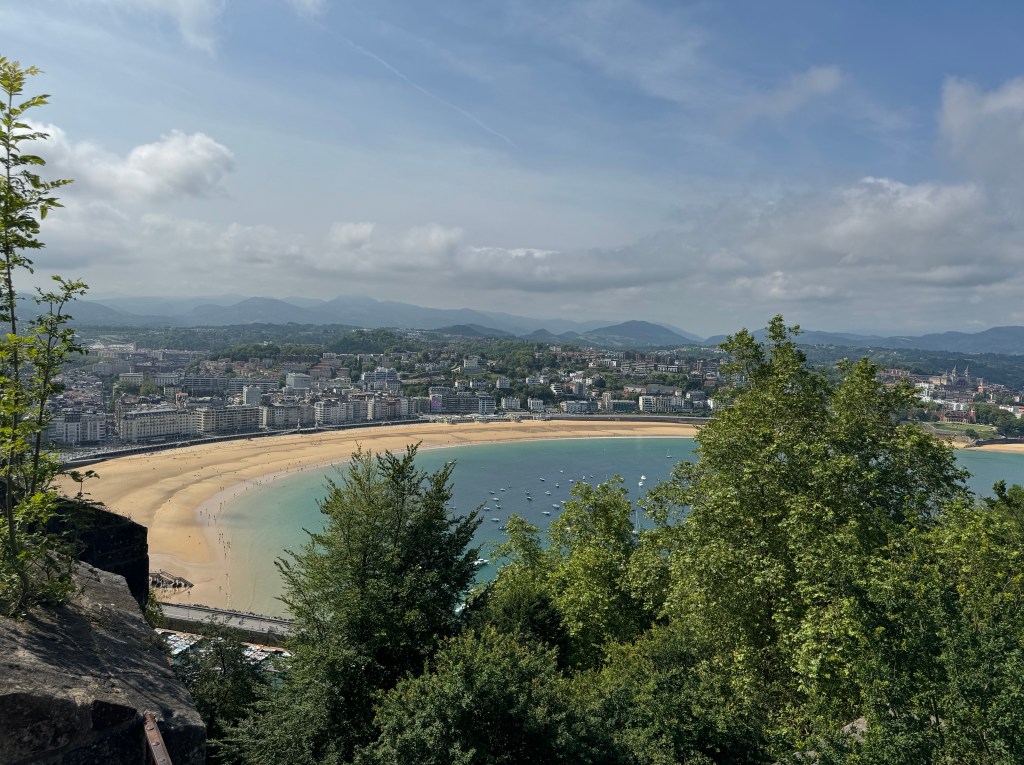
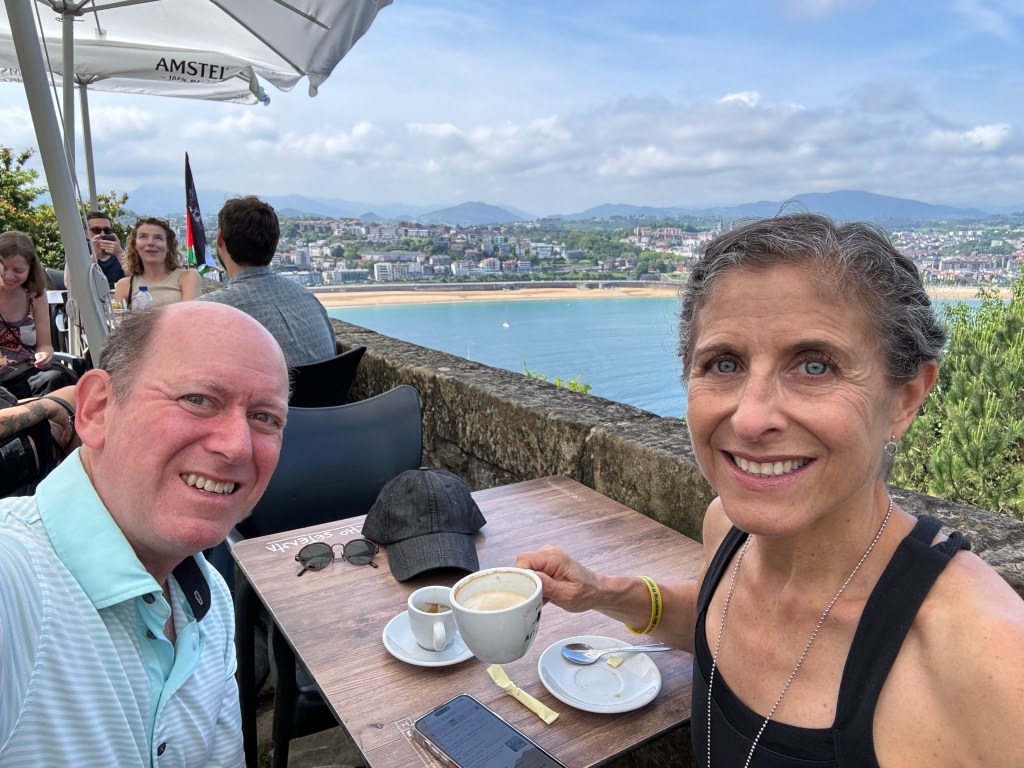
We have hiked up to Castillo de la Mota, a fortress from the 14th century on Monte Urgull. It’s supposed to be tranquil with great views. Yes on the great views. We could see the calm and protected Playa de la Concha and the fabulous waves surfers enjoy from Playa de la Zurriola. But we were joined by a group of schoolchildren (they were fun to watch but not at all tranquil).
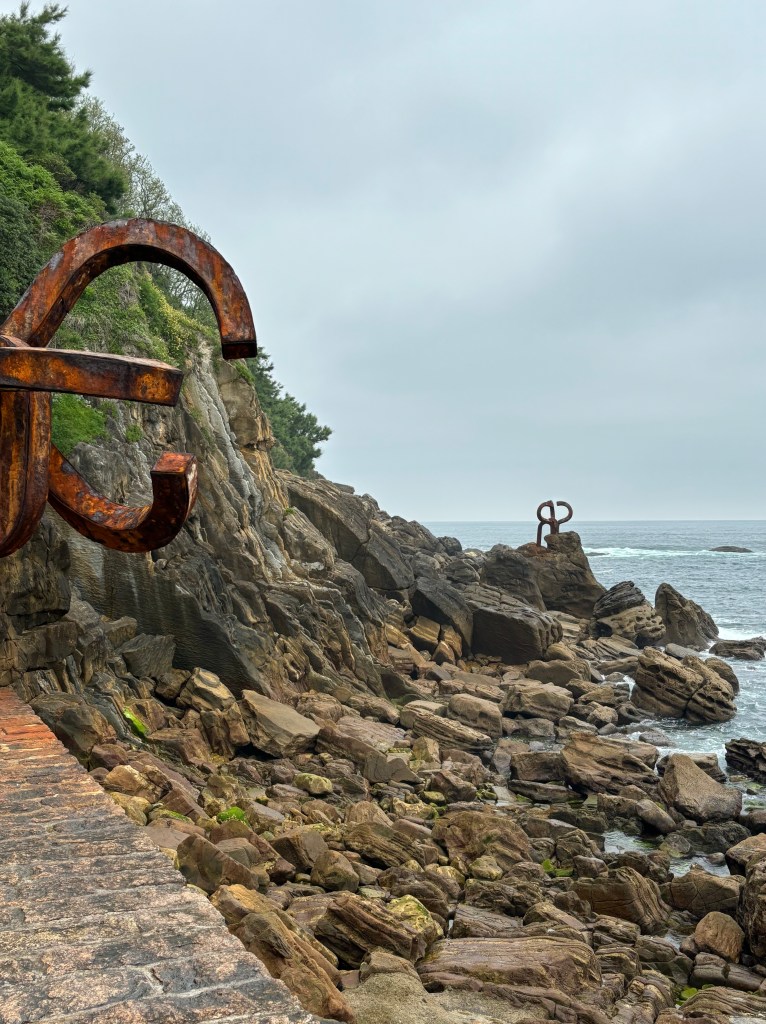
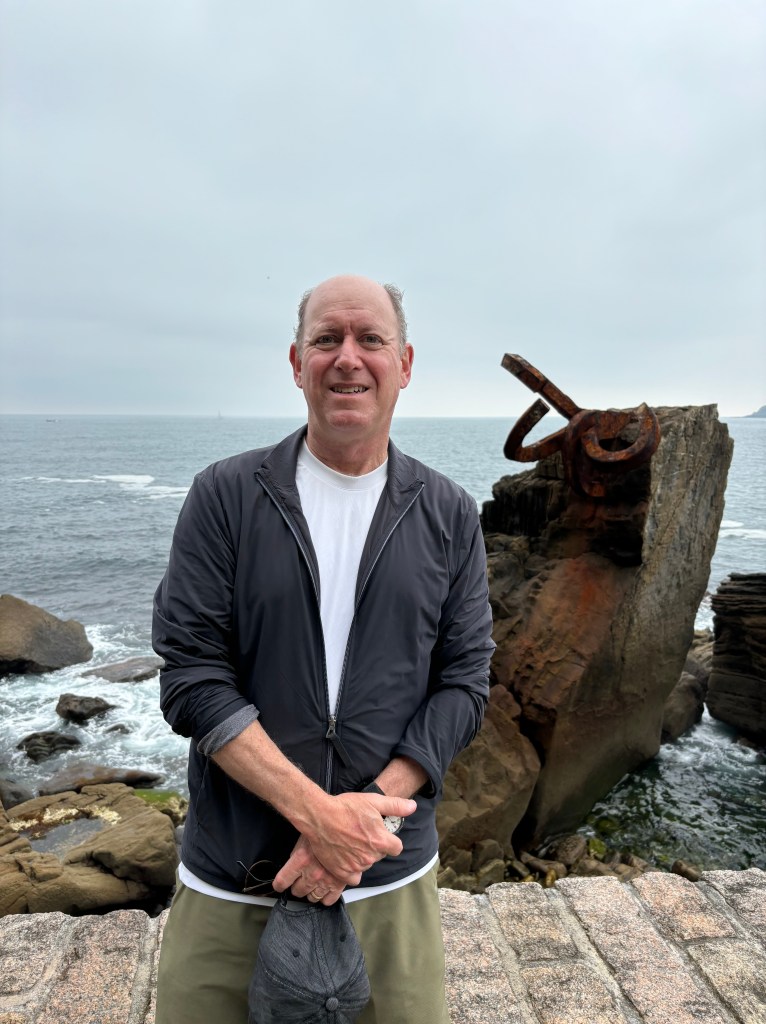
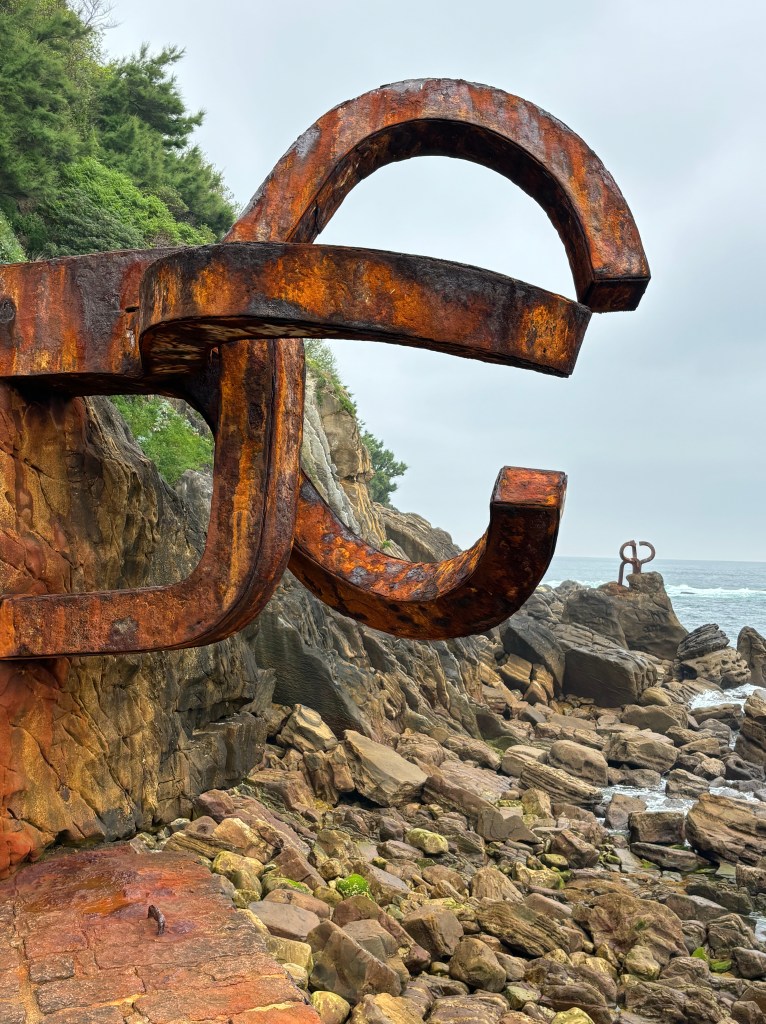
We have also explored the coastline and went as far as the stunning Comb of the Wind sculpture installations by Eduardo Chillida. Each of the three sculptures weighs ten tons so they will not blow away.
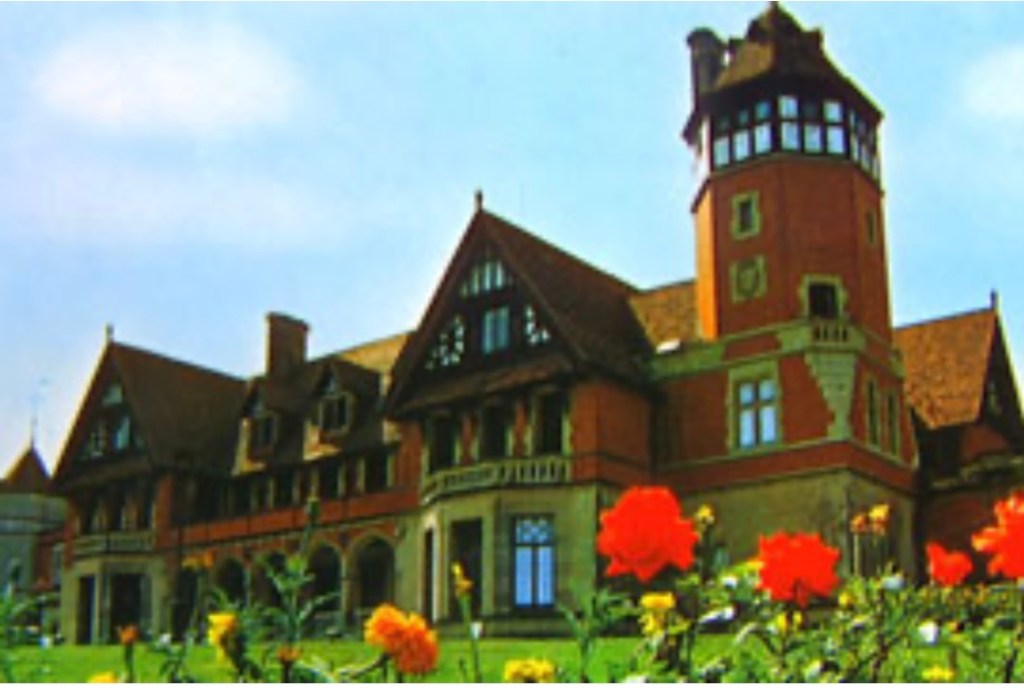
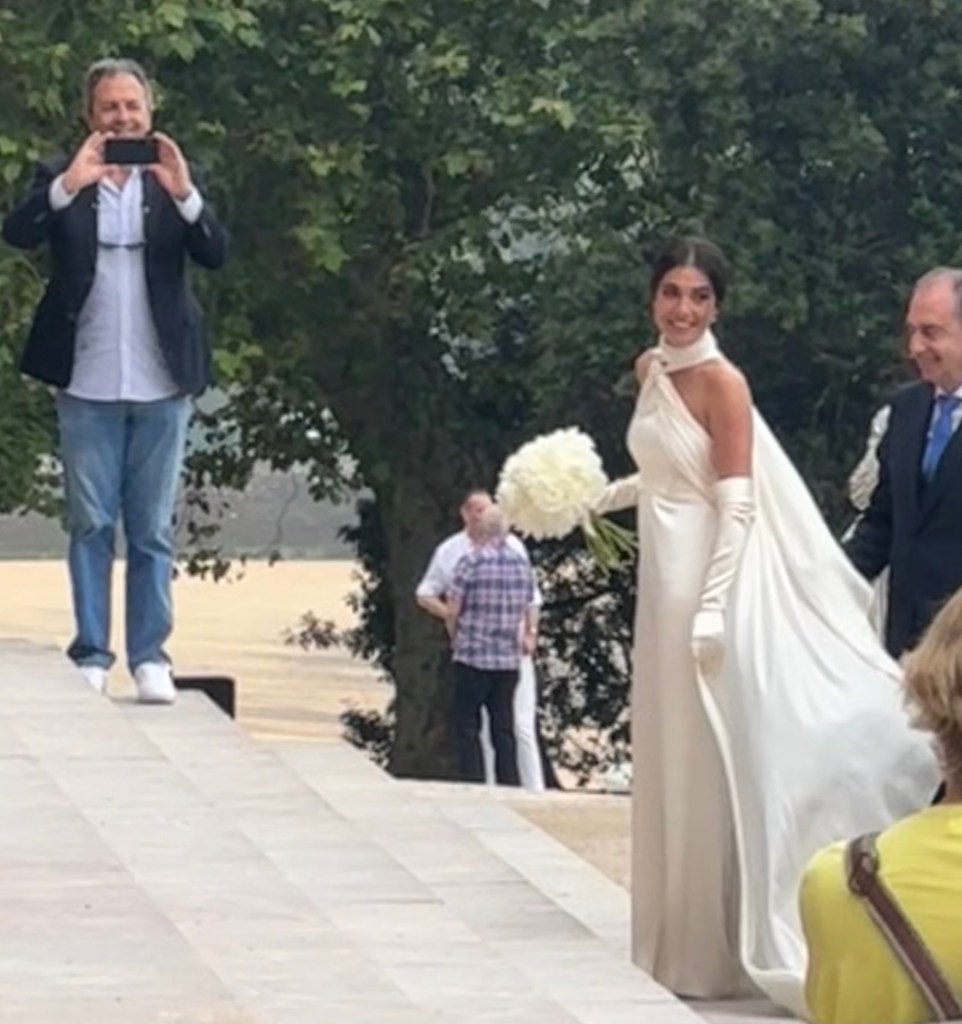
Just above Playa de Ondarreta is the Miramar Palace, the original home of Queen Maria Cristina. While perusing the grounds and gardens, a bride was arriving for her big day.
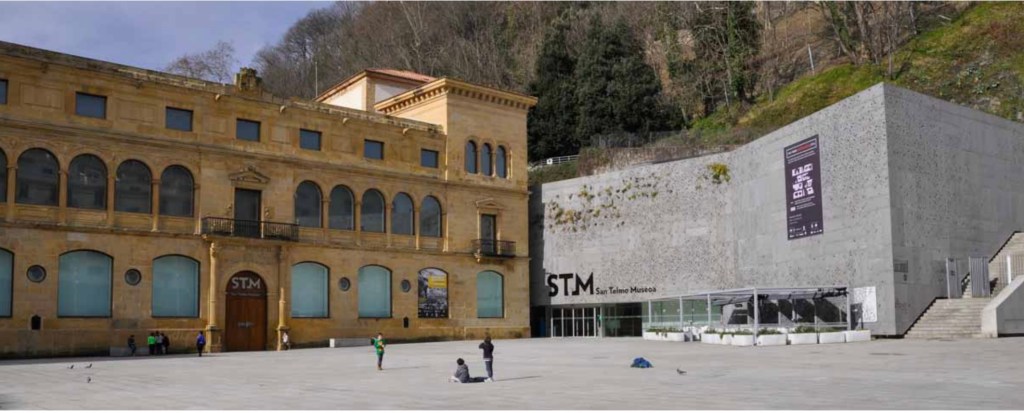
We knew Sunday would be rainy so we enjoyed an indoor day at the San Telmo , the museum on Basque society. Two connected buildings house the history of the region as well as special exhibits. It was most-helpful for synthesizing the rich Basque history.
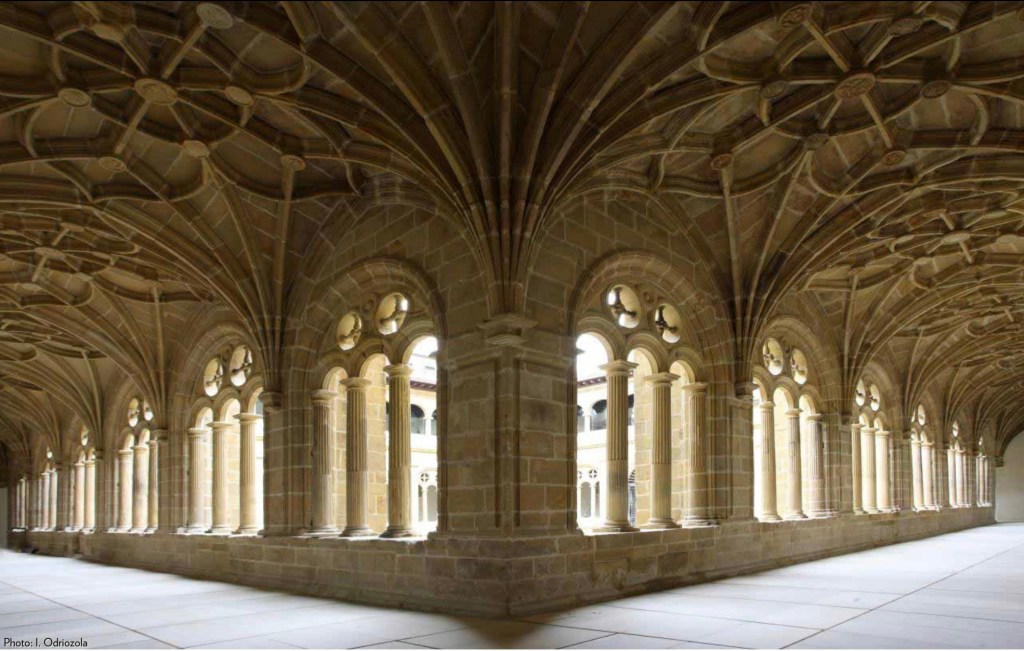
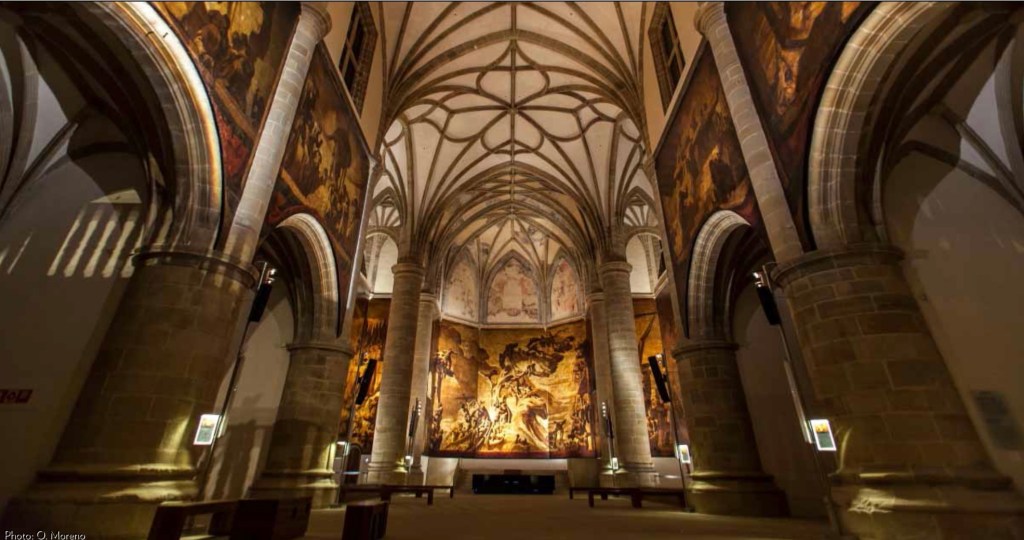
The original building was a 16th century monastery and then became military barracks. When the building became a museum, José María Sert, painted huge canvases which decorate the nave. The Sert canvasses depict scenes from Basque history and have needed a tremendous amount of restoration due to the museum’s proximity to the humid coastline.
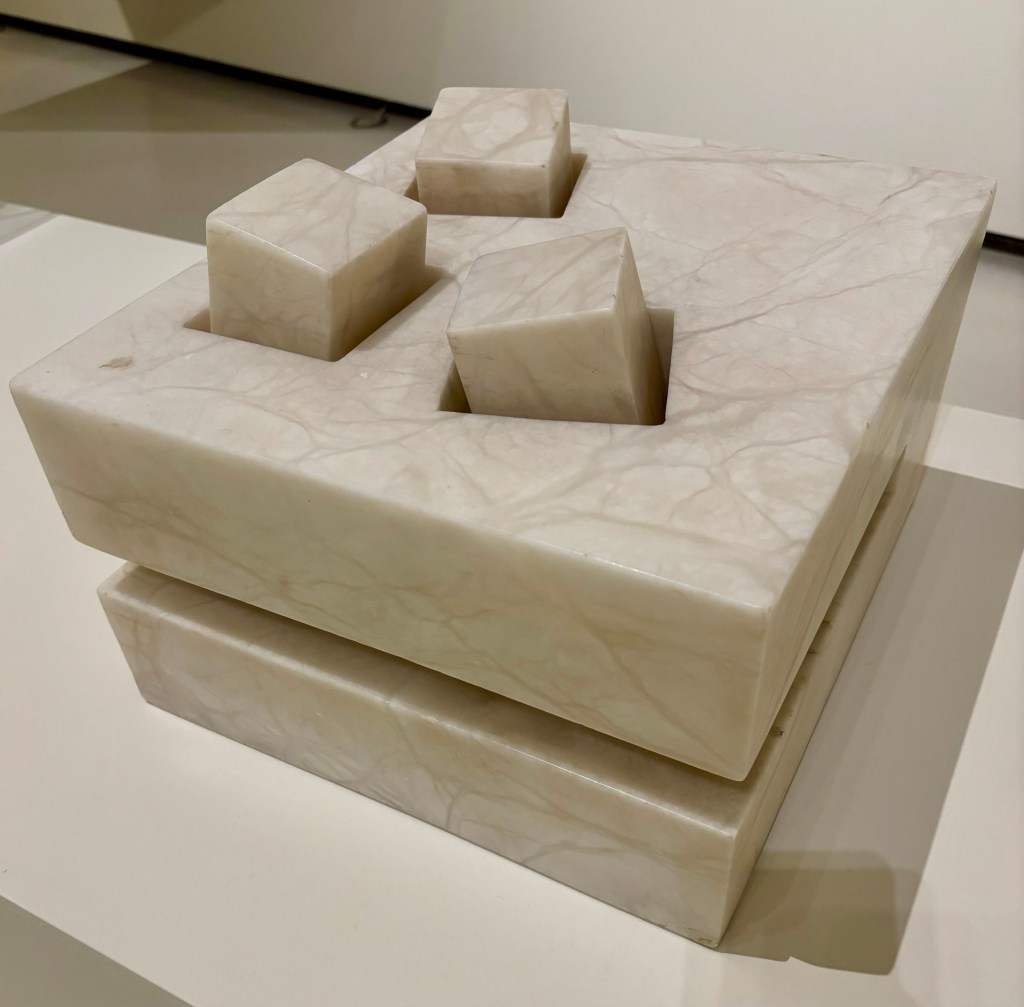
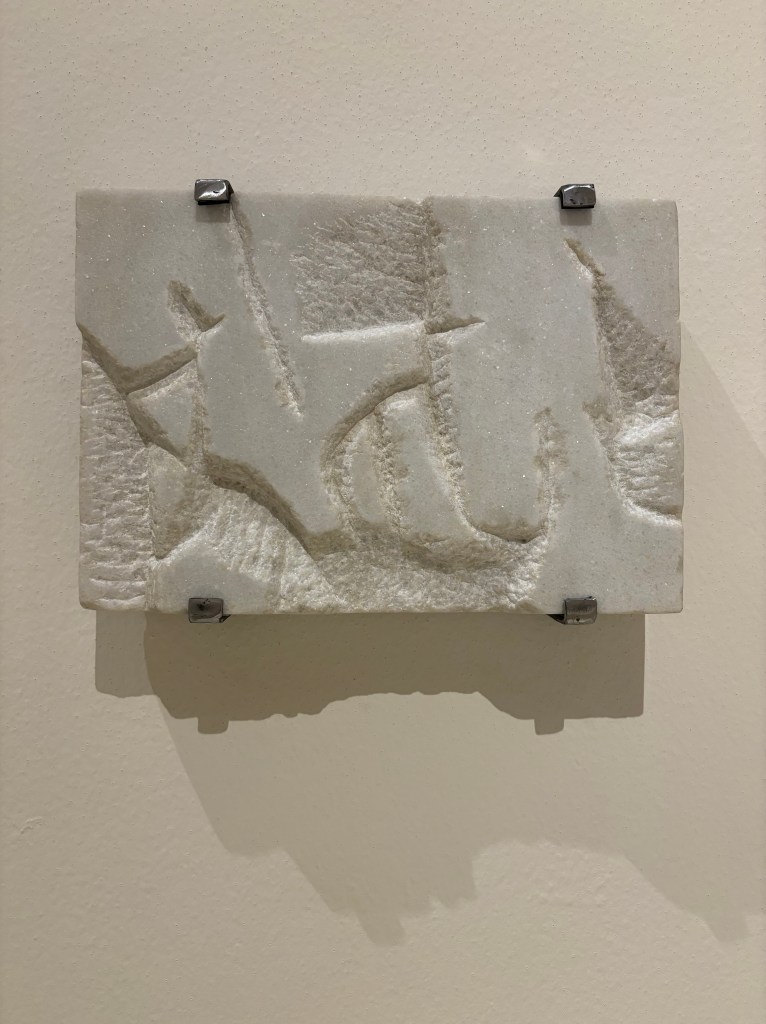
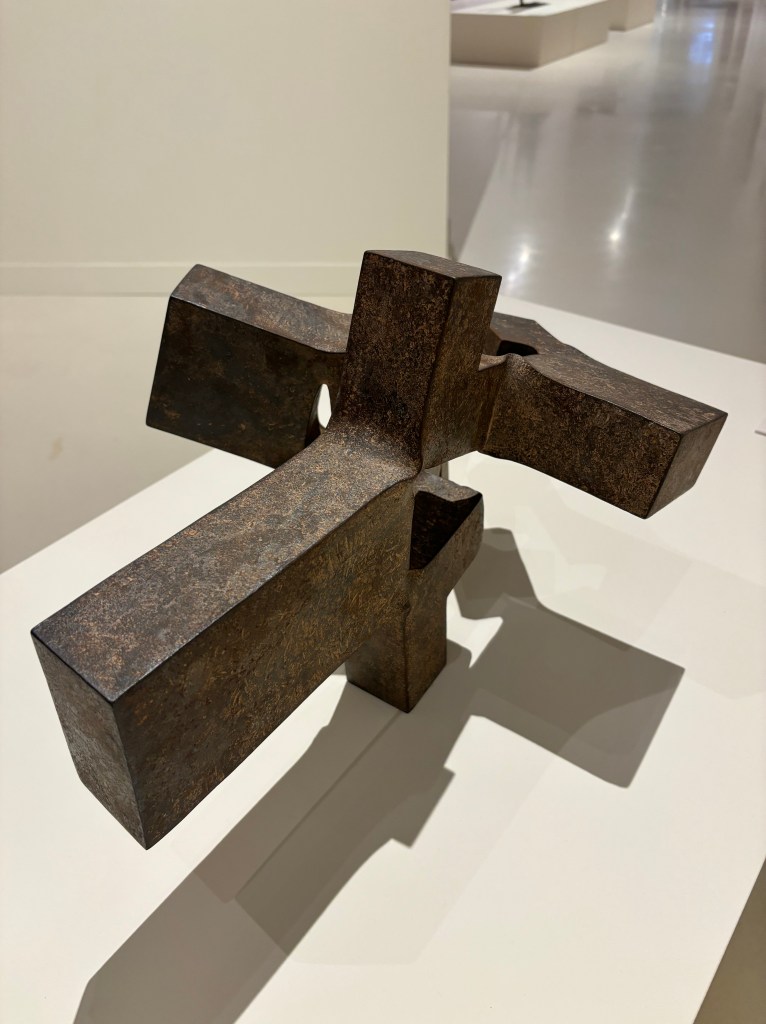
The major exhibit covered Basque history, more than 2,000 years of it. And our last look was to an exhibit of the San Sebastián’s Eduardo Chillida (1924-2002, of the Comb of the Wind installation) and other contemporary artists.
Walking around San Sebastián and window shopping has been fun. We have now gone into most of the men’s stores to find Andy some clothing since his suitcase has not been found. I managed to sneak in one purchase, a Spanish-made, sustainably sourced backpack.

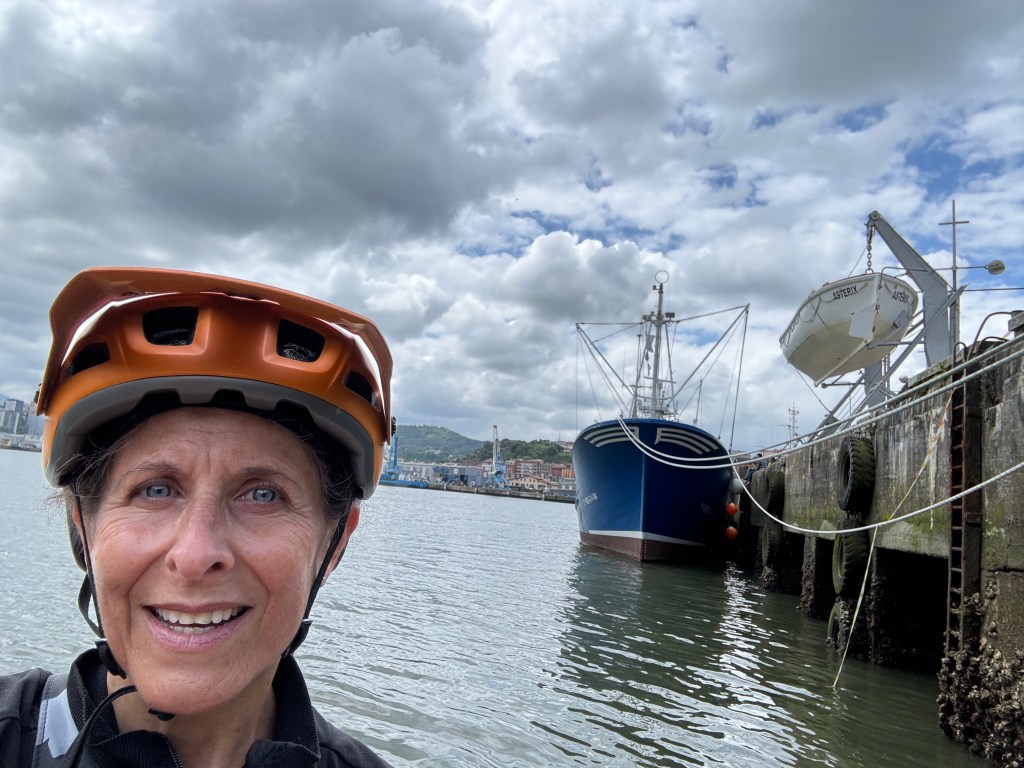
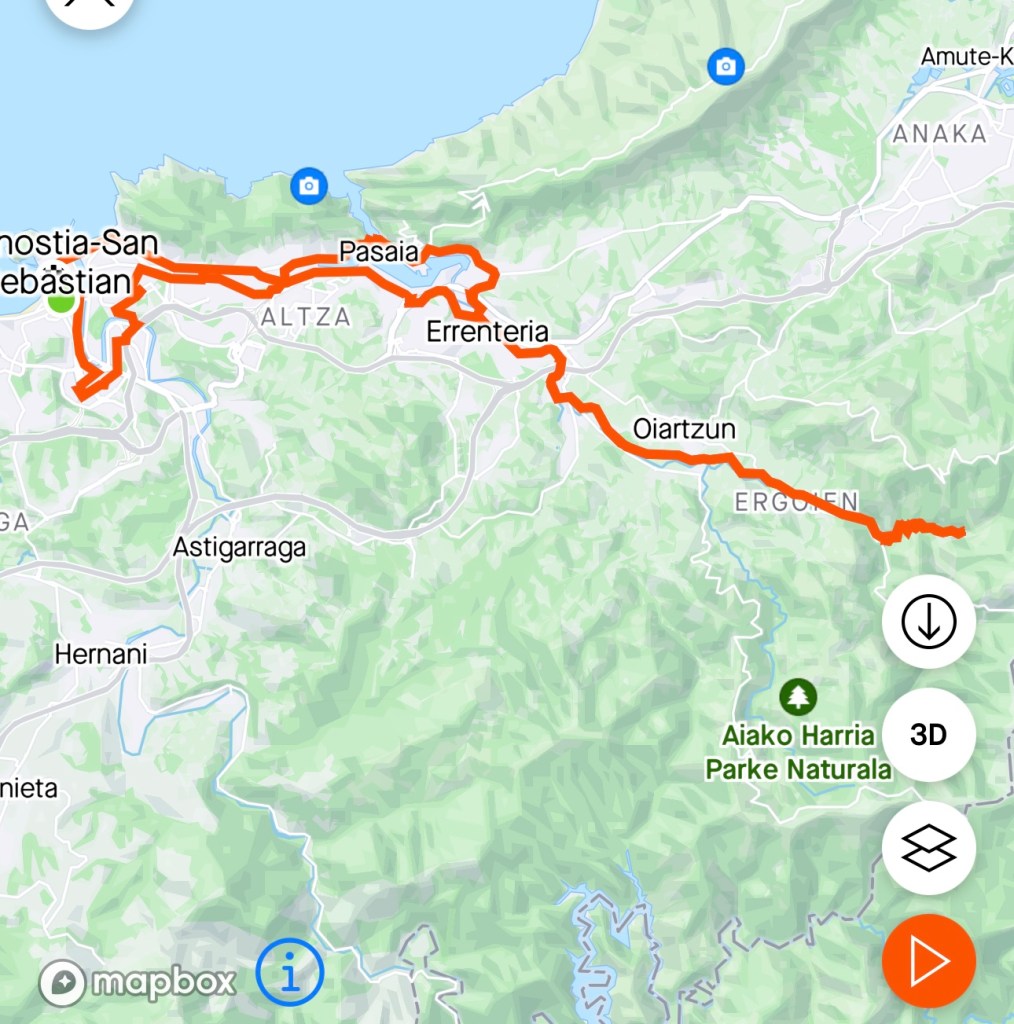
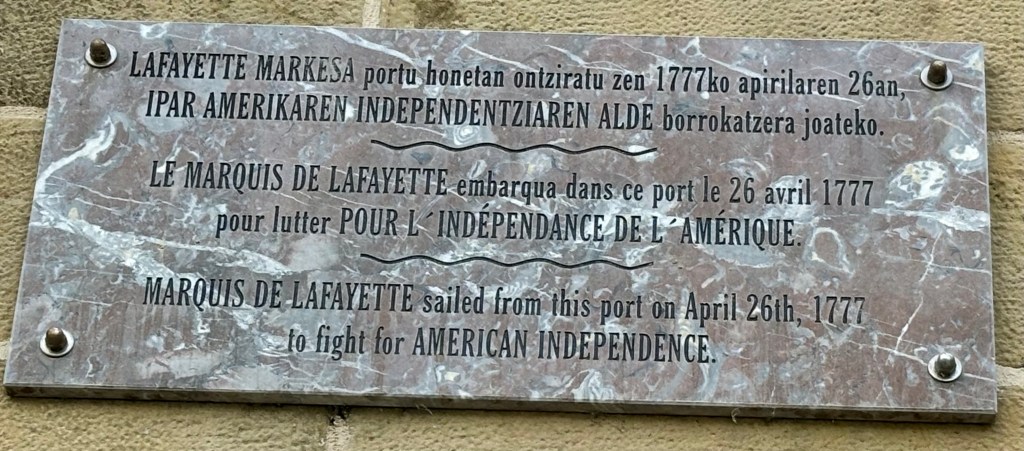
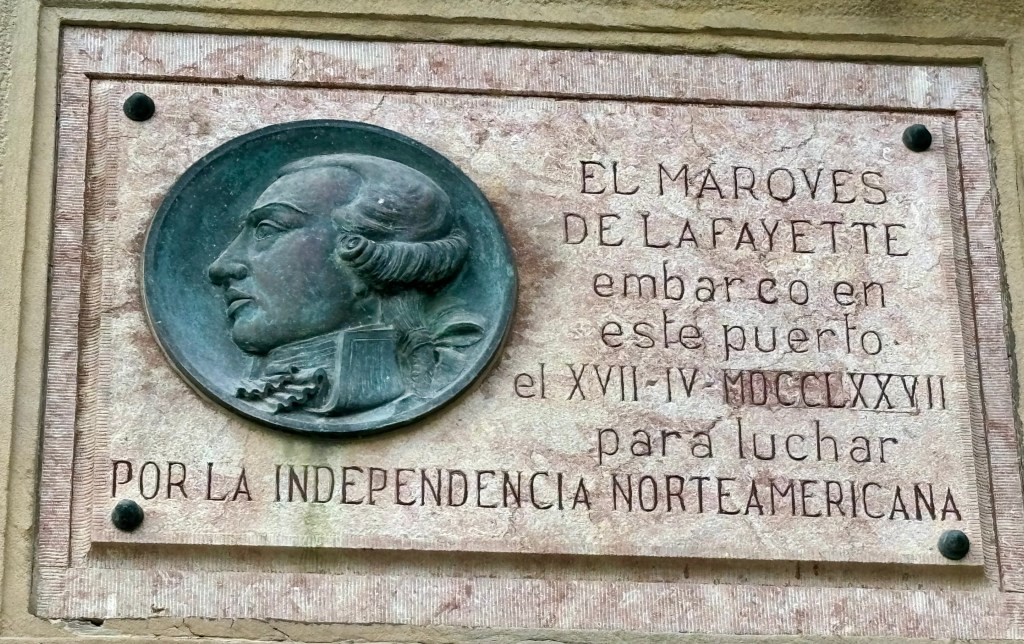
We also found a great little bike shop while wandering near our apartment. Our new friend Mateo rented us the perfect hybrid bicycles to enjoy for a week. We had a great ride on Monday (no rain!). Our first adventure was on well-marked bike lanes and included a short ferry ride before we ascended to Arditurri National Park, in Gipuzkoa, with its Roman Mines. The ferry crossing was very nice and it took us to the Old Town of Pasai Donibane where we were surprised to learn that Marquess of Lafayette, in 1777, left from there to help the Americans in the War of Independence. We also saw a house where Victoria Hugo stayed in 1853. Who knew?
Anyone who knows me (especially my running friends), knows that I can keep a conversation going. When I bicycle, I usually take up the rear and keep quiet. It’s hard to chat single file. So while on this 26 mile bike ride, all I could think about was how there is no way I would have ever spent autumn in Paris, winter in Chamonix and spring in India, Israel and San Sebastián without the sense of adventure belonging to my husband. Andy has planned almost every part of these last ten months and has worked part of every day (he is also a very good editor when I go on and on and on). The confidence Andy has in choosing a restaurant, picking a ski trail and deciding to bicycle all over a new city are just a few examples of why this year abroad has worked. I have loved going along for the ride, literally and figuratively.
More adventures to come and, as they say in Basque, Gero arte and Spanish, hasta luego!
 The Innocents Abroad, 21st Century Version