
21-24 février 2025
Dieu n’avait fait que l’eau, mais l’homme a fait le vin. Victor Hugo*
Today, read about something other than the French Alps and alpine skiing. Andy and I decided to let the Paris school vacationers enjoy the mountains and we headed out on a roadtrip.
It was a stunning drive, from Alps to driving along the Rhône River, to rolling hills — filled with vineyards. Admittedly, I am not a wine connoisseur but Andy is the oenologist in our family. I found a nice review of the Northern Rhône Valley with hotel, restaurant and tasting recommendations; Andy researched Châteauneuf-du-Pape and off we went.
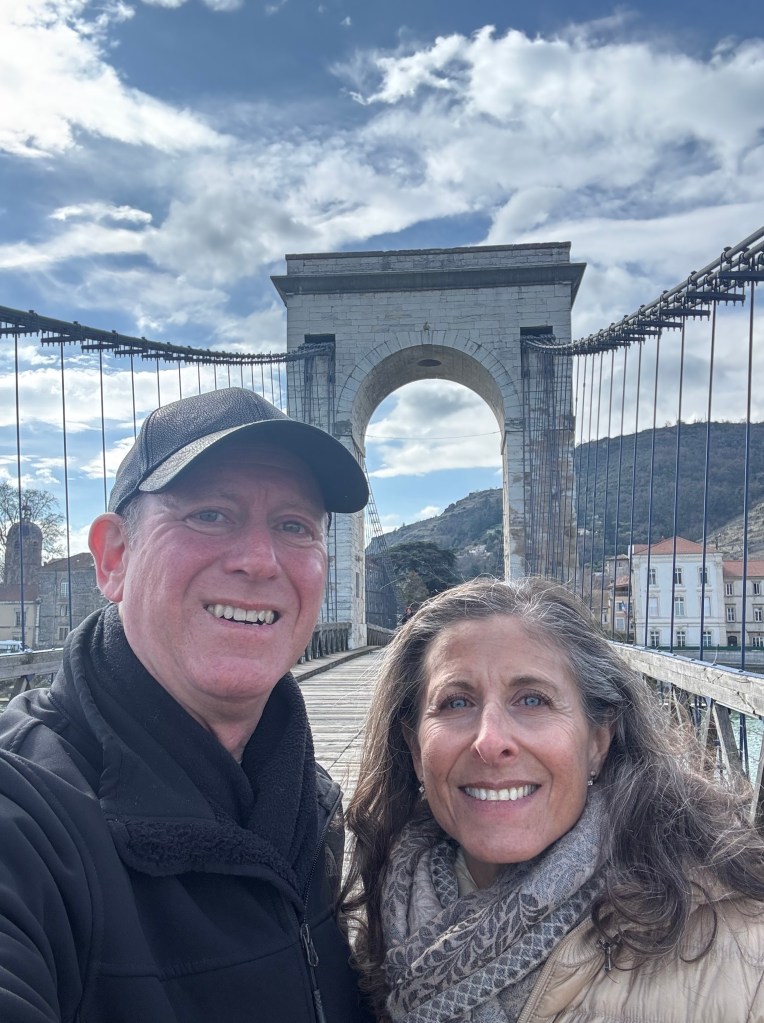
Passerelle Marc Seguin, a pedestrian bridge, over the Rhône in Tain l’Hermitage
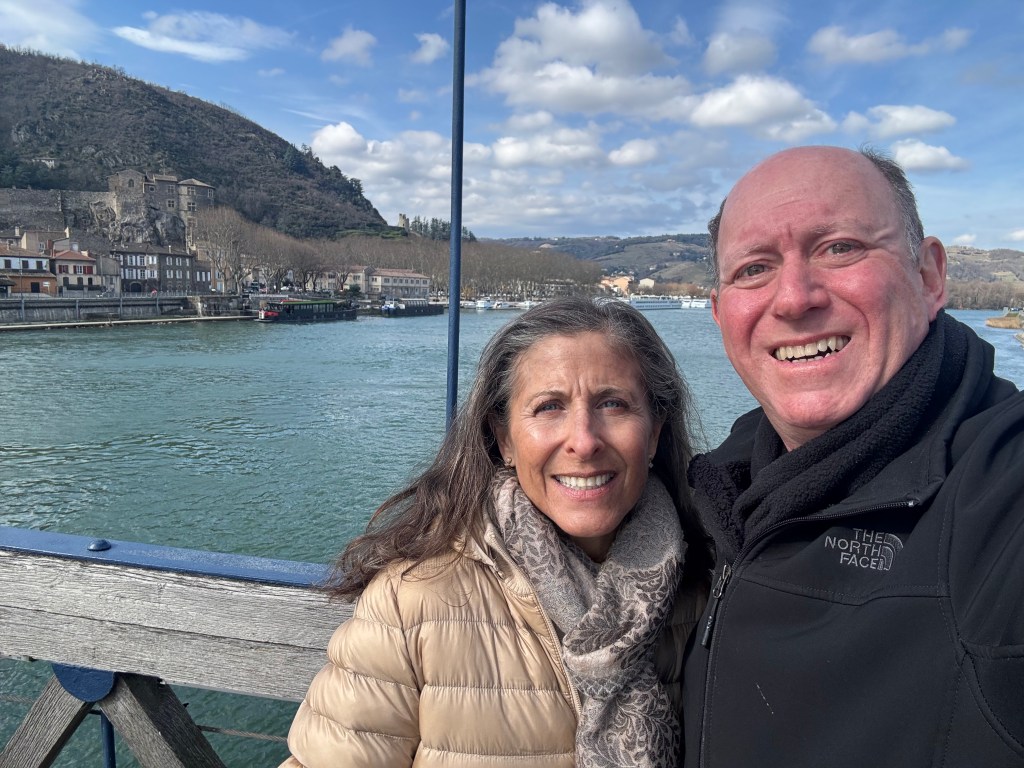
The Northern (Septentrionale) Rhône Valley is the land of syrah grapes. Our first stop was lunch in Tain l’Hermitage, a city with a population of almost 5,900 (most involved in wine or chocolate). The Rhône runs along one side of Tain and many hills of grapevines surround the area. We had lunch at Équipe Vineum, the restaurant of Domaines Paul Jaboulet Aîné (since 1834) and of course, our meal was paired with their organic wines. We also learned that the current owner and winemaker of Domaines Paul Jaboulet Aîné is Caroline Frey, who owns three French and one Swiss wine estates and manages every part of the complex process of viticulture and winemaking. And bonus, we received insider intel about a local wine fair, taking place all weekend: Salon des Vins de Tain l’Hermitage and added that to our itinerary (more about that later).

Équipe Vineum menu

As if we didn’t enjoy enough Côte-Rôtie and Saint-Joseph for lunch, we continued on our wine journey to E. Guigal where we toured Le Caveau du Château, sampled more wine and visited the château’s museum. This vineyard has been around since just after WWII but the Guigal family had a relationship with Vidal-Fleury Winery (since 1781) and for us Americans, its claim to fame was a visit by Thomas Jefferson in 1787, who stated that their wines were “justly celebrated.” The Guigals acquired Vidal-Fleury in 1984. For you wine connoisseurs, perhaps you are familiar with Guigal’s trio of most special wines, their La La La wines: La Mouline, La Turque and La Landonne. Indeed, we had a wonderful variety of wines to taste and purchase. Some, like Côte Rôtie and Crozes Hermitage were familiar to Andy; others, like Cornas and Condrieu were new to us. Guess what? We enjoyed them all.
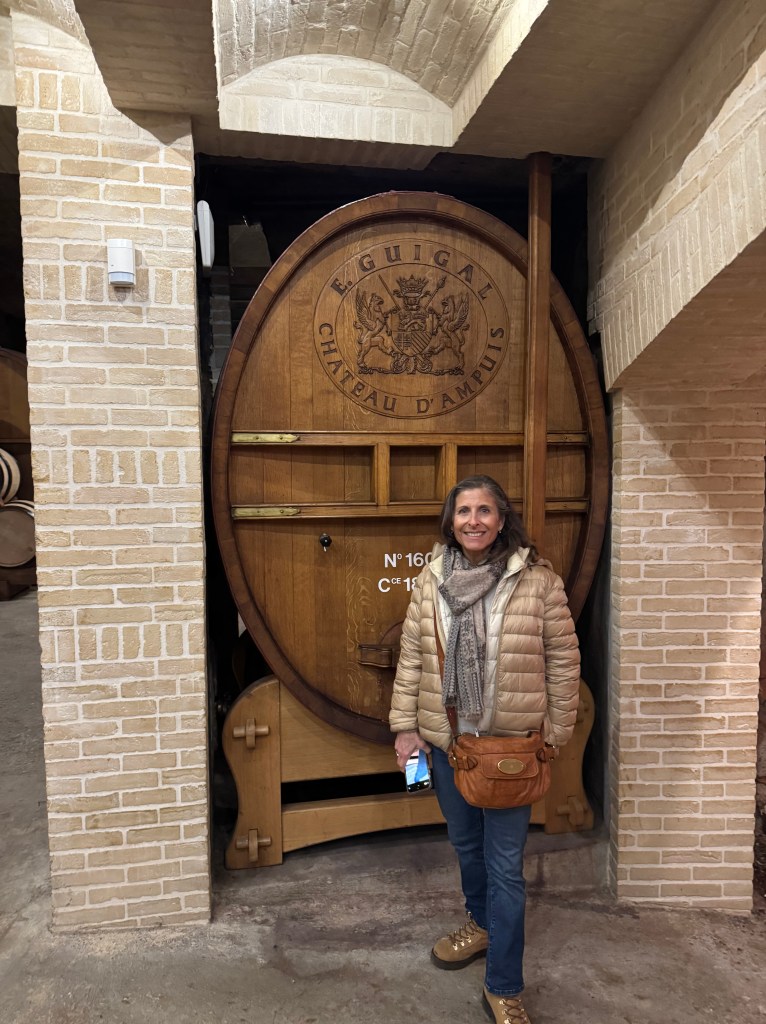
The museum was also quite interesting, displaying historical pieces related to wine and a the fabulous family collection of ancient coins, all going back to Roman times. The grapes that produce wine were first domesticated 10,000 years ago and 8,000 years ago, wine was first produced in what is now Georgia. The Greeks and then the Romans brought viticulture to the region that is now France. In many winemaking regions worldwide, the combination of climate, soil and the human touch have been critical to the success of winemaking.

We also toured Ferraton Père et Fils with a private tour of their cellars, followed by a tasting. The cellars give us a lot of information about the wine. Is the wine aged in oak barrels, steel or cement tanks? Is the wine rotated to other tanks during the aging process? Yes, yes and yes. The result of a wine’s aging process helps determine its character: floral, fruity, smoky, peppery, leathery, earthy, etc. Throughout our visits, the most common theme was the pride these vintners take in the process and the final product.

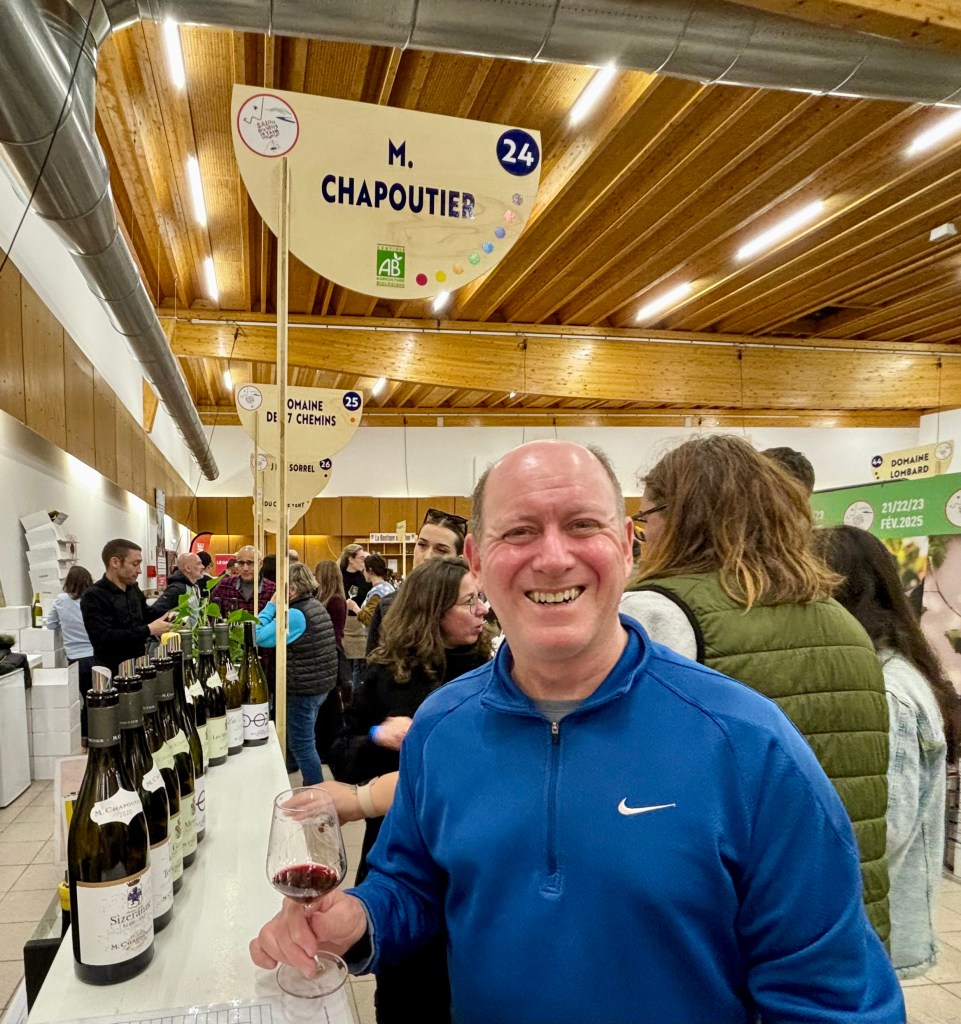
The Salon des Vins de Tain l’Hermitage was not to be missed. For the bargain entrance fee of €3, we strolled through the salon, armed with giveaway wine glasses, which were kept filled by winemakers from local small family-owned vineyards. It was so nice to speak with the actual vintners, learn about their vineyards, their best vintages and taste their wines. Some vineyards are labeled “domaine” and others “cave.” When the grapes and winemaking are single vineyard, the bottle is labeled domaine; when the grapes come from different vineyards, the origin is designated as cave. Of course, we bought more wine at the Salon. Now, we had too much wine to enjoy during our remaining time in France (through the end of March) and we began to strategize how best to ship our growing collection back to the States. We still had the region of Chateauneuf-du-Pape on our itinerary with different varieties of wine that we were looking forward to sampling. A terrific accompaniment to the wine salon was the adjacent food tent. This was not gyros and funnel cakes like back home but local offerings including olives, olive oils, cheeses, mushrooms and truffles. Andy really enjoyed his truffle ravioli.


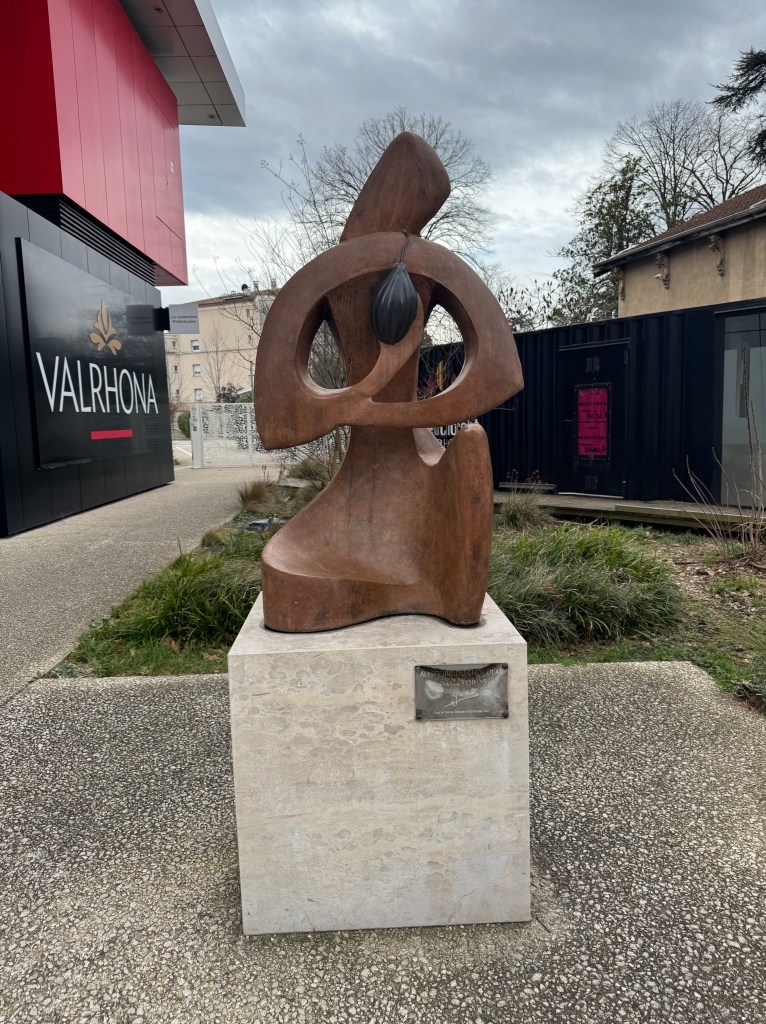
And here’s the bonus, at least for me it was. When we first drove into Tain l’Hermitage, we passed a complex of buildings labeled Valrhona (duhhhhh Rhône Valley). This is where France’s most famous chocolate has been made since 1922. Its campus also includes the École du Grand Chocolate (I want to apply) and the museum, la Cité du Chocolate. This was the perfect Saturday morning activity and as we approached the Valrhona factory, the aroma of chocolate surrounded us. With the purchase of a museum ticket, we enjoyed samples in each section of the museum, so many that even I had to put some away for later. This was the epitome of an experiential museum. We wove through many salons devoted to all aspects of chocolate making and there were many tastes and entertaining quizzes about chocolate along the way.
Chocolate making is quite complex (but totally worth it). In fact, there are nine steps to chocolate production: de-stoning/cleaning of the beans, roasting, crushing, blending, grinding, mixing, pre-grinding/refining, conching and tempering/moulding.
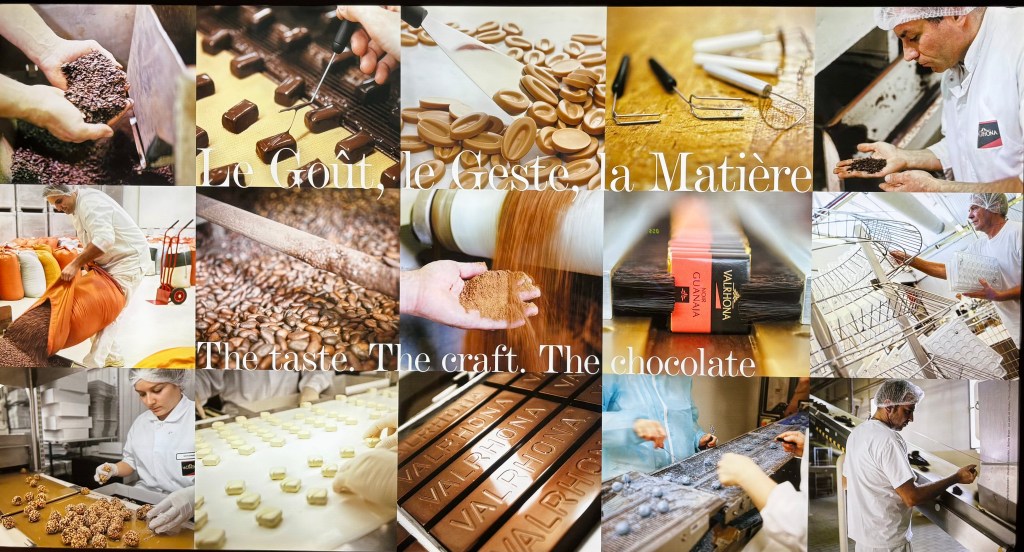
Valrhona imports beans from Central and South America and Africa, all with their unique flavor once made into the chocolates that we love. We had a taste of 100% cocoa – sadly, inedible! What makes chocolate so pleasing to the palate are the ingredients beyond cocoa such as milk, sugar, vanilla, hazelnut, caramel, tea, pepper and many more.
Chocolate is made from cocoa paste, sugar and cocoa butter and it comes in three colors: dark, white, milk and blond. As with wines, France regulates its chocolate. The type of chocolate is based on the percentage of cocoa solids and cocoa butter. And white chocolate is in fact chocolate because its composition includes cocoa butter but no cocoa mass (aka cocoa solids). Blond chocolate is a newer variety of chocolate, made with caramelized cocoa butter, giving it a caramel color (this has not yet been classified with French regulations, but was created at Valrhona) and it is delicious.

The oldest traces of cocoa were found in Ecuador, 5,300 years ago. And, to piggyback on our autumn in Mexico City, we know that Moctezuma II served Hernán Cortés a cocoa beverage called xocoatl. Cortés wrote to King Charles V of Spain “Cocoa beans are like almonds. Indians use them as currency and to make a beverage making the body stronger and preventing fatigue.” Needless to say, Cortés brought cocoa and the xocoatl recipe back to Spain in 1528. In 1615, Anne, the 14 year old daughter of King Philip III of Spain, introduced chocolate to France, as a wedding gift to her fiancé, Louis XIII. It was an instant hit with the nobility of France and the rest is history.
For more chocolate tidbits, see Valrhona’s blog:
https://www.citeduchocolat.com/fr/notre-blog
Châteauneuf-du-Pape (The Pope’s New Castle)
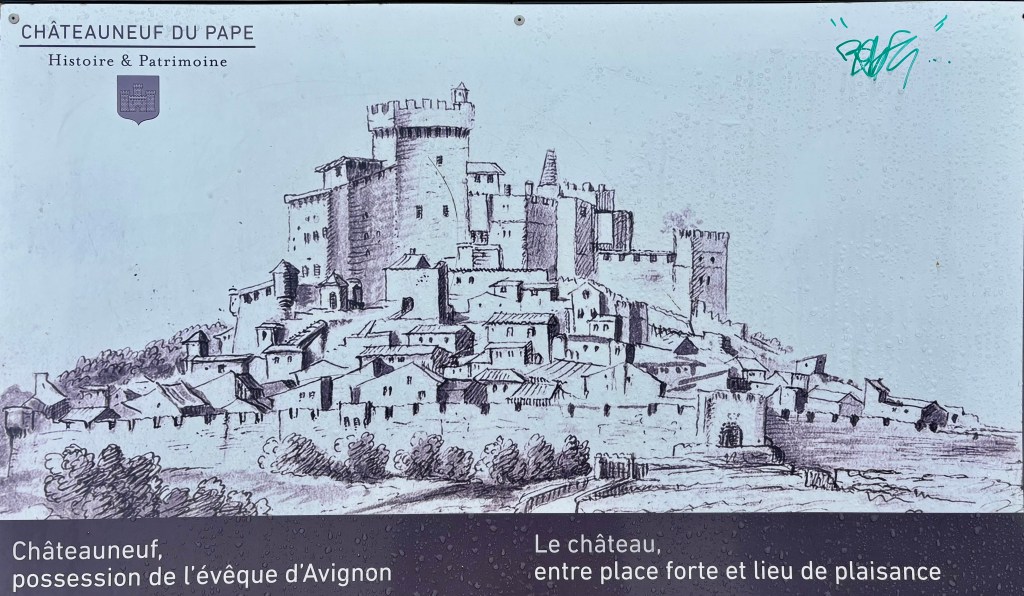
We arrived to the beautiful commune of Châteauneuf-du-Pape where Andy found us the lovely Hotel La Mère Germaine. Signs of spring were everywhere with buds and flowers beginning to bloom; however the area was unusually quiet. Yes, it was off-season but there was practically no activity as we meandered the streets. Turns out, it was school vacation time in this region of France as well. Perhaps the families of Châteauneuf-du-Pape were off skiing in the French Alps! Walking through this quaint village, I felt as though I was in a Cézanne painting, the rooftops reminding me of the artist’s cubist landscapes.
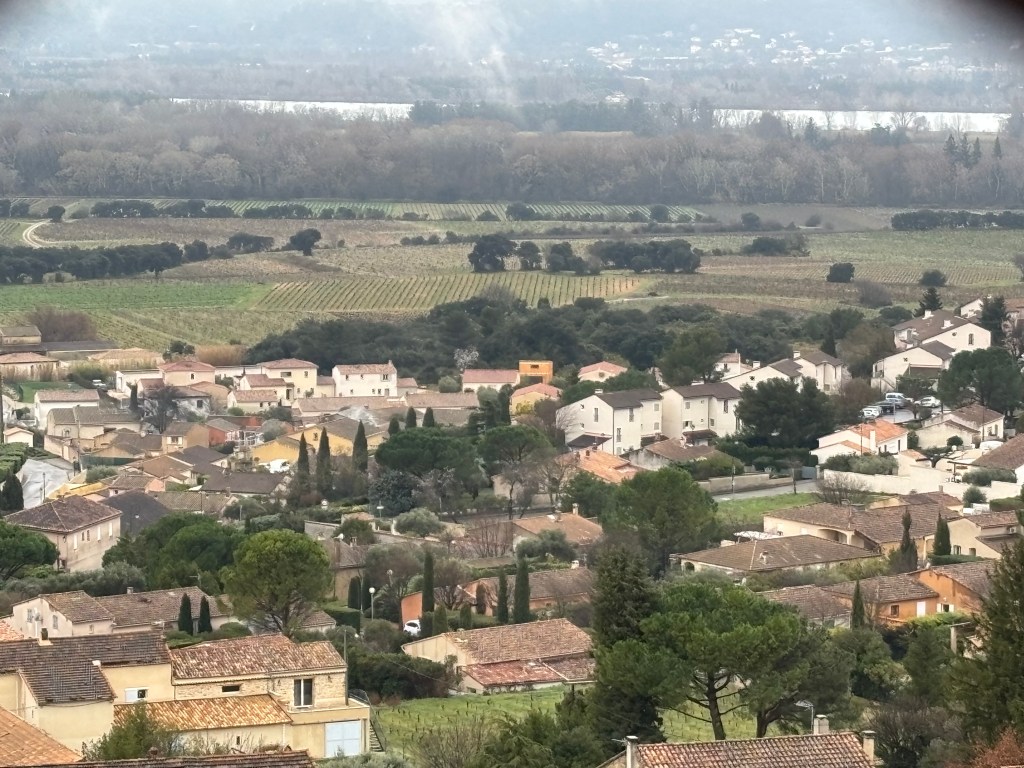

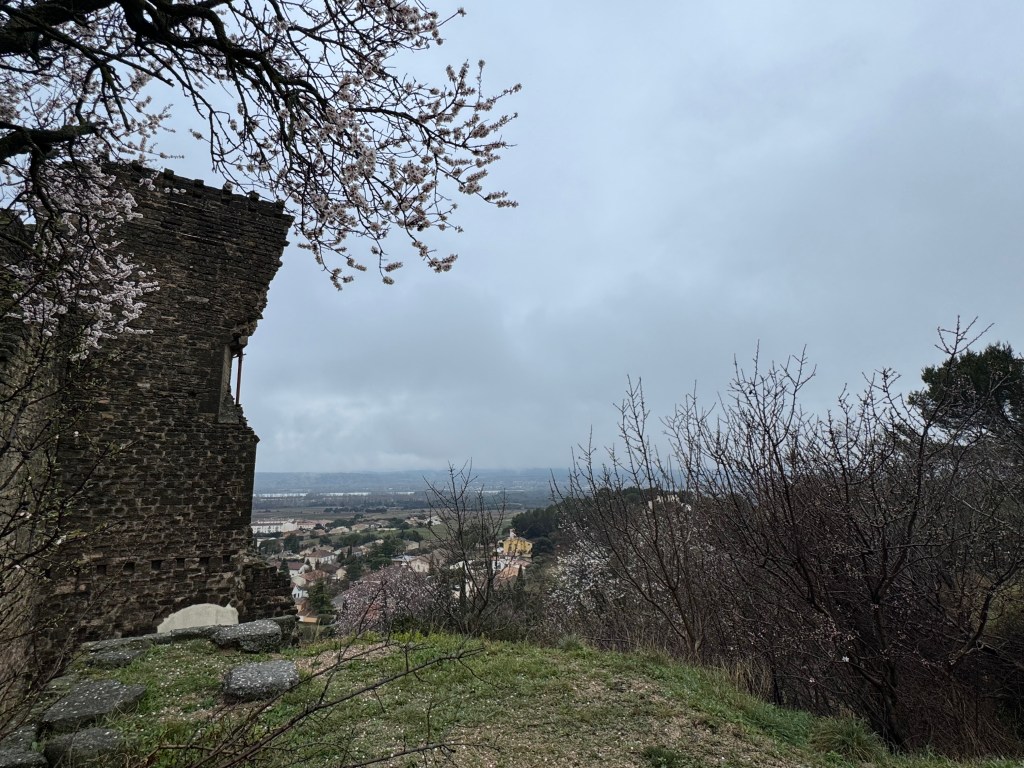
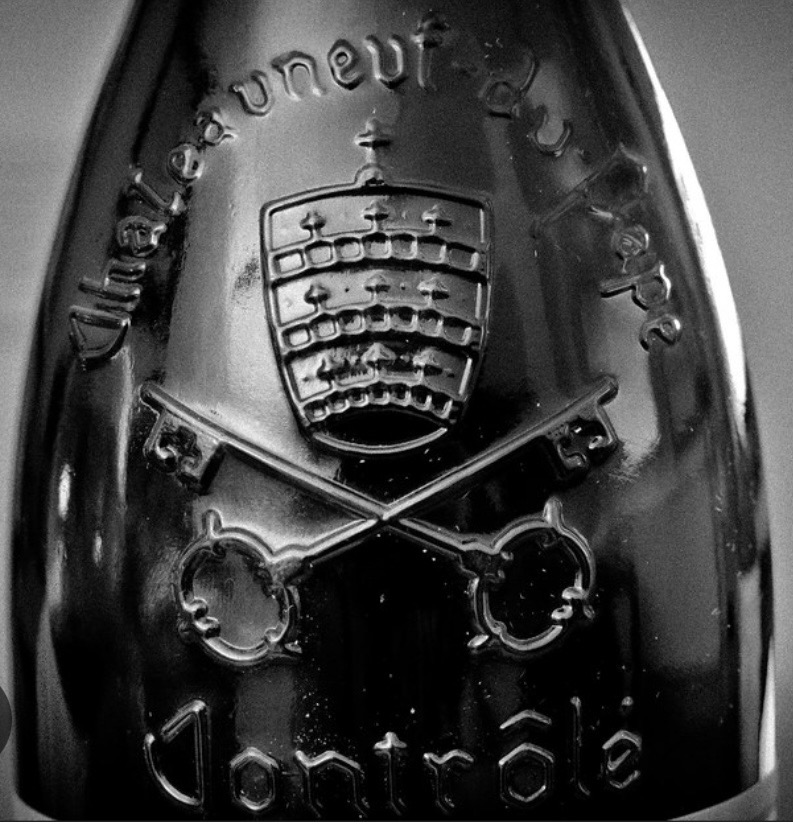
This region, just 90 minutes (80 miles) south of Tain-l’Hermitage has a completely different terrain and a Mediterranean climate. Its name came from the Babylonian Captivity (1309-1376), when Pope Clement V relocated the papacy from Rome to Avignon, and where the next six popes held court. These French popes loved their burgundy wine and influenced and improved the winemaking in this region. Pope John XXII, (also known as Bishop Jacques Duèze) built the castle and resided in Châteauneuf as opposed to Avignon. Once the palace was constructed in Avignon, the Châteauneuf palace was used as a fortress as it is perched at the top of a hill. Its ruins are the highlight of the landscape and we had an early morning hike up the hill to take in the view and get a little history. In 1563 Châteauneuf-du-Pape was occupied by the French Protestants, known as Huguenots, during the Wars of Religion (between Catholics and Huguenots, 1562-1598). What was left of the structure was not affordable to upkeep and its stones were dismantled and used in construction of other buildings in the village. Fast forward to World War II; the Germans used the area as an observation post until the end of the war when they destroyed part of what remained, leaving its southern wall. To this day, most bottles of wine from Châteauneuf-du-Pape have papal regalia and insignia on their bottles.

While many domaines and caves were closed for holiday, we had a super experience at Maison Brotte and its eponymous Wine Museum, followed of course, by a tasting in which our sips were paired with local confections such as nougat, dark chocolate-covered almonds and marzipan. The Brotte family has been producing wines since 1931 and the museum told the story of the region’s heritage and a lot about winemaking. While there are more than ten thousand varieties of wine grapes worldwide, eighteen of them can be used to produce this region’s wines which are 84% red, with the most prominent grape as Grenache noir. The mistral winds dry out the air and the vines are surrounded by galets roulés, pebbles that protect the four types of soil during summer’s intense heat. During the winter, the proximity of the Rhône River prevents the vines from freezing. So many factors contribute to the success of each year’s wine output. We found two more neighborhood spots to buy more wine and thankfully, we were just around the corner from a Mailboxes Etc. which happily shipped our souvenir wines back to the States. Most will be at their best vintage ten to fifteen years from now. Do we dare wait or is anyone ready for an “Open that Bottle” night?
We had two lovely dinners while in the Châteauneuf-du-Pape region. One was in the village of Tavel, at La Courtille which was in a converted silkworm farm. Chef Natalia Crozon seemed to keep popping out of the kitchen to greet her patrons, most of whom seemed to be locals as we saw the familiarity of hugs and kisses (three, from cheek-to-cheek-to-cheek). The dining space was filled with families, kids running up and down like they were at home and even a few dogs on diners’ laps or playing with the kids. The food and wine were outstanding and it was so much fun to be part of this lively scene.
We also dined at our hotel’s more moderately priced restaurant, Le Comptoir de la Mère Germaine (the hotel also boasts a Michelin Star restaurant, La Mère Germaine). I must admit, it is hard to refrain from ordering a bottle of wine with dinner in these parts, after all, we were now so educated, but by the end of the weekend, a glass of local wine was just enough to accompany a delicious meal. With all the samplings and museums and wine cave tours during the three days in the Rhône wine region, I am no more able to discern or rate wine or distinguish whether the aroma is apricot, floral, peppery, berry-like, vanilla or honey-flavored, but I thoroughly enjoyed the many sips (and chocolate) as well as the rich history of the Rhône coast.
*God made only water, but man made wine. Victor Hugo
Next post: back to Les Alpes with friends.
À bientôt!
🍷🍫🇫🇷
 The Innocents Abroad, 21st Century Version