Seventh Post from Mexico City
12/11 – 12/29/2024
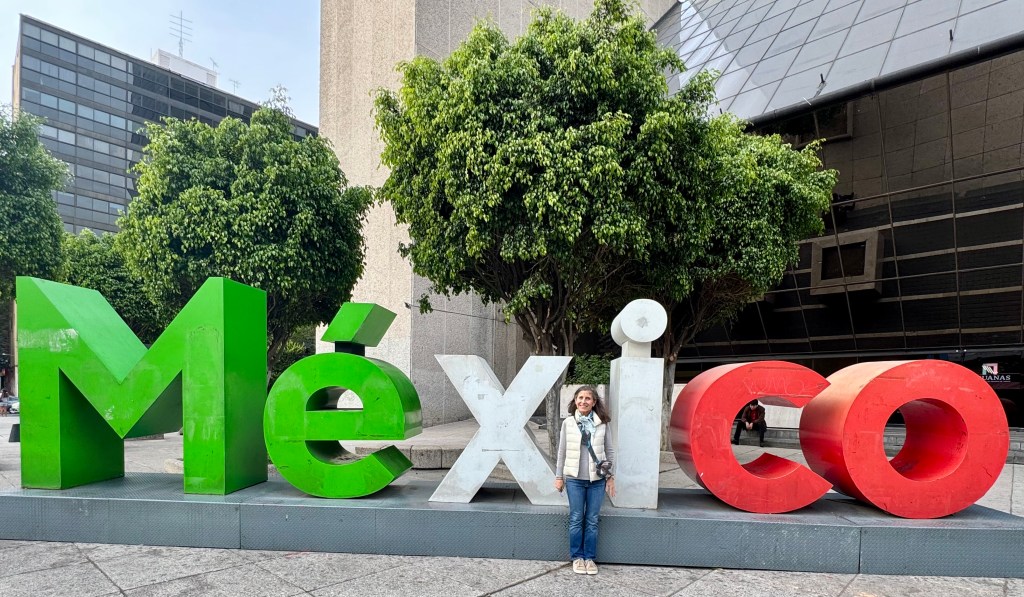
Writing this entry as we celebrate both Christmas and Chanukah is very meaningful. In the eight weeks that we have been in Mexico, the influence of the church has surrounded us. Almost eighty percent of Mexicans identify as Catholics and wherever we visit, we have learned a bit more about how the Spanish colonizers evangelicized this huge region of indigenous people to Catholicism. New Spain also followed in the footsteps of (old) Spain with an Inquisition (1571-1820) that mostly impacted its Portuguese-Jewish immigrants, some of whom became Crypto-Jews and risked arrest, trial and execution. For the indigenous people of New Spain, the Franciscan, Dominican, Augustinian and Jesuit orders came to convert the population by shifting Christian-friendly indigenous beliefs and traditions into Christianity. Dia de los Muertos is a perfect example; the pre-Hispanic tradition of honoring the dead was eventually moved to coincide with All Saints’ Day. As long as a native tradition did not conflict with Christian ideology, it could be incorporated into Christianity, helping to win over the people. Furthermore, the miracle of the Virgin of Guadalupe (1531) convinced the people that the Virgin Mary appeared in Mexico and has (since 1737) been the patroness of Mexico and Empress of the Americas, all the territories of New Spain. More on that down the page!
We have kept very busy during the month of December. We have had guests, met friends of friends and family of friends. And, not wanting to miss anything, I have been checking off my still-to-do-list before we depart on December 31st.
Friends
We enjoyed meeting our dear friend Ana’s brother, Carlos for two terrific meals and great company. We have enjoyed discussing the Mexican view of both Mexico and the U.S. The Mexican view of Mexico, politically speaking, is varied but the Mexican view of the U.S. is fairly consistent.
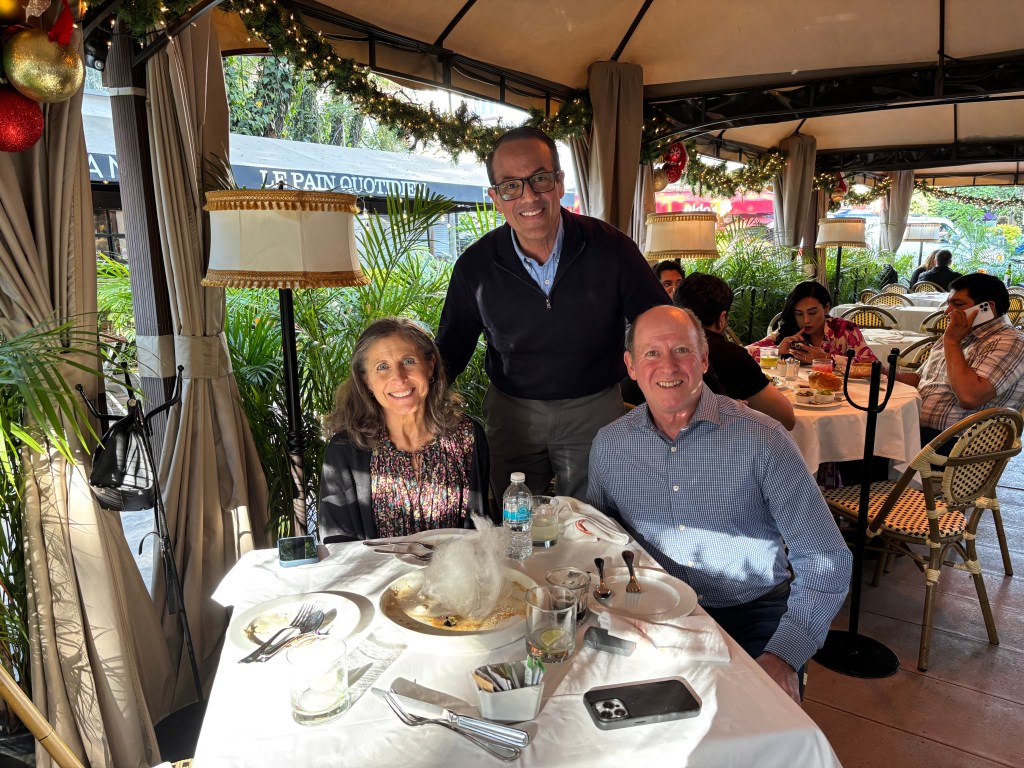
On Christmas morning, we took a quiet walk to meet my cousin Linda’s friend, Debbie and family, who are celebrating Debbie’s birthday in CDMX.
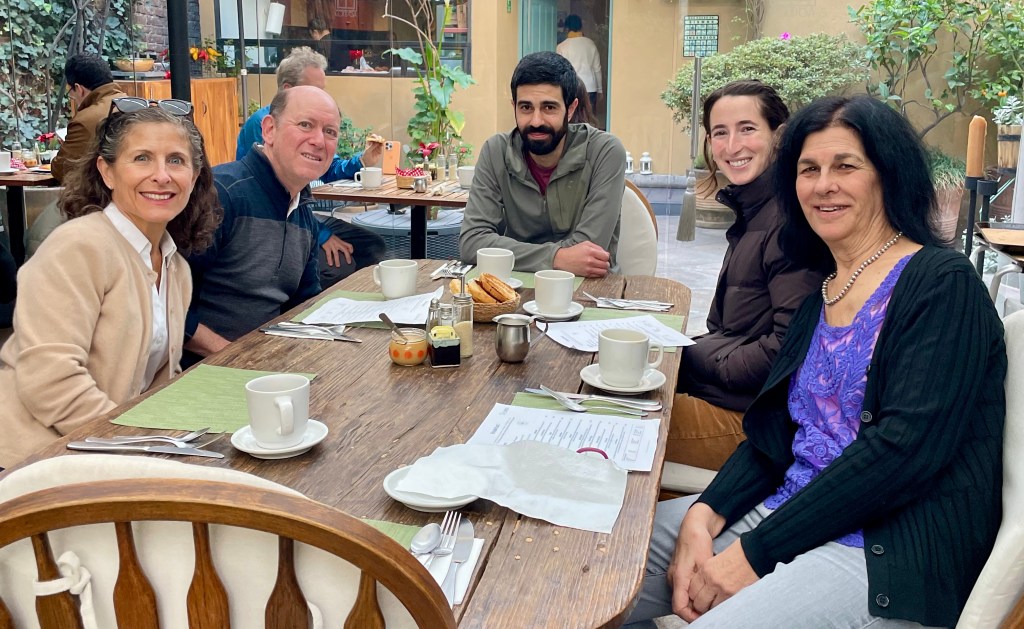
And we loved our long weekend with Pam and Doug. We happily repeated some of our favorite places with them and explored some new ones as well.
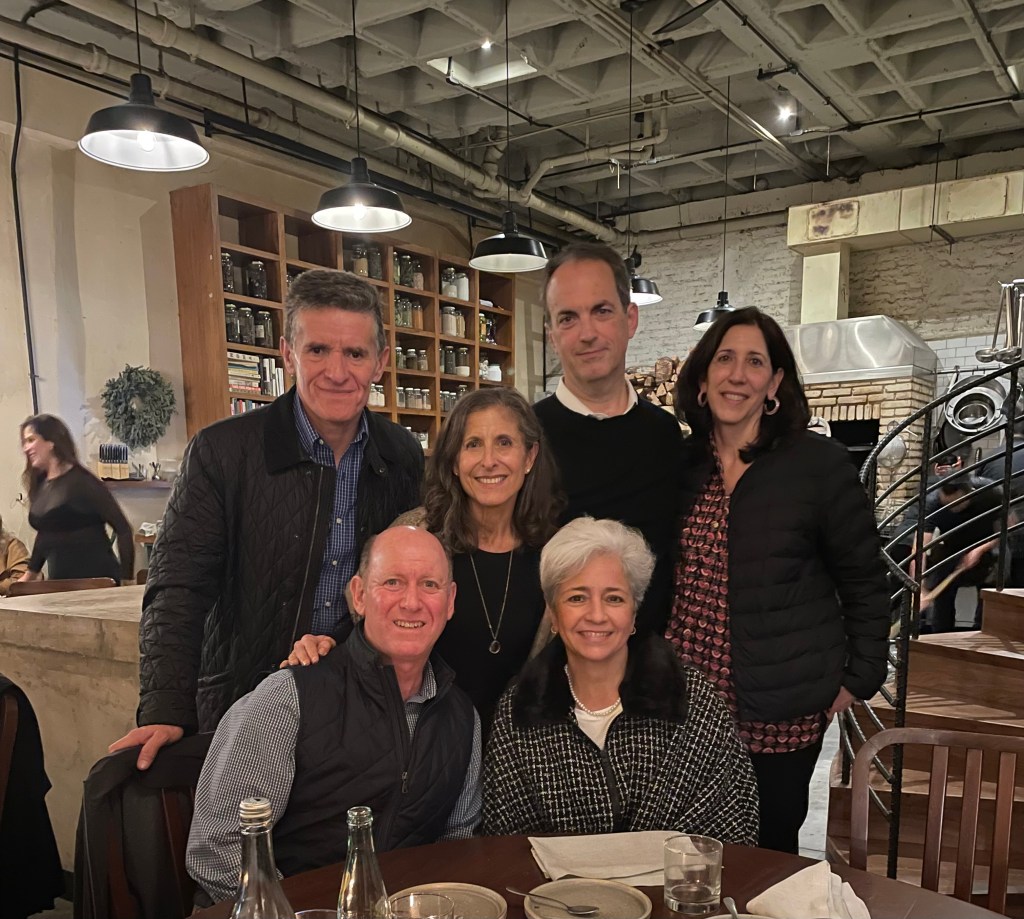

Exploring More Museums
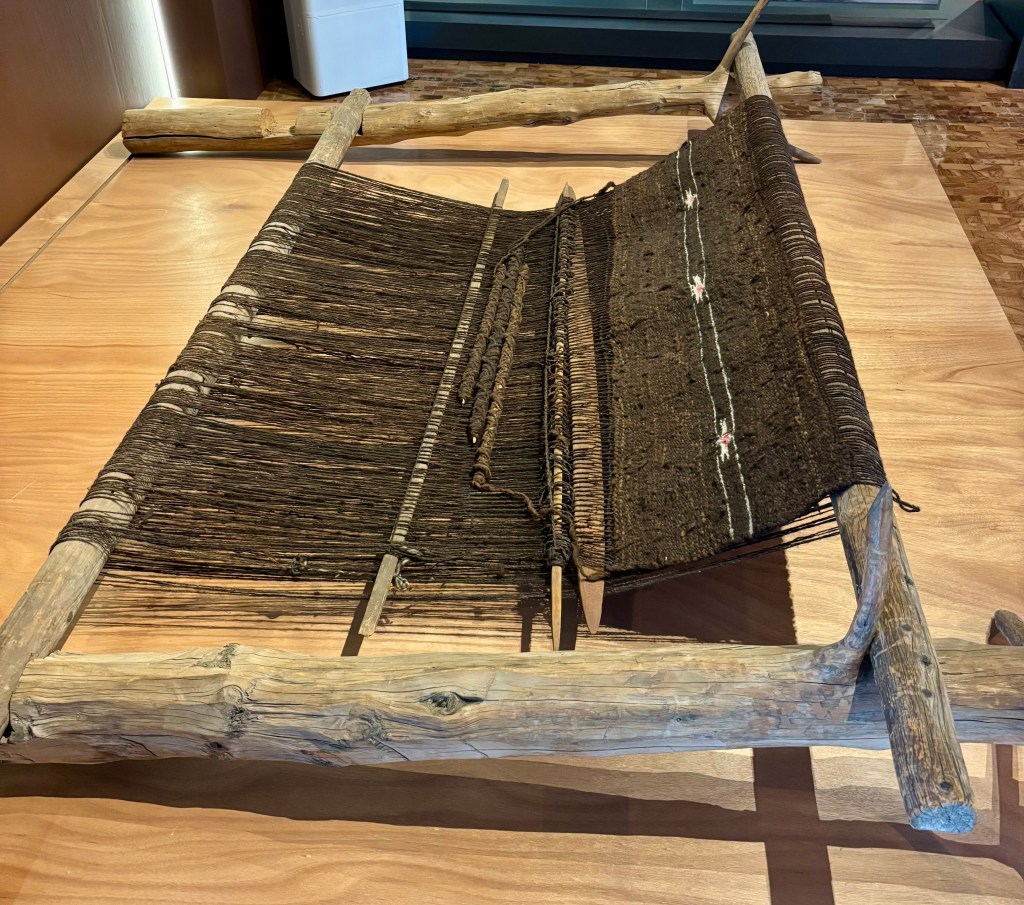
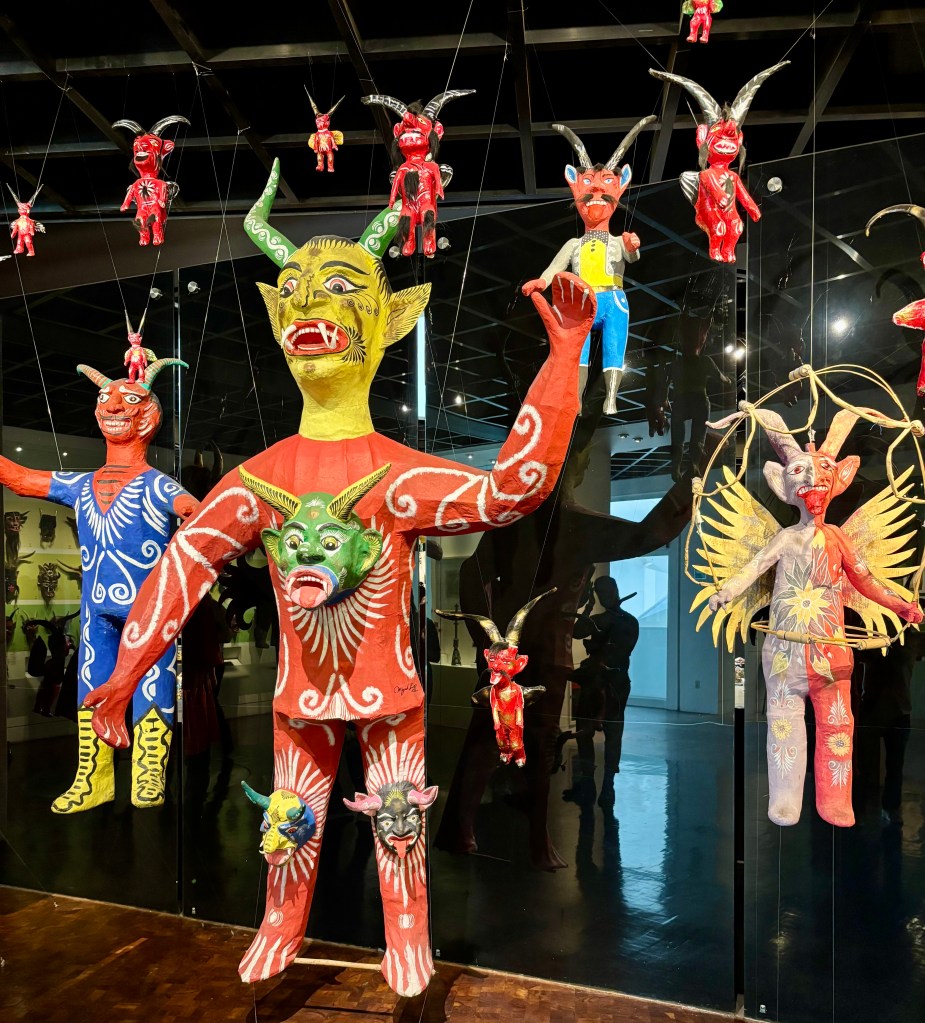
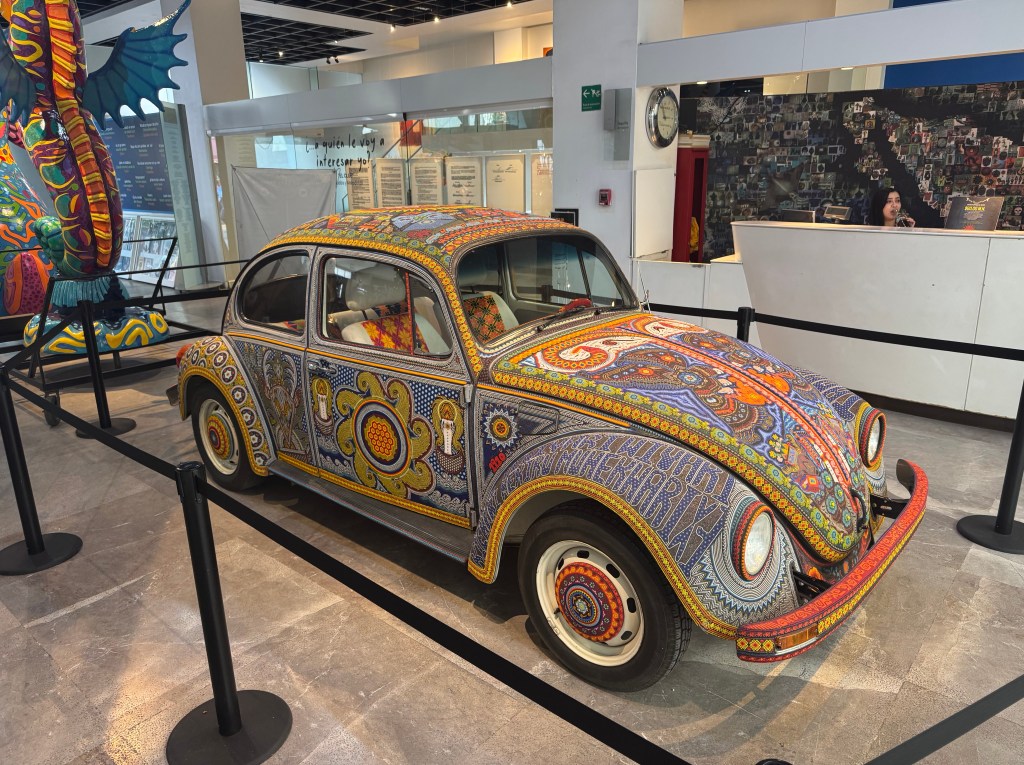
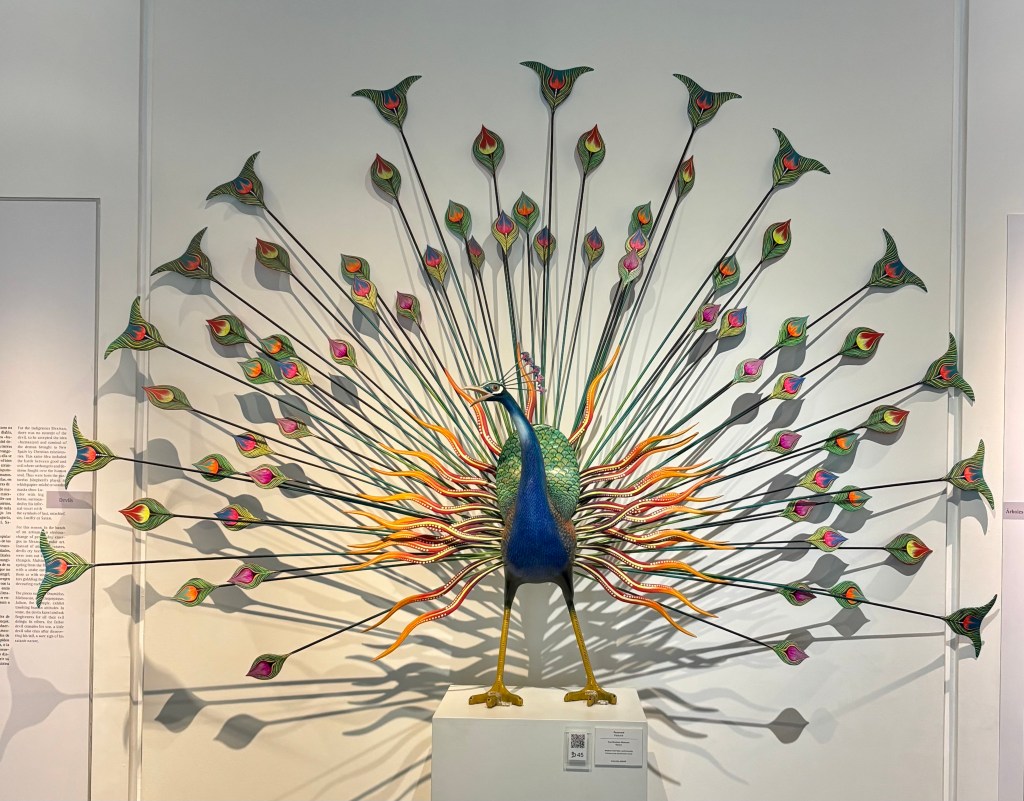
After a morning in a previously unexplored section of the Museo Nacional de Antropología (MNA), we shifted gears (but remained faithful to a day of museums) and visited the Museo de Arte Popular (MAP). What these museums have in common is a celebration of what makes Mexico so unique and colorful. Here are some highlights.


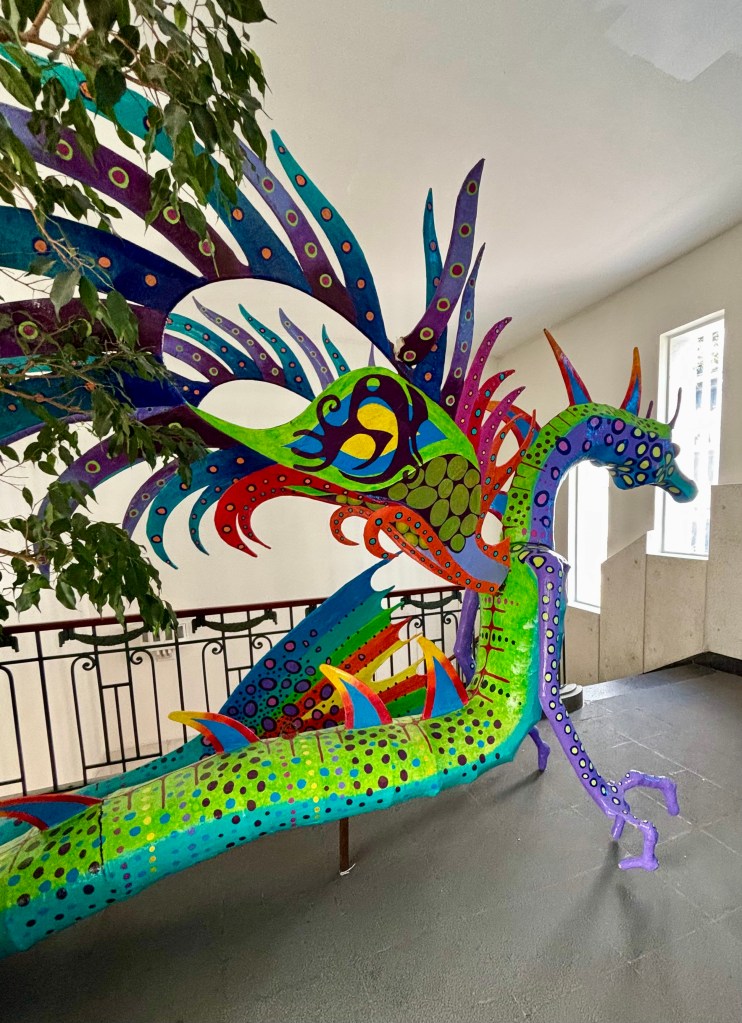
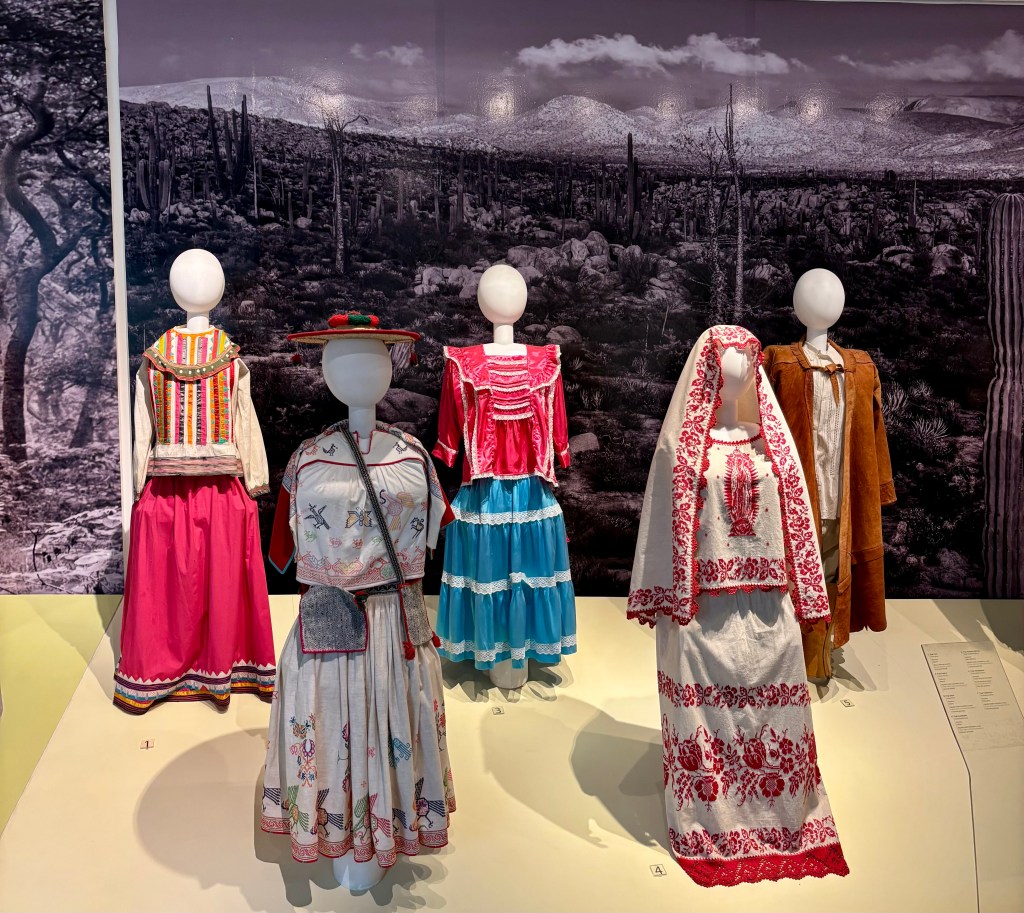
Pujol


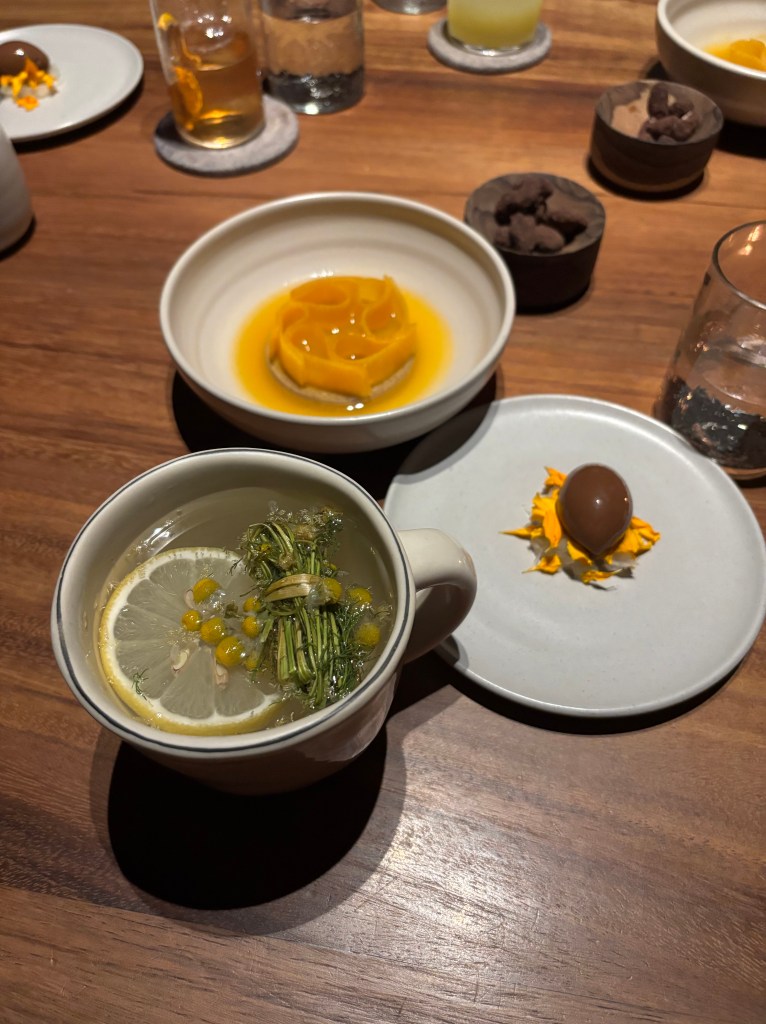
Andy worked on getting a reservation at this Michelin Two Star restaurant as soon as we arrived to Mexico City. Pam and Doug agreed to the splurge and we enjoyed Enrique Olvera’s seasonal tasting menu. It included Pujol’s famous mole madre, which was 3,582 days old – that’s almost ten year’s old (some things — and people — get better with age). And as you may know, cilantro is an herb that is a staple in Mexican cuisine and you may also know, to some folks (like me) cilantro tastes like soap. While it’s not an allergy, omitting cilantro is a preference. I hope I have not insulted any chefs! The meal was wonderful and a true culinary highlight.
Another day at Teotihuacan with the addition of Basilica de Guadalupe
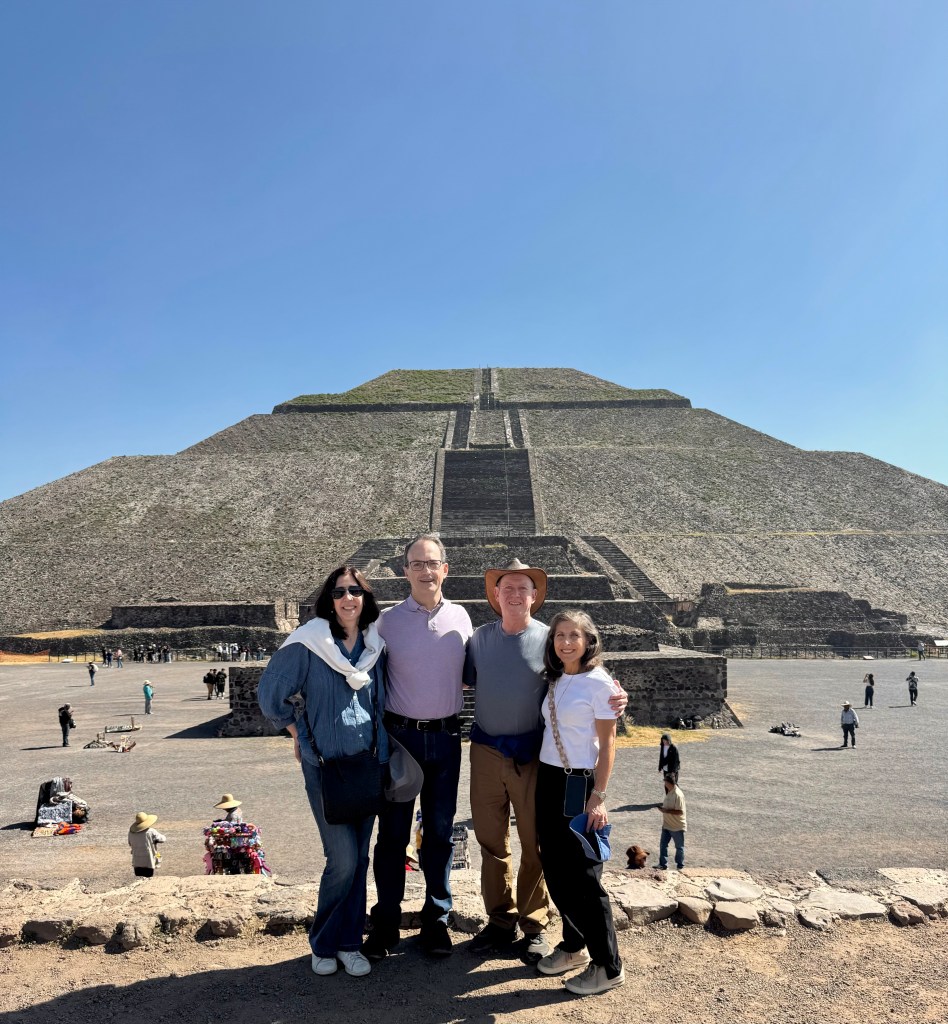
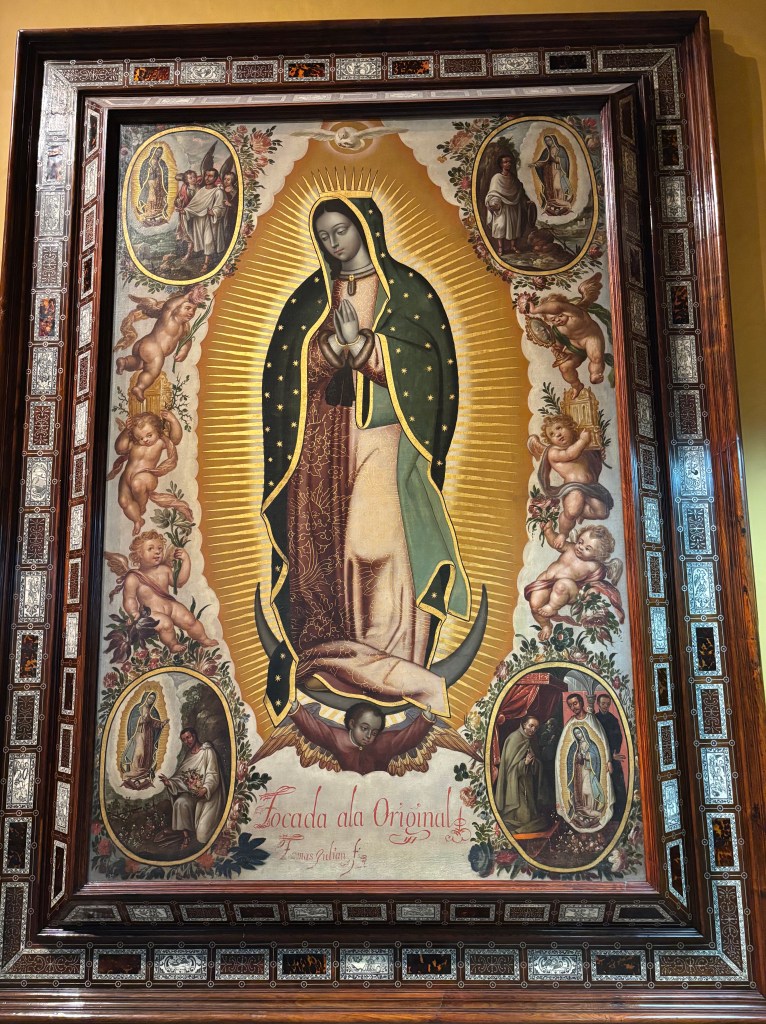
We enjoyed a second trip to Teotihuacan with Pam and Doug and we added the bonus excursion to the Basilica de Guadalupe. This spot, at Tepeyac Hill, is the second-most visited pilgrimage destination in Catholicism, after the Vatican. We visited the Basilica two days after the annual Feast of Our Lady of Guadalupe, when eleven million (estimated in 2023 out of its annual 20 million) pilgrims visit. There are a few chapels at this location and a new basilica was added to the campus between 1974 and 1976 because the Old Basilica is sinking (we’ve heard that one before). The background is that between December 9 and 12, 1531, Guadalupe’s (the Virgin Mary’s) image appeared on the tilma (cloak) of Juan Diego (now Saint Juan Diego), an indigenous convert to Catholicism. Juan Diego shared the image and the Virgin’s request to construct a shrine at the top of Tepeyac Hill. The bishop who didn’t quite believe Juan Diego, demanded to see a sign of this miracle. Guadalupe’s image appeared three more times and roses un-expectantly bloomed on the hill. This sacred spot became the site of the Basilica of Our Lady of Guadalupe and a shrine to her has been on the hill since 1556. Most important is that the image of the Virgin Guadalupe that appeared on the tilma has mestiza (mixed Indigenous and European) features; her turquoise robe was the color of Aztec royalty; the sunburst halo around her head reminded the people of the Aztec sun god Huitzilopochtli; she stands on a crescent moon, representing the Aztec moon god; and the angel depicted below the moon represent the wings of an eagle. All these points elevate Mary/Guadalupe over the Aztec gods. Though the cloak exists (like the Shroud of Turin), and we saw it, some say this miracle is a myth. Regardless, one can see how the story and image of Guadalupe helped convert more Indigenous Native Americans in Mexico to Catholicism and again we can see how adapting Mexica symbols helped promote conversion.
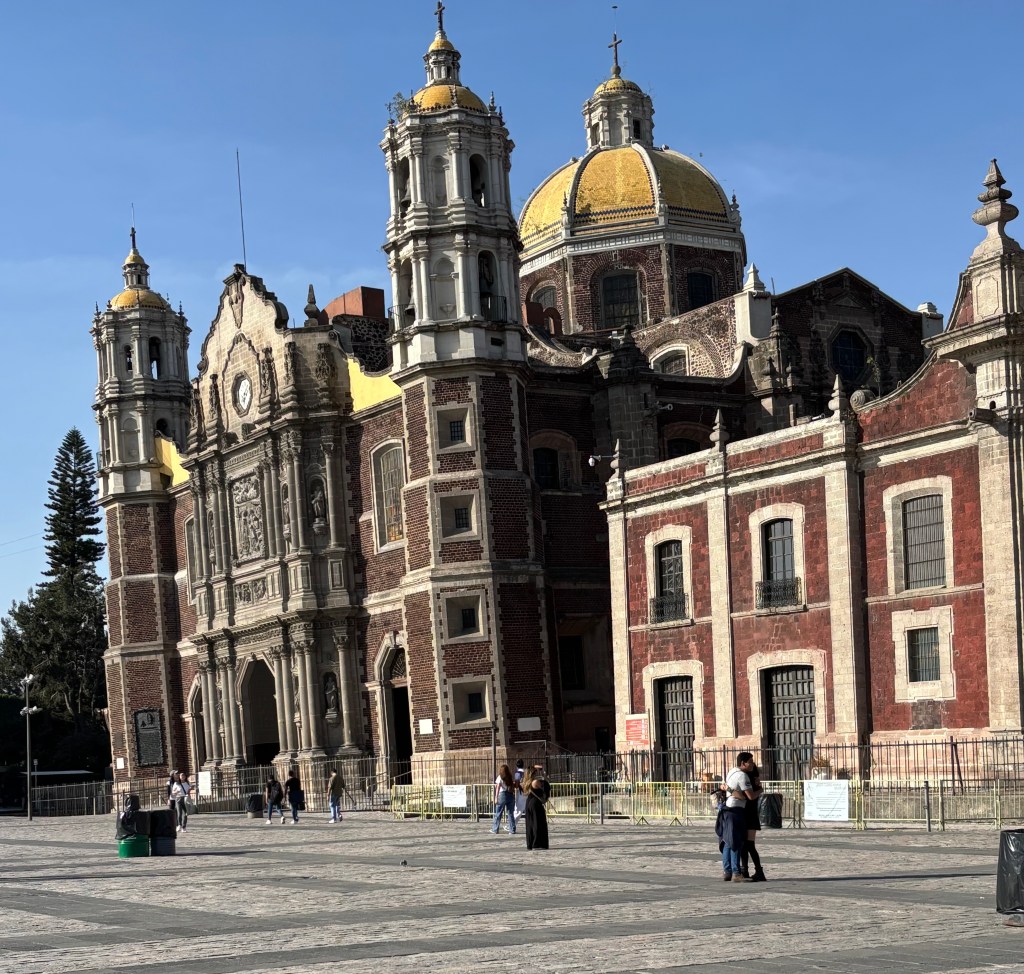

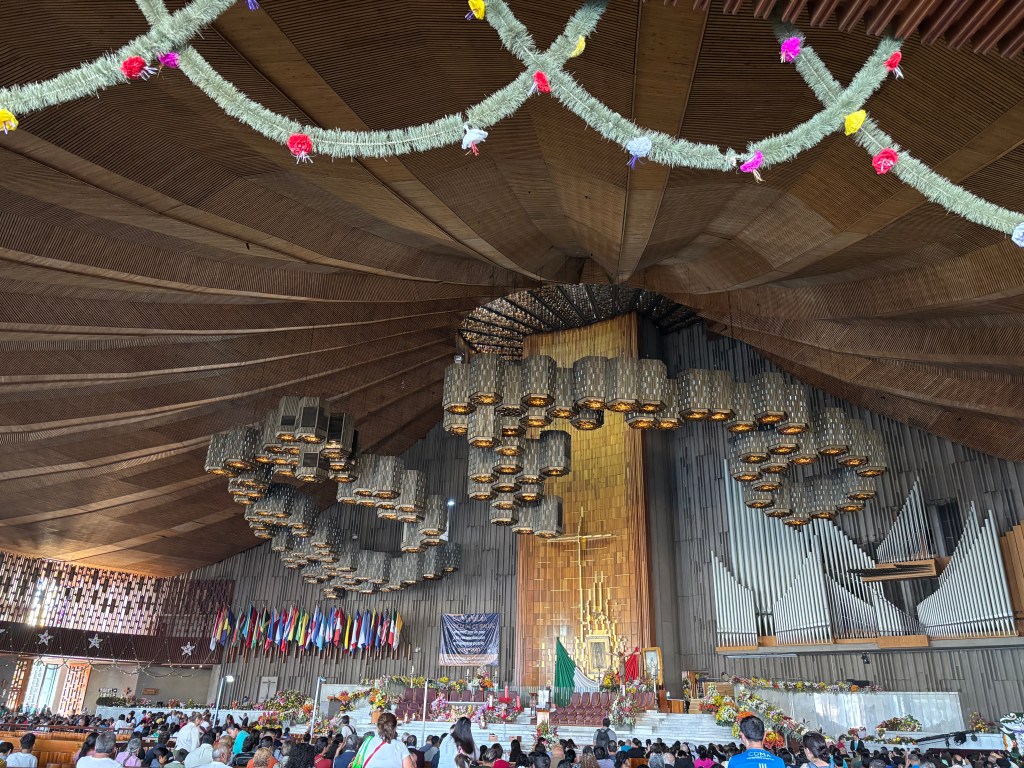
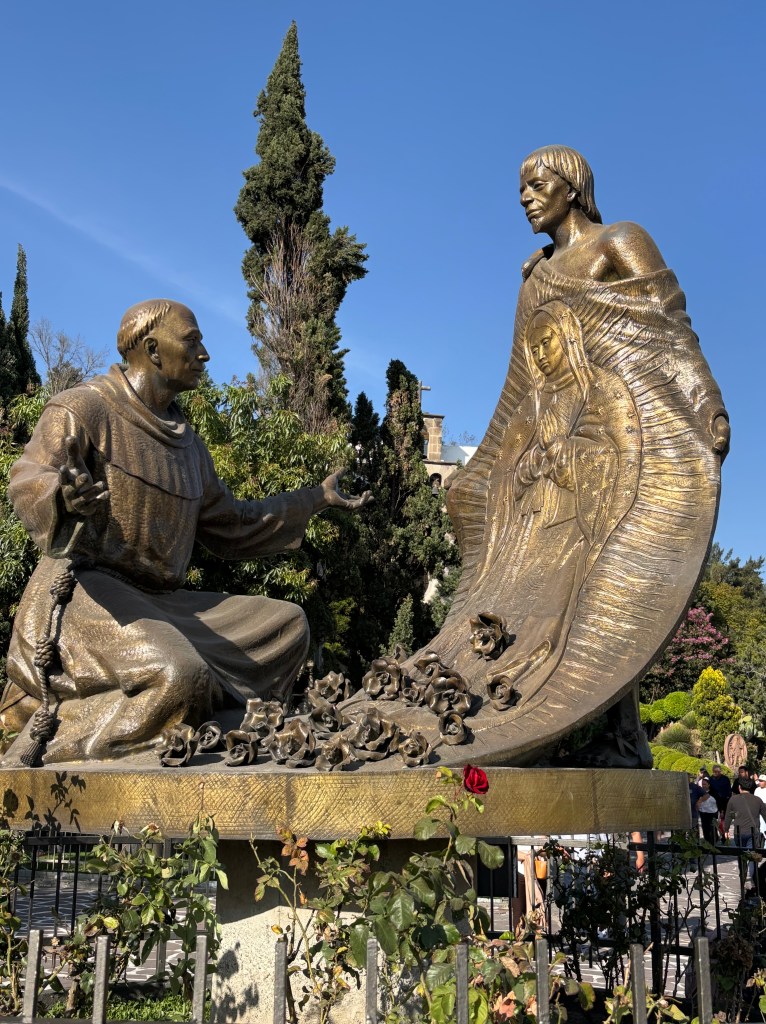
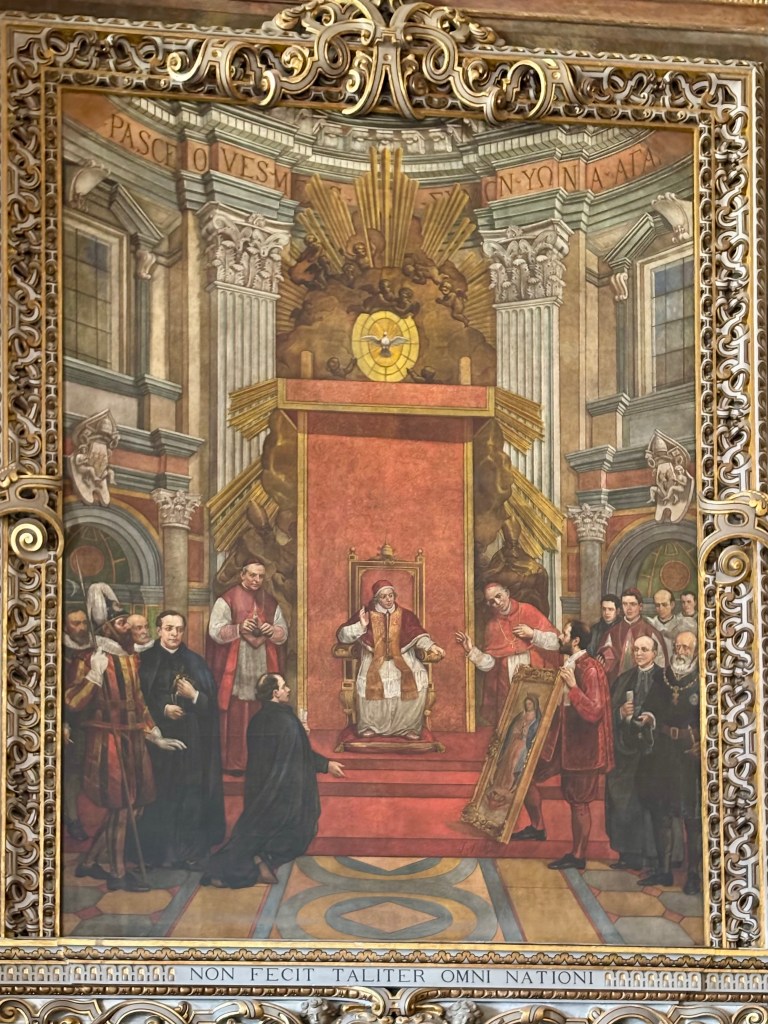
This link shows how we were able to see the original cloak in the Basilica, on a travellator, just like the ones at the airport:
Luis Barragán

Casa Luis Barragán is the creation of Mexico’s most famous modernist architect of the twentieth century. Luis Barragán (1902-1988) studied in Mexico and Europe and his home, built in 1948, was his studio and the space where Barragán experimented with shape, color and light, often revising his surroundings. In recognition of Barragán’s work, MoMA held a retrospective of his work (1975). Soon thereafter Barragán received the Pritzker Architecture Prize and in 2004 his home was listed as a UNESCO World Heritage site. Since a guided tour was by appointment only, I was constantly online for many days, hoping to arrange an English language tour and was fortunate to do so. To quote our guide, this house is the “jewel of Barragán’s work” and “Simplicity is hard; less is more.”
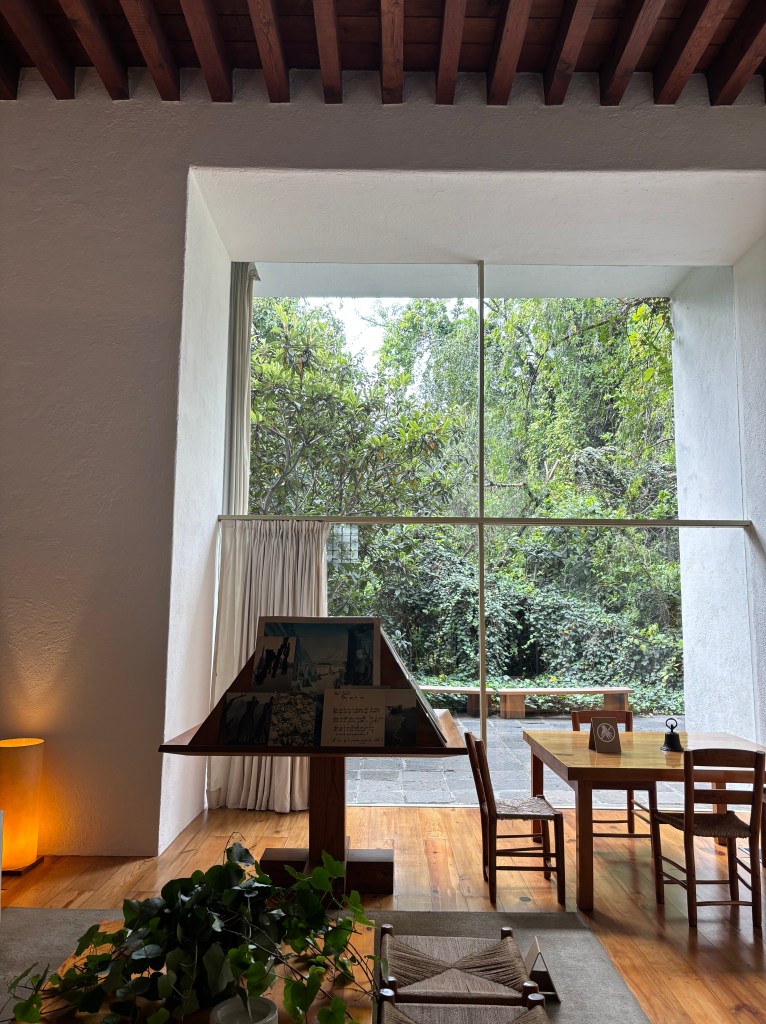
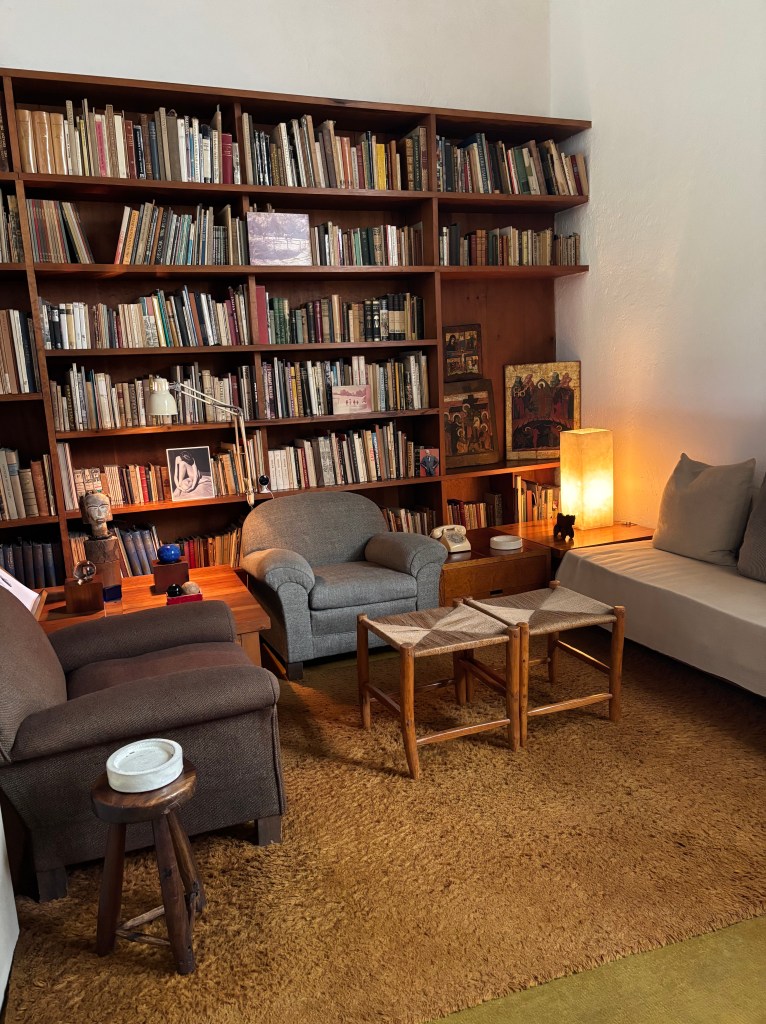
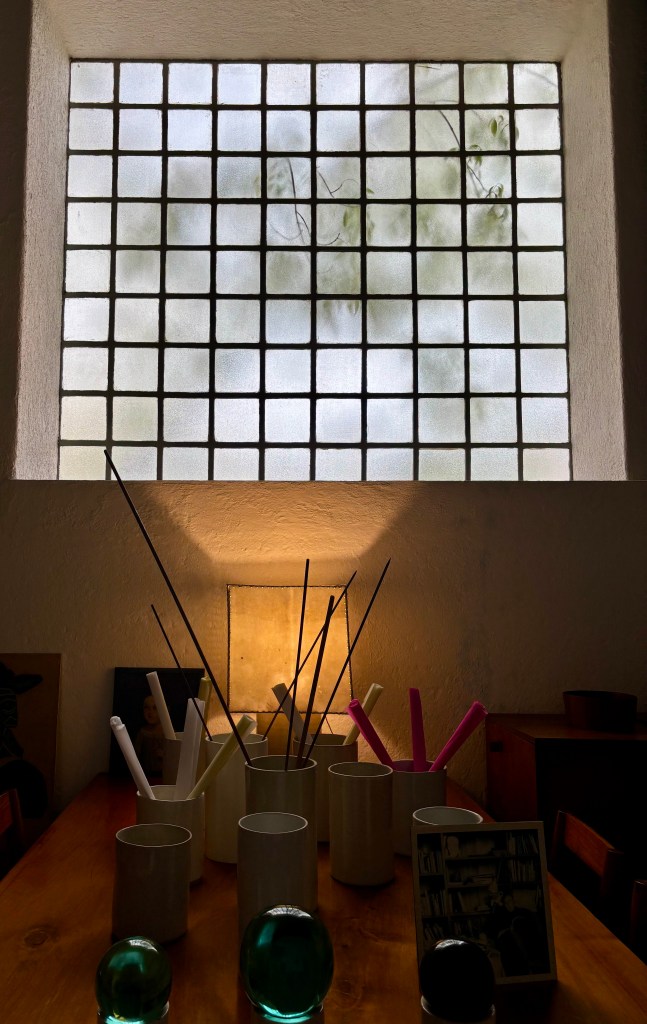
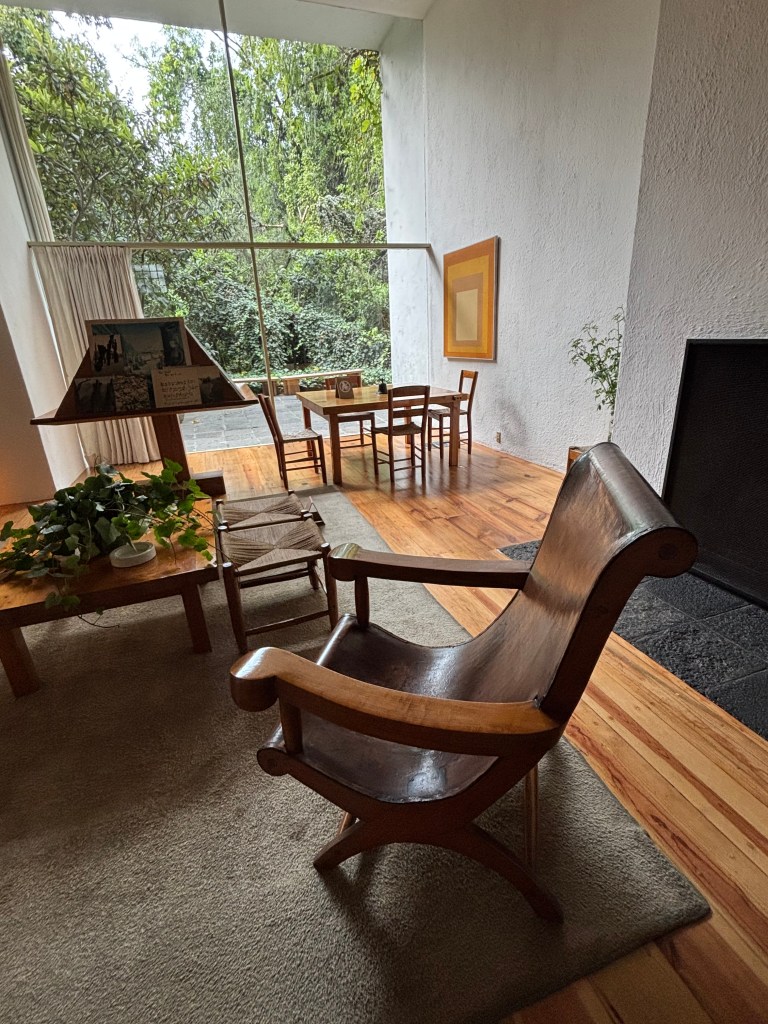


From the street, the house looks quite basic and sterile but upon entering we were greeted with bright walls and floating staircases that interacted with light to create a feeling of serenity. Square shapes dominate Barragán’s home on walls, windows and furnishings.
We enjoyed our tour so much and took Linda’s recommendation to go to another Barragán creation, now a funky restaurant called Tetetlán, in the Jardines del Pedregal neighborhood, where a number of Barragán homes were built. Originally the stables of Casa Prieto López, the home was renovated and renamed Casa Pedregal. The space works with its environmental challenges including a glass bottom floor, over the uneven, rocky terrain, exposing the natural landscape. Today, the space is a restaurant and more as it includes lounge space and a vast library of books and record albums. The Neighborhood Store, also part of the building, is merchandised with unique clothing, jewelry (bringing one home!) and art – all local. The food was healthy, delicious and everything is organic.


Only a Few Days Left!
Dolores Cárcamo Museum
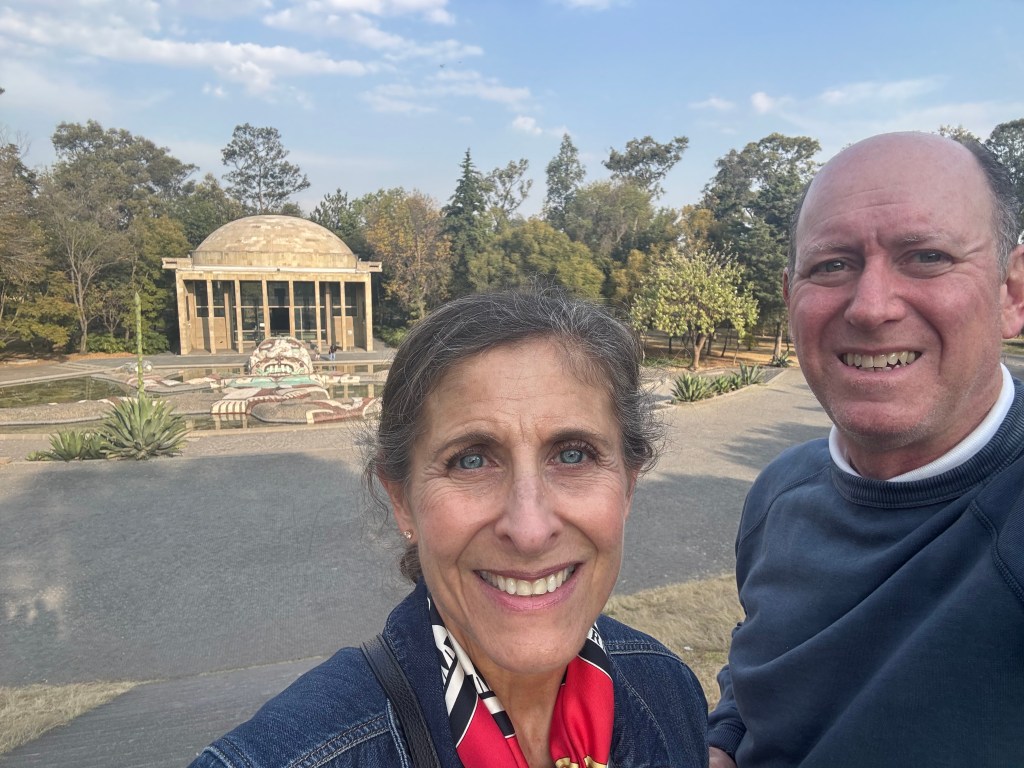
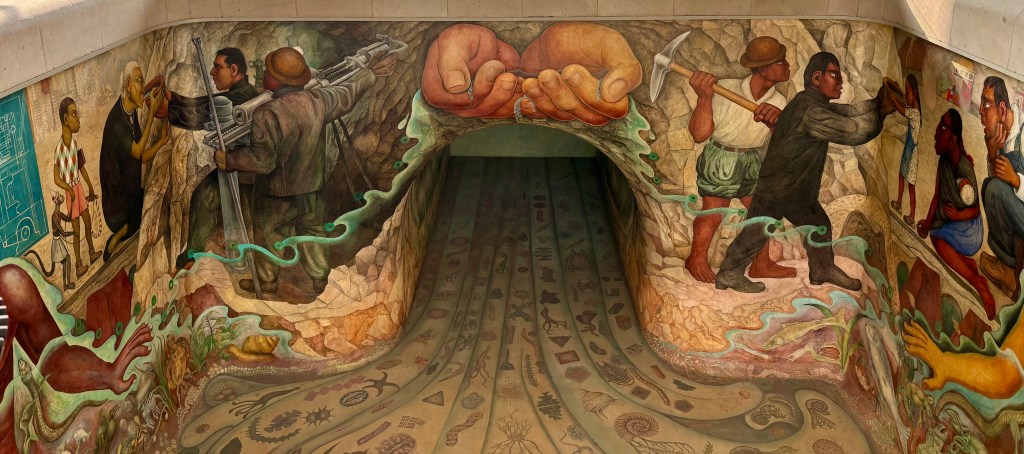
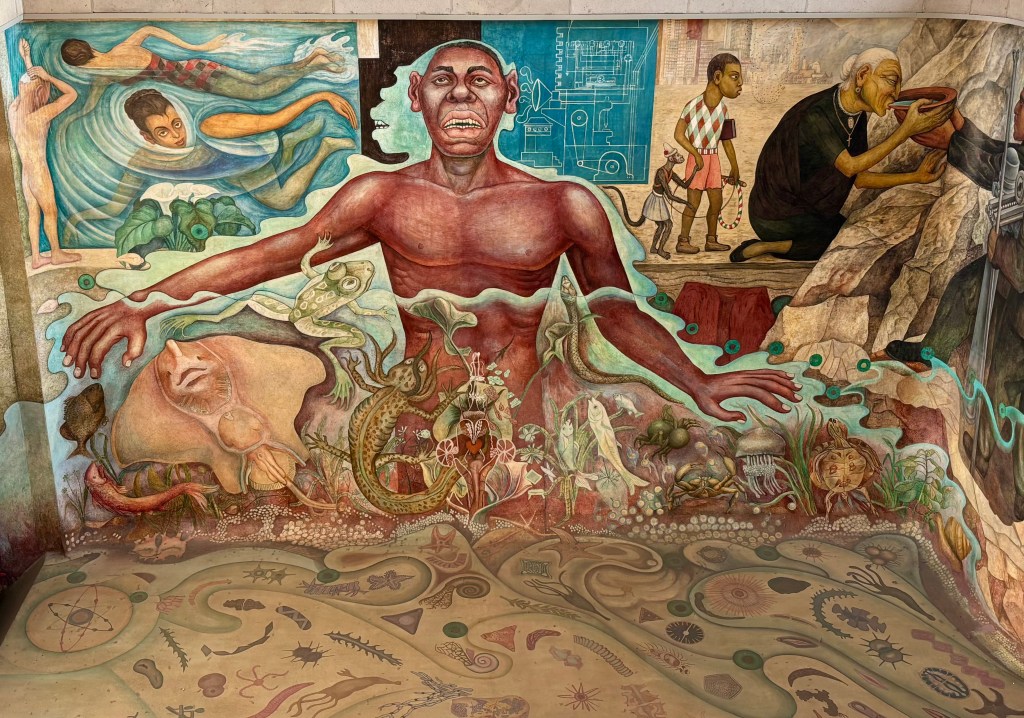
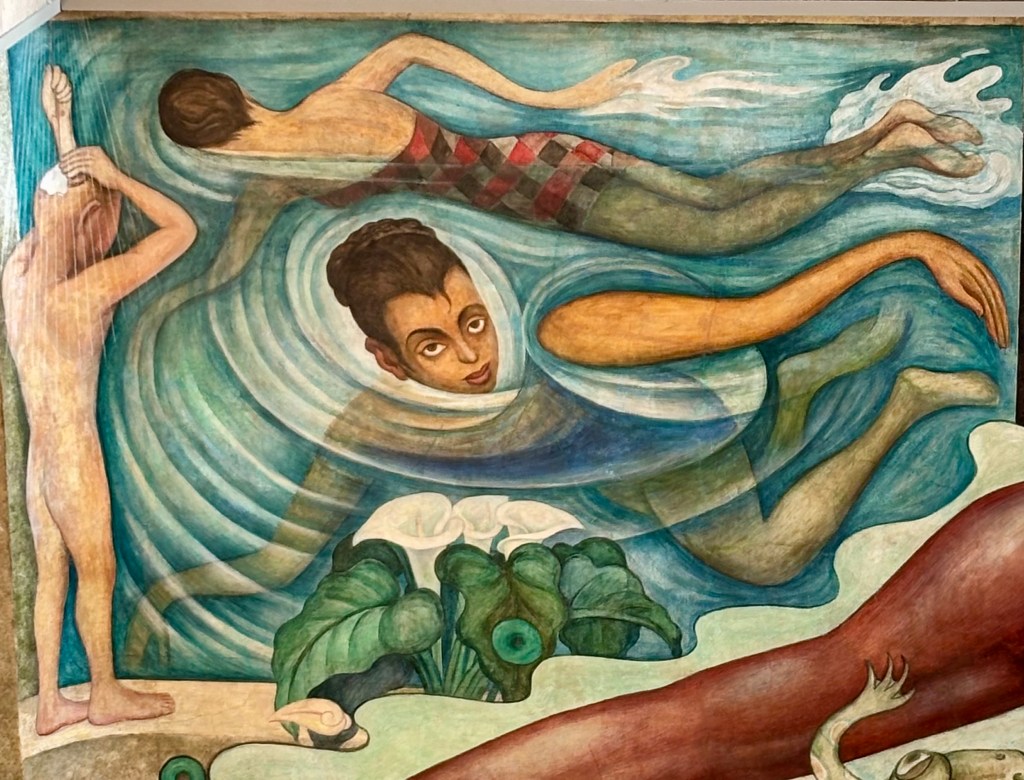
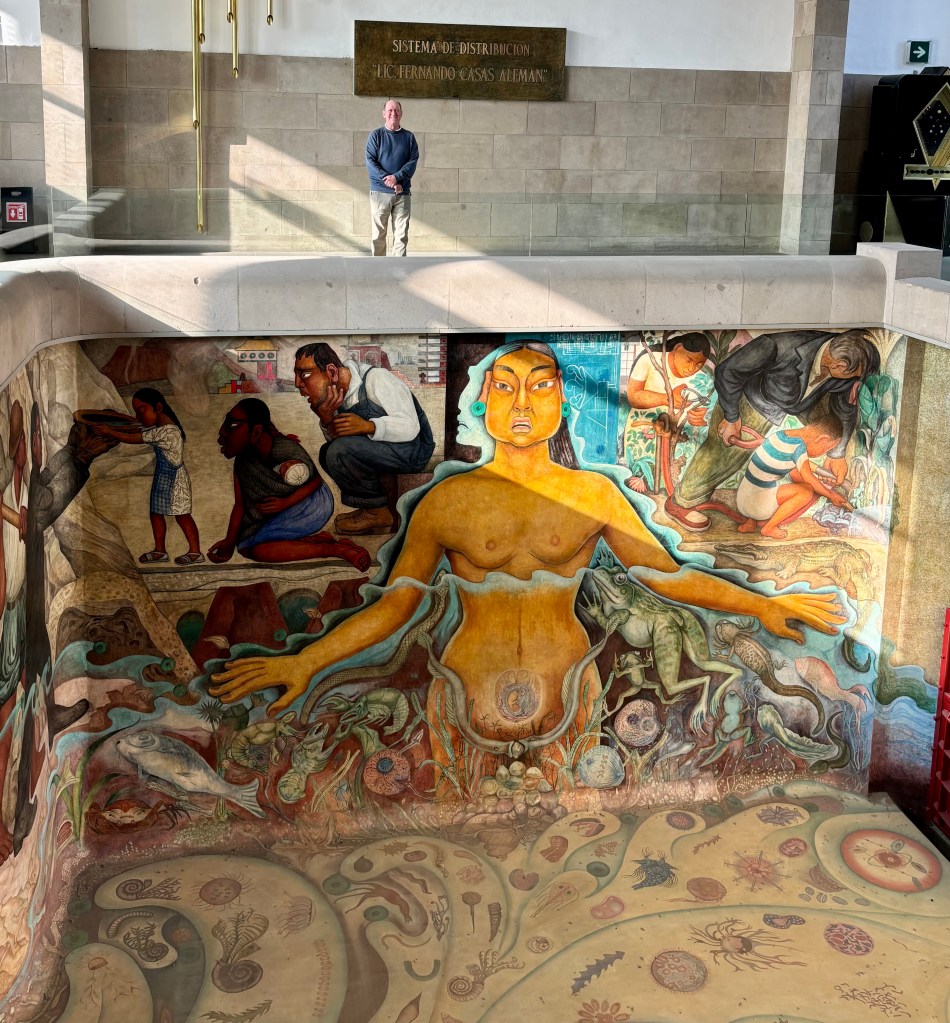
This is another solo Diego Rivera installation and it is located in the very quiet Chapultepec Forest, far from the major attractions in the same park. In 1951 Rivera created a mural called Agua, el origen de la vida (Water, source of life). The mural commemorated the completion of this hydraulic structure that was an important part of the Mexico City Water Works, honoring its engineers and the many uses of water. It no longer holds water and was reopened as a museum after its 2010 restoration. Rivera also created a huge mosaic fountain outside the building.


Museo Diego Rivera – Anahuacalli (opened in 1964)

In the pre-Hispanic world everything in the life of the people was artistic, from the palaces and temples which are monumental works of sculpture, with their magnificent frescoes that amaze everyone peering at them in the jungle, down to the most humble pot used daily, and the children’s toys, and the stone to grind grain. Everything was a work of art, ninety-nine percent of the time, a masterpiece. – Diego Rivera (1886-1957)
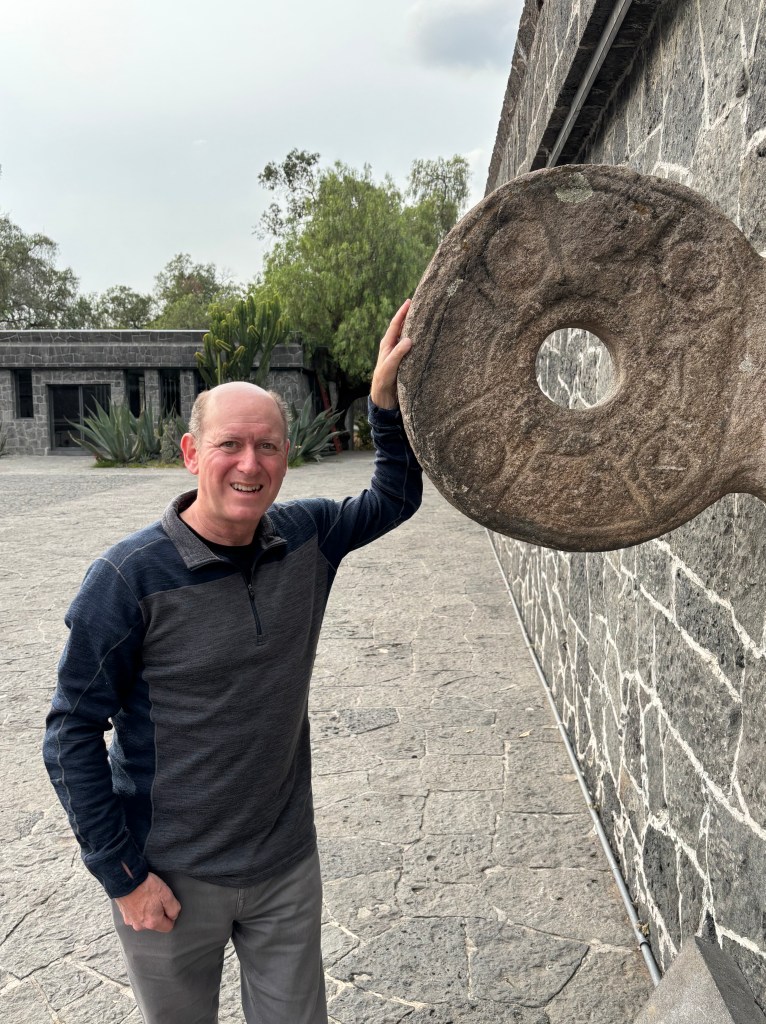
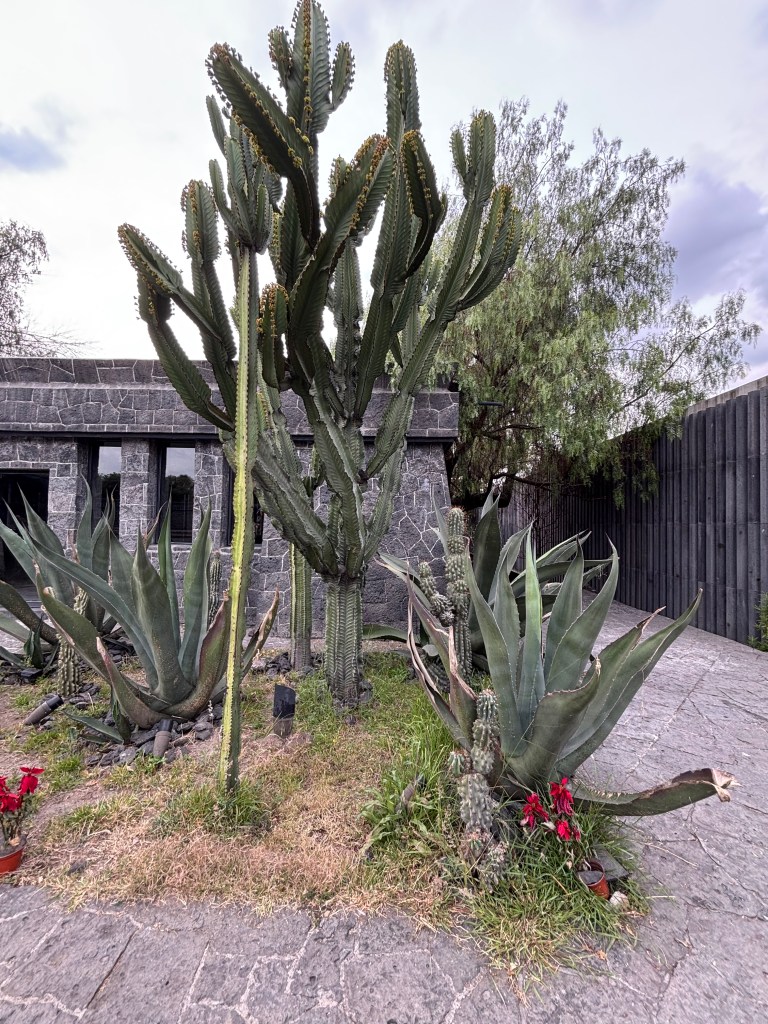
Quite a few people in the know recommended this museum to us. Diego Rivera did not want to see his country’s rich history acquired by foreign museums so he collected and collected 2,500 Mesoamerican artifacts, envisioning and designing Anahuacalli to house his treasures. After Rivera’s death, the museum was completed by his colleague, Juan O’Gorman. The building itself is a work of art. It is naturalistic and reminiscent of Mexico’s pre-Hispanic pyramids. In addition to the permanent collection, which also included some of Rivera’s mural studies, there is currently a special installation throughout the museum by the artist Pedro Reyes titled Atomic Amnesia. It highlights his and colleagues’ protesting of weapons of mass destruction and their work in promoting global denuclearization. Unfortunately, museum rules prevented us from taking photos inside but both the building, the permanent collection and the special installation were phenomenal.
Museo del Templo Mayor
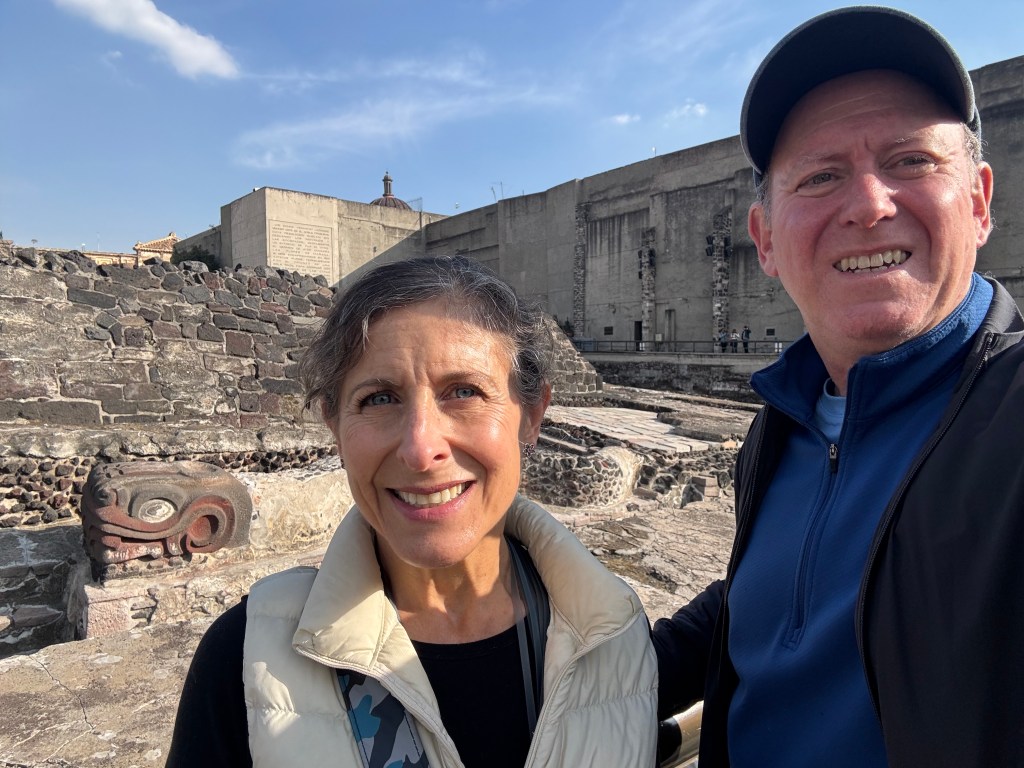
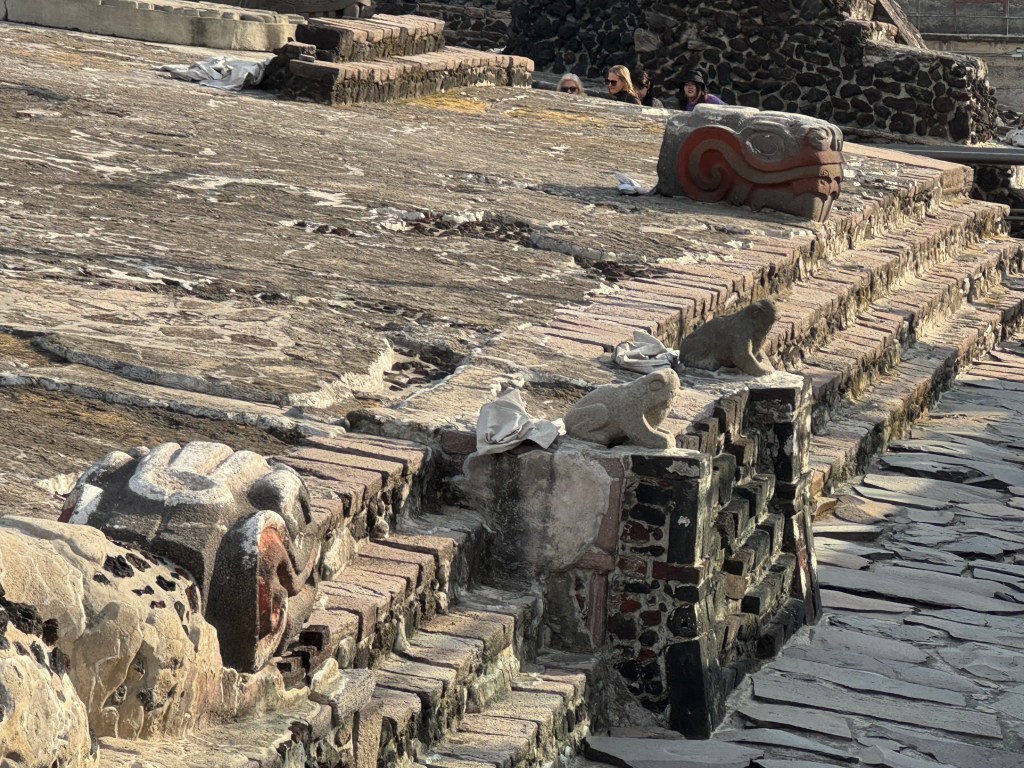
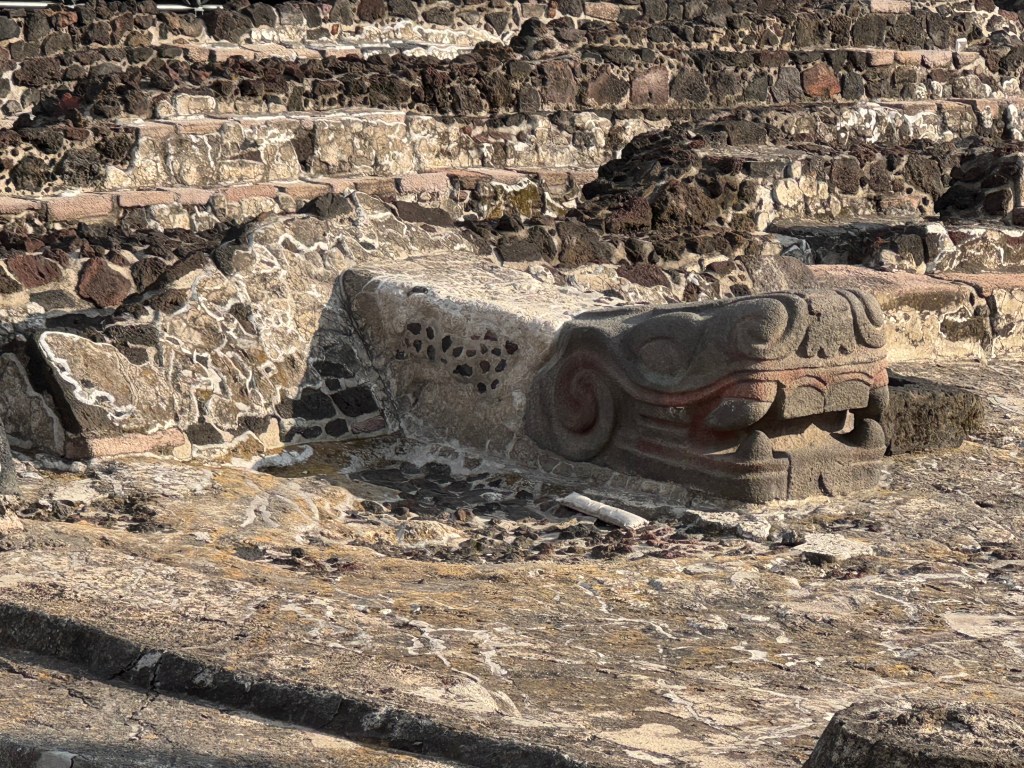
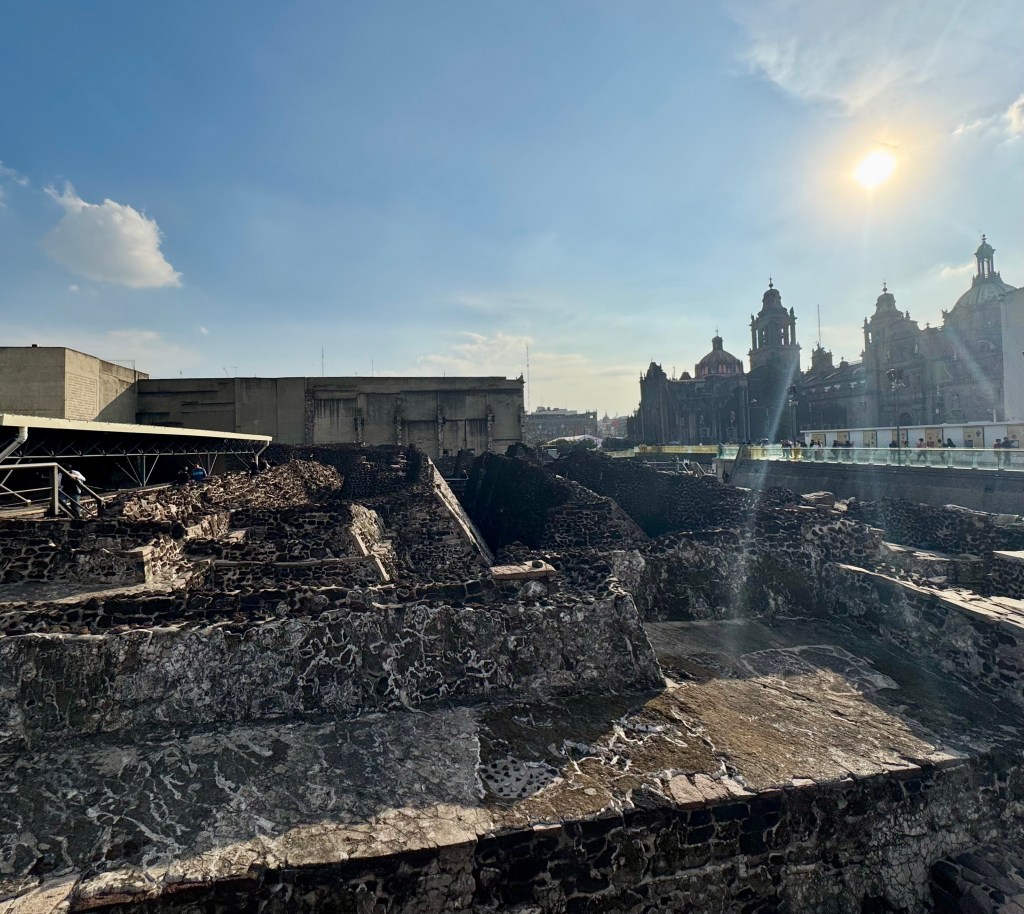
This was the capital of the Aztec empire, in the Historic Center of Mexico City, originally called Tenochtitlan. Its people were called Mexicas which is how Mexico got its name. The Mexicas settled on this island in 1325 and were conquered by the Spanish in 1521. The Aztec Great Temple stood in this area until the Spanish Conquest and was mostly destroyed; what was left was covered up. The Spanish constructed the Catedral Metropolitana in this same location and it wasn’t until 1978 that the buried Tenochtitlan was discovered and excavations began. Four additional temples were uncovered beneath the Great Temple because each successive Aztec leader constructed a temple on top of the previous one. Almost 7,000 pieces of art were uncovered and archeological work continues here to this day.
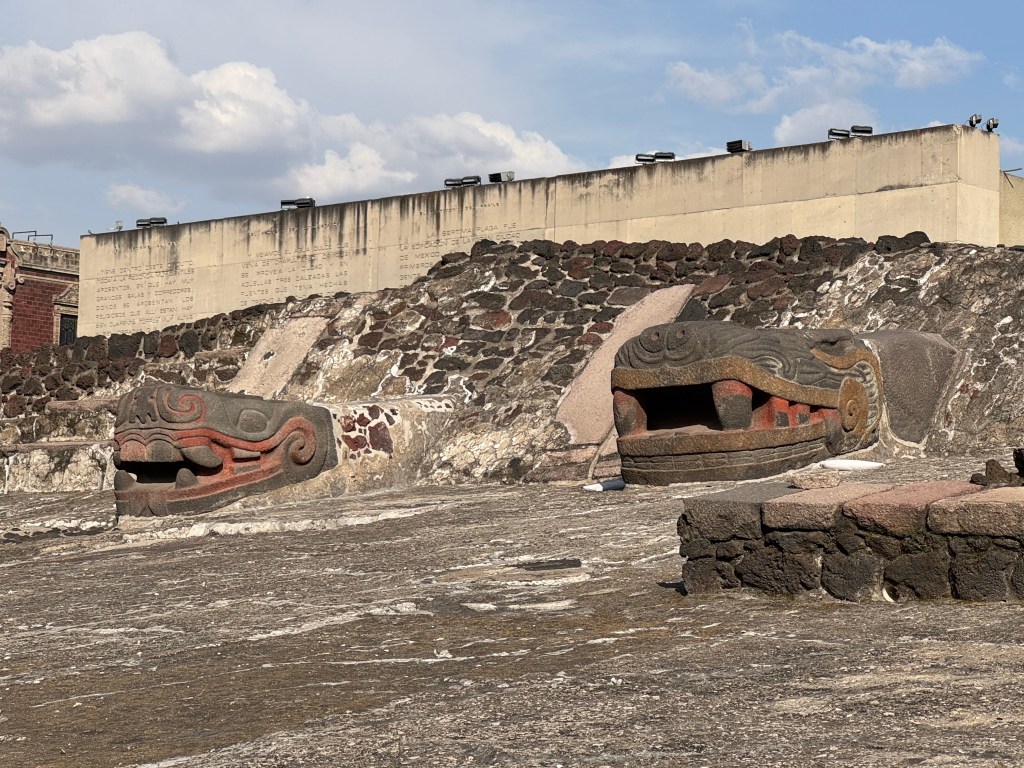
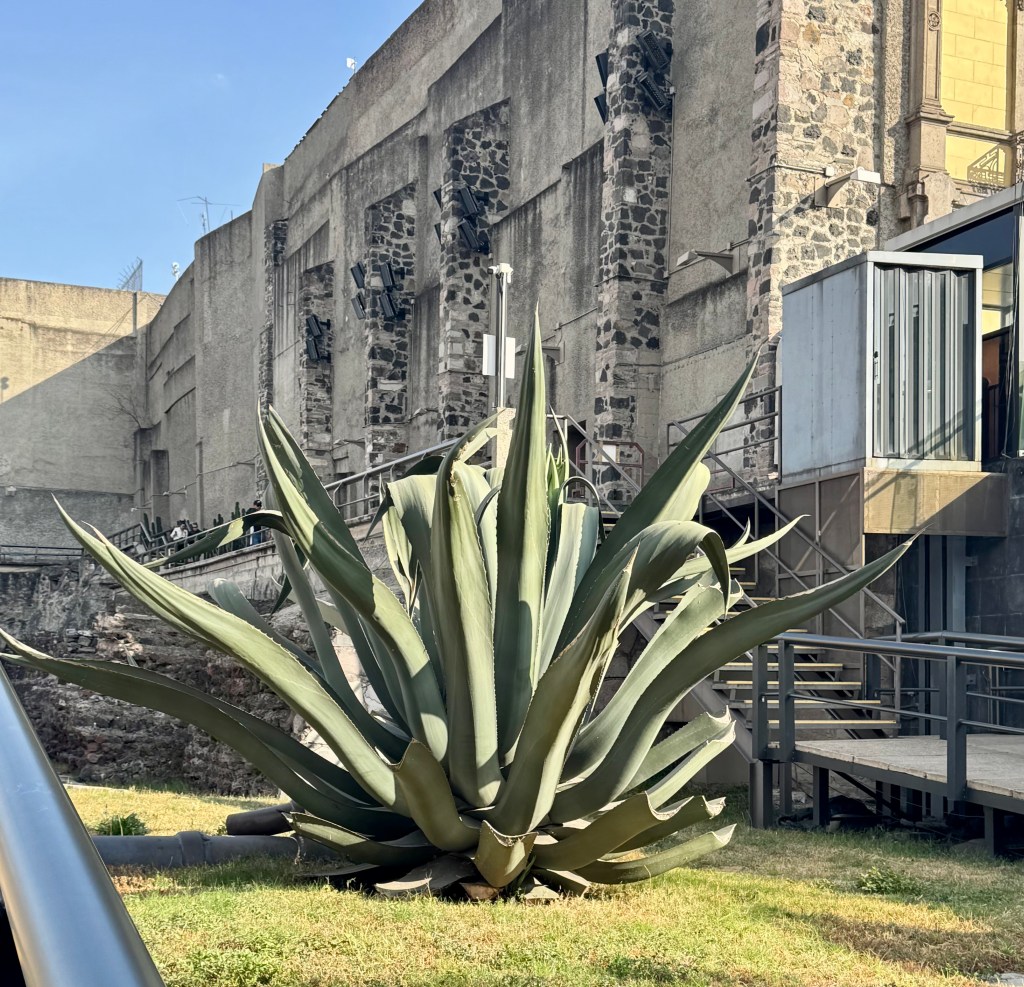

Museo Nacional de Arte


This was another must-see as its collection includes art from the early days of the Spanish colonial period until the mid-twentieth century. It is housed in a beautiful building that was reminiscent of European architecture we have seen across the Atlantic.


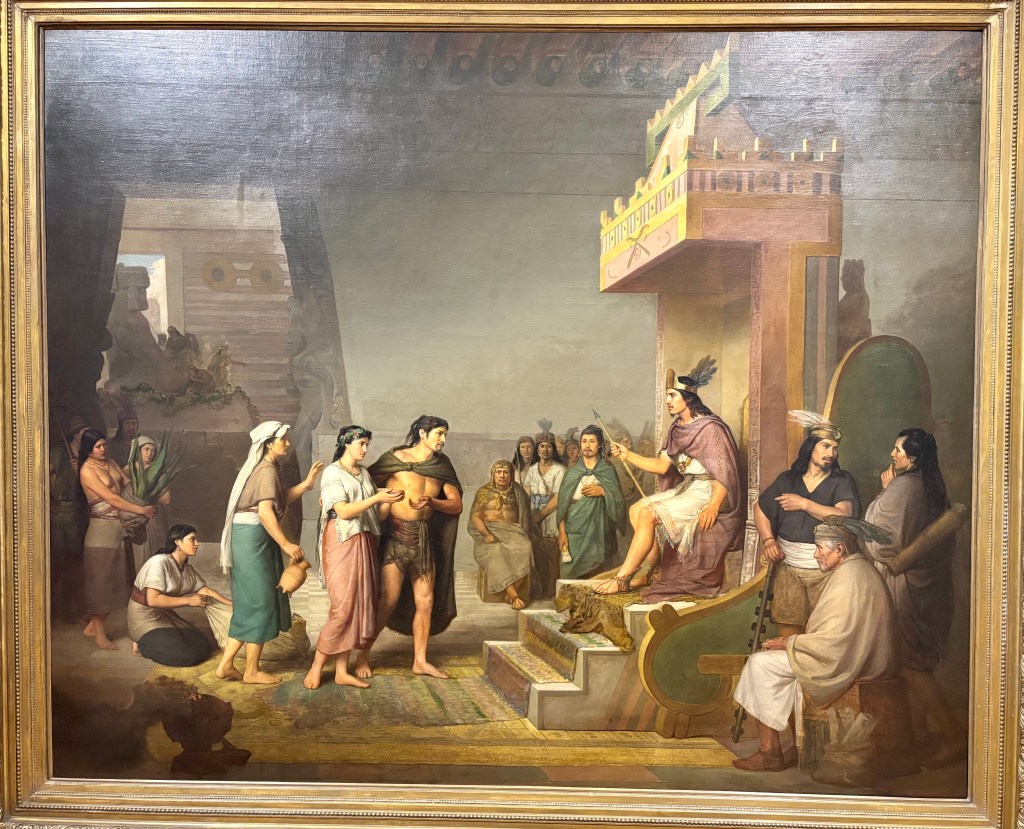
There was a wonderful exhibit demonstrating the interaction and similarity of style between the European and Mexican artists in the Nineteenth and early Twentieth Century. Below are a few examples:
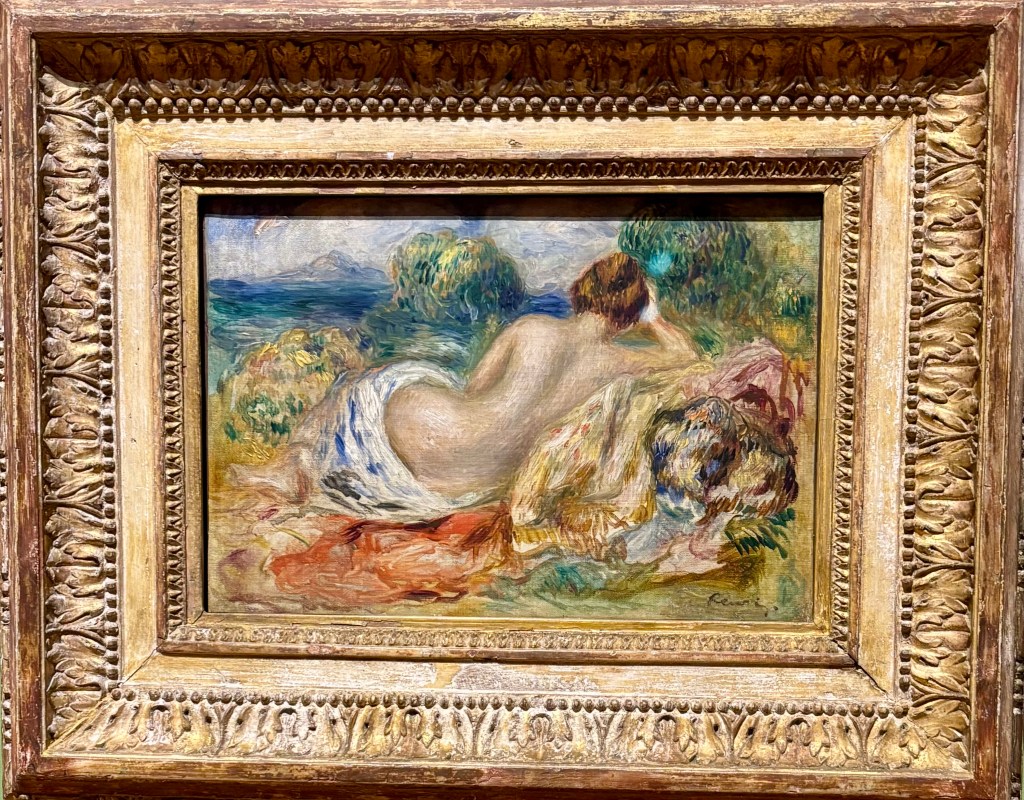
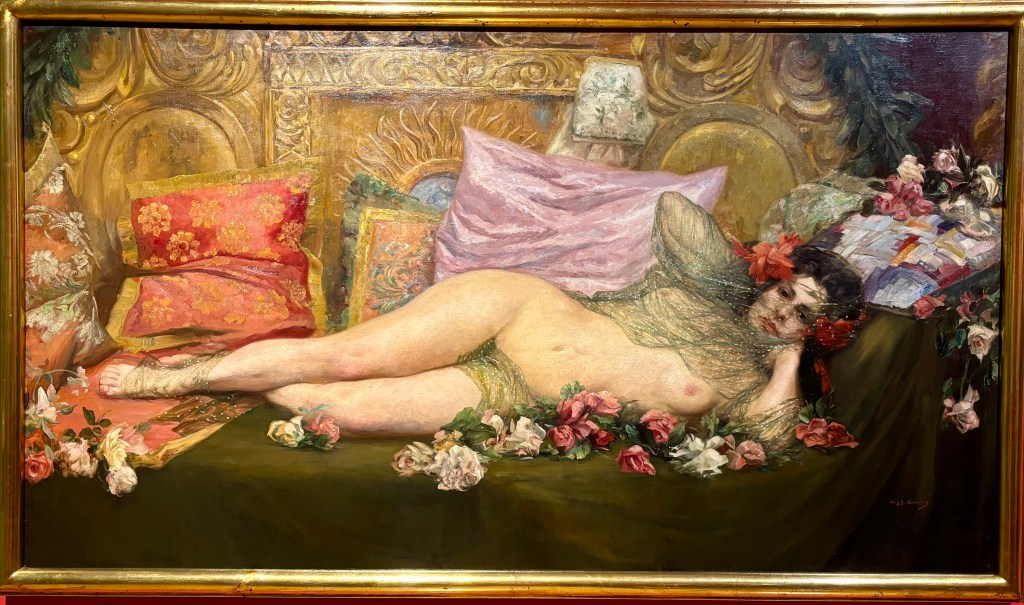

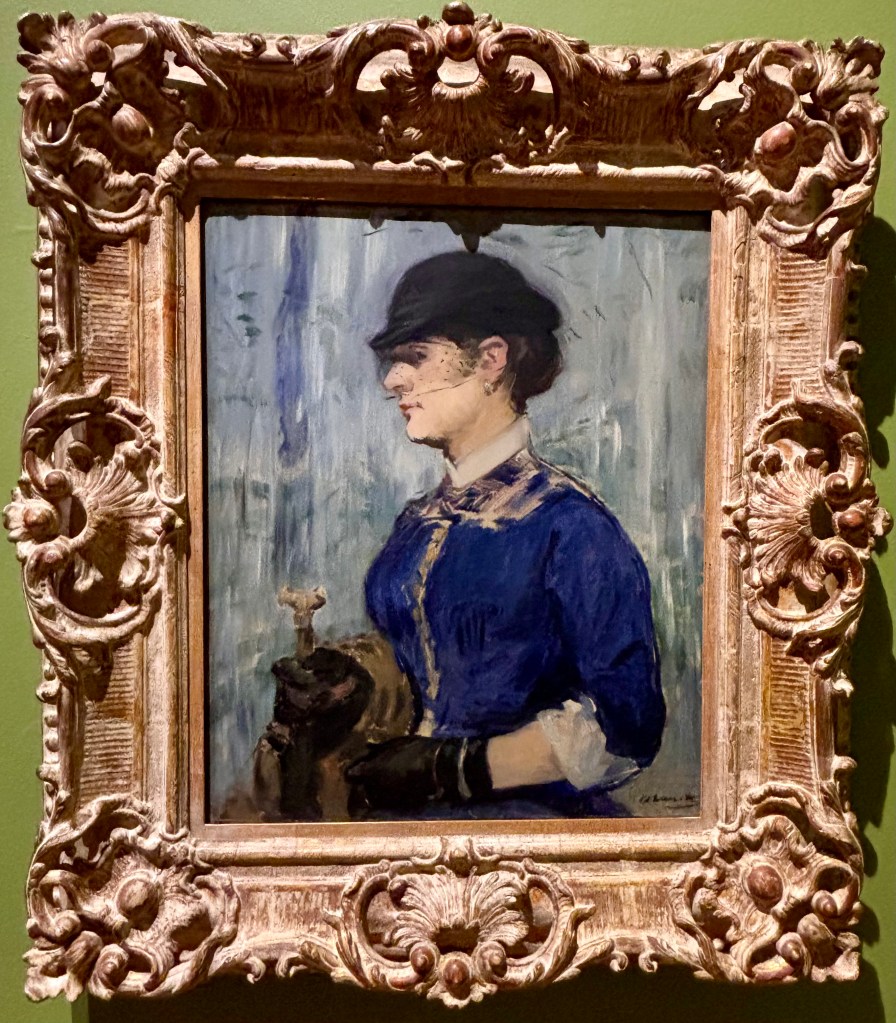
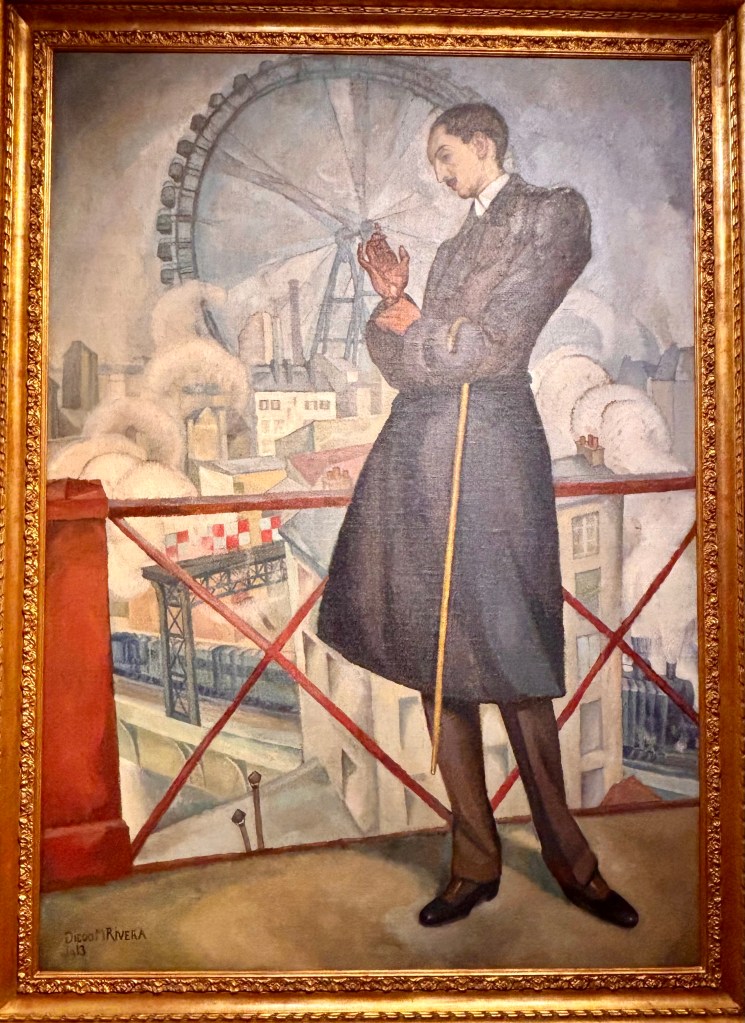
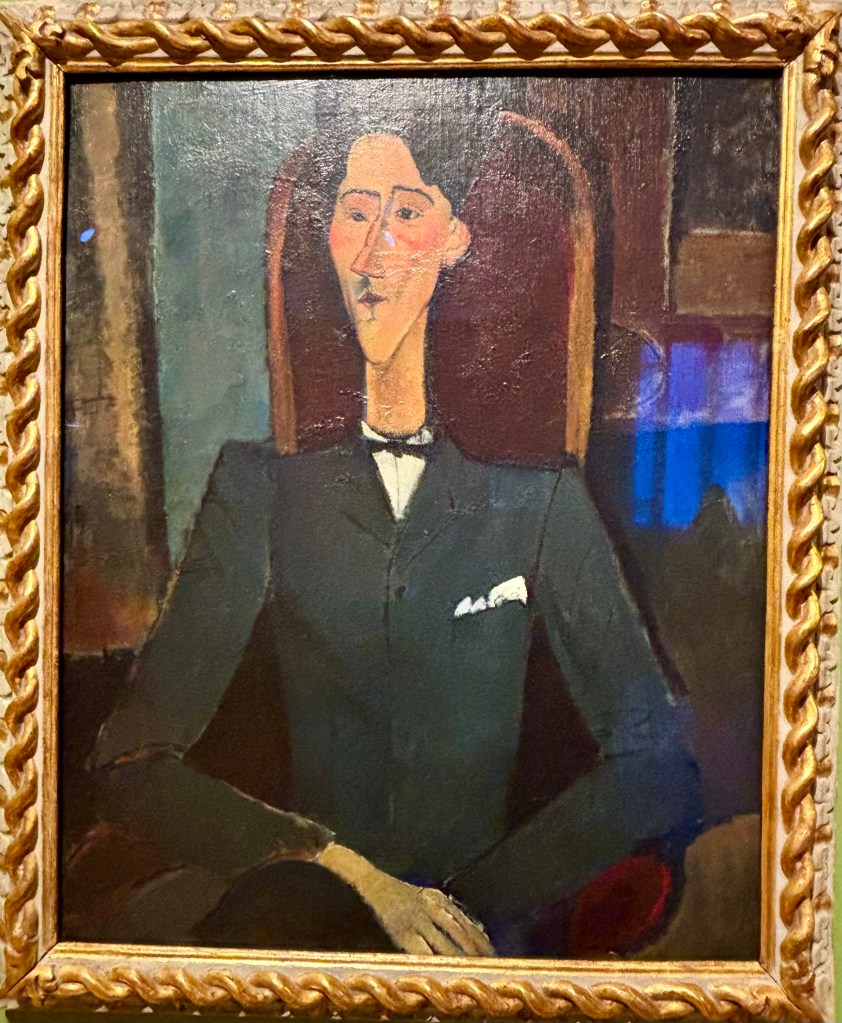
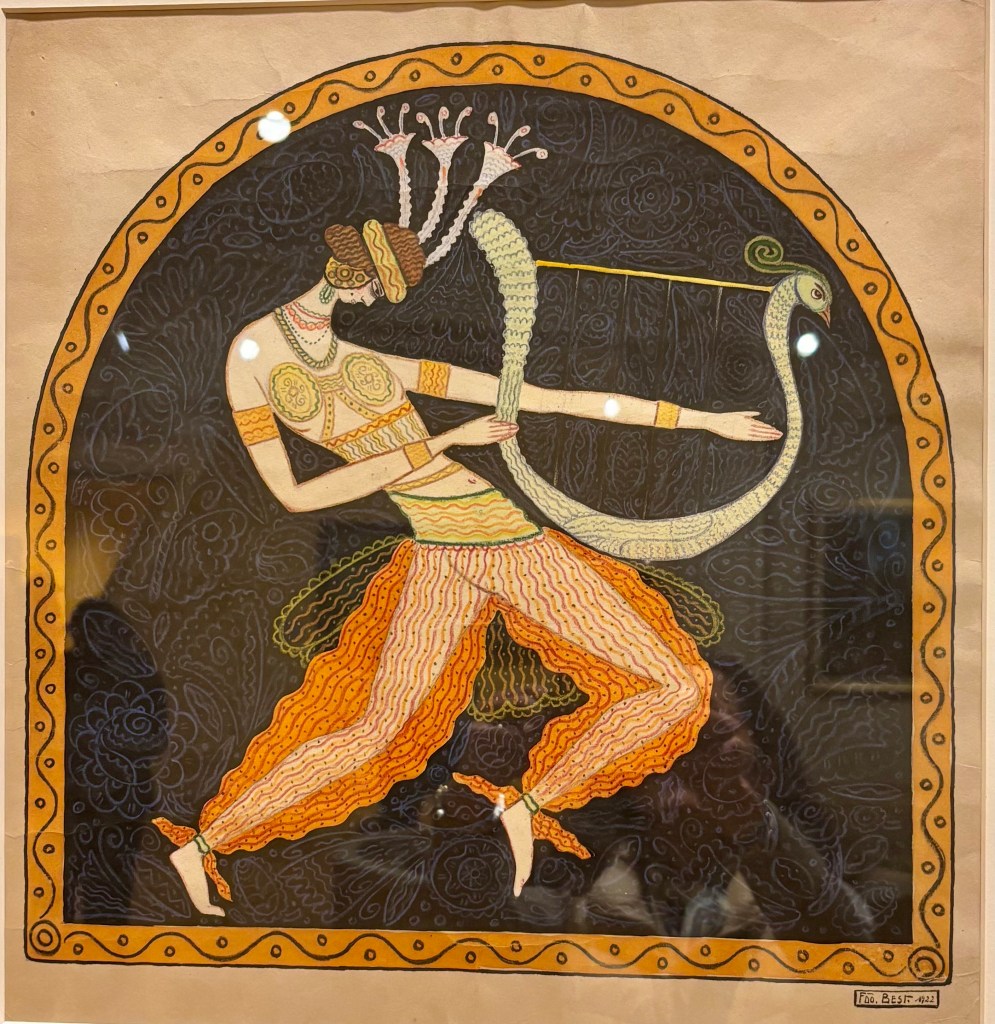
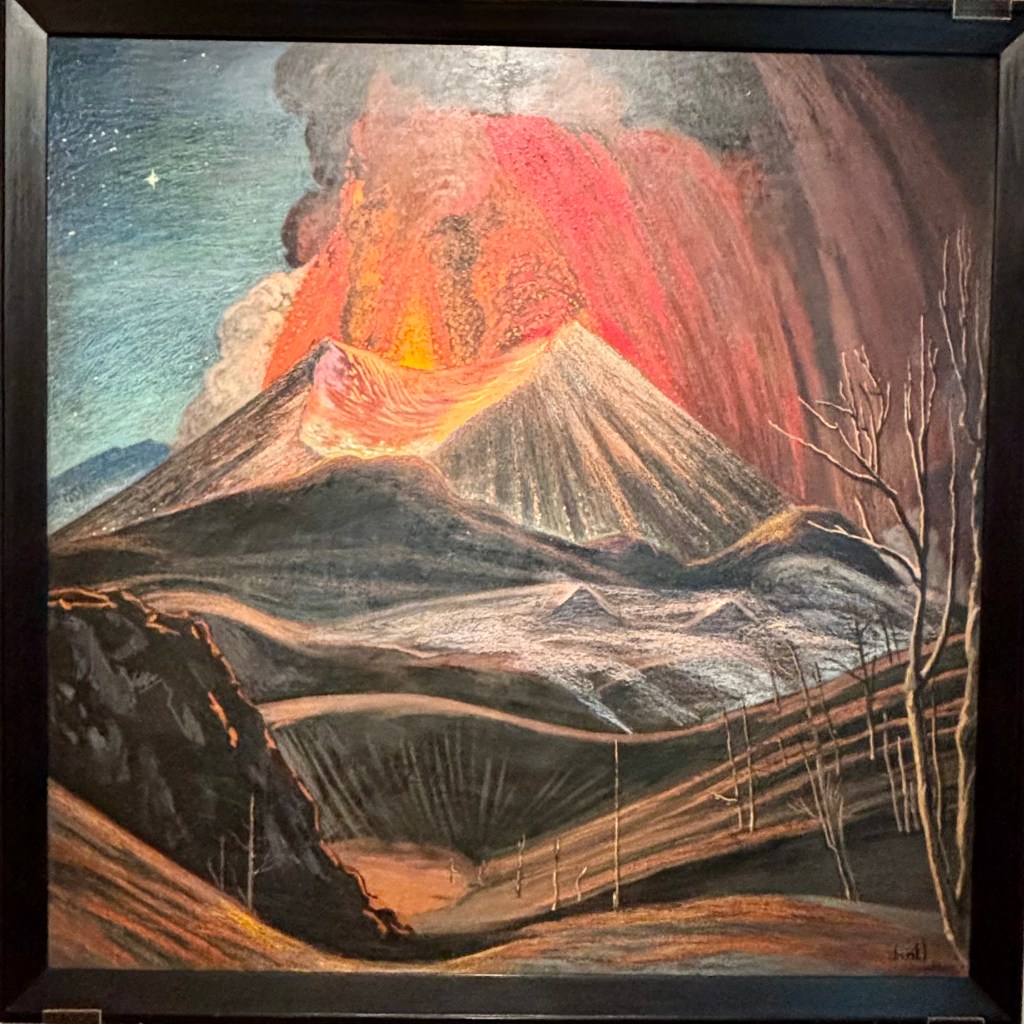
Some of my favorite pieces in the collection are these three untitled works:



Gerardo Murillo, also known as as Dr. Atl (1875-1964) painted volcanoes, capturing the energy as they erupted.

Another Special Night Out
We dined at Máximo, by chef Eduardo Llao Garcia, one of the restaurants on everyone’s list. It felt like New York because all the patrons seemed to be conversing in English, including the next table where a young man from Scarsdale was dining with his fiancée. My theory is that Americans share their lists and read the reviews. Once any restaurant, anywhere abroad, is well reviewed, it becomes overwhelmed with Americans. We have seen this in Venice, Paris and Mexico City as well. Fortunately, the recommendations are usually spot-on. The dining room’s past includes being an auto body shop and pool hall but it has been transformed into a beautiful candlelit setting.
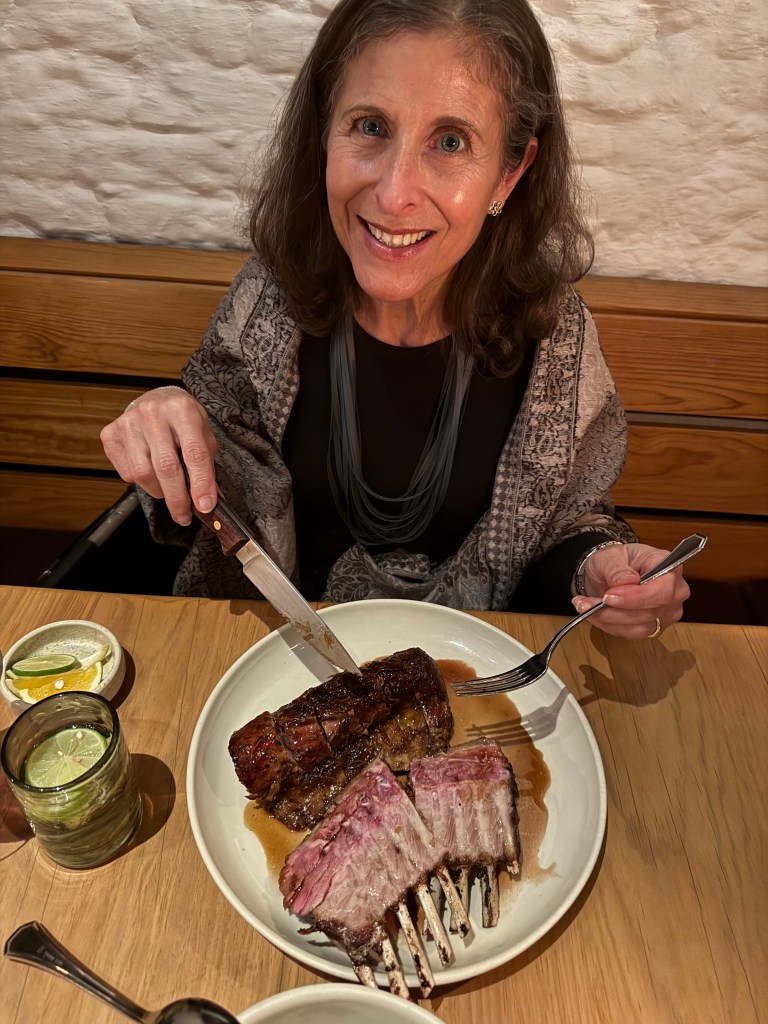
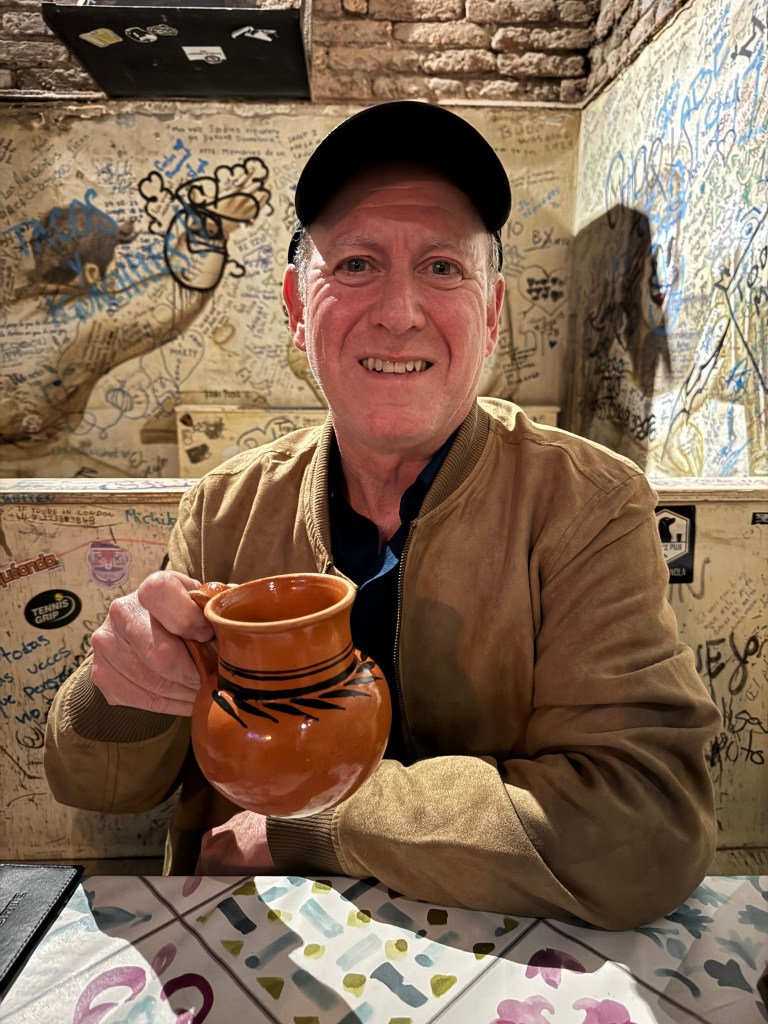
Rather than enjoying a digestif at Máxim, Andy was on a mission to experience pulque, an ancient Mexican beverage. It is the fermented sap of the agave plant and is milky in color and texture. So we went from elegant restaurant to dive pulque bar – Andy seems to have a well-tuned radar for both. It was certainly an interesting way to complete our evening out!
UNAM
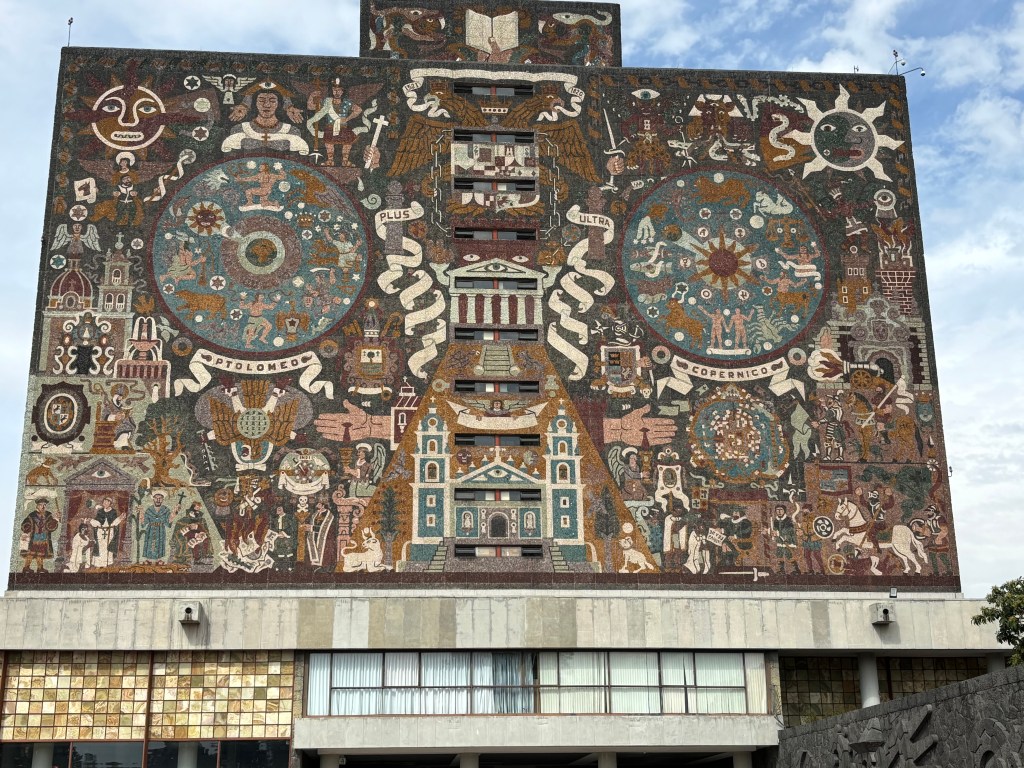
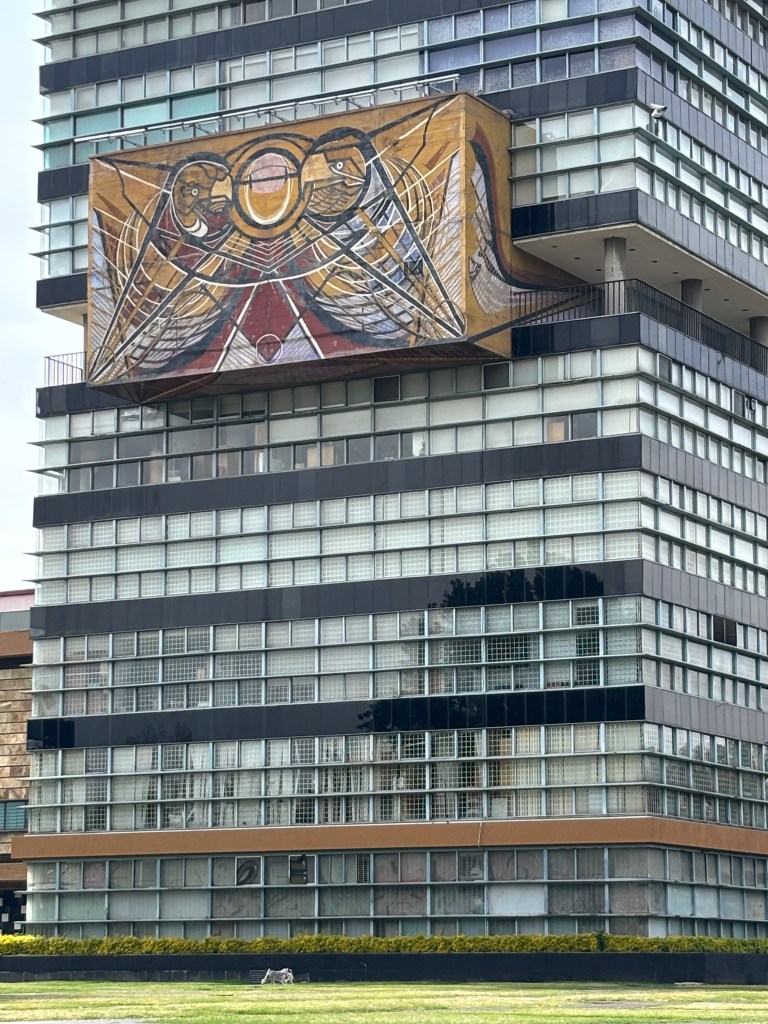
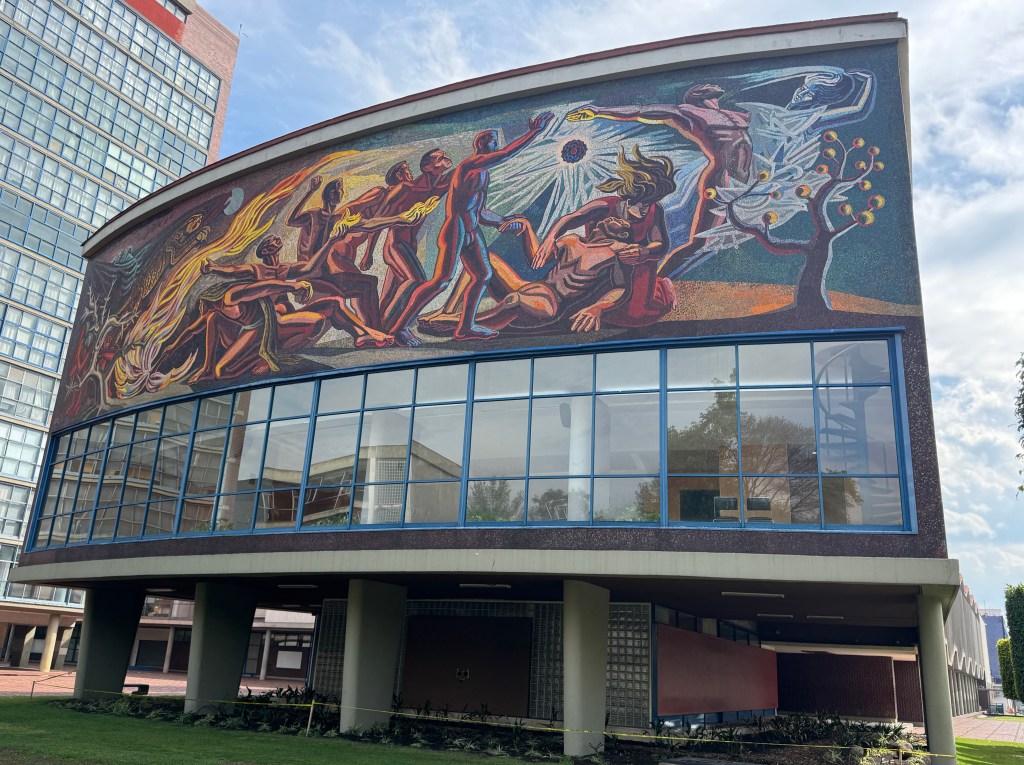
The National Autonomous University of Mexico (since 1910 and a UNESCO World Heritage Site since 2007)
This is the most prestigious university in Mexico and home to 34 research institutes and 26 museums. The contributions of many of Mexico’s most prominent artist are part of the campus including Diego Rivera murals at the Olympic University Stadium and the Juan O’Gorman mosaic on the exterior of the Central Library (the largest mural in the world).
This would have been a great place to visit had the University not been closed for the holidays. We made the best of it and took a long walk around this huge campus. We thought we could get into the sculpture garden but that and everything else was behind locked fences. Next time!
Museo Soumaya-Casa Guillermo Tovar de Teresa

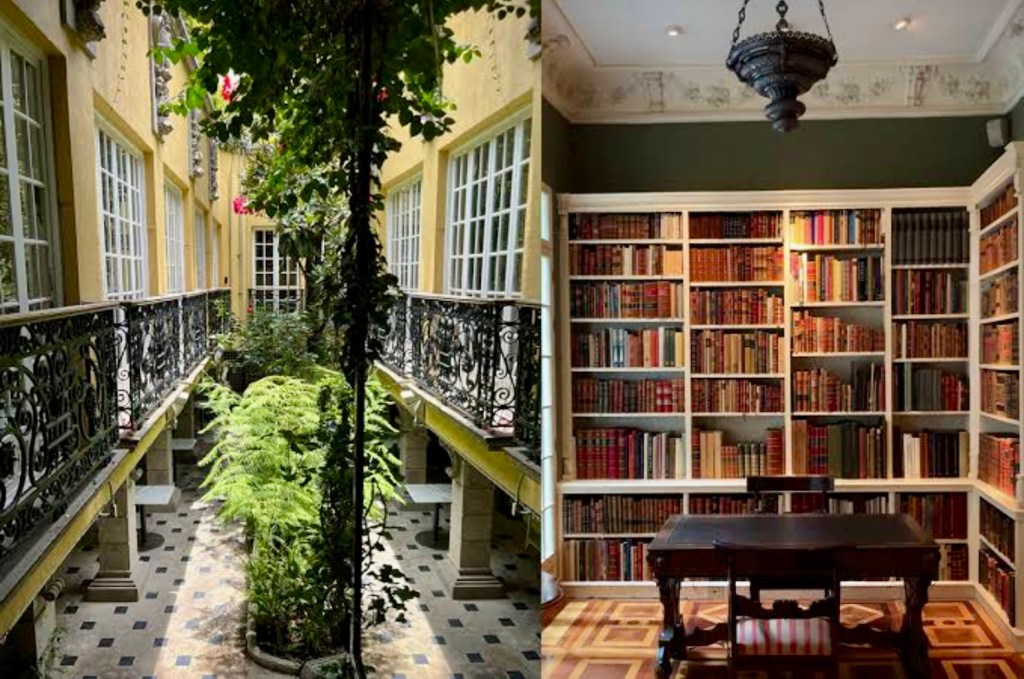

We did a quick walk-through of this neighborhood museum on Christmas Eve (it was about the only thing open), part of the Soumaya Network of Museums since 2019 and free of charge. It is a beautiful house highlighting a typical home of Mexico’s Viceroyal period of the Nineteenth century. Its last owner was Guillermo Tovar de Teresa (1956-2013), a child prodigy, advising top government officials about art from a very early age and, as an adult, a collector and scholar of the arts.
Commerce
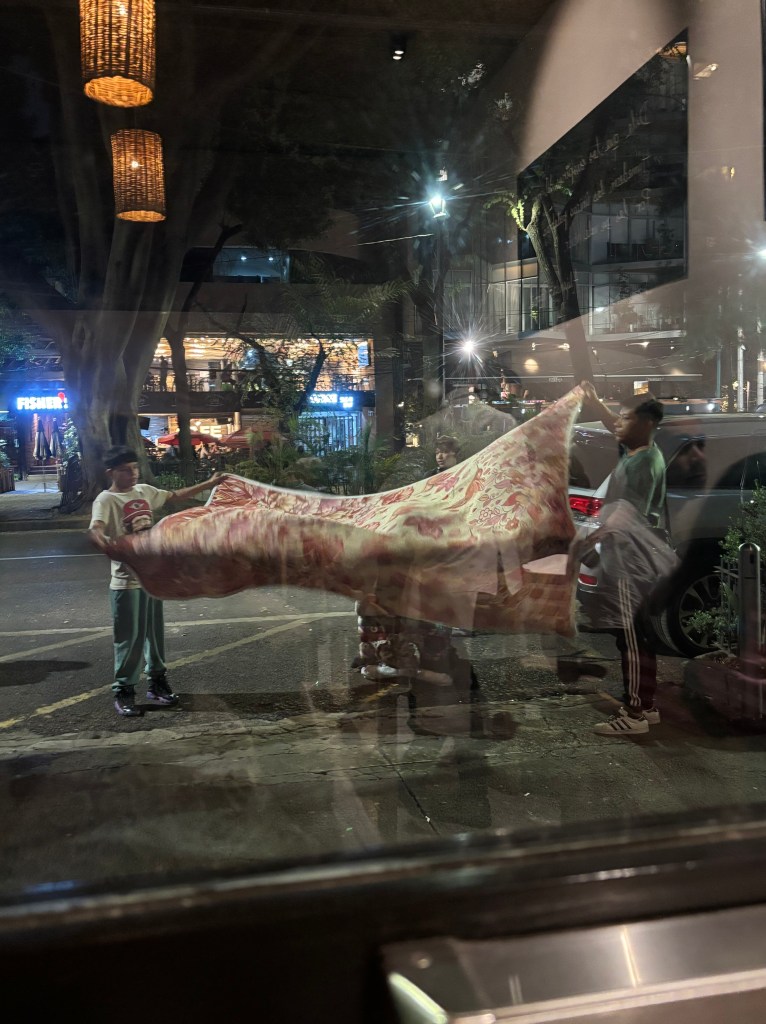
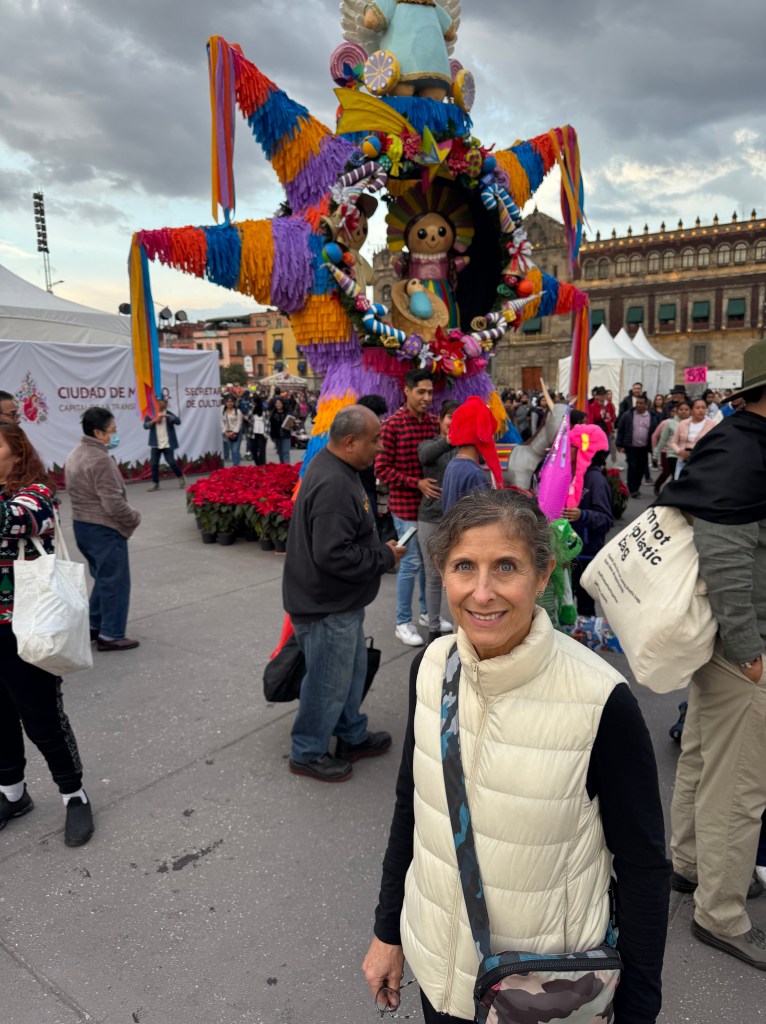
During this busy holiday season, I would be remiss if I did not mention the incredible amount of commerce that goes on in the streets, parks and plazas of Mexico City. Ambulantes sell their wares wherever they can. People peddling candy, nuts and chips from trays up and down the streets; pushcarts with juices, fruits, fried potatoes and plantains are stationed at park entrances; musicians serenading al fresco diners and then passing their hats for tips; and holiday markets (mostly selling the same items) pop up on many of the major boulevards. Last week we dined at a local Peruvian restaurant; we were inside, when all of a sudden I noticed a man showing his rugs to us through the window. It was a presentation to us as there were no other diners nearby. Little did he know that we have no place to put a rug at the moment! We saw this same sales pitch going on a few days later at a different location.

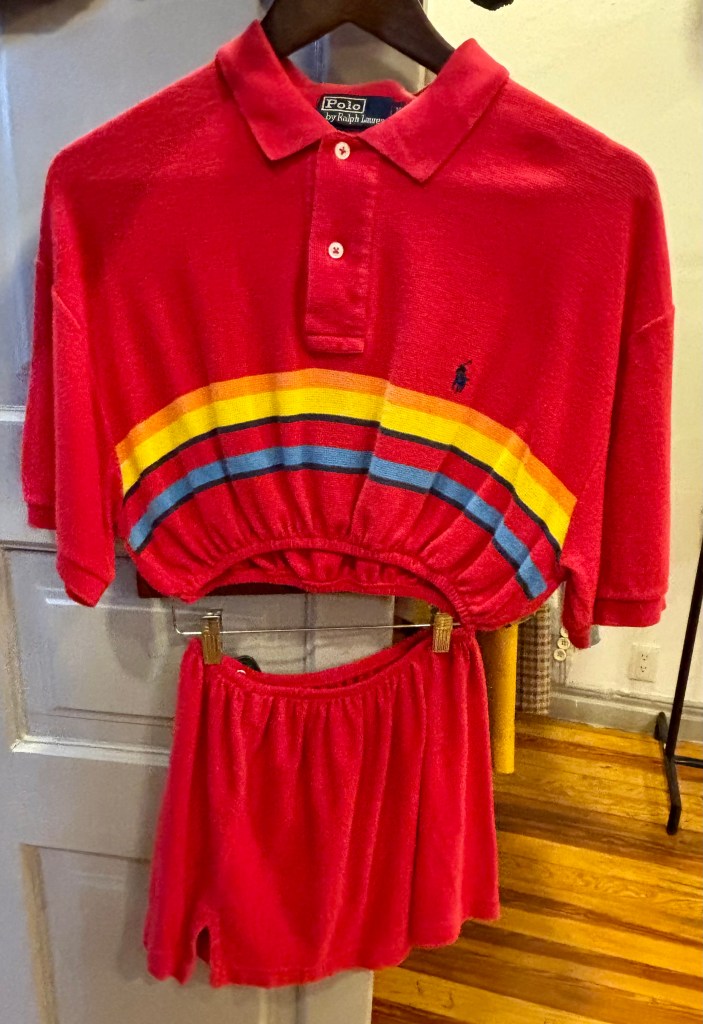
And then there is the world of resale. There are many shops selling “vintage” second-hand clothing, especially in our neighborhood of Roma Norte. Our neighborhood does have a bit of a Williamsburg vibe to it so this came as no surprise and resale promotes sustainability. One day we happened in on a store called Good Bye Folk. It was well-merchandised and very creative. While we didn’t buy anything (again, we have no place to even put extra clothing at this point), we loved exploring racks of used and repurposed clothing.




Happy Chanukah – Feliz Janucá
On Boxing Day, Andy and I went out for a run. It is still a challenge to run at this high altitude and I traded in my running time for yoga time during these last two months. Our reward was Mendl’s, a local jewish-style delicatessen where we enjoyed a Chanukah feast. That was no myth but part of me thinks it was a miracle to find a Jewish deli on Chanukah, with latkes, lox and sufganiyot!



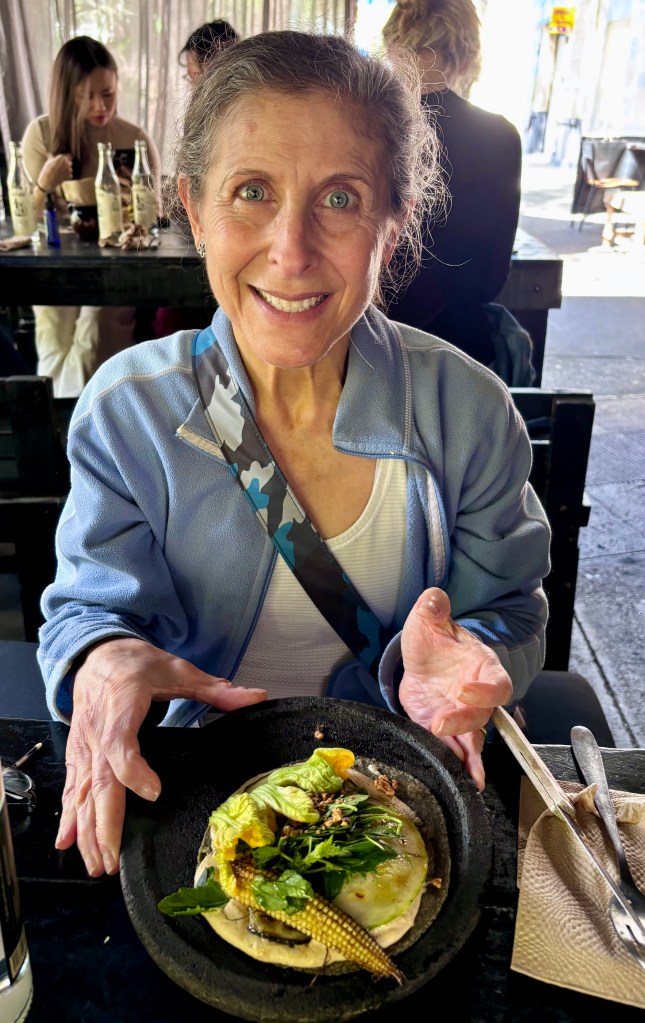
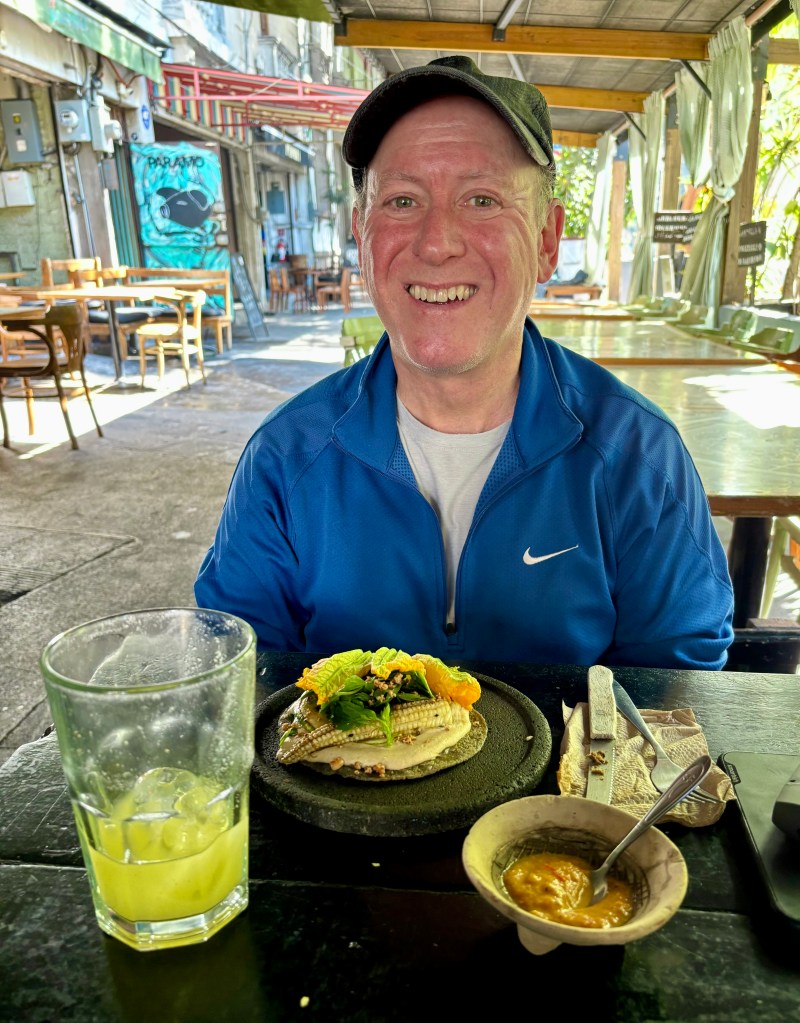
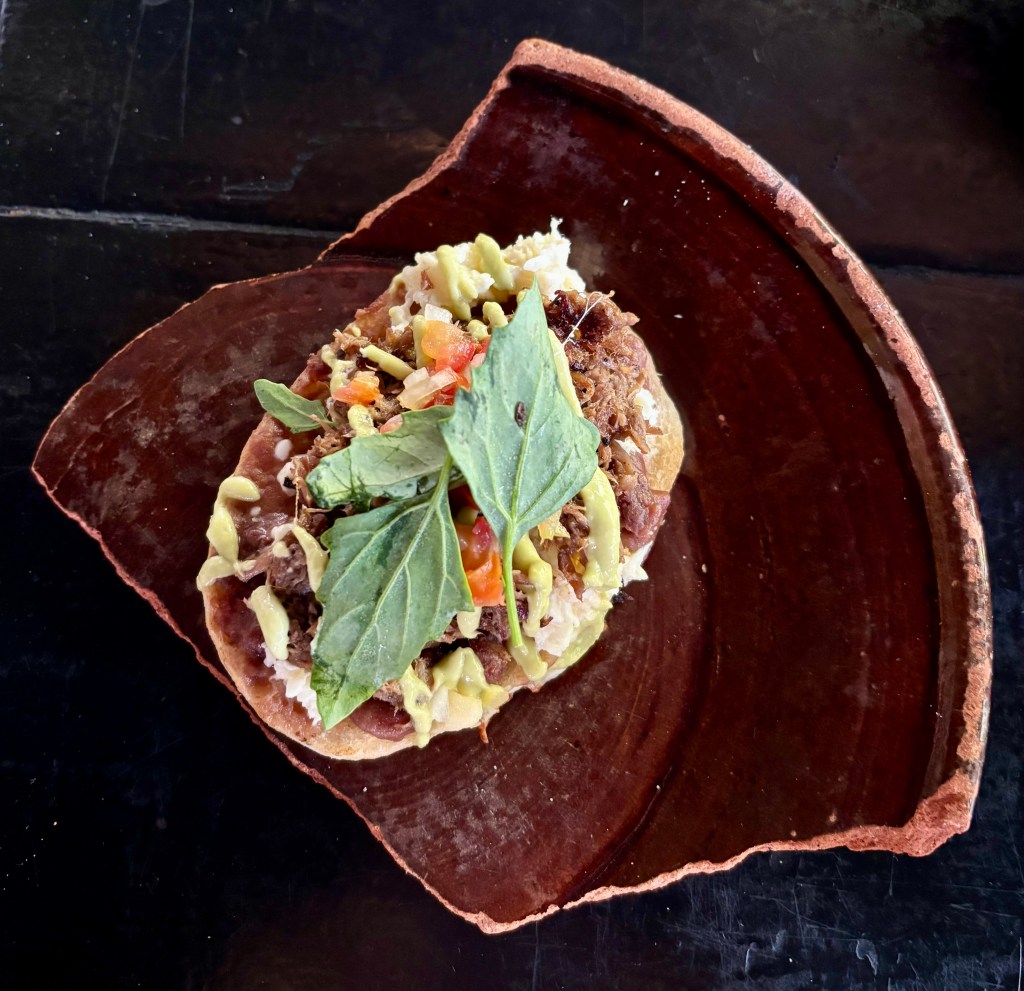
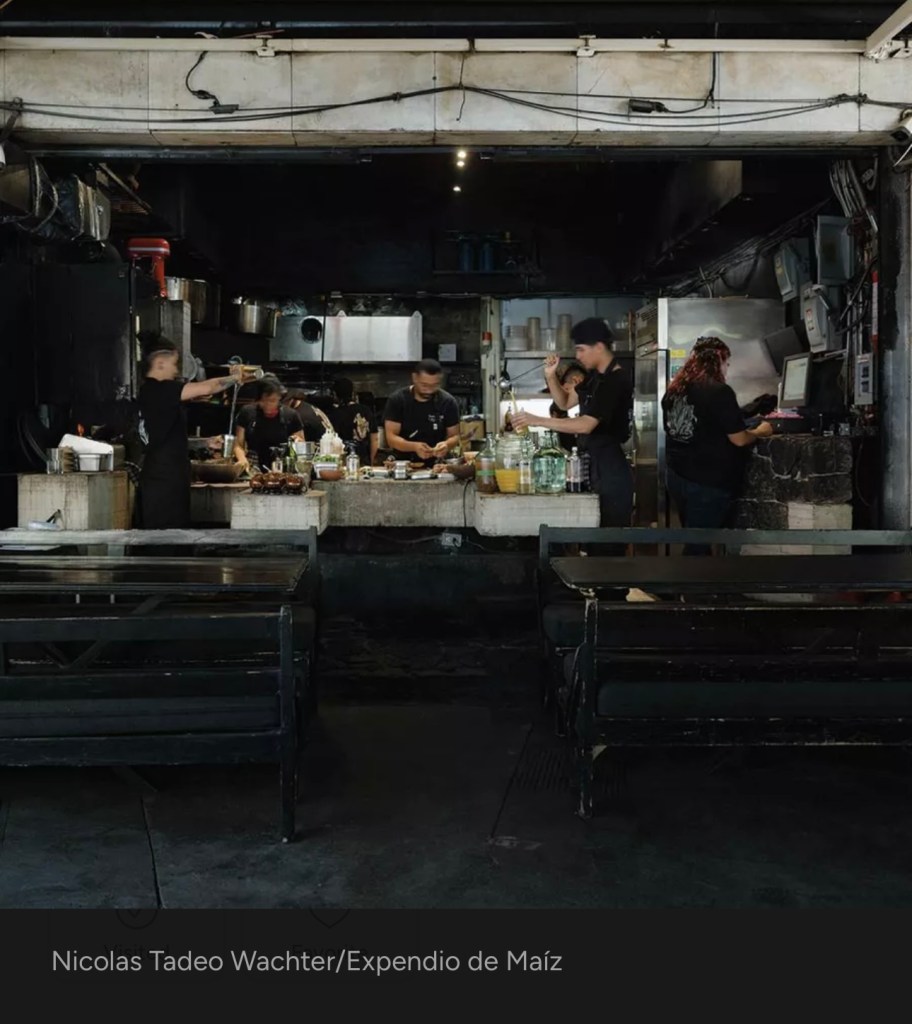
As you may have guessed, I find the museums but Andy finds the food! There is a restaurant with no name right around the corner from our apartment and we must have walked by constantly. Who knew it had a name, Expendio de Maíz, and is a Michelin 2024 honoree? We had to get there first thing in the morning to put our name down; there was already a two-hour wait. So in anticipation of a good lunch, we went to the gym. No menu: the food keeps appearing until you say stop. I just had to share what Michelin wrote about this place:
Tucked between two other establishments with no visible sign, Expendio de Maíz invites diners to take a seat at one of four long tables arranged under the covered sidewalk. While there are no reservations, there are a number of seatings, with guests placing their name on the list for the next round. This novel
concept offers no food menu; instead, each course is presented as a surprise, one-by-one, until you confirm that you have had your fill. The team sends forth a range of impressively executed plates such as a warm, tender, and crisped yellow masa huarache topped with a thin slice of braised beef along with avocado, cherry tomatoes, queso blanco, and a scattering of lightly dressed young greens. The accompanying salsa is worth slathering on any and all preparations.


Wishing you a Merry Christmastide (just learned that word) and a Happy Chanukah. This Festival of Light celebrates miracles, and wonders, at the same time of the year our neighbors in Mexico celebrate the Miracle of the Virgin of Guadelupe. May the rest of 2024 and 2025 be filled with light, joy, good health and the love of family and friends. Andy and I say goodbye to Mexico on December 31 and plan to be in the New York area for ten days before we travel to the Trois Vallées of France for the final immersion of our fifteen months of travel.
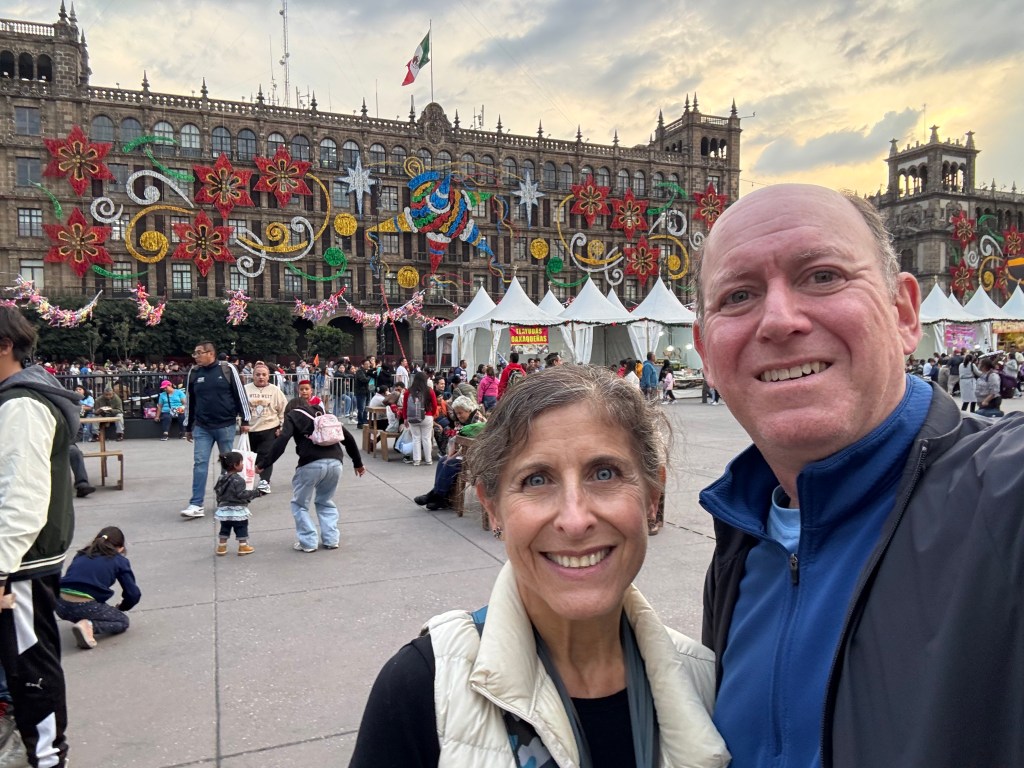

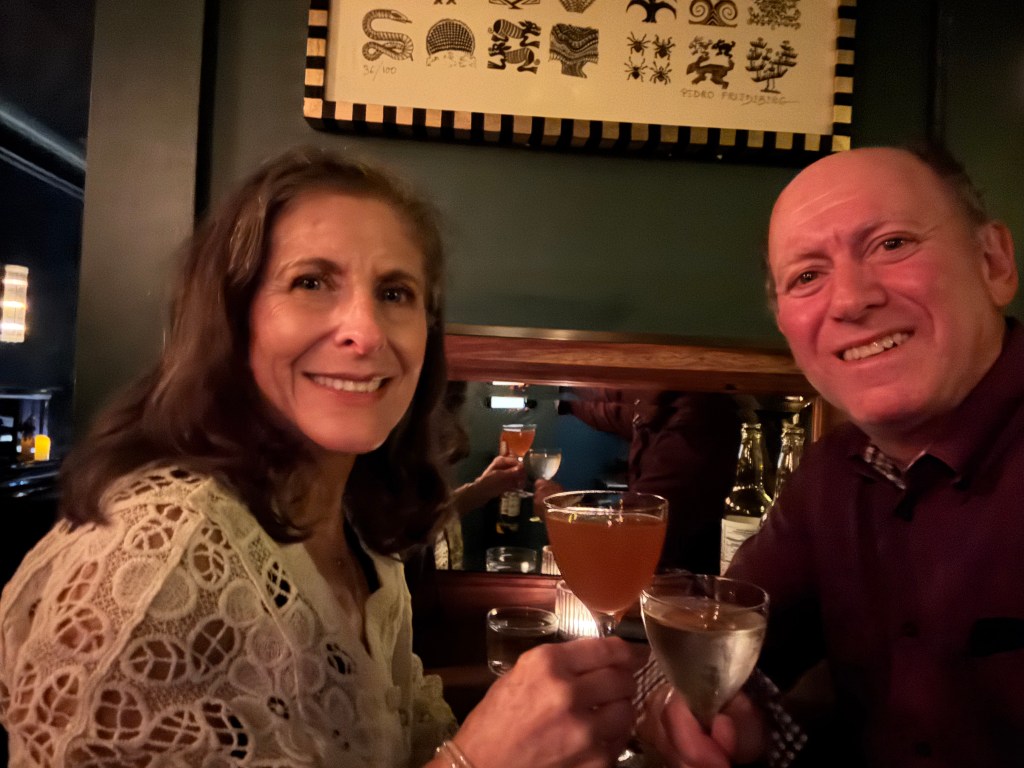
¡Feliz y saludable año Nuevo y hasta pronto! / Happy and healthy new year and see you soon!
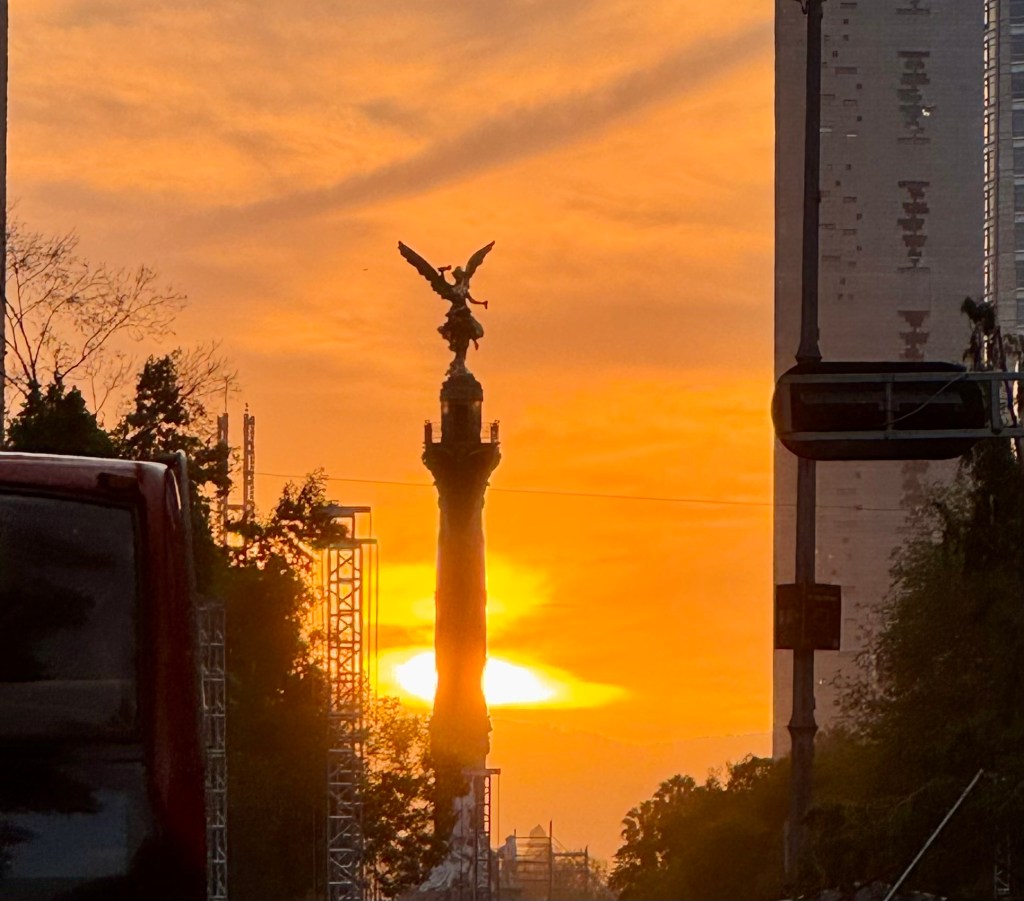
 The Innocents Abroad, 21st Century Version