June 14-16
I am happy to report that Andy’s luggage materialized after a week, during which time his wardrobe was greatly enhanced (in my opinion).
We loved our 48 hours in Barcelona, the capital of Catalonia and its largest city. Barcelona, is a major center for culture, sport and tourism. The city’s energetic vibe was quite visible over the weekend as the main pedestrian street, La Rambla, was mobbed. The weather was delightful and the late sunset contributed to the fun atmosphere in “Barna.”
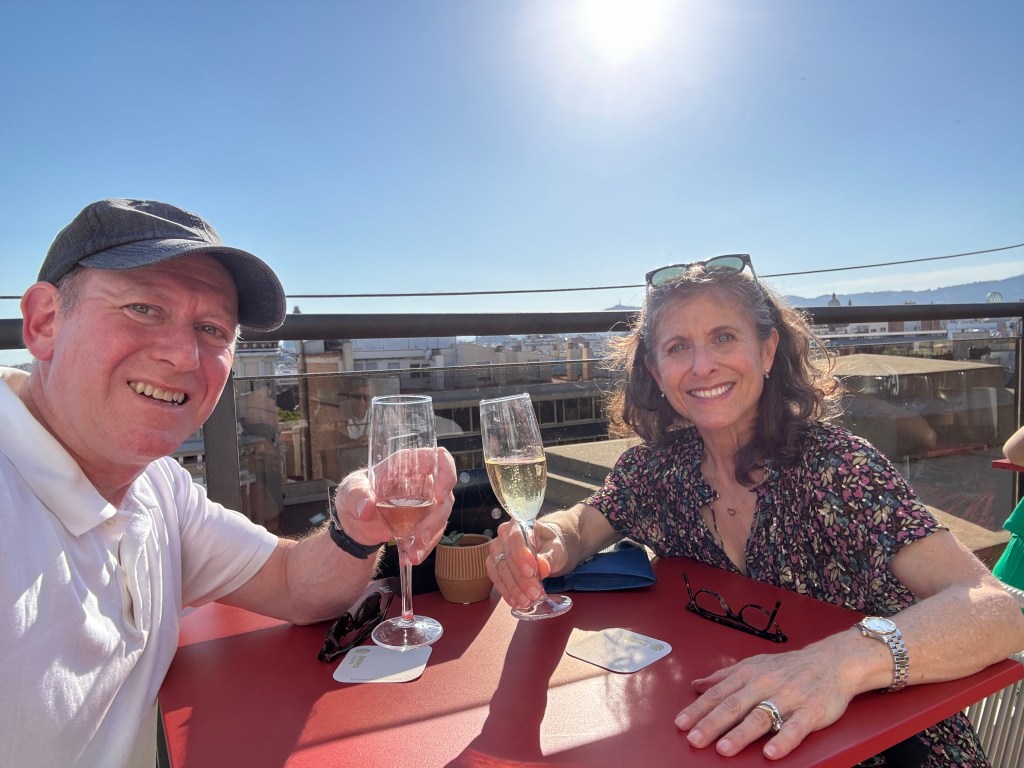
Since we have been here before, we knew a bit about what we wanted to do, redo and visit. We booked the lovely Hotel Serh’s Rivoli, very close to La Plaça de Catalunya and were happily surprised to be upgraded to a suite with a balcony overlooking and listening to the hustle bustle of La Rambla. This plaza opened in 1927 and is considered the center of the city. For the next two weekends, it’s hosting the fan-fest for the upcoming Formula 1 Spanish Grand Prix. Since we already went to a fan-fest, back in 2020 in Melbourne (although that race was canceled), we decided not to wait on the long line to enter. We also had no plans to go to the race. Instead, we opted for a long walk, a nice dinner and a visit to the (now much fancier than when we stayed there 11 years ago) cocktail bar at the Ohla Hotel where I chatted it up with the people guarding entry (one of them then escorted us up to the roof — we made it past the bouncer — took 61 years for that to happen 😉).


Saturday morning was devoted to Pablo Picasso (1881-1973). I can never get enough of this incredible artist who had such a strong relationship with Spain and Barcelona. Picasso’s father was an art teacher and Picasso spent some formative years studying art here. It was said that Picasso chose Barcelona to house his early works over Málaga, his birthplace. Whereas the Paris Picasso Museum was created so the Picasso heirs would not have to pay huge taxes after the artist’s death, the museum in Barcelona was conceived of and opened in 1963, while the artist was still living. The earlier works stayed with family in Barcelona after Picasso’s 1904 move to Paris and became part of the museum’s collection when in 1970, Picasso donated more than 900 works to the city. Much of the art in the museum was also donated by Jaume Sabartés (Picasso’s secretary) and Picasso’s family.
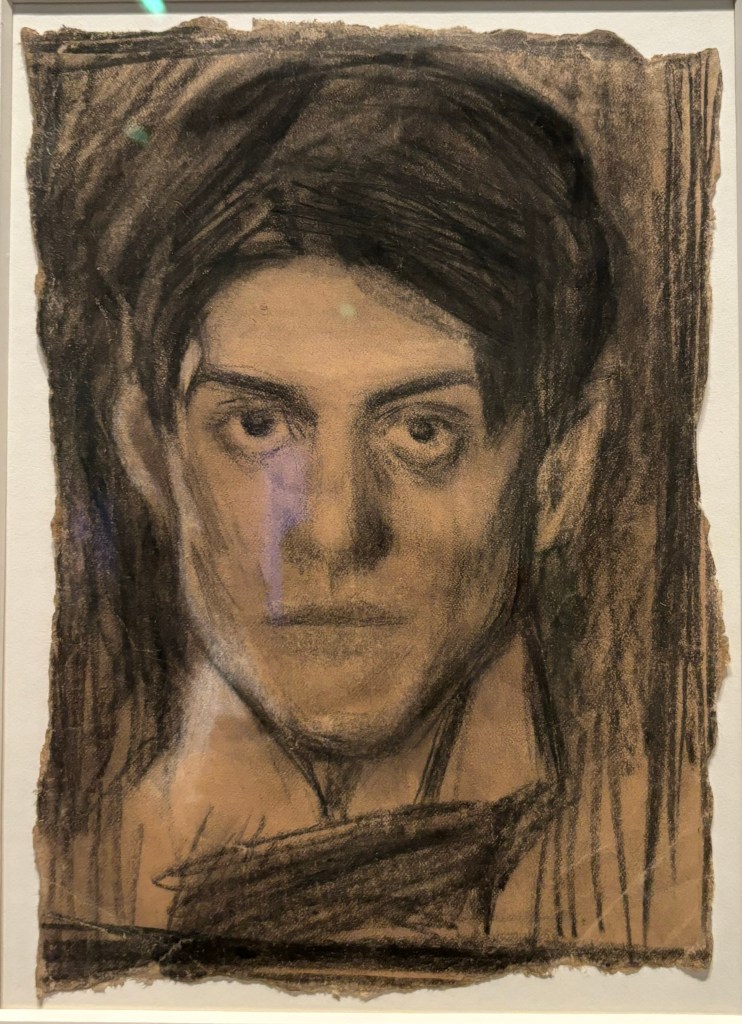
The museum is presented in chronological and our visit included a special exhibit called Fernande Olivier, Pablo Picasso and their Friends. Olivier (1881-1966) was a model to many contemporaries of Picasso and became the artist’s first muse as well as partner, from 1904-1912.
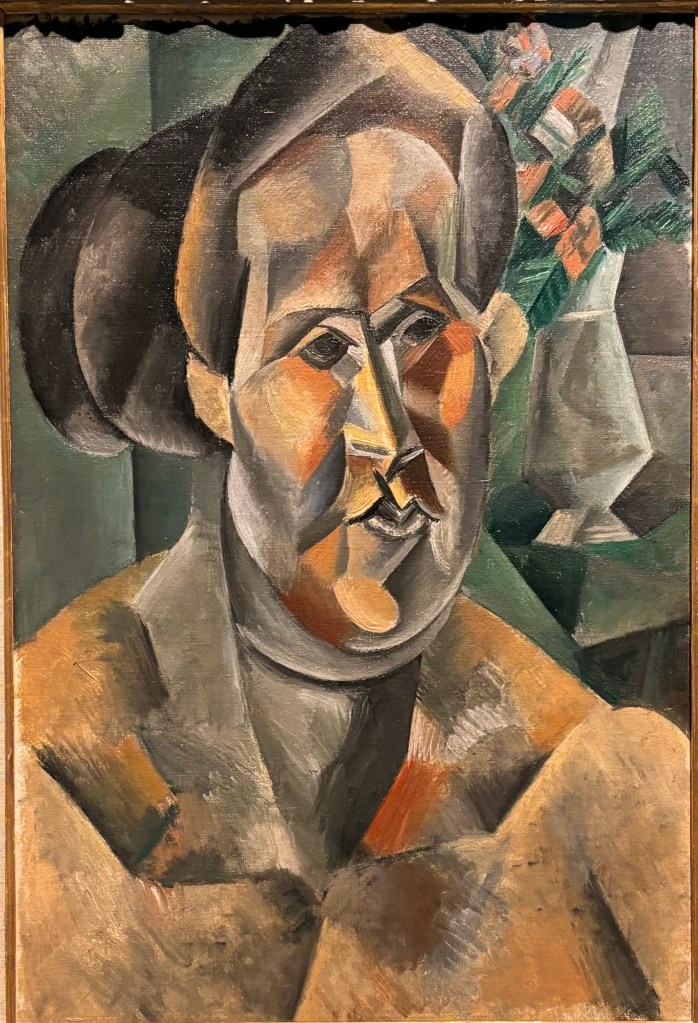
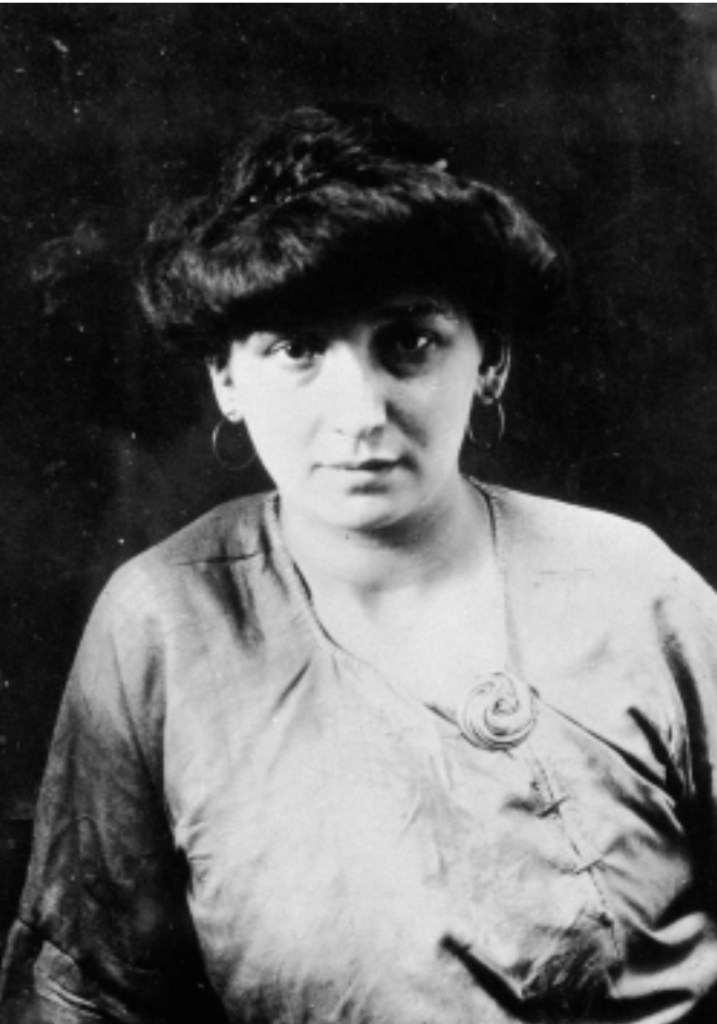
Olivier was an artist in her own right and some of her work was part of the exhibit. But what Fernande Olivier might be best known for was her writing. Olivier wrote Picasso et ses Amis in 1930 and Loving Picasso, 1988, was a compilation of articles of which Picasso originally had blocked. Sadly, Olivier often came upon hard times post-Picasso and in her later years, she asked and received a pension from Picasso with her promise of not publishing anything about him while they were both still living.
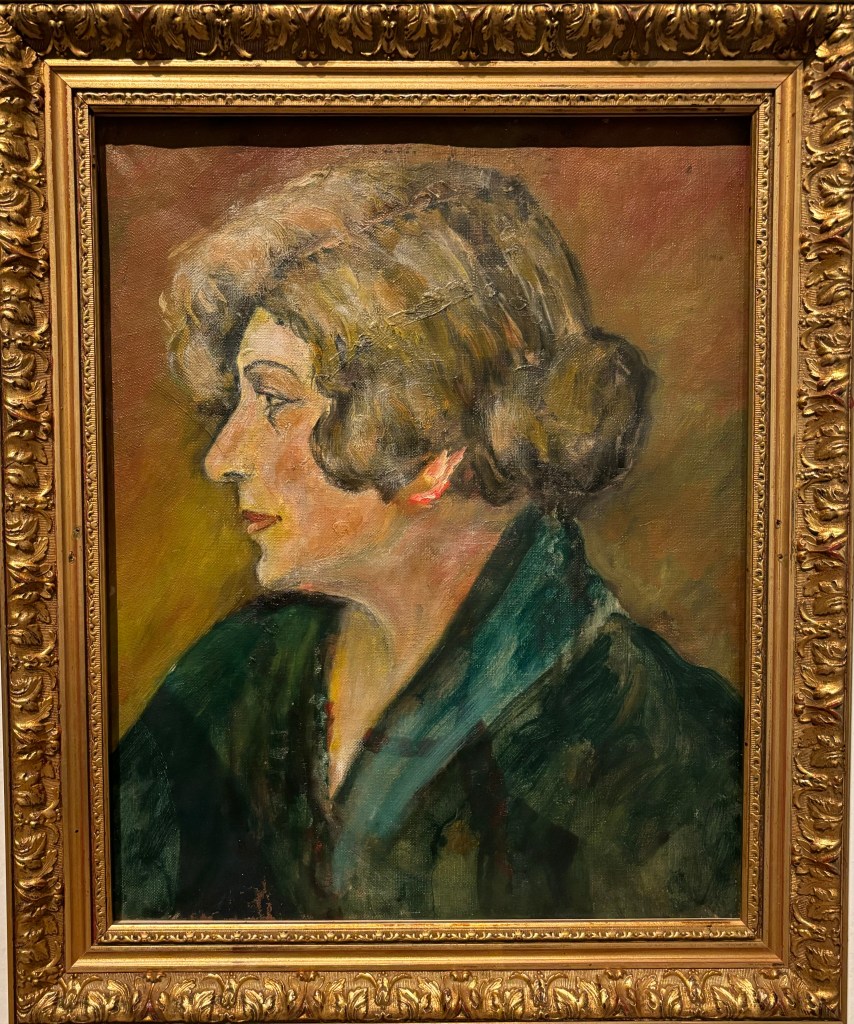
“I spent the most precious years of my life with Picasso: the years when I was happiest.” Fernande Olivier, Picasso et ses Amis
During Pablo Picasso’s formal art education, he was and remained greatly influenced by El Greco and Velázquez. El Greco’s influence on Picasso is seen below in the mannerist (elongated) style both paintings share.
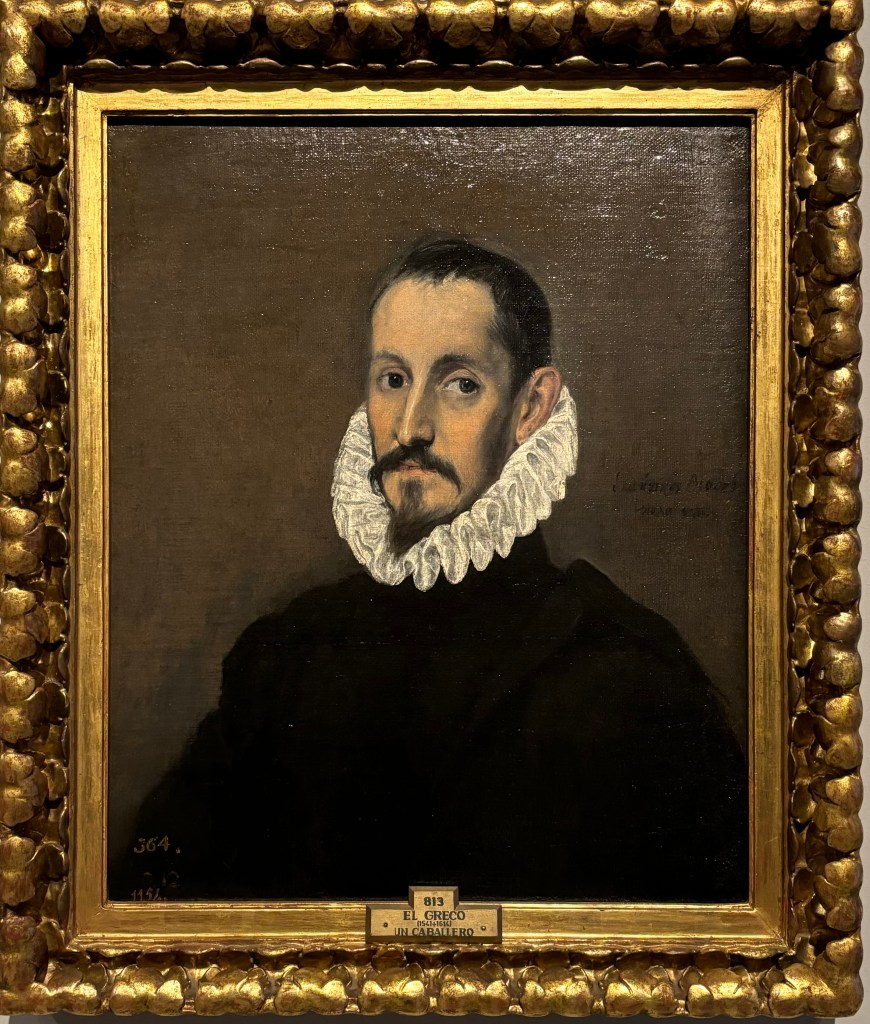
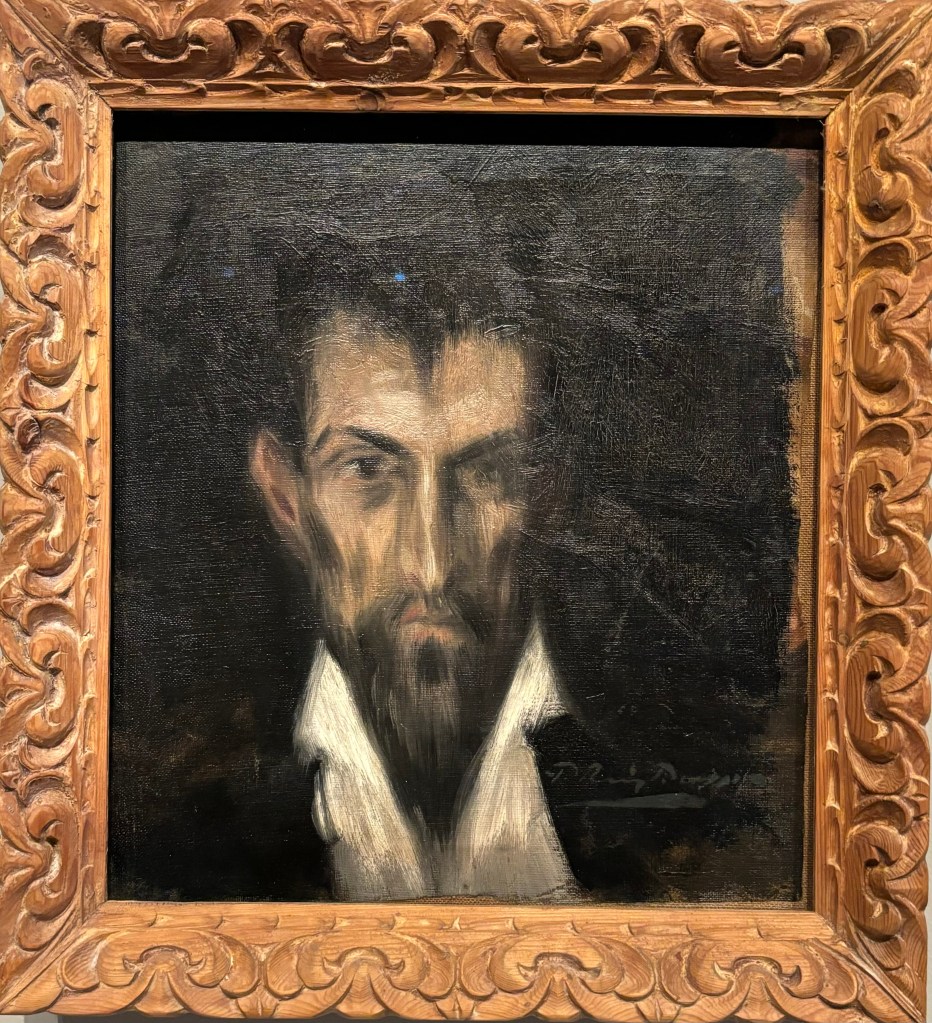
Who didn’t study Las Meninas by Diego Velázquez (1599-1660) in that college art history survey class? Well, Picasso studied it too and in 1957, the artist painted 45 analyses of Velázquez’s masterpiece out of the 58 paintings in this series — in a very short time. Picasso donated the complete series to the museum in 1968 in honor of Jaume Sabartés.
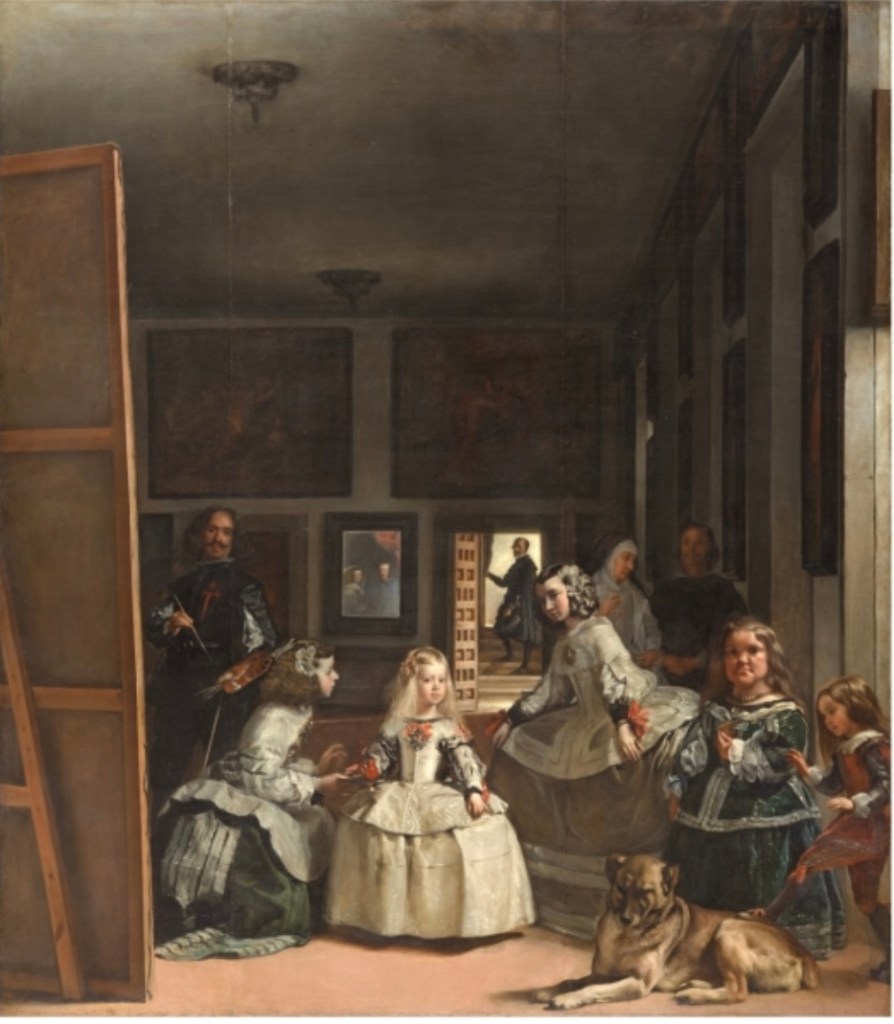
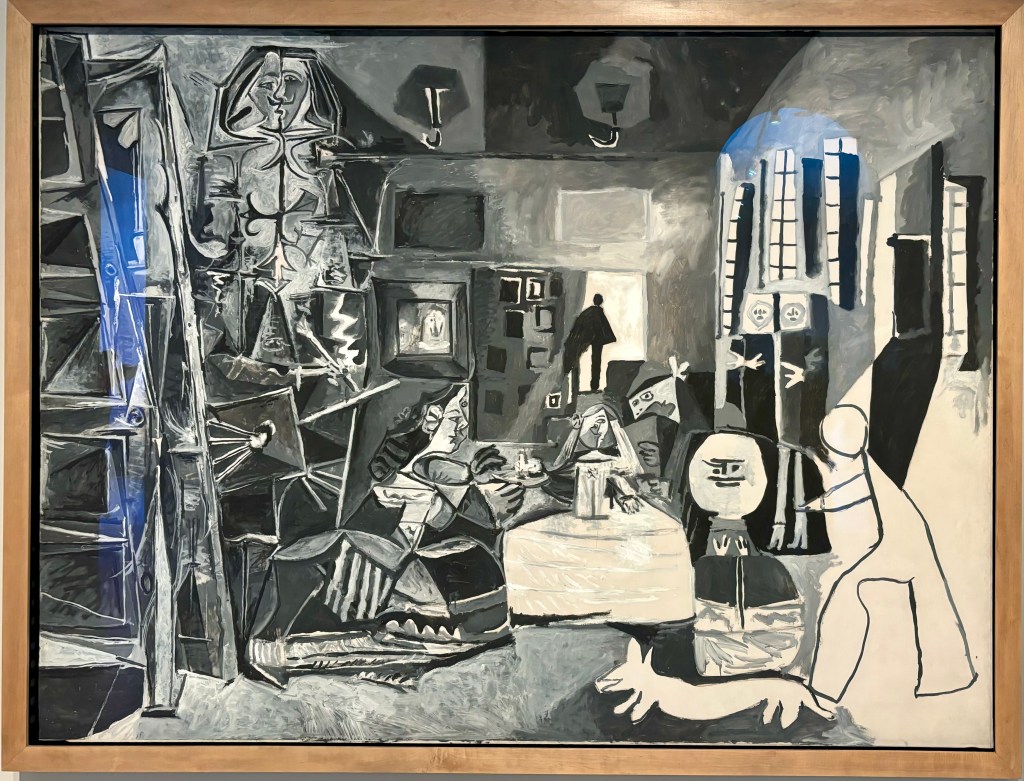
While Velázquez’s main character is the Infanta Margarita (she is recognizable in every one of Picasso’s versions), it is Velázquez, the artist on the left, who has grown significantly in Picasso’s version.
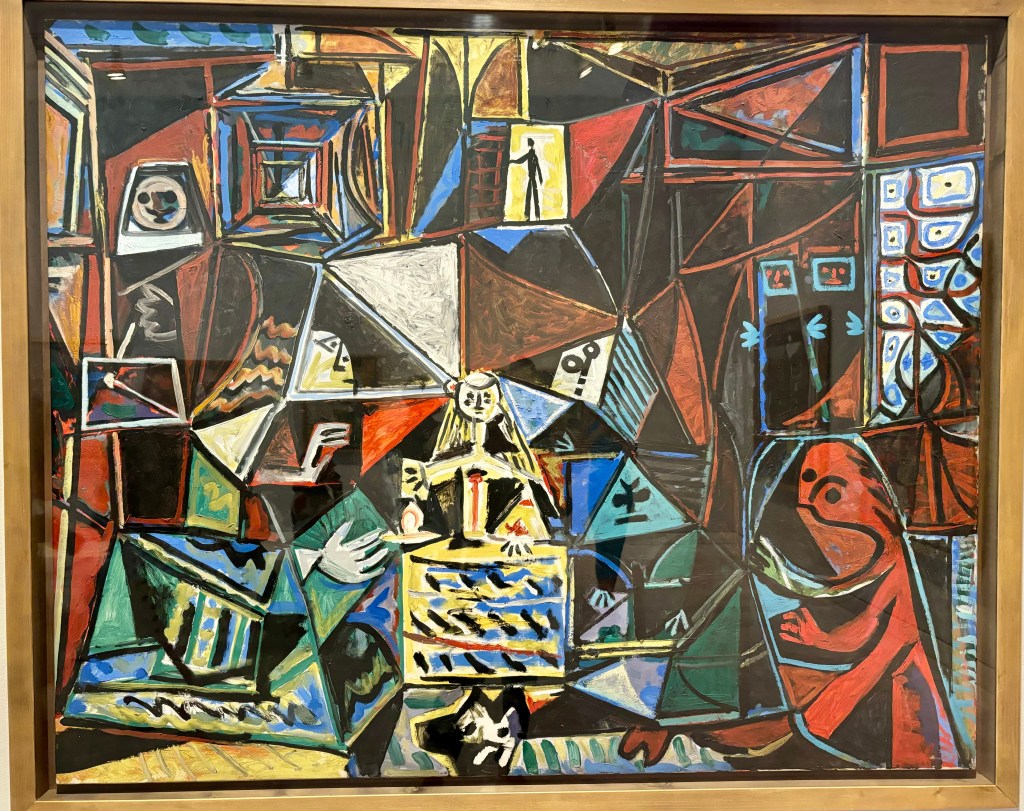

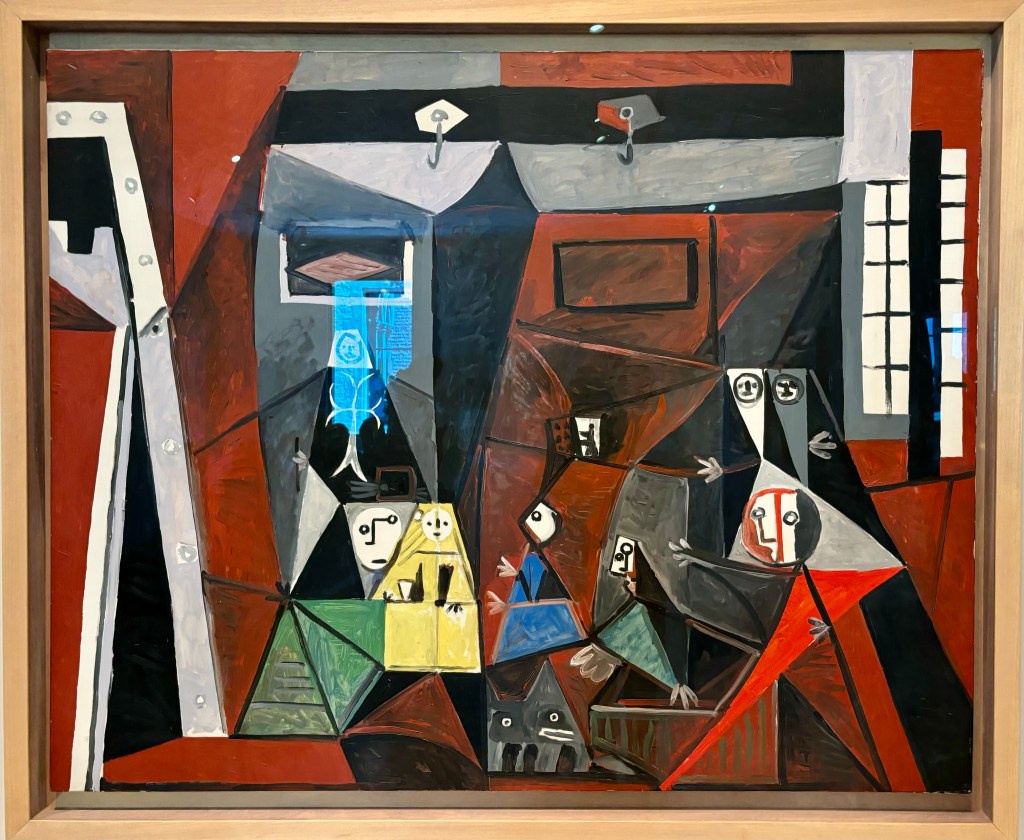
If you go to Barcelona’s Picasso Museum, don’t miss the short film with clip after clip from cinema and television, all referencing Picasso. It was quite fun.
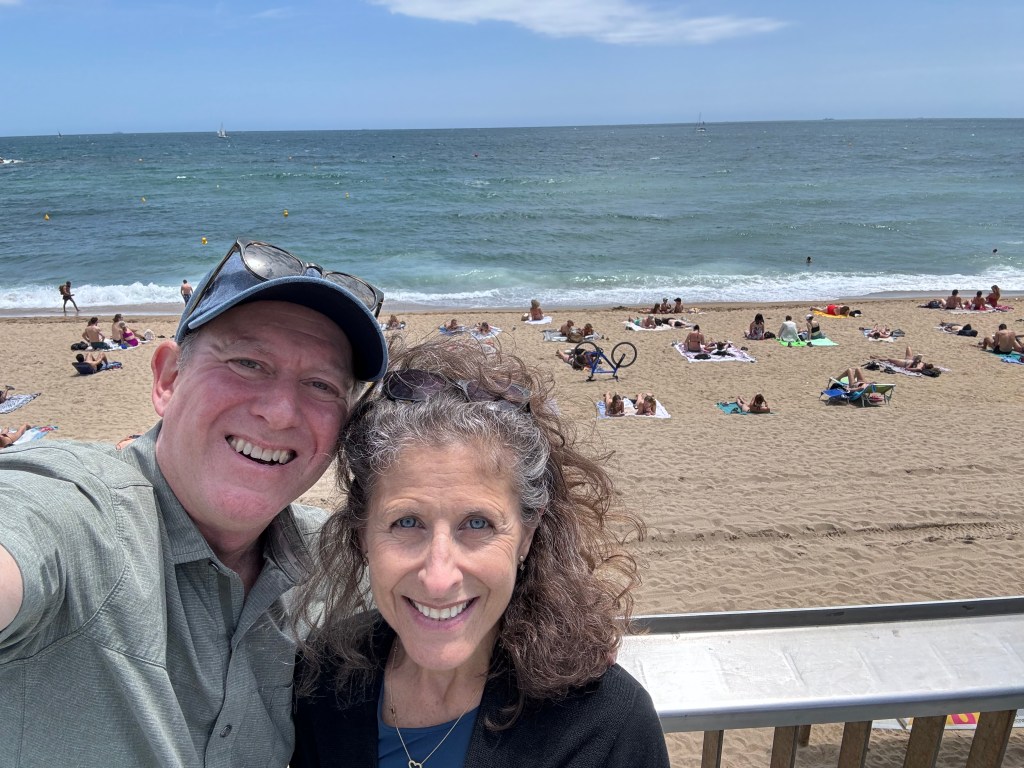
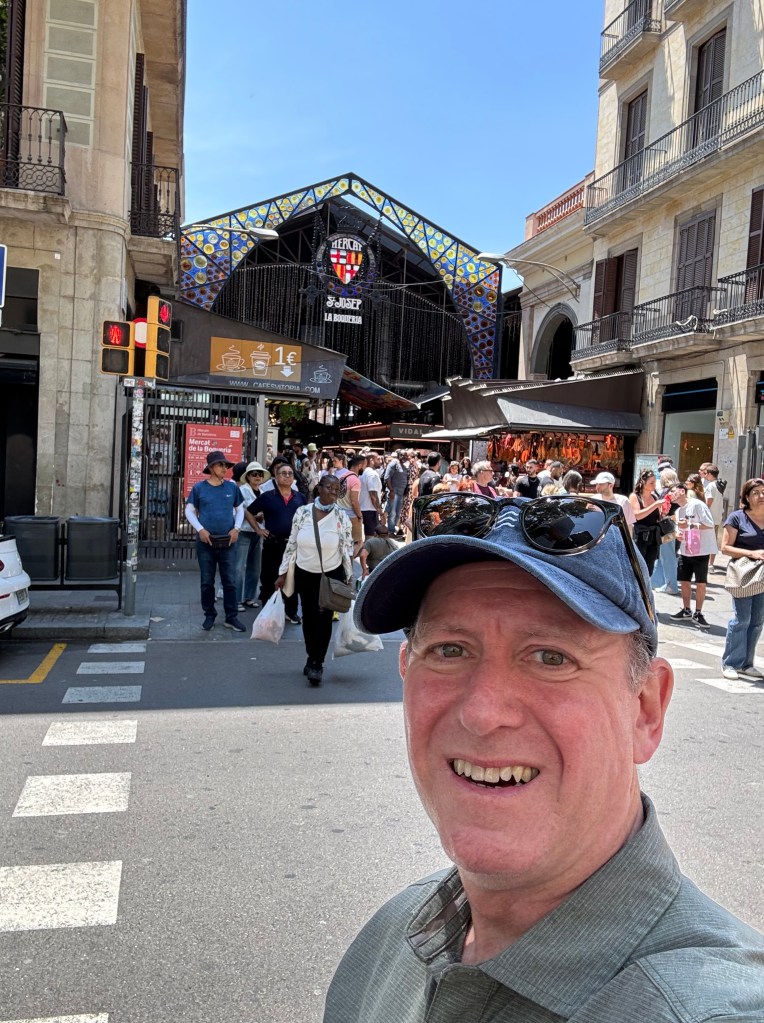
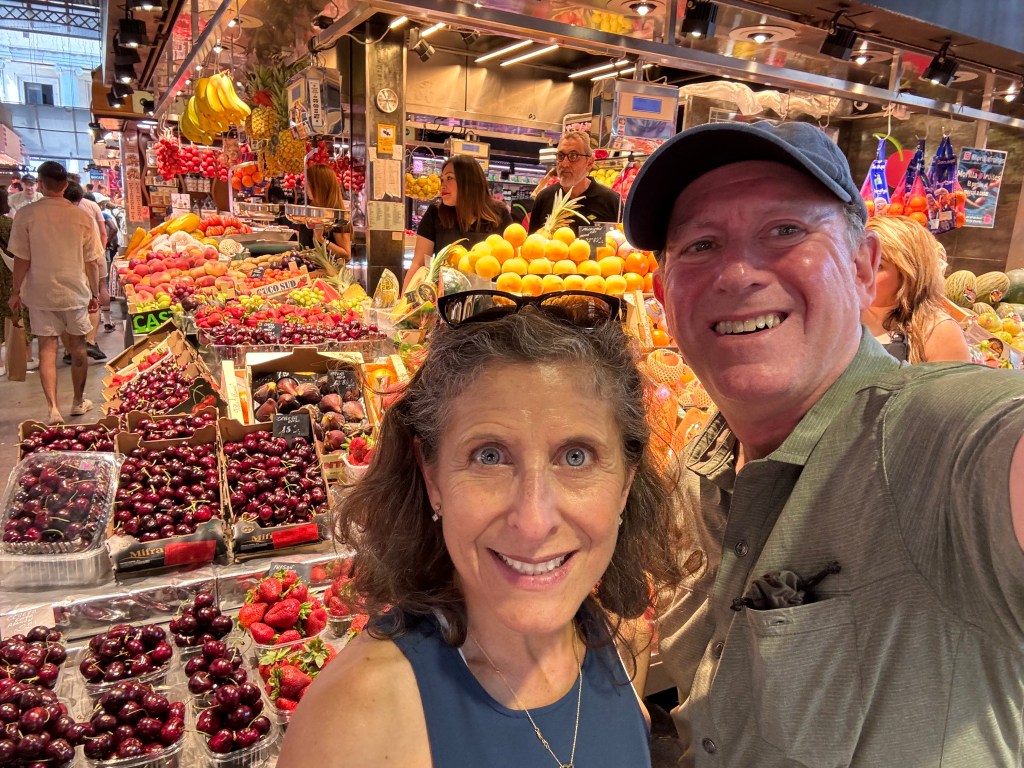
Our après Picasso afternoon included a walk to the beach and a visit to la Boqueria Market where we bought some Happy Hour treats.
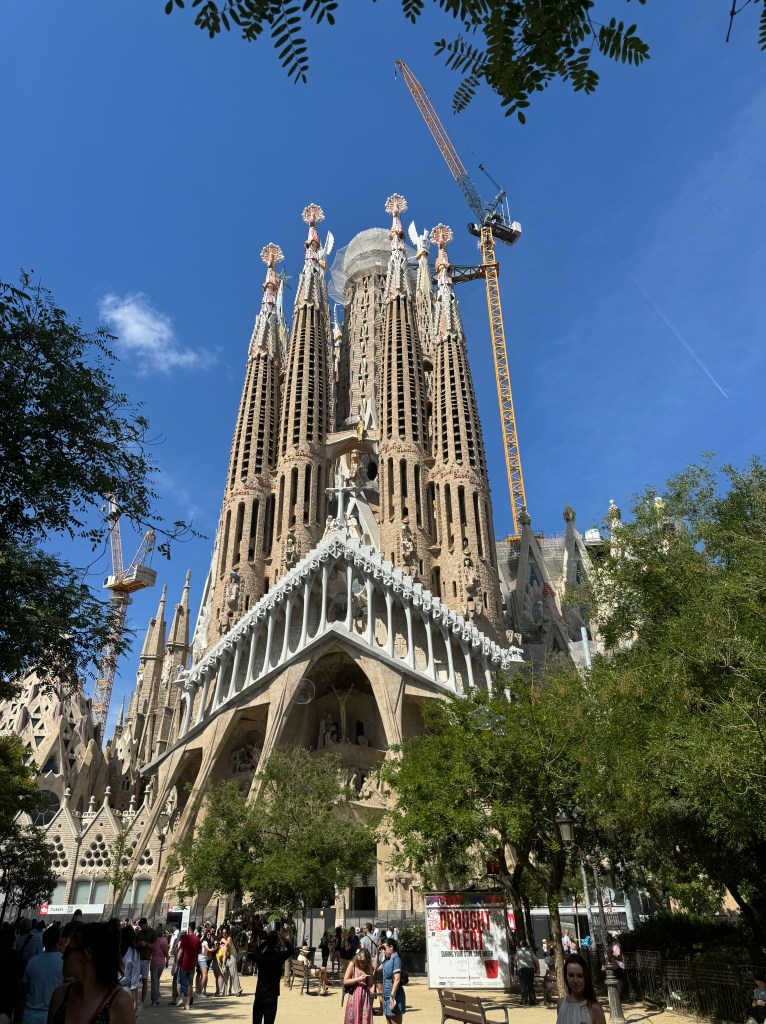
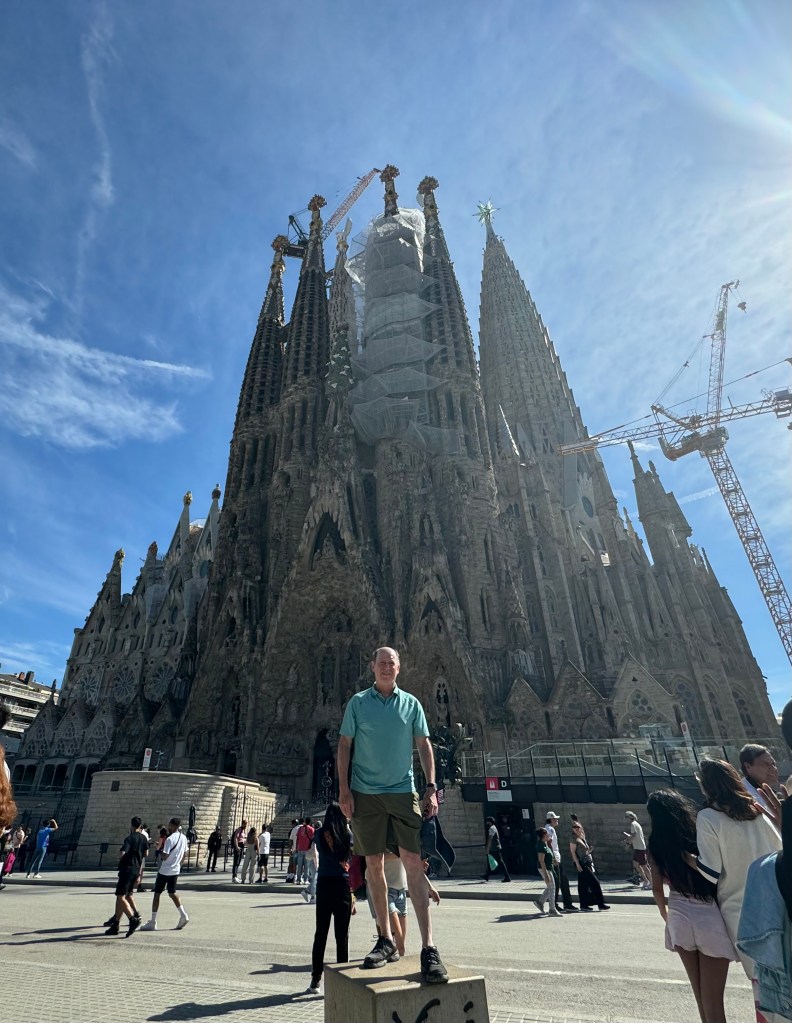
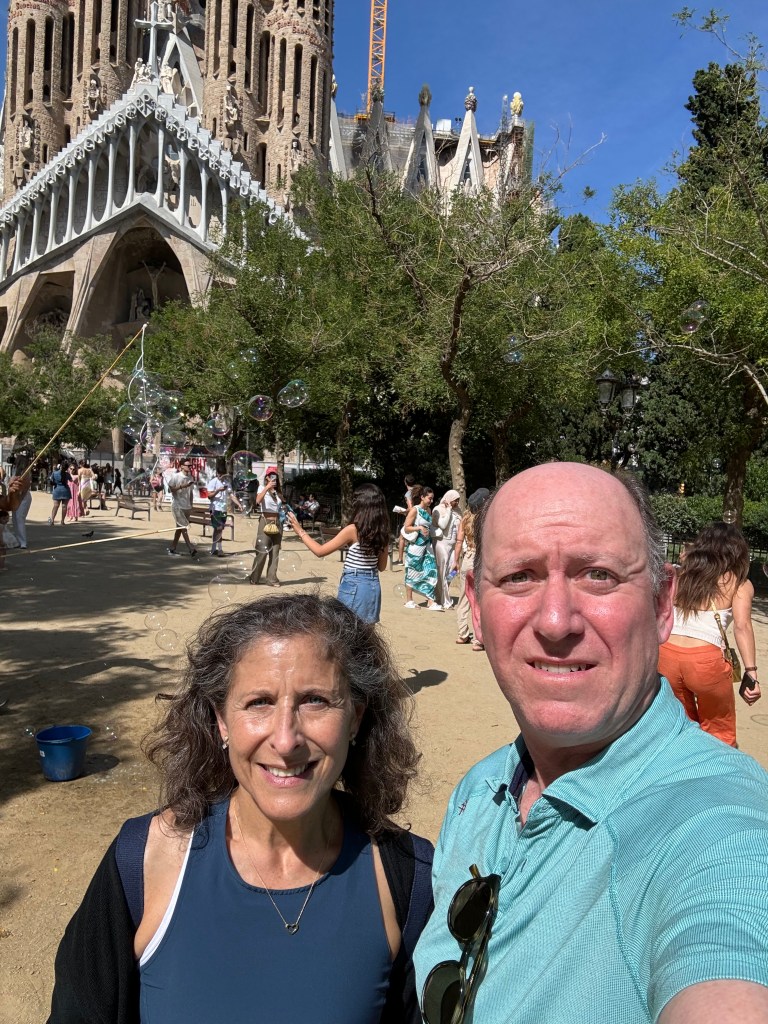
We also took a nice walk to check on the progress on the Basilica Sagrada Famila, the masterpiece of Antoni Gaudi (1852-1926). We visited in 2013 and saw that a tremendous amount of work has been completed over these last eleven years: the towers of the Evangelists, Mary and Jesus; the Cross on top of the pediment of the Passion Façade; and the star of the Virginia Mary. The anticipated completion is 2026. It is fascinating to walk around this basilica and see that some parts are brand new and clean and others are weathered, having been in place for more than 140 years.
All that art, architecture and history aside, our evening was a wonderful, with cousins Deb and Dave. This was a very special setting for our get together. Usually, it’s Lake Hopatcong. For Andy and Dave, that means long bike rides, many rounds of golf, floating with a few beers on the man-couch and pot-luck family feasts. Instead, we enjoyed wine and appetizers on their hotel terrace, followed by a delicious meal of paella.

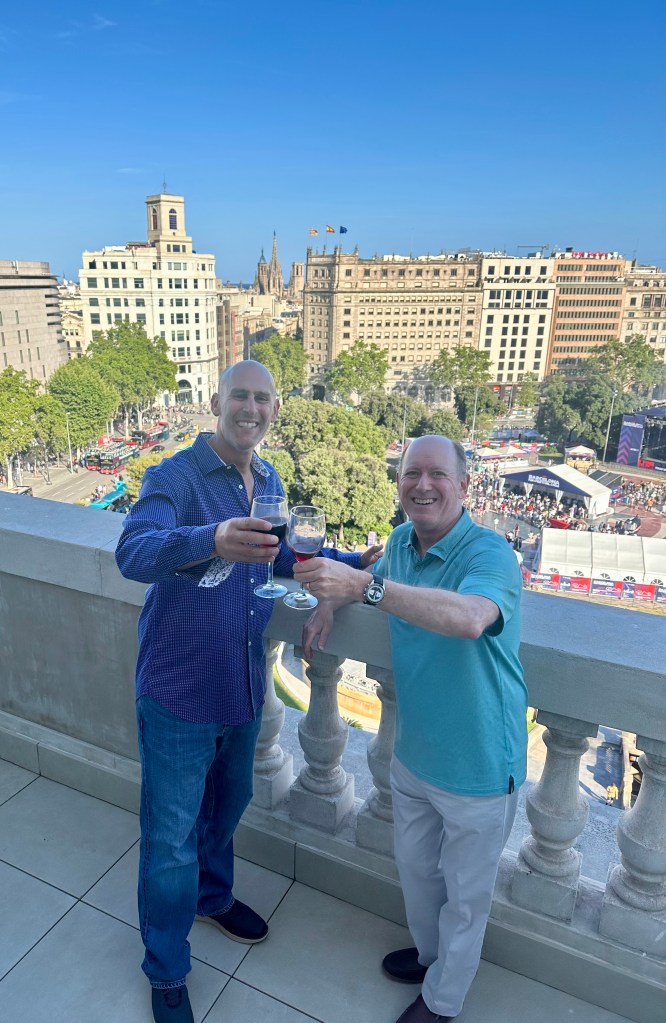


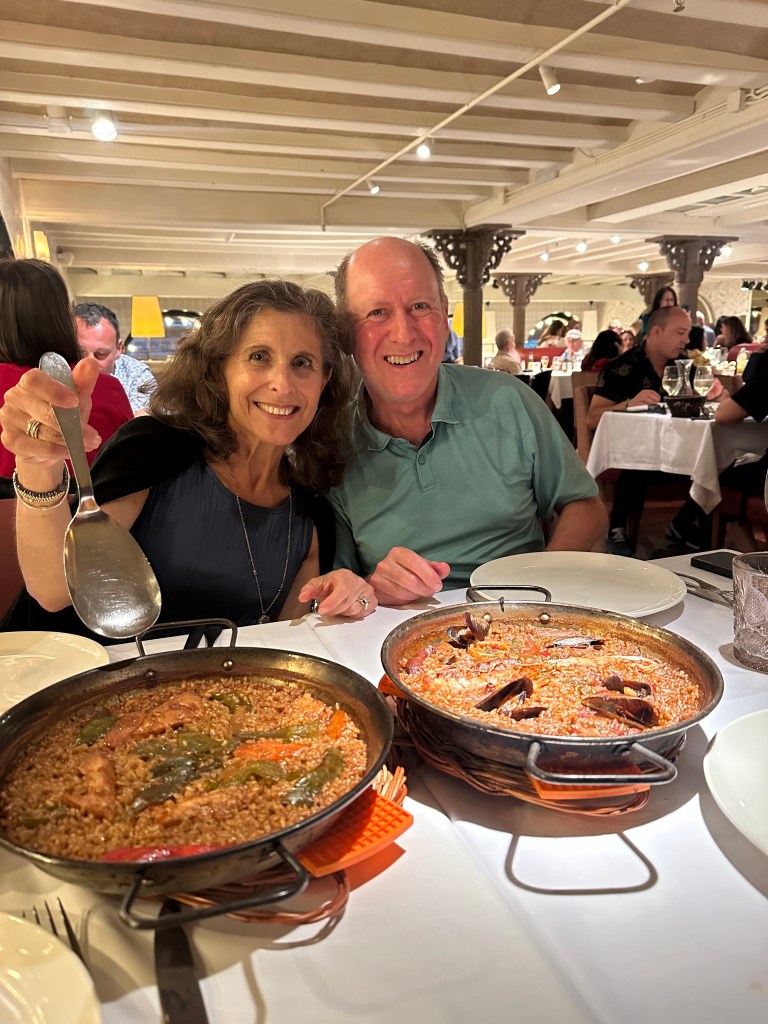
We clocked more than nine miles on foot, Saturday and every step was worth it.
Sunday morning, we enjoyed brunch on the Plaça Reial, which, by the way, has lampposts designed by Gaudi, and then walked to the Jewish “Call” or Quarter. We love learning about Jewish Heritage in every city we visit but the Jews were expelled from Barcelona in 1391, more than 600 years ago and now all that exists is a museum honoring the heritage of the Jews of Barcelona. It is thought that Europe’s first synagogue was here, built in the third or fourth century. It is also reported that the Jews represented fifteen percent of Barcelona’s population during the Middle Ages. But, in time, the Jews were accused of starting the Black Plague and were victims of pogroms. Fast forward to 1924 when Spanish Dictator Miguel Primo de Rivera allowed ancestors of expelled Spanish Jews to be eligible for citizenship, after more than 500 years.
It seems as though many European places where discrimination (forced conversion, pogroms, Inquisitions, scapegoating) existed throughout history, have recently embraced their rich Jewish history. Is it altruistic or self-serving, with the goal of attracting Jewish heritage travel and Jewish tourists? We have found this pattern in numerous cities that banished their Jewish population in the fourteenth and fifteenth centuries and cities whose non-Jewish citizens turned blind eyes when their Jewish neighbors were sent to the camps by the trainload and then took over their properties and built over their graveyards. While we wandered the narrow streets of Barcelona’s tiny Jewish Call, there were at least three English-speaking tours passing through. I just hope these tours provide an honest and not a sugarcoated revisionist history. And of course, we went to the MUHBA El Call, that museum of the history of the Jews in Barcelona (up until 1391).
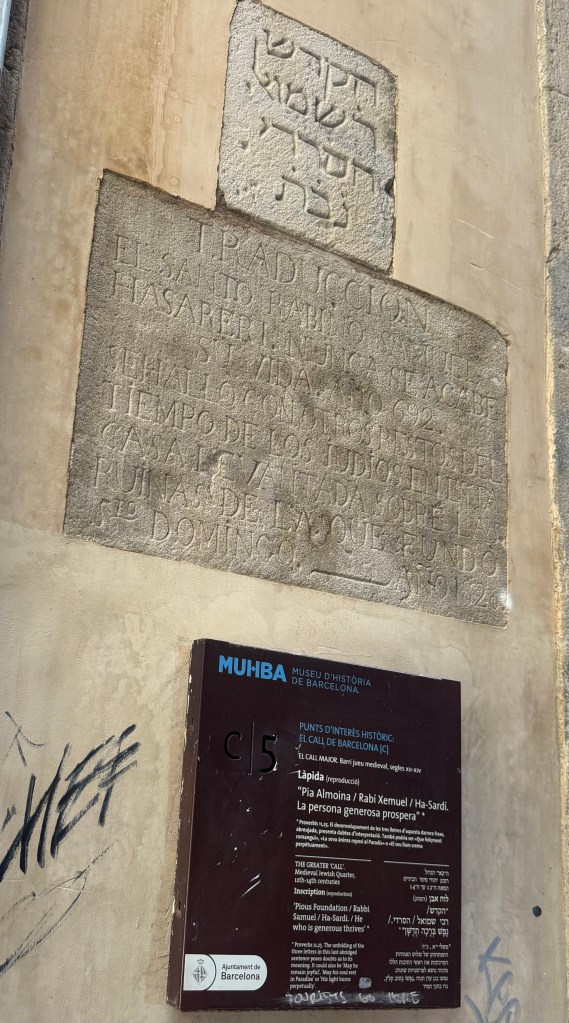

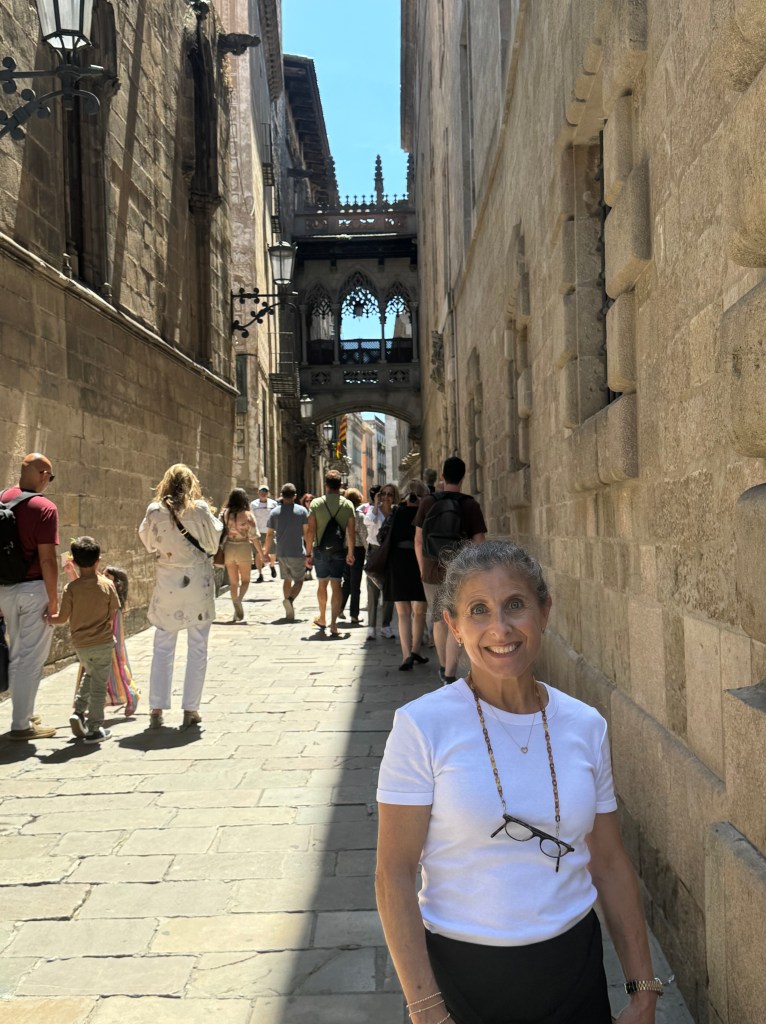
And Back to San Sebastián on Sunday, in time for a walk along the beach.
June 16-18
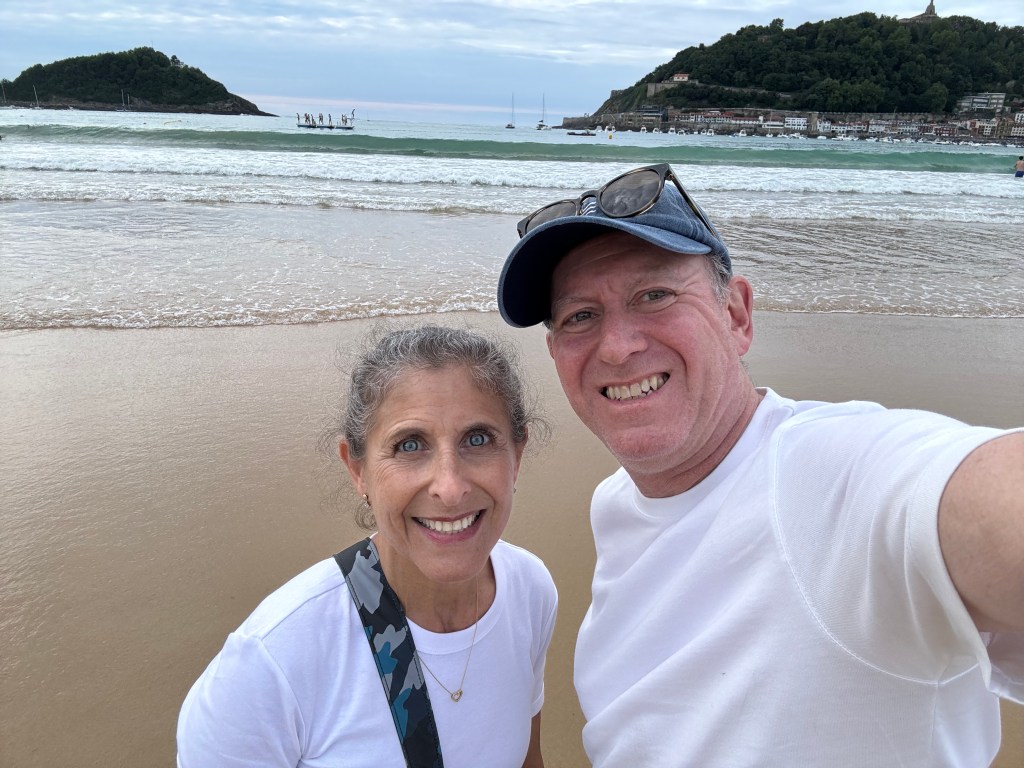
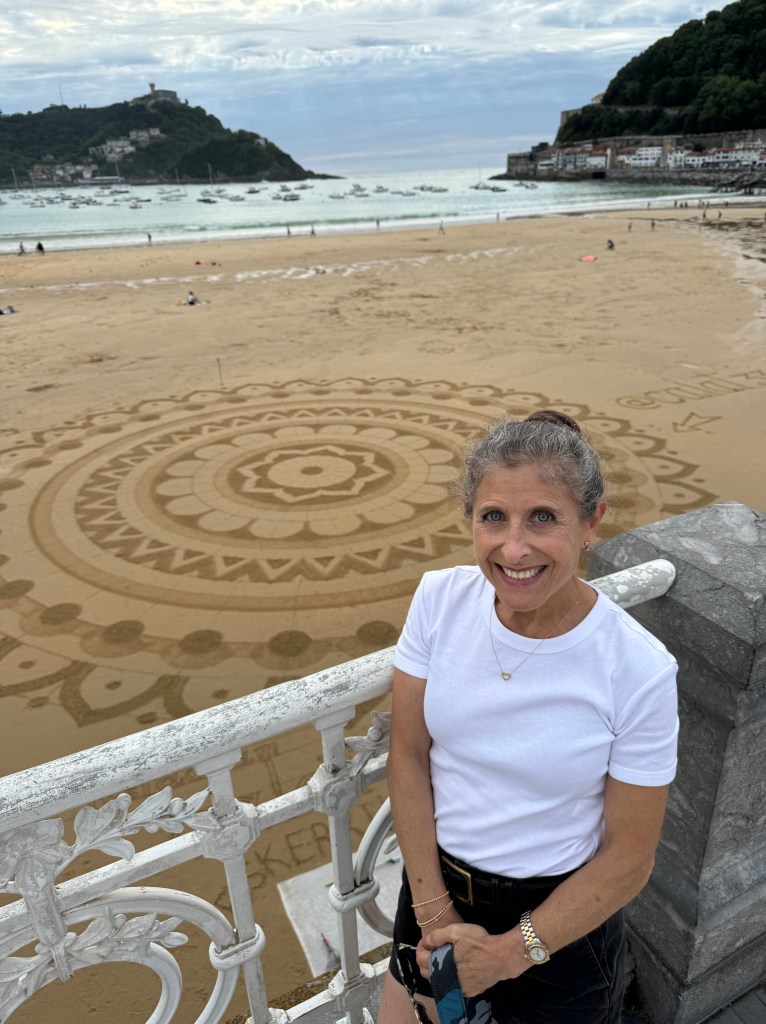
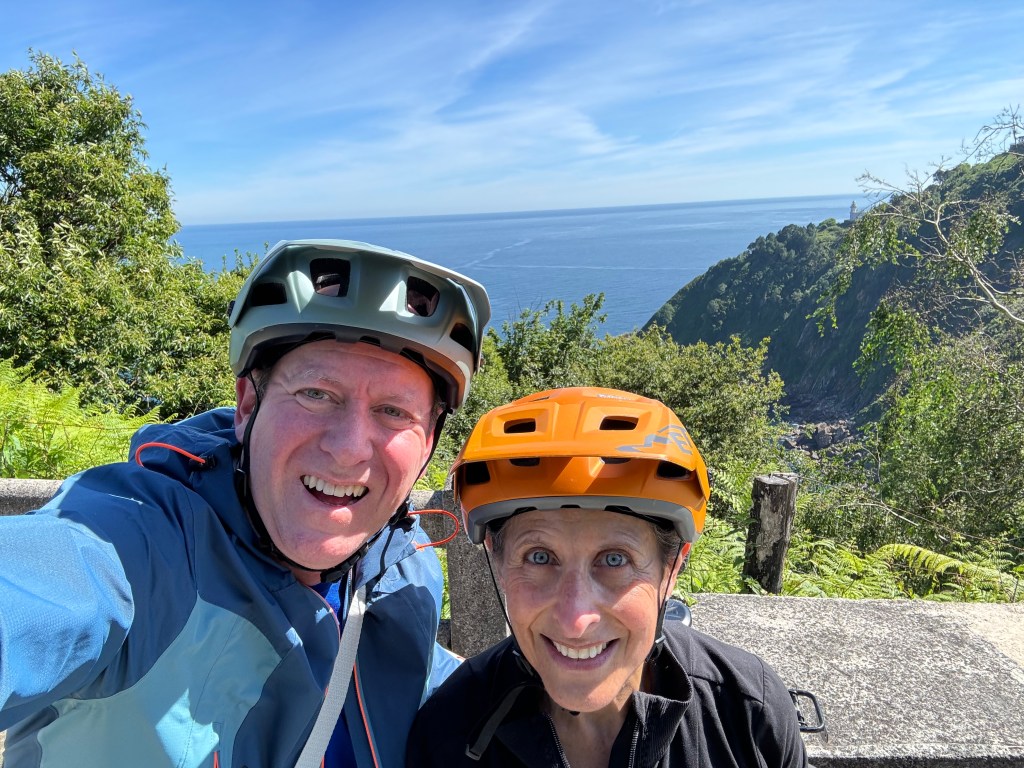
Since we had rented bicycles for a week, we rushed to enjoy one more couple’s ride before we returned our hybrids and Andy upgraded to a road bike. The bike lanes throughout the city are very navigable and they continue as one heads for the hills. Somehow, we seem to get stuck going up hills way steeper than expected. Let’s just say the views have been spectacular and leave it at that!
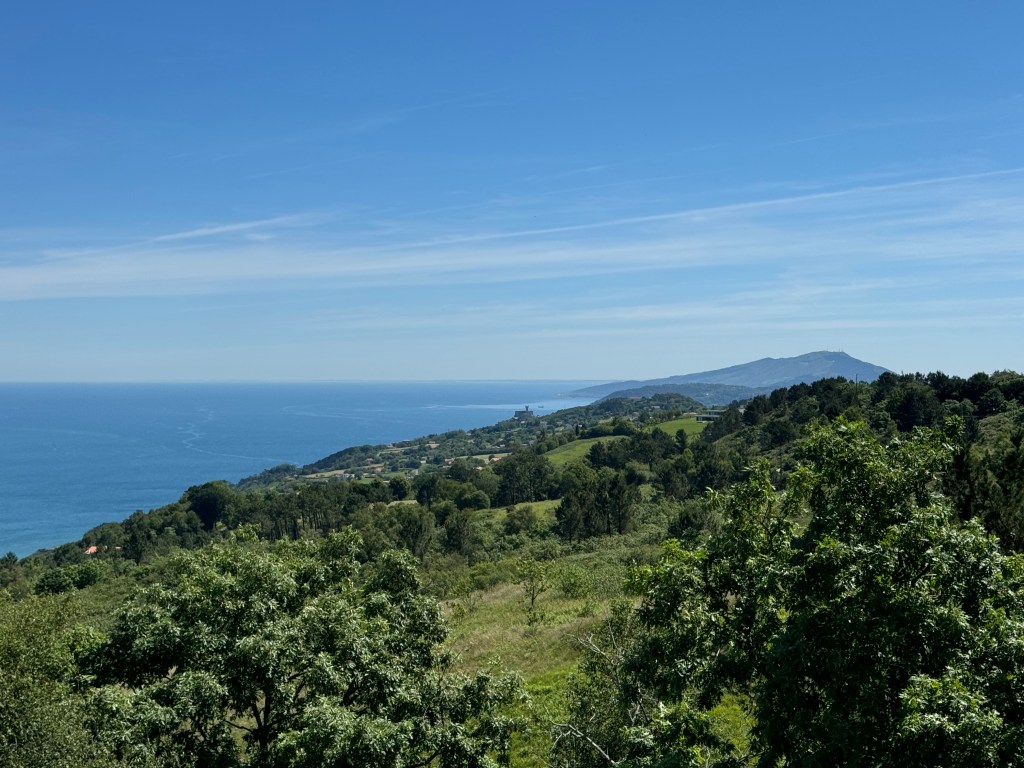
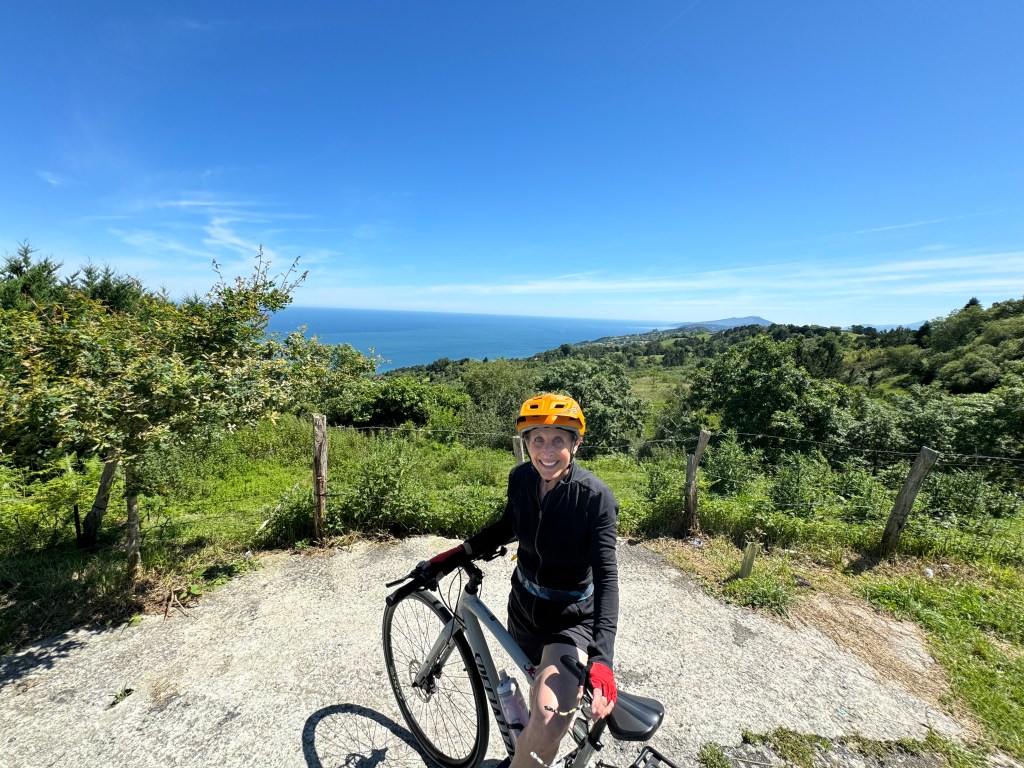
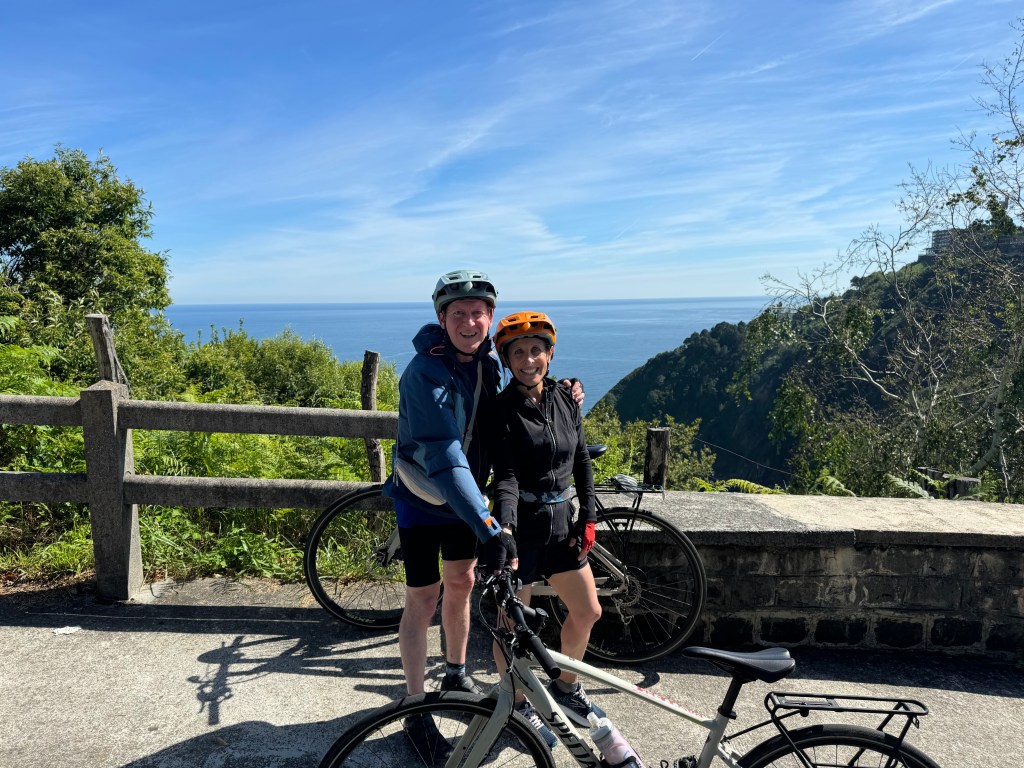
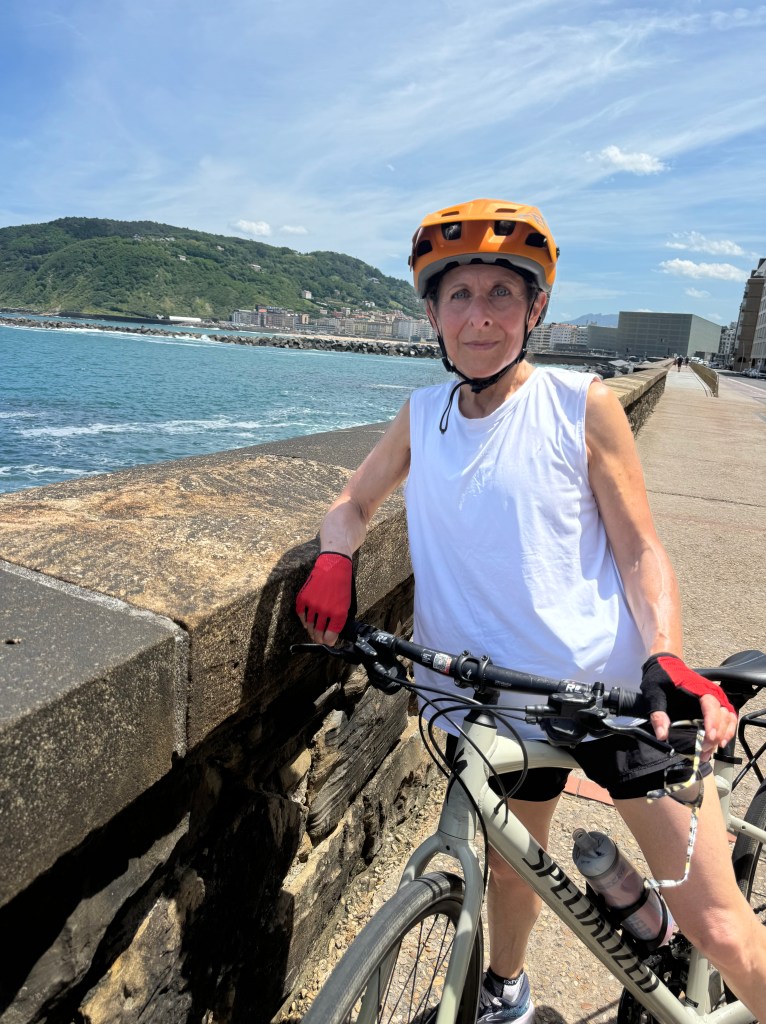
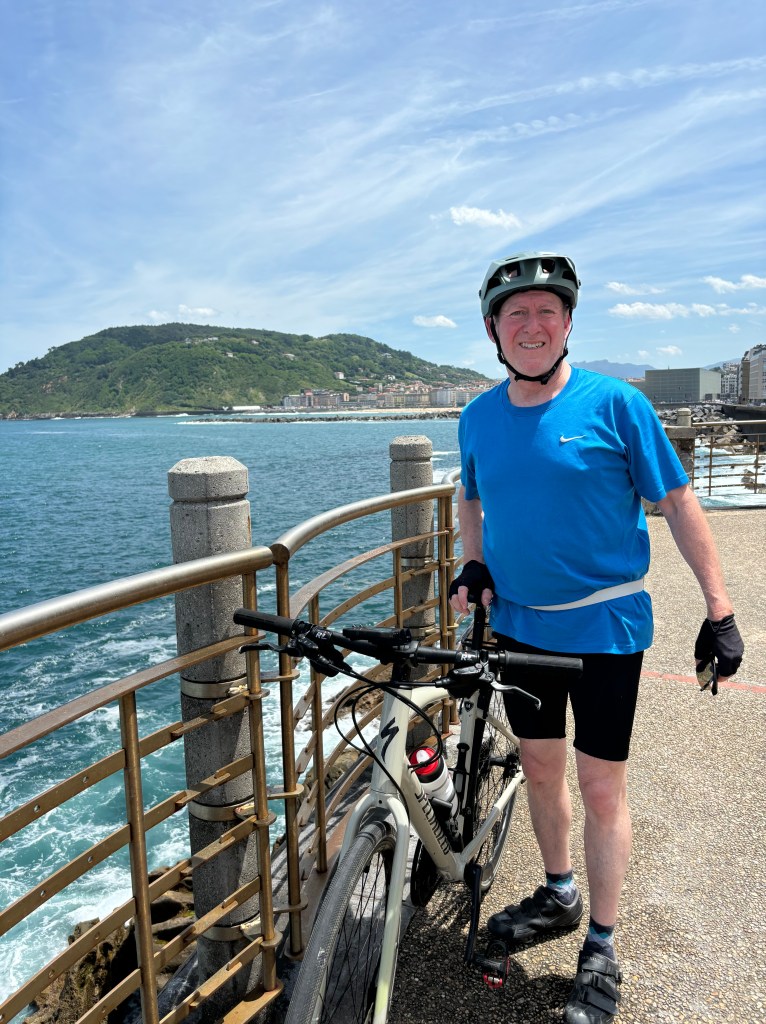
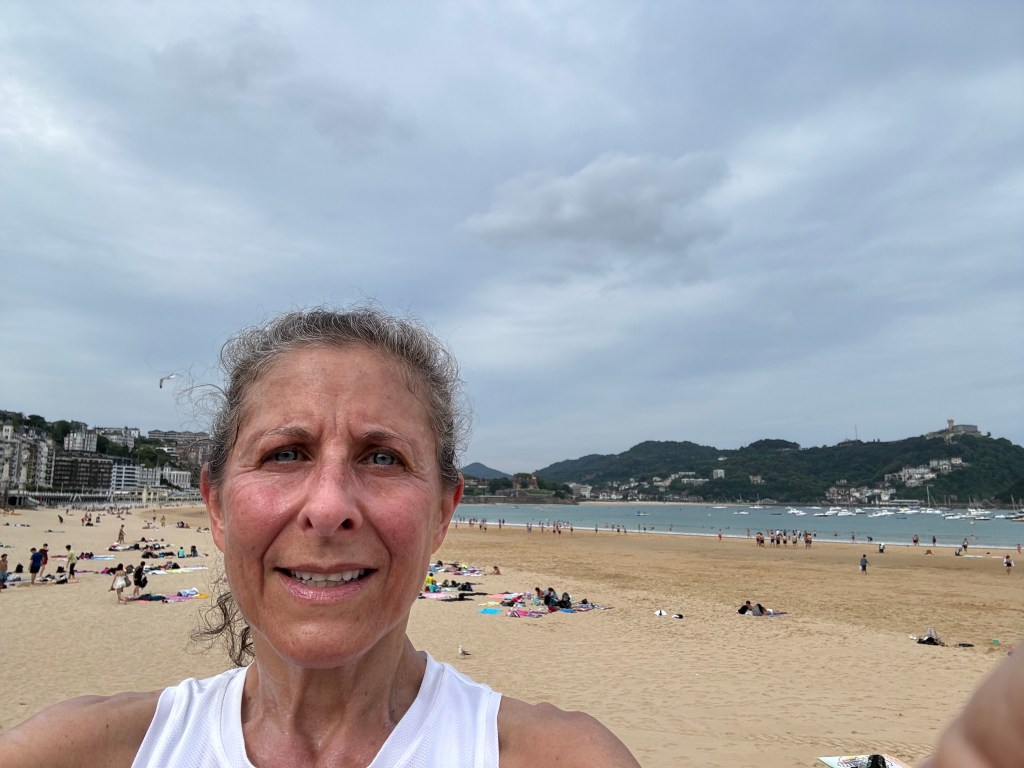
So today, while Andy did his road-bike thing, I enjoyed a lovely run along the Bay of Biscay. I hope to do a few more of these in the next week and a half.
My little mishap occurred after my ride, all in the name of keeping safe. Since Andy was still out and I was expecting housekeeping, l locked the bathroom door for fear that someone would enter while I was indisposed. After showering and wrapped in a towel, I was stuck; alas, the lock didn’t work and as hard as I tried, I could not open the bathroom door. All I could think of was that Andy was calling me (he had said two hours on the bike and it had been way longer than that). With no where else to go and no way to reach anyone, I kept calm and waited. At least I was clean. I took my sweet time playing with my cosmetics and continued to wait. Andy returned (uninjured, thank goodness) but he could not rescue me. Soon, a handyman arrived and about thirty minutes later, they finally ripped apart the broken lock and out I went, still in my towel. Door will be fixed on Wednesday.
Stay tuned for more exciting adventures and mishaps!
Hasta la proxima vez!
 The Innocents Abroad, 21st Century Version