Financial capital of India, City of Dreams
OR
Welcome to Houston. Never in my life have I been in a more humid city (except for one summer in Houston).
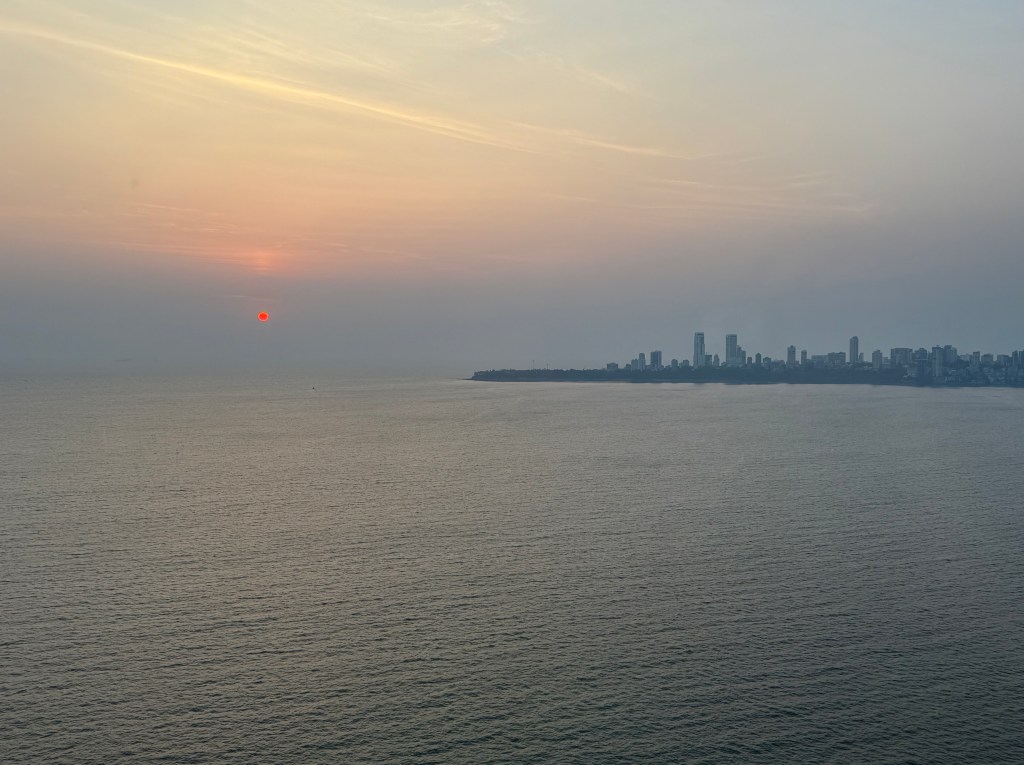
Millions of people have moved to the cosmopolitan city of Mumbai, in the state of Maharashtra, to fulfill their dreams. This was by far the most Western city we visited, with an ever-present reminder of the years of foreign occupation and colonization.
Mumbai is a city of more than 20 million people and while it has great wealth, there are still very visible signs of poverty.
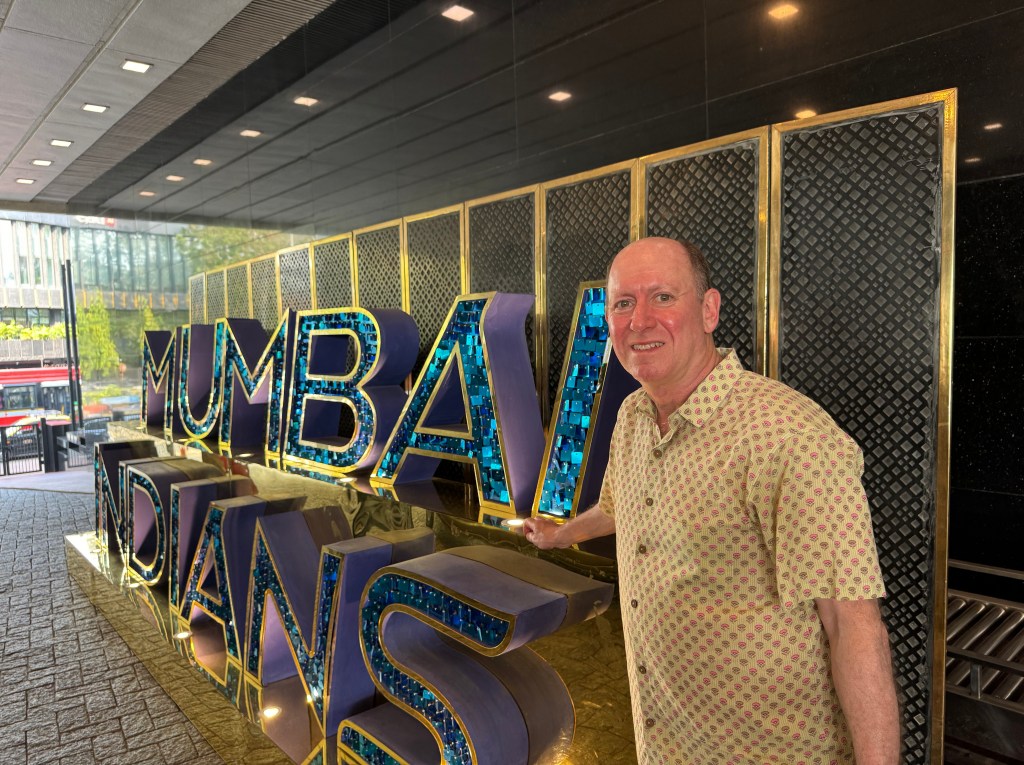
Our big-city hotel was the Trident by the Bay, Nariman Point. The Trident was not experiencing off-season! In fact, the hotel hosts the Indians, Mumbai’s local cricket team, in-season and there were tourists and businesspeople from all over the world among the hotel’s guests.
Our guide Shilpa is on the faculty at the University of Mumbai (founded 1857), educating future tourism professionals and leading the department. She was the perfect guide for many reasons: firstly, for being able to answer all our questions (candidly, I might add) and secondly, because she knew what to do when the afternoon of our first day together, I came down with that stomach ailment I had hoped to avert (fortunately it was a 24-hour thing and I bounced back with two days of mild meals of rice and yogurt, suggested by Shilpa, to settle my stomach).
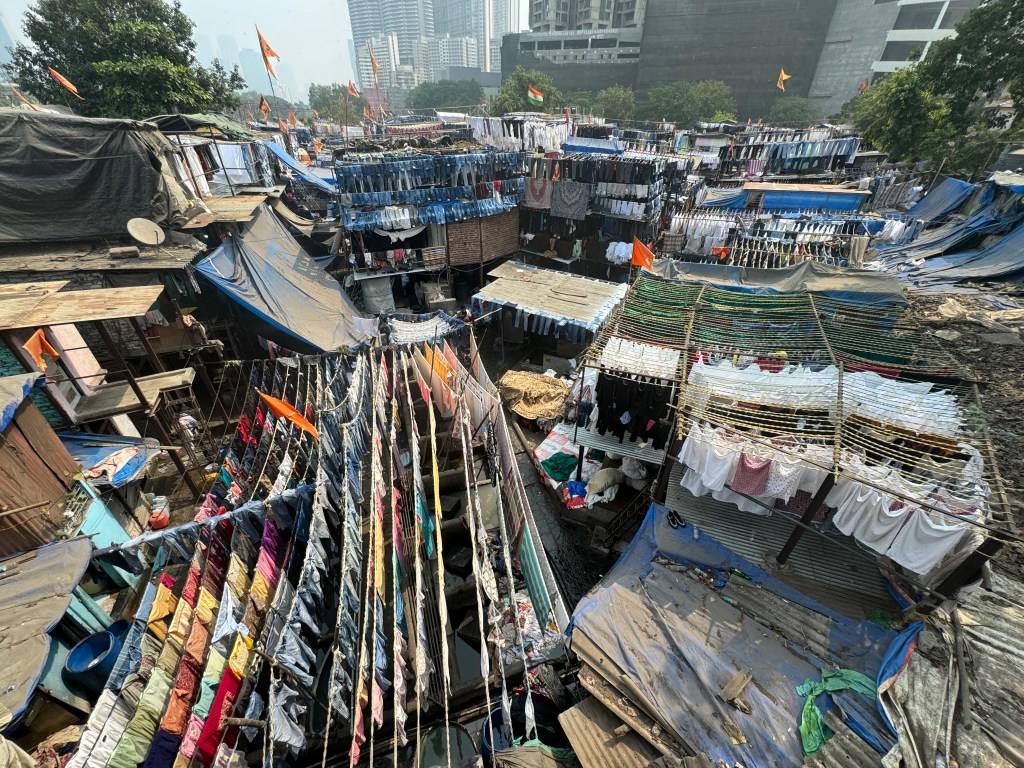
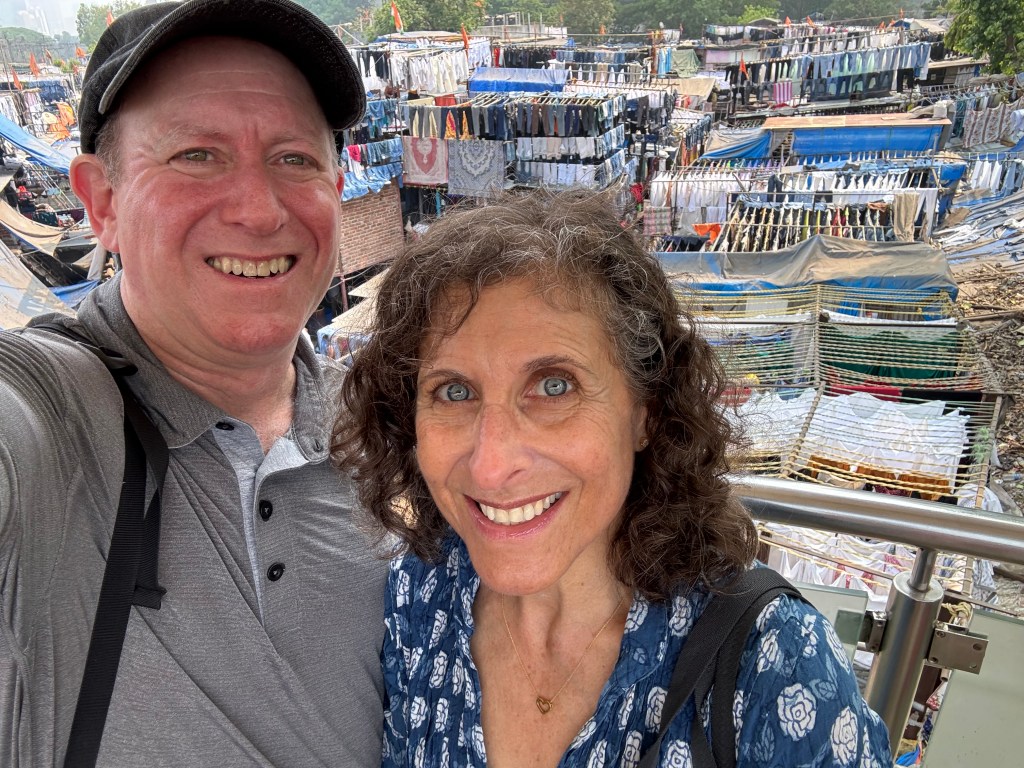
Present-day Mumbai was originally 7 islands, now connected by many bridges and our driver navigated the busy streets for our morning agenda. Our first stop was something I could not even conceive of until I saw it with my own eyes: the Dhobi Ghat is a huge open-air laundry. This unique system has worked for years. Laundry is picked up from local homes and hotels, washed first thing in the morning, hung out to dry and returned to customer’s door — all in one day.
What a segue to our next stop, the museum dedicated to the life of Mohandas Gandhi, a house called Mani Bhawan. Shame on me for not knowing enough about “Bapu,” the “father of our nation,” as he is so fondly remembered and Mahatma or “the great-souled one.” Gandhi lived here among friends from 1917 until 1934. He also set up an Ashram, a community where residents of all religions were represented and equal. In the film Gandhi, it resembles a commune or kibbutz.
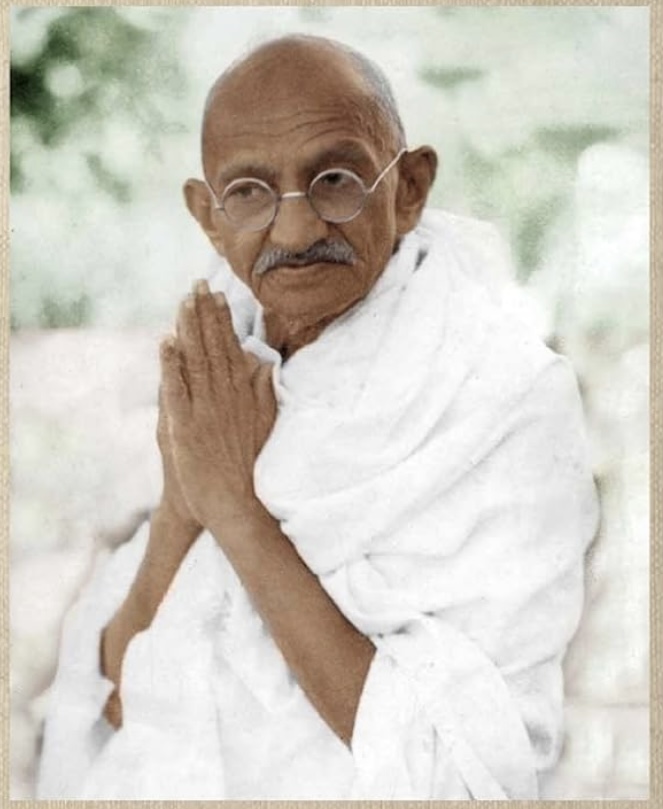
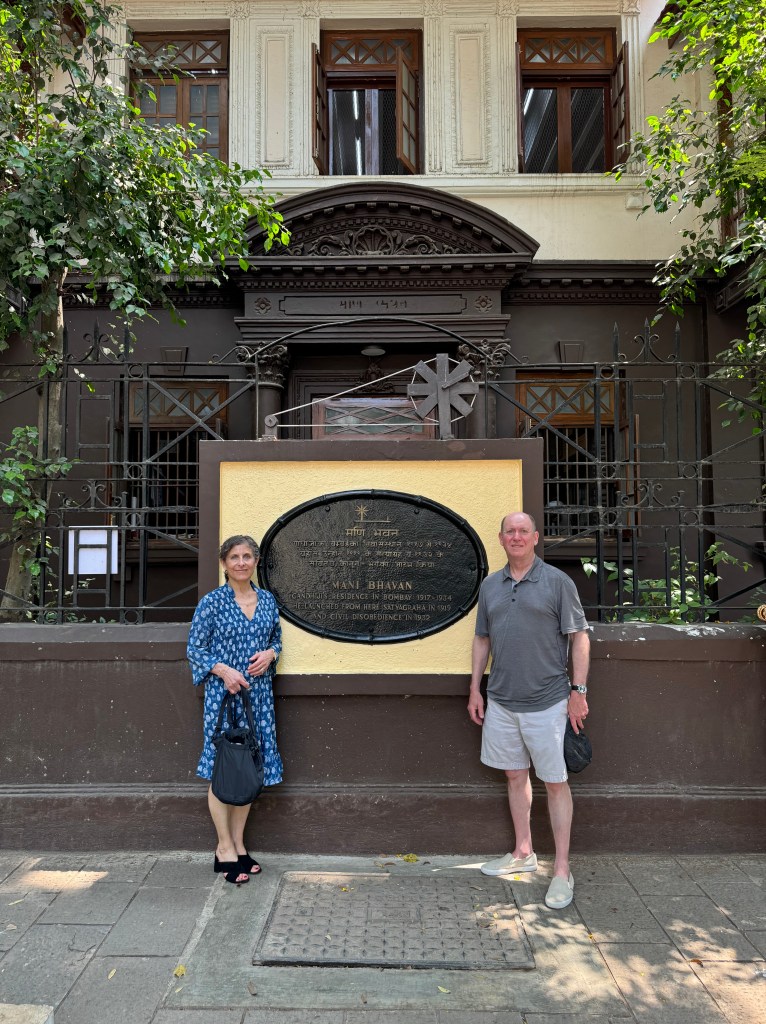
I cheated. In addition to finding complementary information about Gandhi all over the internet, my return flight agenda included Gandhi, produced & directed by Richard Attenborough (1982). Now I am able to synthesize the pieces of Gandhi’s life and connect it to my knowledge of history and everything I have learned and experienced during these last three weeks.
Having been trained as a lawyer in the British system, Gandhi ended up finding his calling while practicing law in South Africa. He experienced discrimination as an Indian, illustrated by the humiliation of being kicked out of a first class train car and tossed out of that train. This event was the catalyst for organizing the Indian migrant population in South Africa, making peaceful demands for the same rights as all subjects of the British Commonwealth. Gandhi’s work did not go unnoticed and once back in India, step-by-step, he and leaders of the Indian Congress Party led the Indian people towards independence from the Crown. Gandhi was so revered (being trained as a lawyer and being brilliant didn’t hurt) that the peaceful, nonviolent, non-cooperation, civil resistance eventually succeeded and Indian self governance was achieved in 1947. Gandhi saw poverty as the worst form of violence and thus took on the cause ending untouchability as well as elevating the status of women.
Gandhi adopted a modest lifestyle, giving up possessions and passions; this was his way to God as a follower of Hindu philosophy. He eventually took a vow of abstinence, although he and his wife Kasturba remained married (they wed at the age of 13). At Mani Bhawan, Gandhi received visitors seated on the floor; he wanted to experience life like the most impoverished Indians. He no longer dressed Western and instead, wore a simple dhoti (loincloth) on the bottom. Gandhi also respected and studied Christianity, Islam and Judaism. In Gandhi, Attenborough portrays Gandhi in the company of many Muslims, a Christian minister and a his Jewish soulmate, Herman Kallenbach. And of course, India’s first Prime Minister, Pandit Nehru was mentored by Gandhi throughout years of activism.
There were a number of times in Gandhi’s life when he was imprisoned and other times where he protested with hunger strikes. Gandhi’s fasting was his personal penance for any violence spun from his movement. He was followed by the press which gave him worldwide recognition and support.
Here are but a few examples of Gandhi’s leadership and defiance of the British which ushered in a self-governing India.
•Supporting Indigo farmers who were starving and abused by the British.
•Going on a hunger strike to protest the massacre of peaceful protestors by British soldiers who opened fire on thousands of Indians.
•Burning English made cloth to protest the loss of India textile business.
•Indian refusal to buy taxed salt from the British and making their own: India’s salt belongs to India.
•Gandhi’s invitation from British Prime Minister Ramsay MaxDonald to represent the Indian Congress party at a roundtable conference on India Independence.
The road to Indian independence had its share of issues. As a British colony, India was made up of Hindu areas, Muslim areas as well as the princely states; Gandhi was hoping all factions could be unified under one flag. Mohamed Ali Jinnah, the Congress party leader representing the Muslims, had cooperated with the British which gave him power and freedom to speak, instilling fear in his fellow Muslims about an independent India that would be predominantly Hindu. Jinnah negotiated for Pakistan to be its own Muslim country with himself its head of government. In 1947 most Hindus left Pakistan and many Muslims left India. Immediate violence ensued. Still a conflict today, was the division of India into two sovereign countries. India 🇮🇳 with its colors representing Hindu (orange) and Muslim (green) tradition and Pakistan 🇵🇰 (green) for its creation as a Muslim nation.
There were Hindus who denounced Gandhi as “an appeaser of Muslims.” They opposed Gandhi’s belief in religious pluralism. The man who killed Gandhi, Nathuram Godse, worked for an extremist Hindu newspaper and had denounced Gandhi. Doesn’t this sound familiar? Martin Luther King Jr. followed the teachings and practices of Gandhi during the height of America’s Civil Rights movement. His Students nonviolent…….and ultimately his death echo that of Mahatma Gandhi. Neither of these iconic leaders seemed afraid, a quality that both empowered them and led to their assassinations. I wish present-day leaders would finally learn from history, how to repair our damaged world without violence, murder and war.
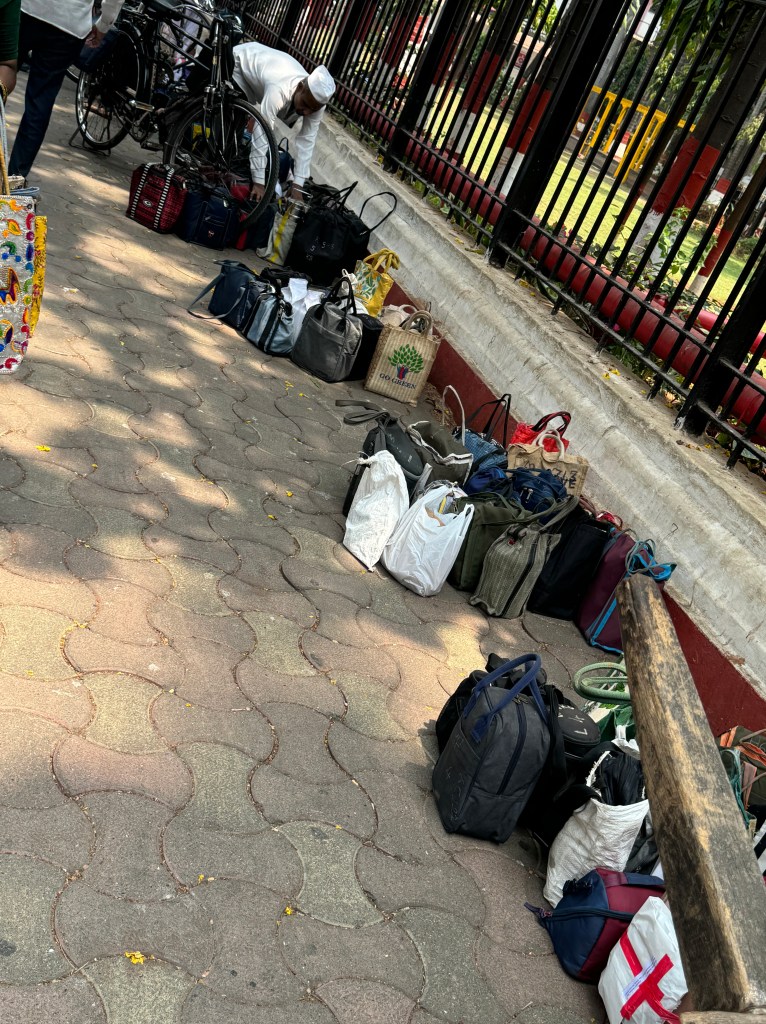
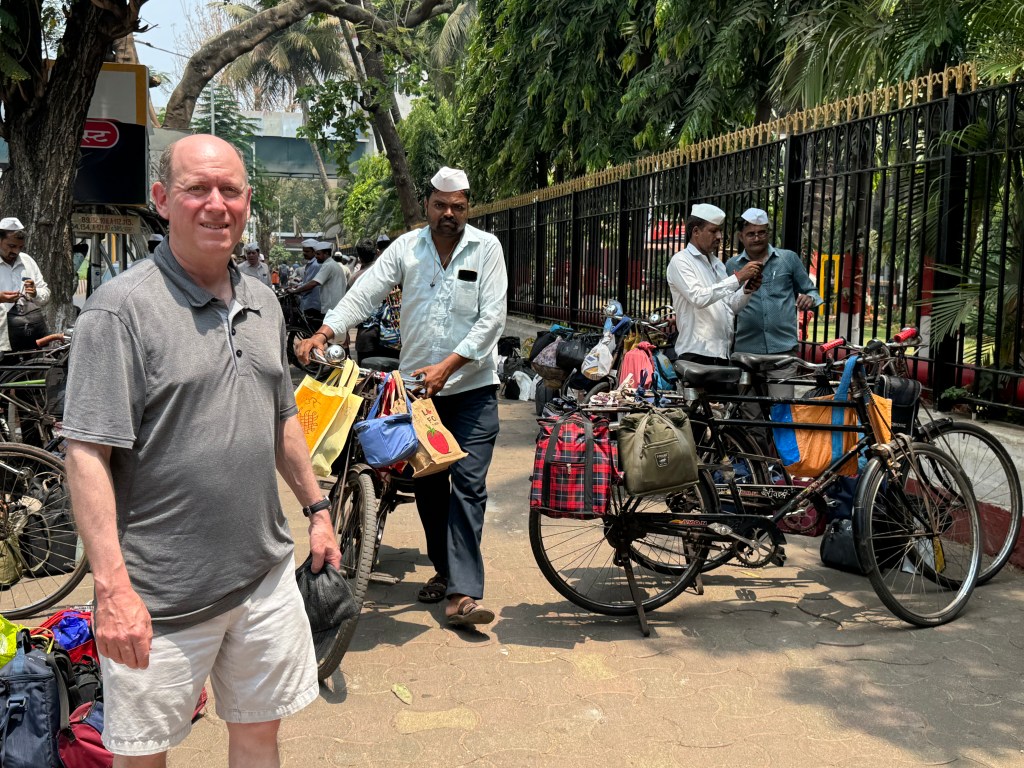
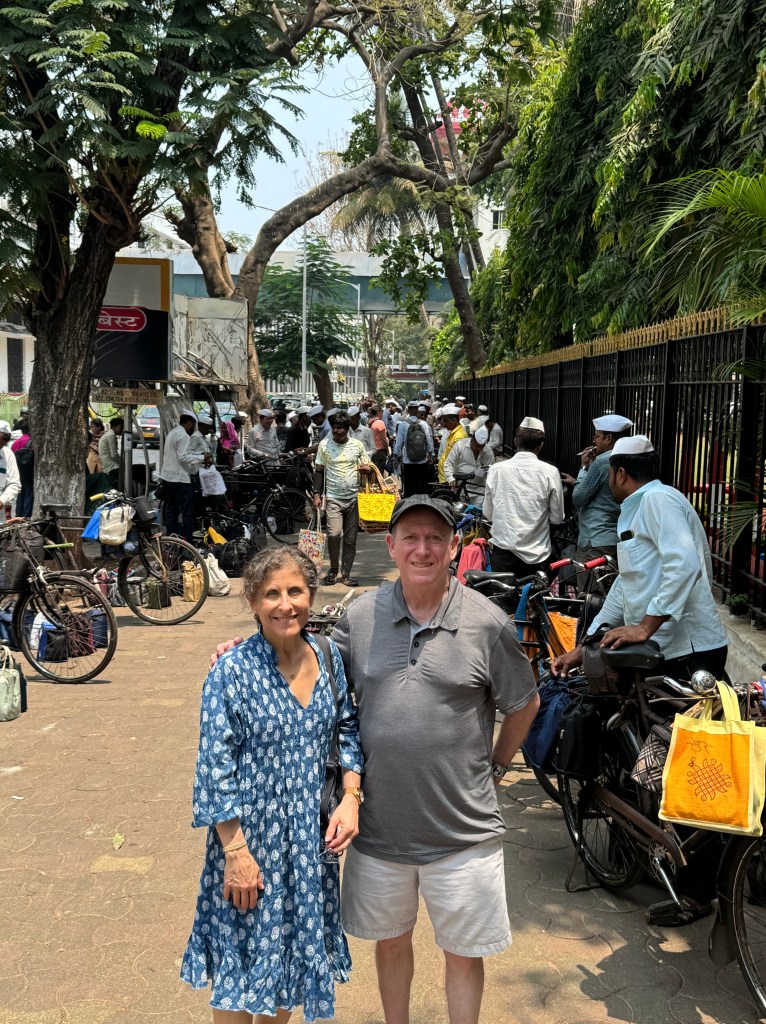
Our next stop in historic Mumbai was to experience the Danbawallahs, also known as the tiffin box carriers. Theirs is a time-honored tradition of delivering a worker’s home made lunch (they aren’t ready in the early hours of the commuter’s morning) to deliver at lunchtime to the worker’s office. This is a daily system of relays which included the pick up, the transport (typically by train), the organizer, and the delivery, by bicycle. Everyone involved has a specific job and there is even a substitute on call if needed.
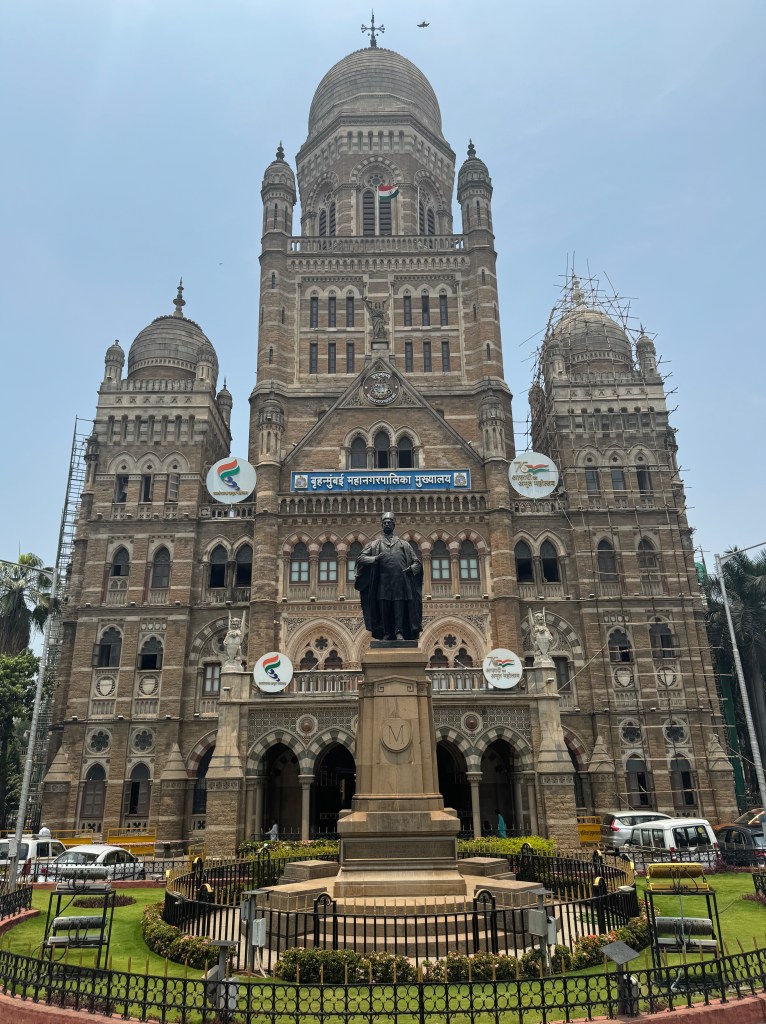
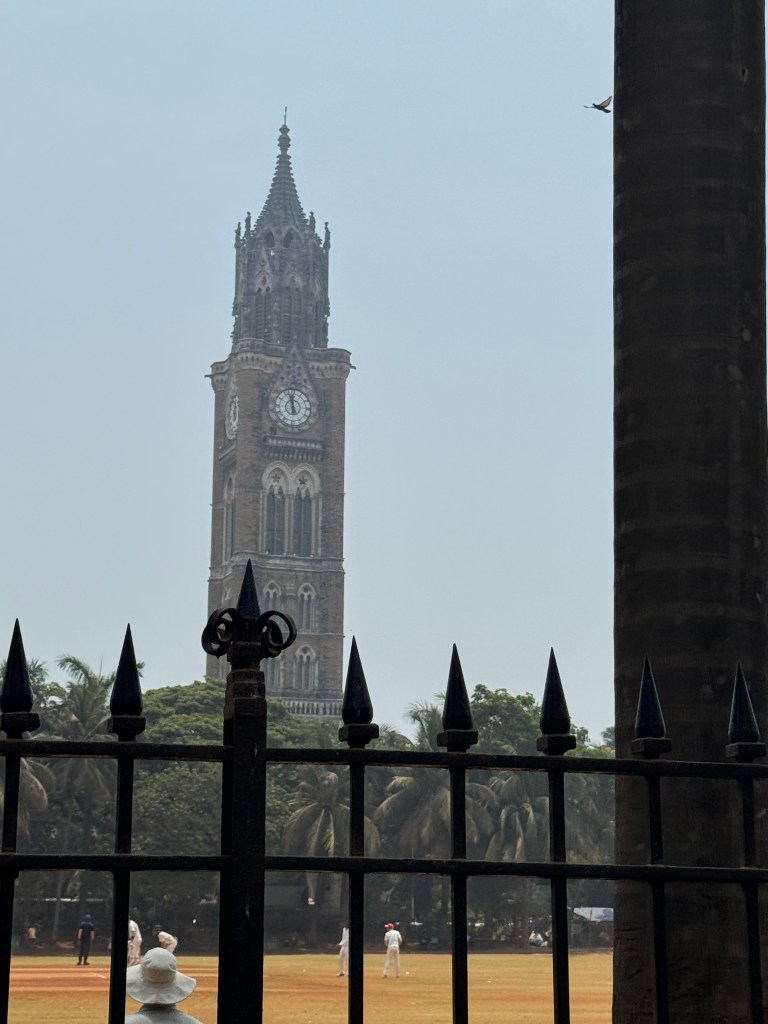
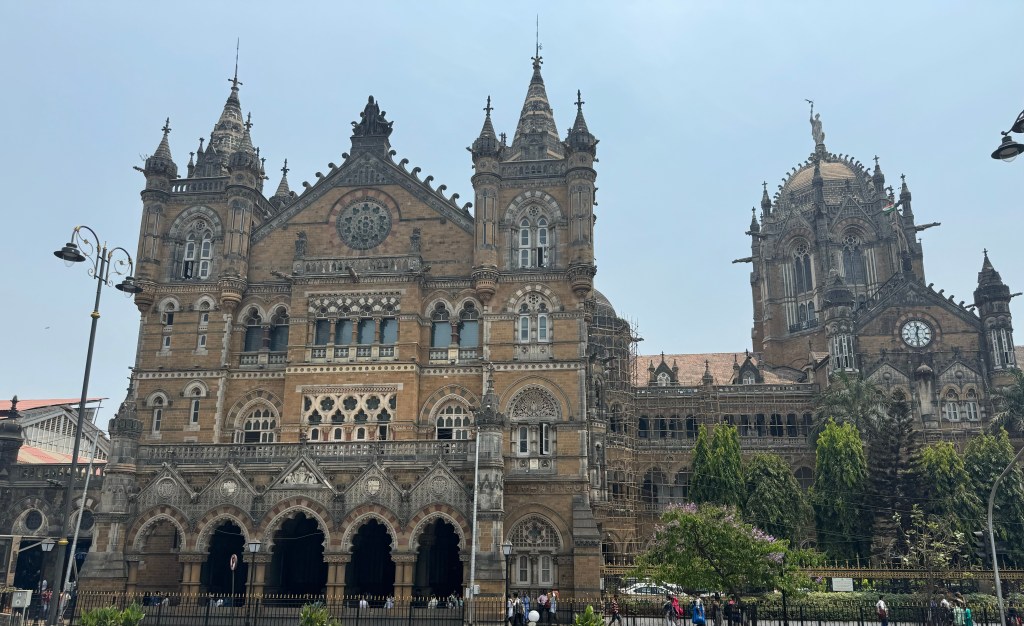
Driving through Mumbai, once cannot miss the Victorian-Gothic Revival architecture within fort walls of Colonial Bombay. This neighborhood has been a UNESCO World Heritage Site since 2018. We admired the University of Mumbai, the David Sassoon Library and Reading Room (1870), the High Court of Bombay and the Victoria Termininus train Station (1878-88). This station boasts relief sculptures, both static and dynamic that were created by art students. Today, 2-3 million people use this station every day. These buildings symbolize the wealth of Bombay as a major port during the era of British rule.

For the afternoon, we chose a visit to the Chhatrapati Shivaji Maharaj Vastu Sangrahalaya Museum and enjoyed exhibits that linked many ancient cultures, more miniature paintings and a Buddha display.
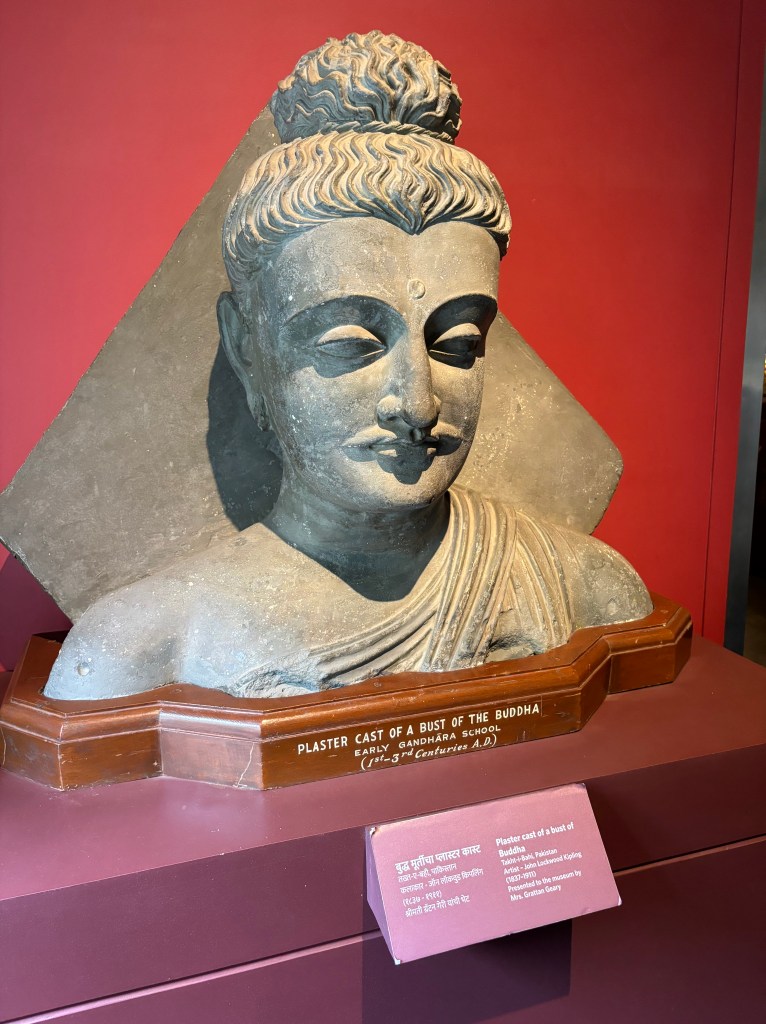
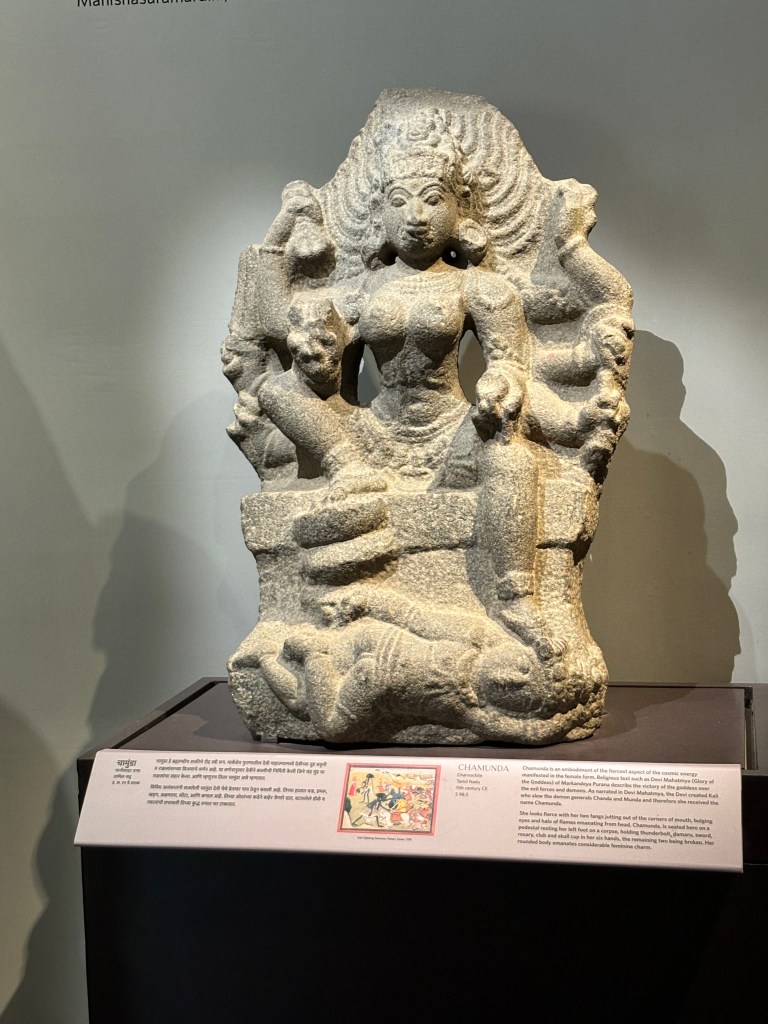
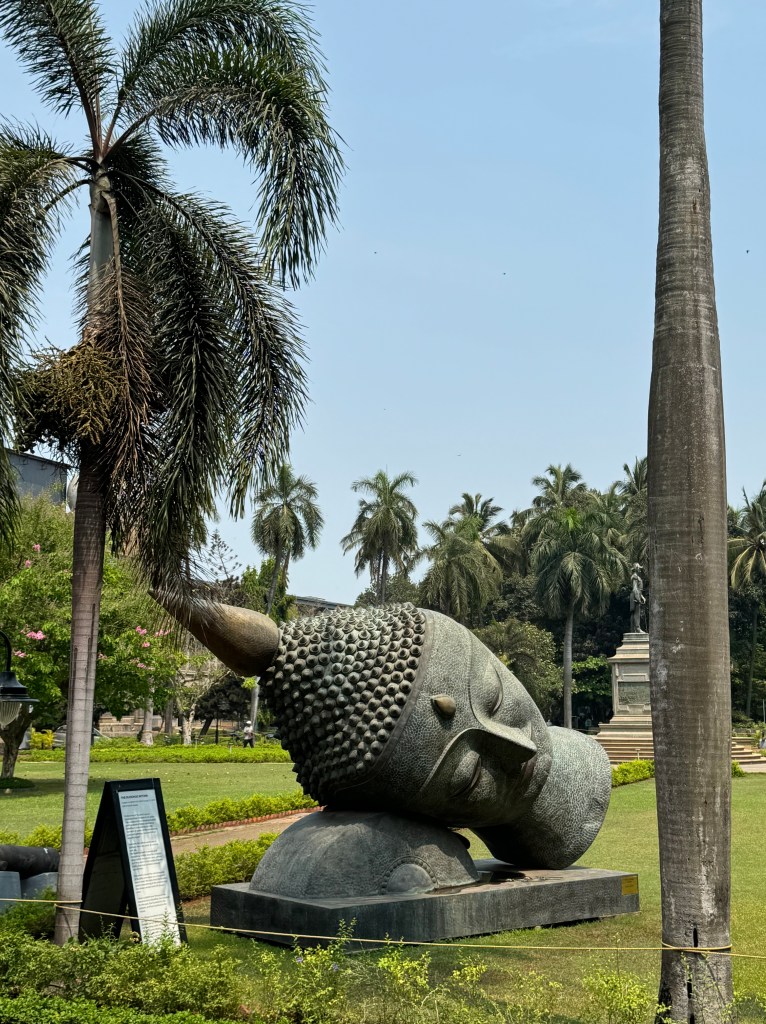
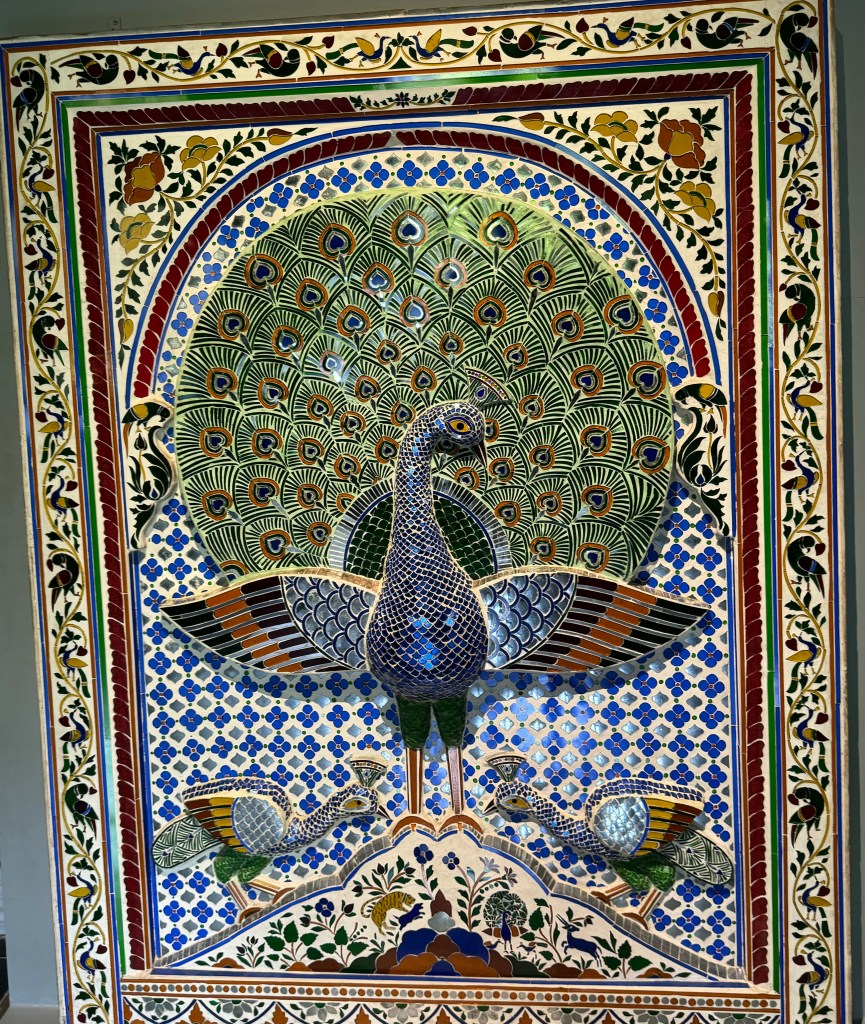
Andy continued onto the bazaars of Bhuleshwar while I collapsed at the hotel. My tummy had gotten the best of me🤢.
Our second day in Mumbai took us on a ferry across Mumbai Harbor, to Elephanta Island, so named because early Portuguese explorers thought they saw elephants there from the distance (it was actually a large stone elephant) and the name stuck. Actually, this landmark is a series of caves and temples, carved out of solid basalt rock, constructed mainly in the 5th and 6th centuries, although there have been discoveries proving that the island hosted humans as early as the 2nd century BCE. We walked along a pier where I purchased a much-needed hat for about $1.50. Then I experienced one of the most embarrassing and out-of-character moments of my life. Having spent the prior 24 hours under-the-weather, Andy insisted that I take a ride up the hill to Elephanta’s caves. I had a great seat and an entertaining view of the local monkeys.
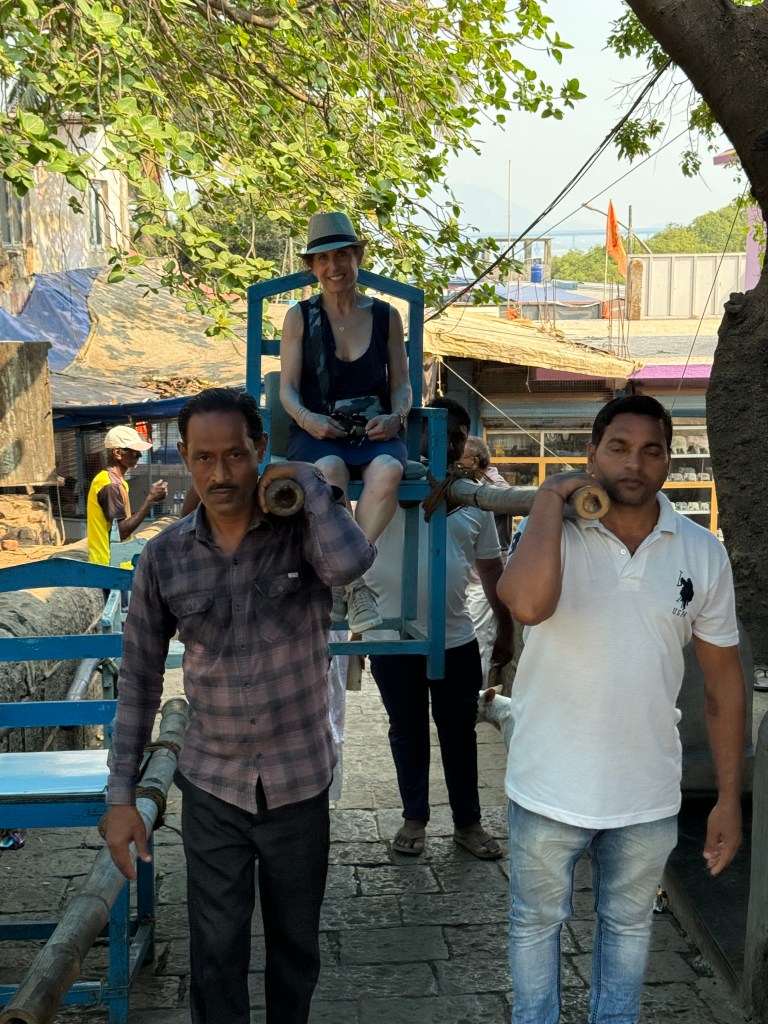
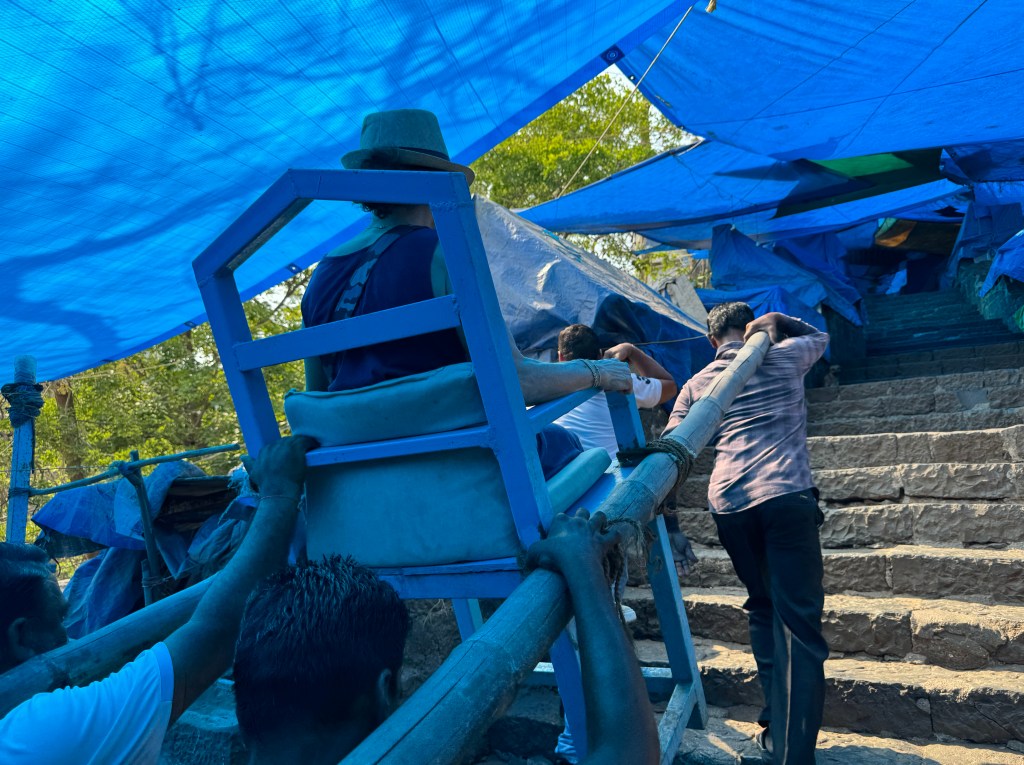
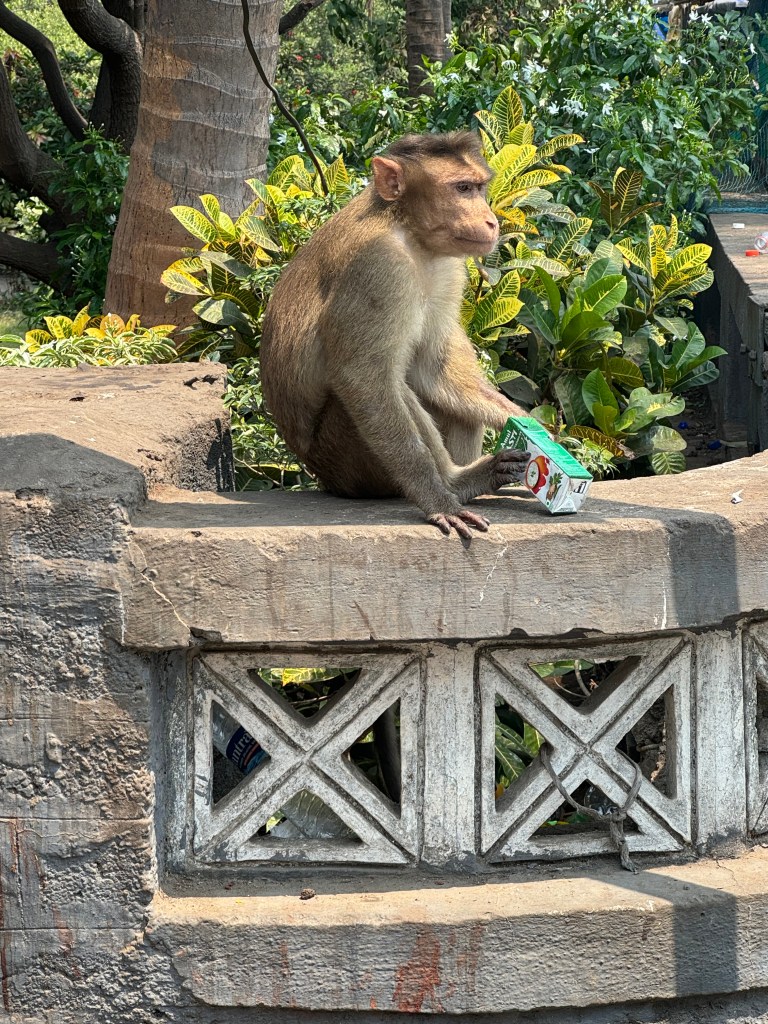
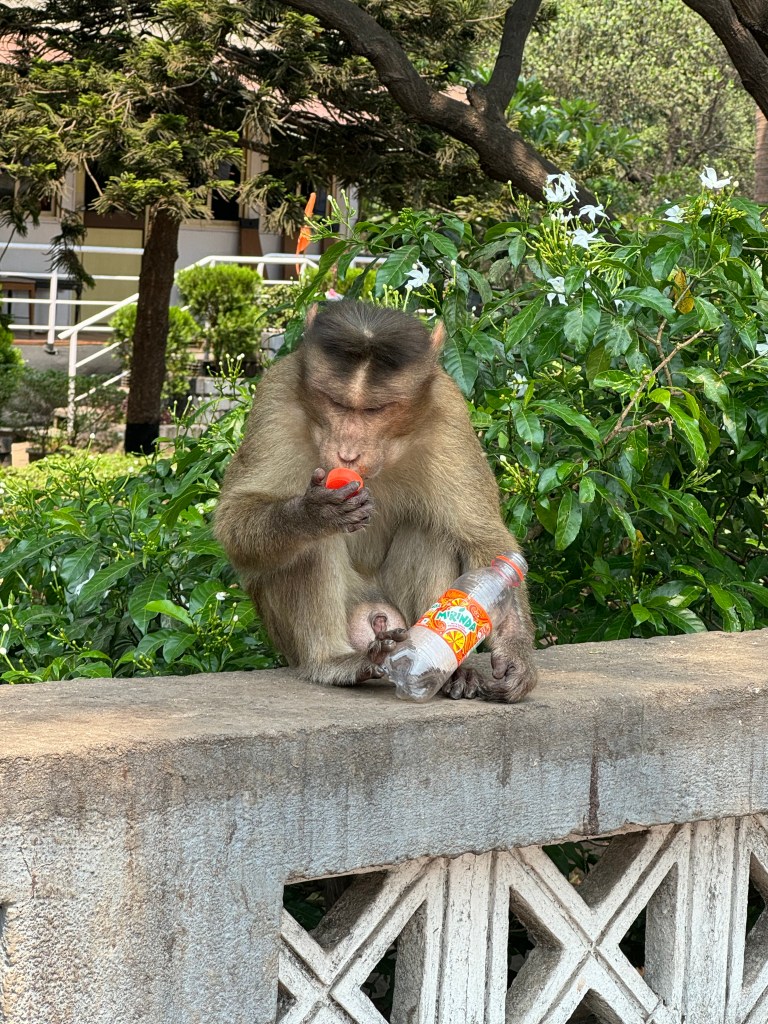
Elephanta’s temples are dedicated to the god Shiva and tell his story through huge stone carvings. Here was another attempt by one of our guides to explain Hinduism to us and Shilpa did her best to share stories about this important god who represents dance and is known as the destroyer.
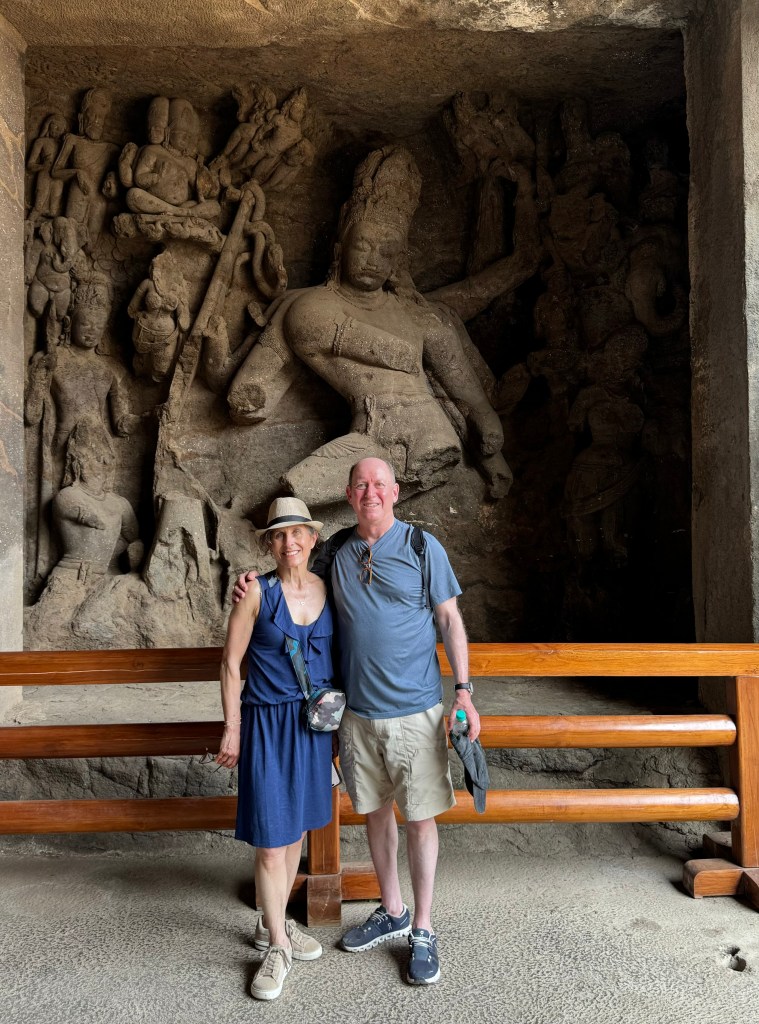

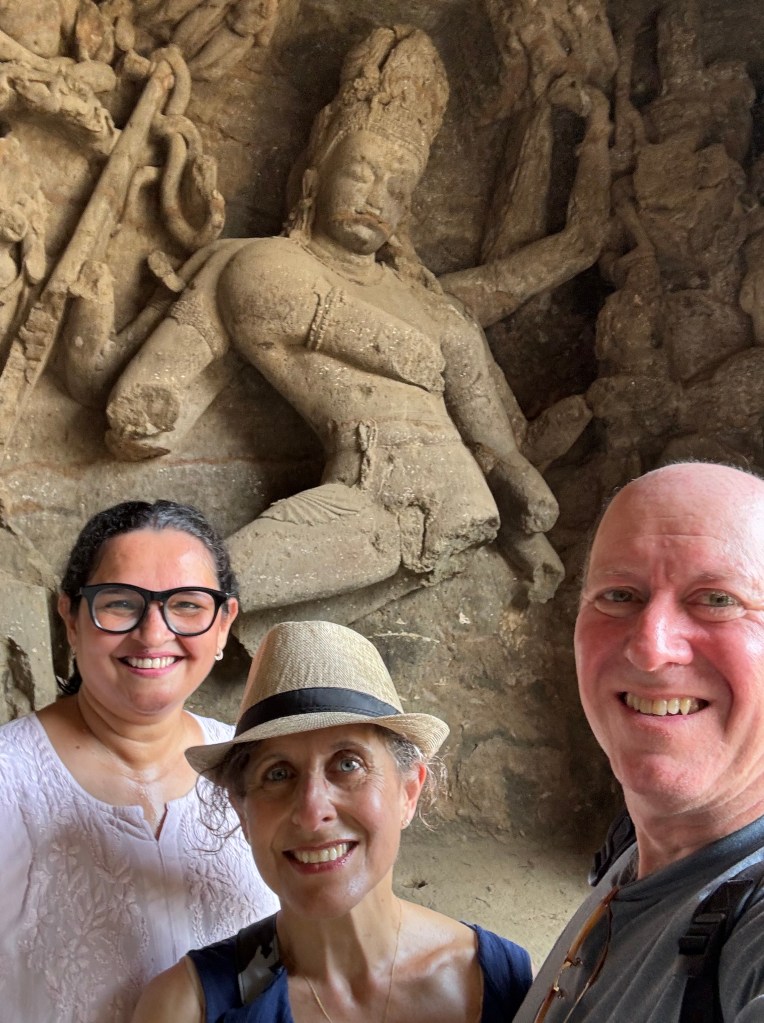
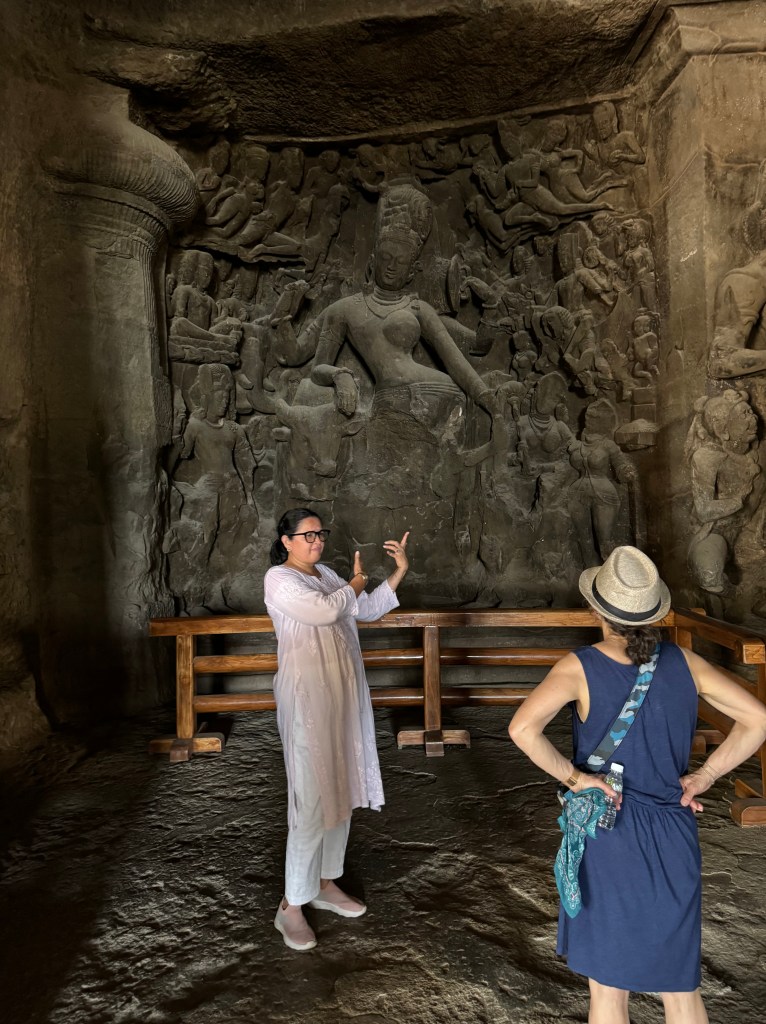
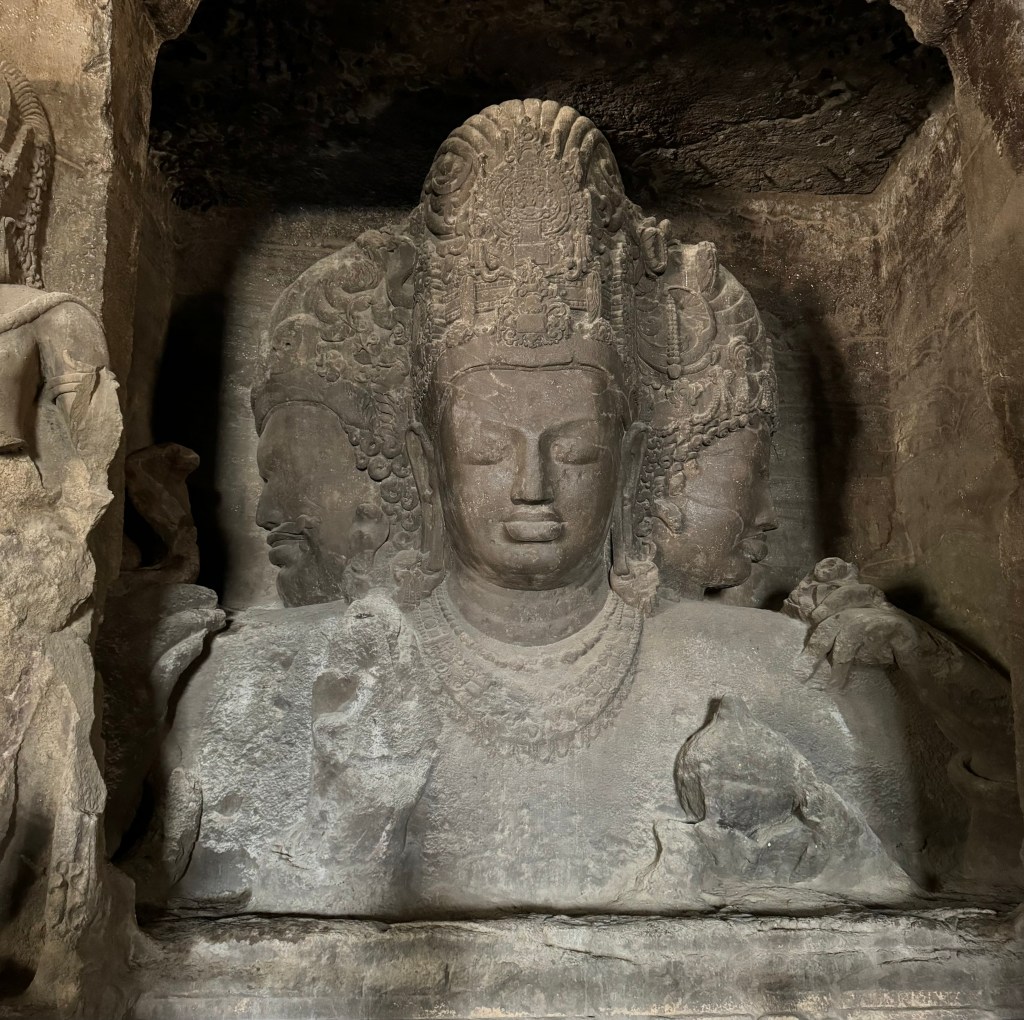
On the ferry ride back, we saw the workings of busy Mumbai Harbor with shipping vessels and the Gateway of India, a momument that was constructed to welcome the royals, King George V and Queen Mary in 1911.
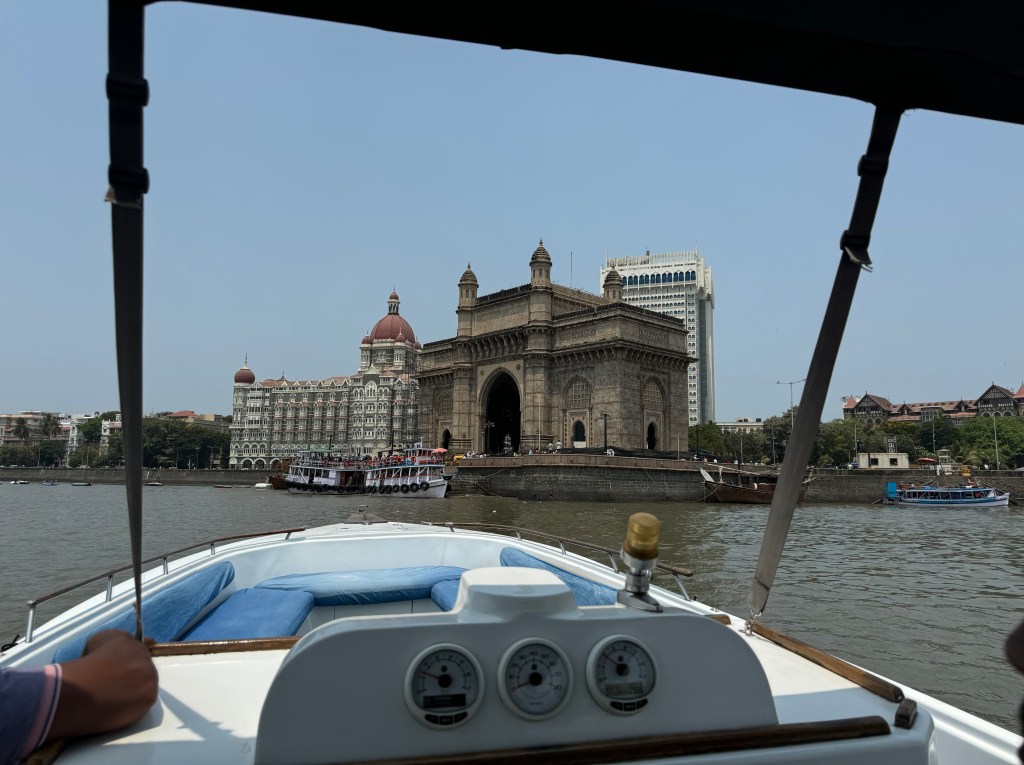
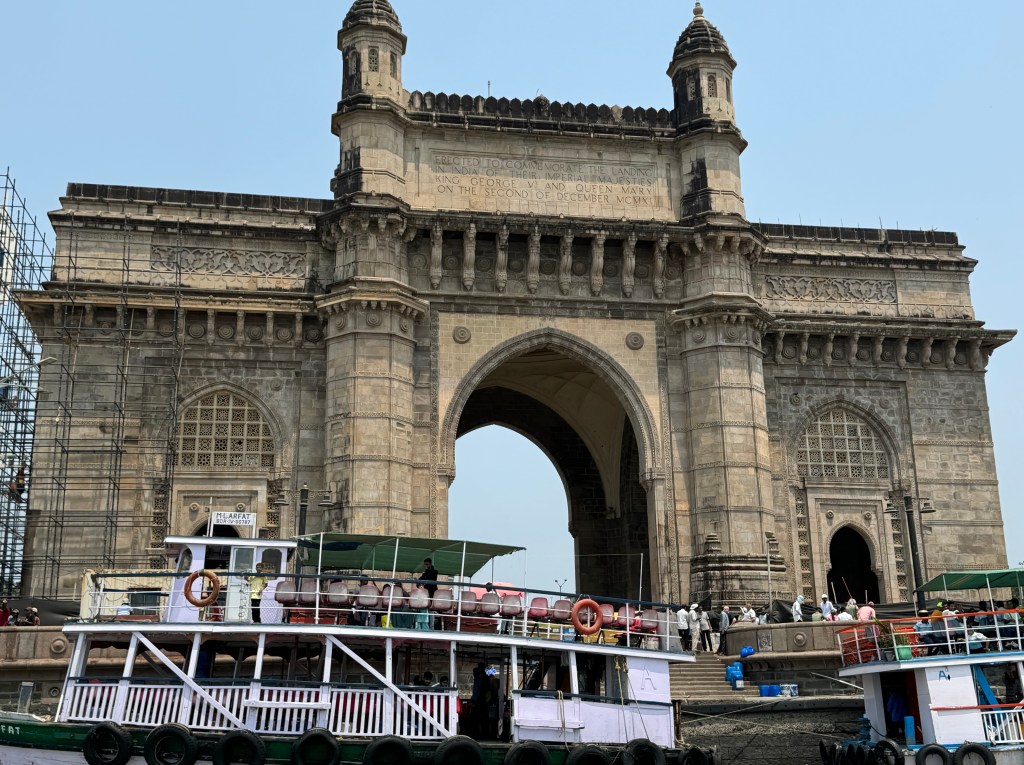
Just across the street was the famous Taj Palace Hotel (1903) which I wanted to see (not just for its clean washrooms) for its historical significance and beauty. The Taj was built by Jamsetji Tata after he was refused admission to Watson’s Hotel. Today there are Tata companies all over India and even The Pierre in NYC is part of Tata’s hotel group.
Our city tour continued in a completely different direction to the original Portuguese colony of Khotachi Wadi in Mumbai. The architecture is different and to this day, the neighborhood is a blending of Hindu and Catholic people and culture.
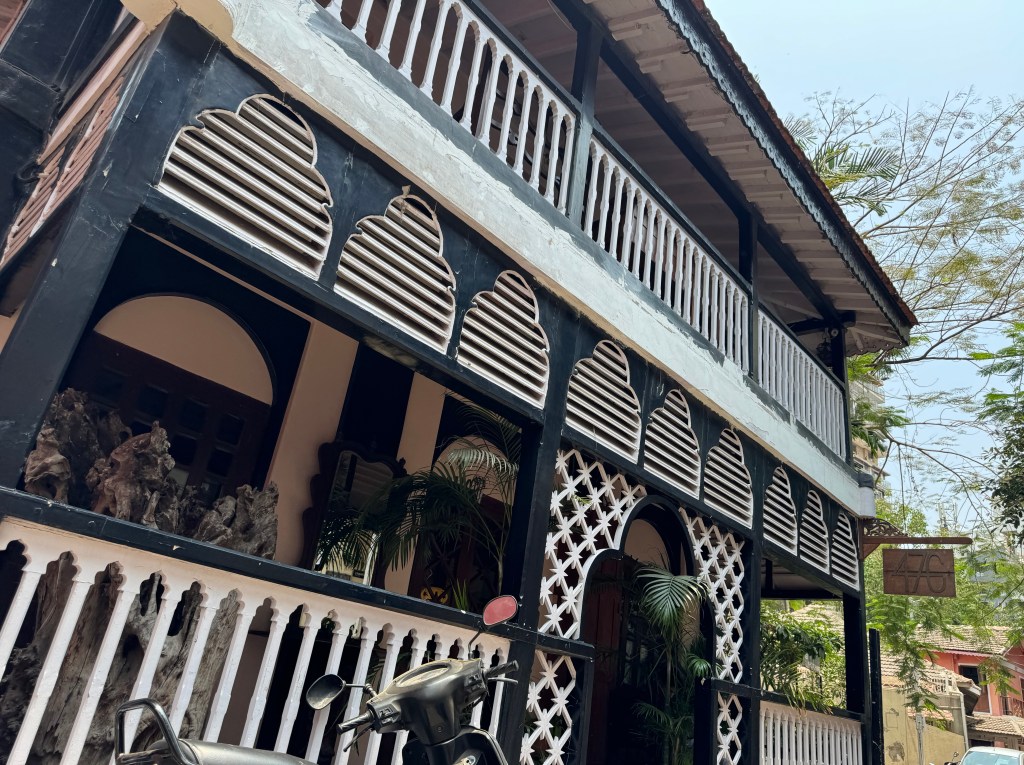
The highlight here was a visit to a few shops. One was a designer’s shop of beautiful clothing and the other was to Baro Market, a gallery of “Advance Nature” sustainable art and jewelry from Pune, India. This particular gallery’s art emerged out of the Covid pandemic. Many of the artists are migrant workers who had to literally walk home to their villages during the pandemic because they had no work. Some founded this collective and began to explore their creativity using recycled materials. For more information:
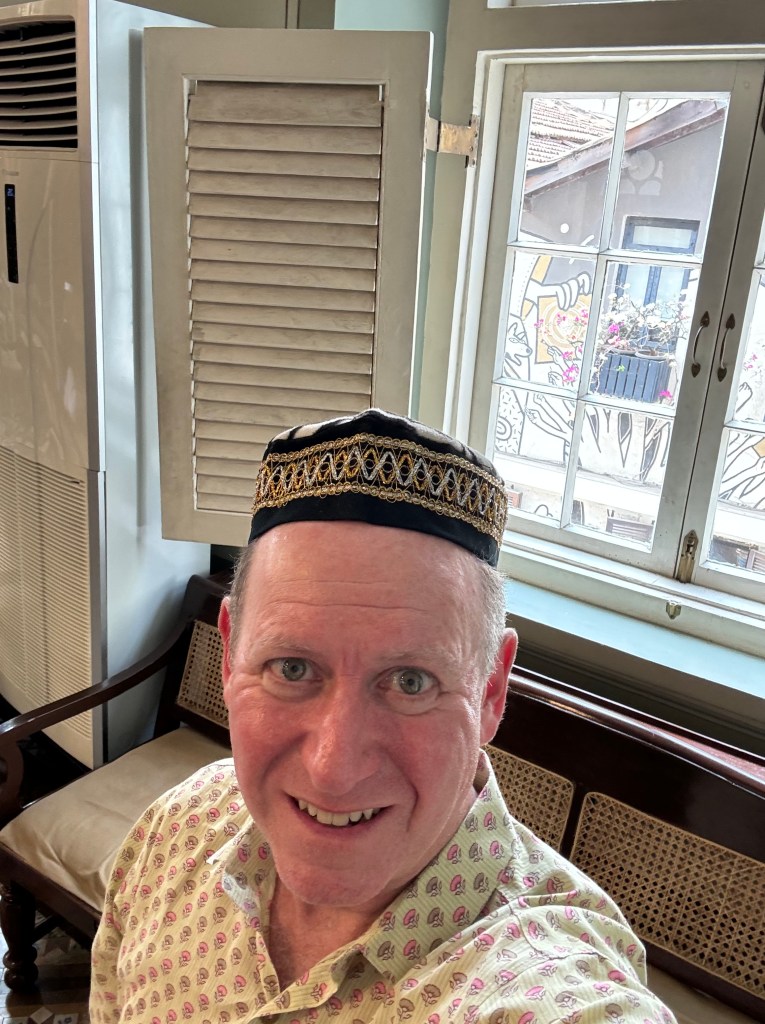
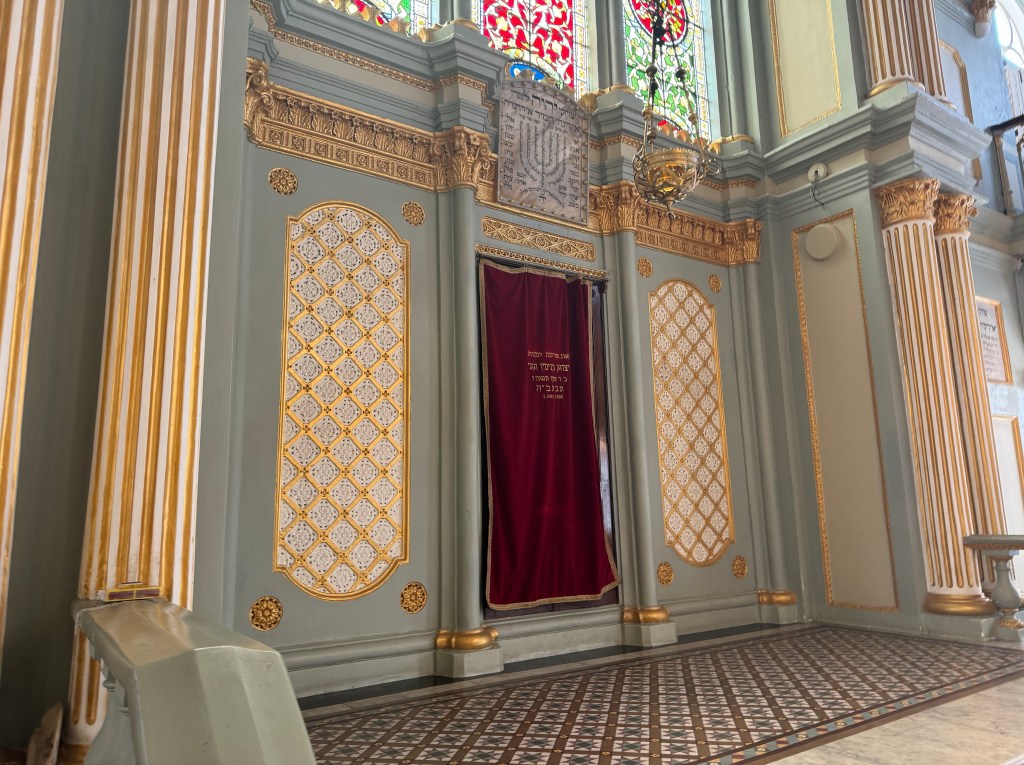
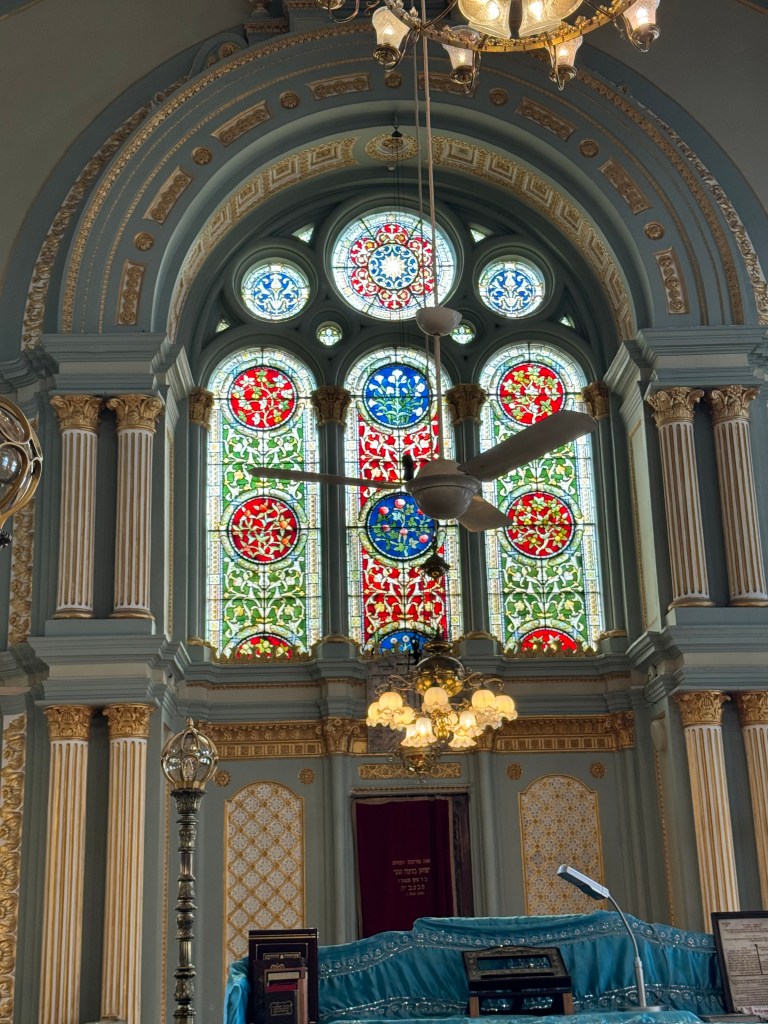
After another mild lunch (for me, that is), Keneseth Eliyahoo Synagogue
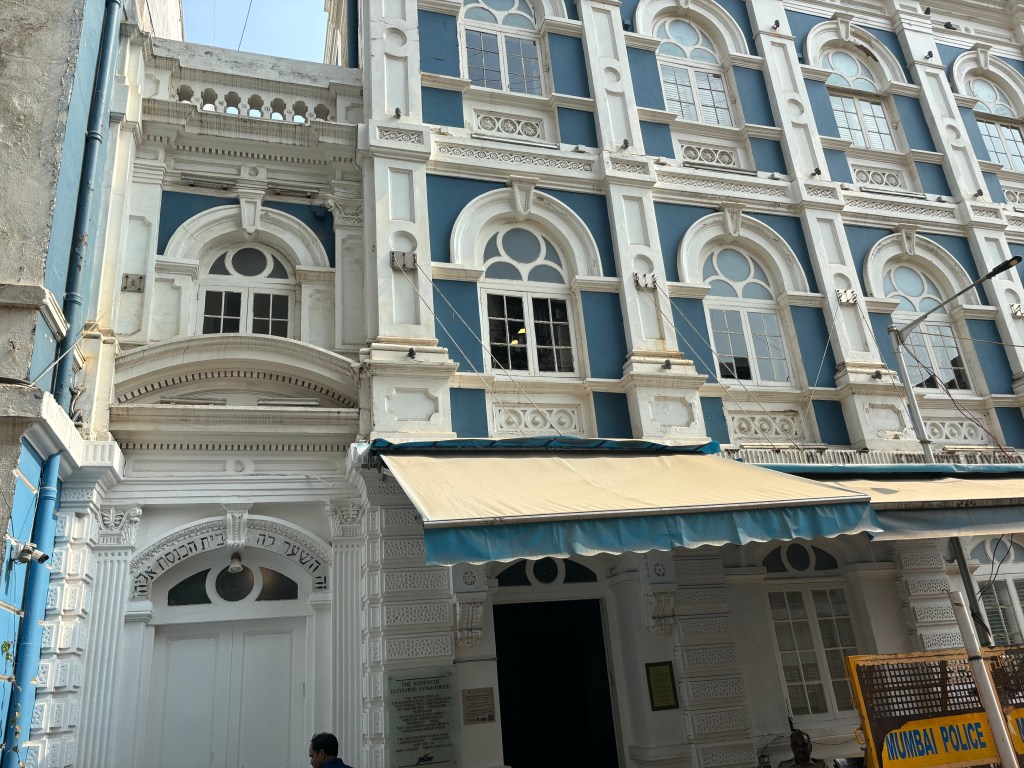
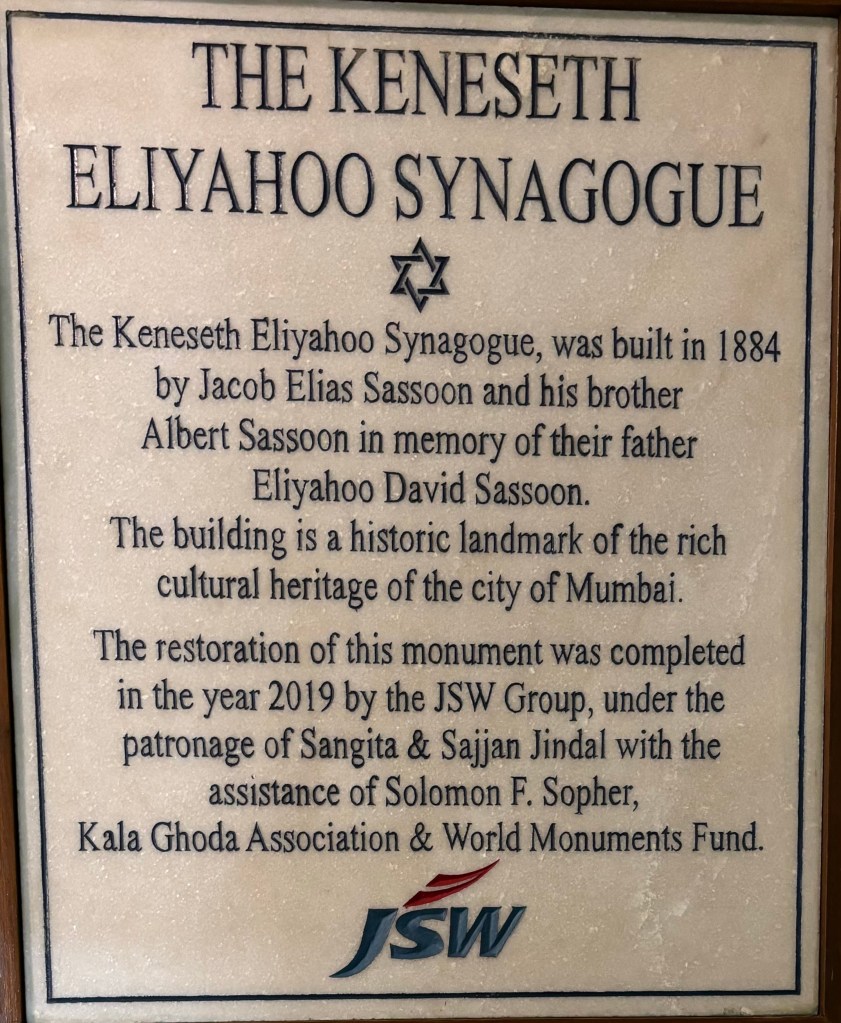
Built by Jacob Sassoon in 1884 and one of six synagogues in Mumbai. The Jewish community of Mumbai includes Baghdadi Jews, like the Sassoons, and Bene Israels who may have been on the Indian subcontinent during the reign of Ancient Greek King Antiochus IV Epiphanes.

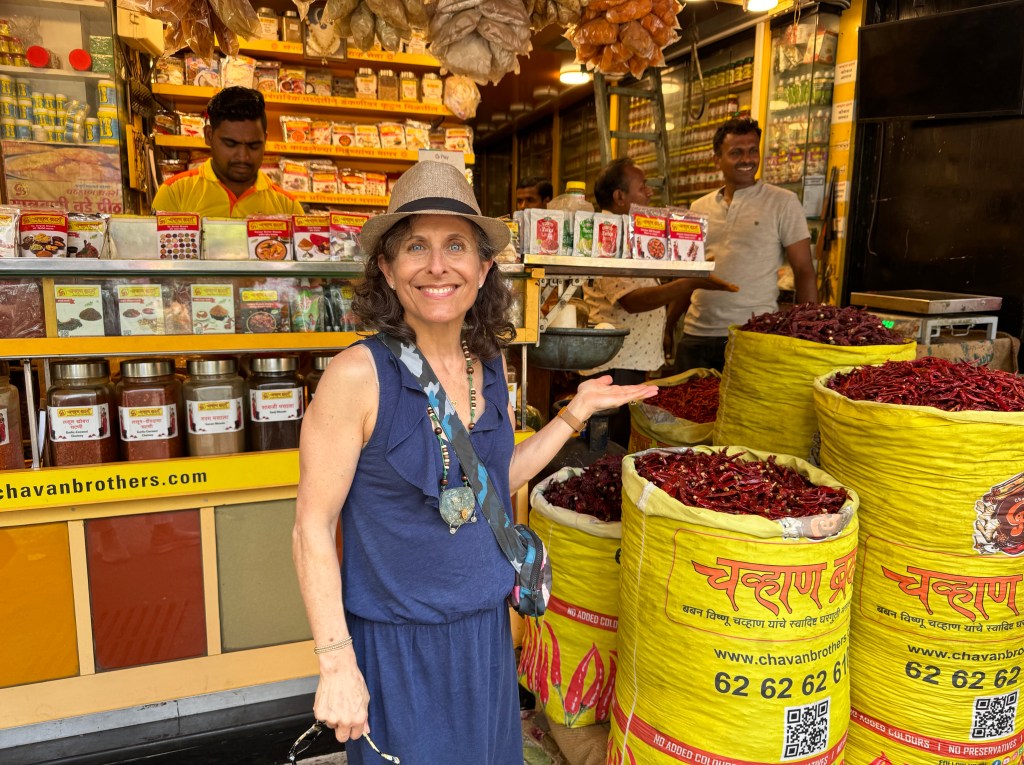
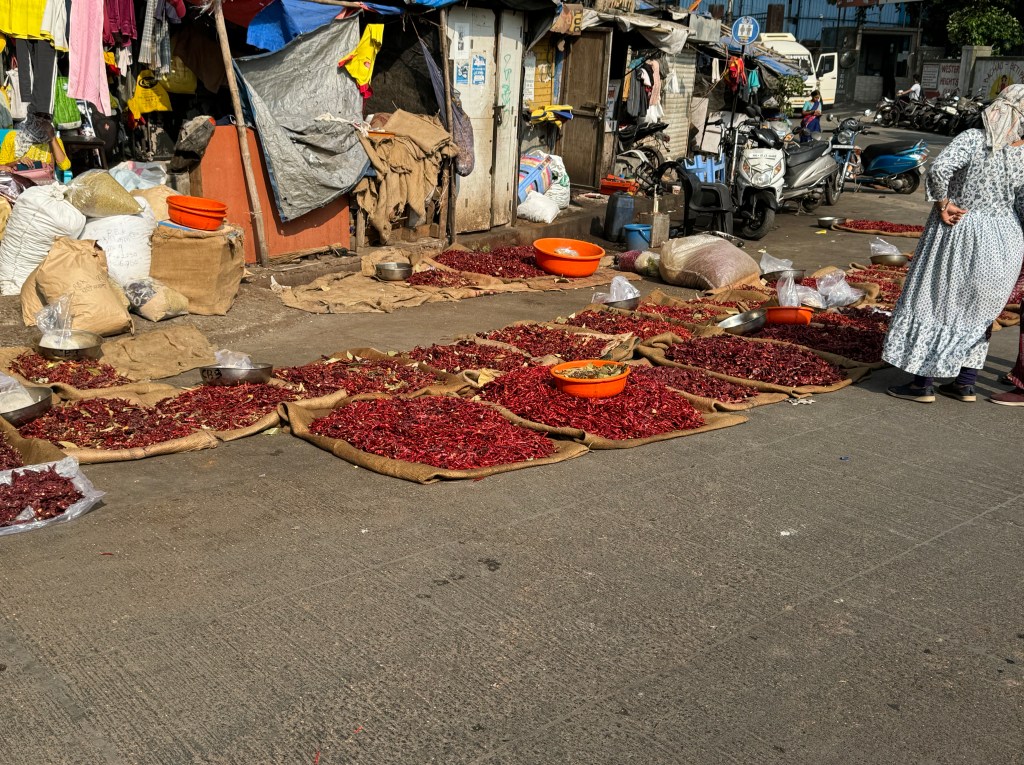
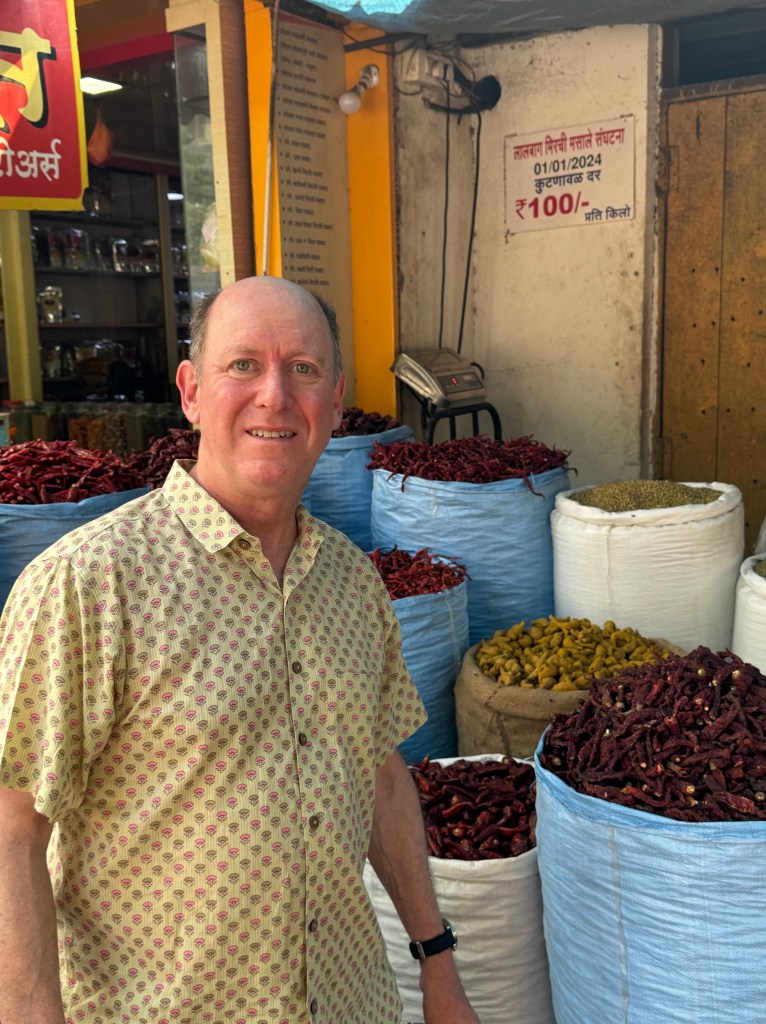
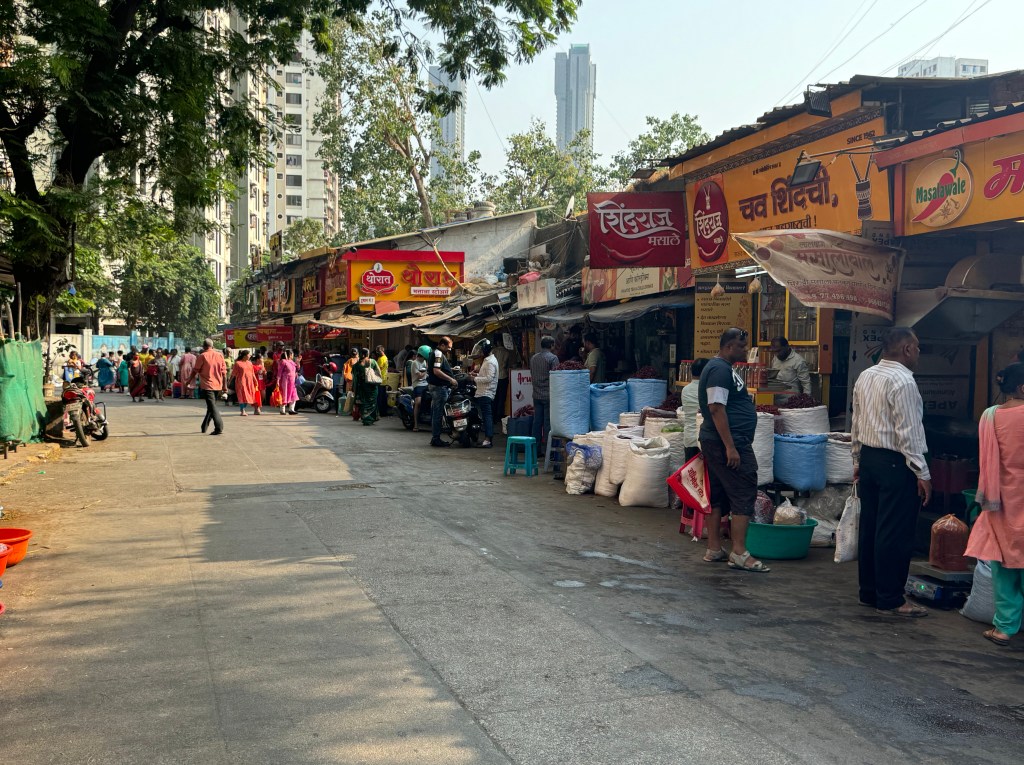
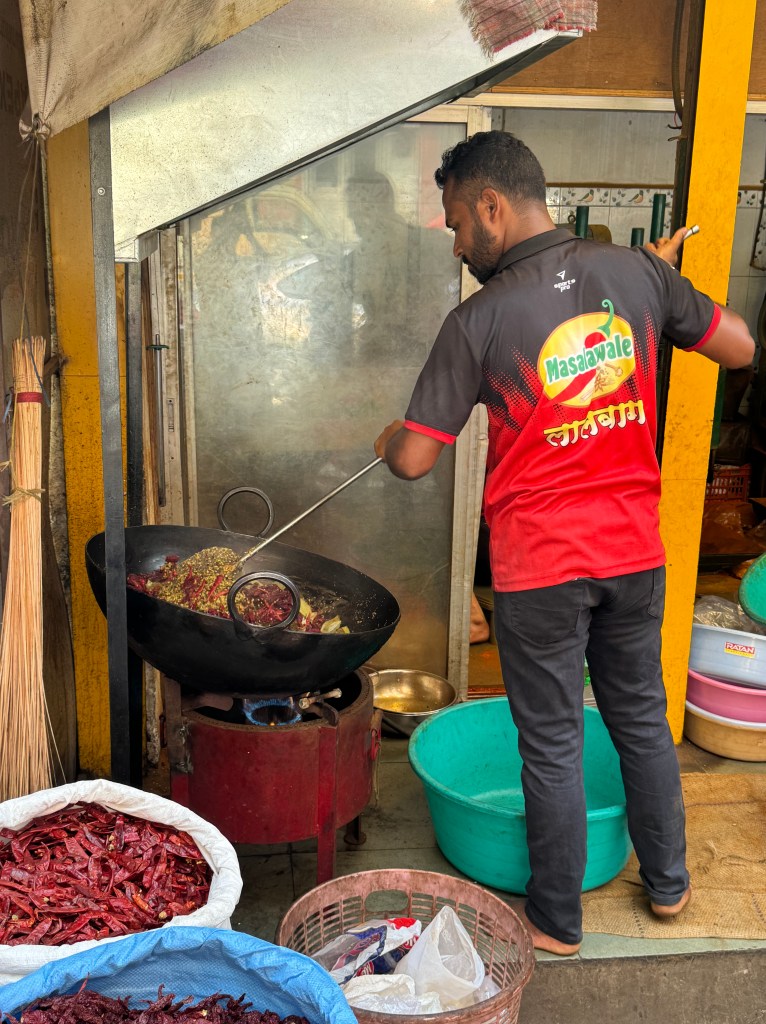
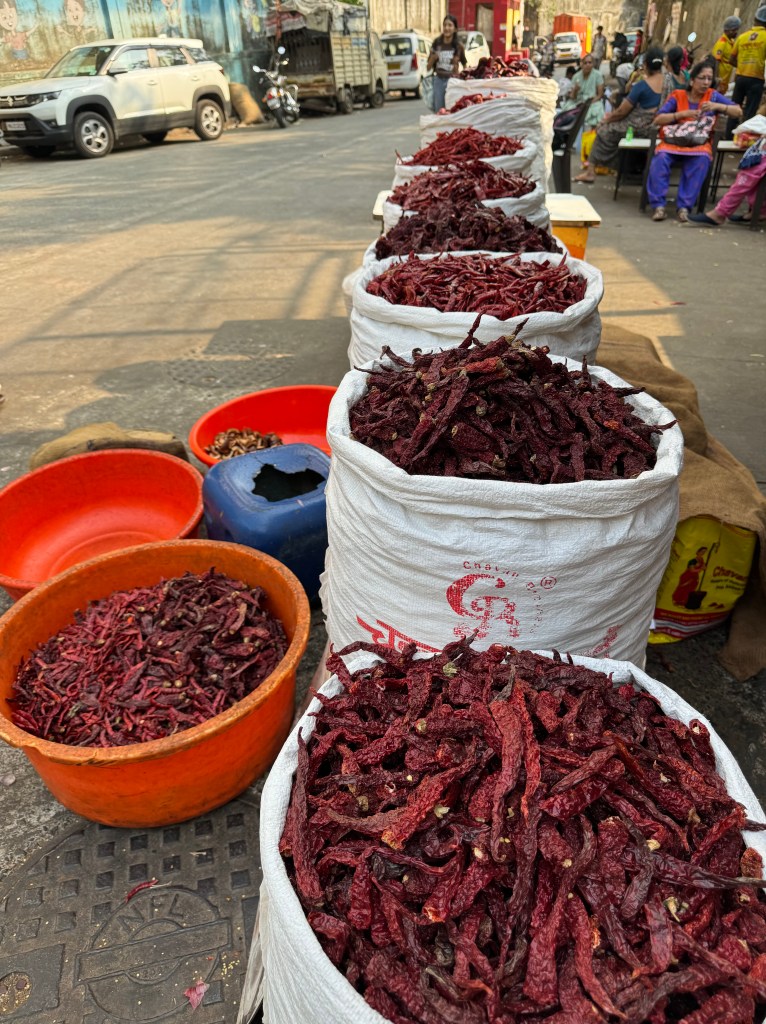
We happened to be in Mumbai during spice market season (this is a big theme as we have continued south). We observed the roasting of spices for packaging and bought fresh turmeric and a masala blend at the Lalbagh market.

Mumbai was quite an experience. We saw a great deal of infrastructure improvements taking place there (and all over India) and there are plans to clean up the slums and provide housing — an ambitious plan but hopefully one that will lift those who need it and usher in a new prosperity.
After Mumbai, we continued south, from to the state of Kerala, a completely different India — and even more hot and humid😓 .
Namaste
 The Innocents Abroad, 21st Century Version