(and some observations)
April 22, 2024
Dear friends,
Andy and I have so enjoyed these last two weeks of travel and I am taking copious notes and pictures to share. More of that below.
We are thinking of our friends and family back home and our friends in Israel as we begin to celebrate Passover. Wishing you meaningful and delicious Seders and to borrow from the American Jewish World Sevice Haggadah: “Next year, in a just world” (thank you, Peter). 🙏🏼☮️🕊️
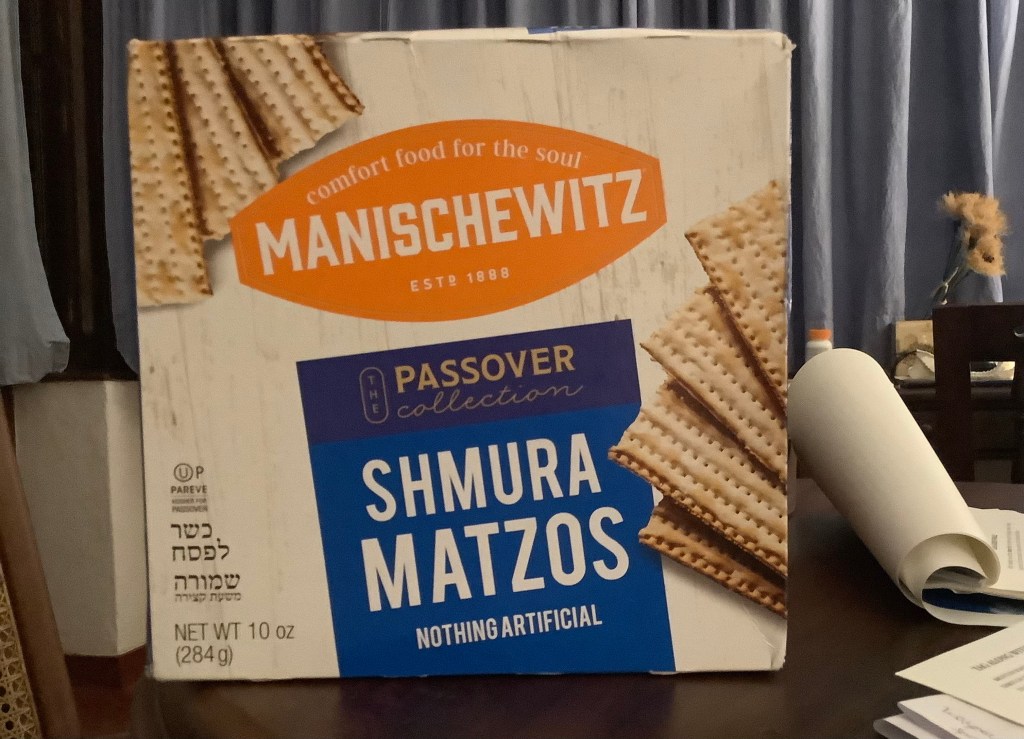
This box of matzah left New York on April 7 — it’s probably farfel by now! Jews have observed Pesach in India for centuries and now we will too.
INDIA’S GOLDEN TRIANGLE:
Delhi – City of Rallies, the capital city, and that’s where the people go to protest, divided by Old Delhi (pre-Colonial India) and New Delhi (developed during British Colonial years)
Agra – City of Taj (need I say more or read my previous post)
Jaipur – Pink City in the state of Rajasthan (so named when the Maharaja Sawai Ram Singh honored Prince Albert’s 1876 visit by painting the town pink. This is the Prince Albert, son of Queen Victoria and future King Edward VII. The “pink” custom became law and Old Jaipur is terracotta pink to this day.
Friday, April 12. While Andy conducted business with his partners and the analysts of Rhodium Analytics, I chose four sights to see in Delhi with Palasm, my guide for the day.
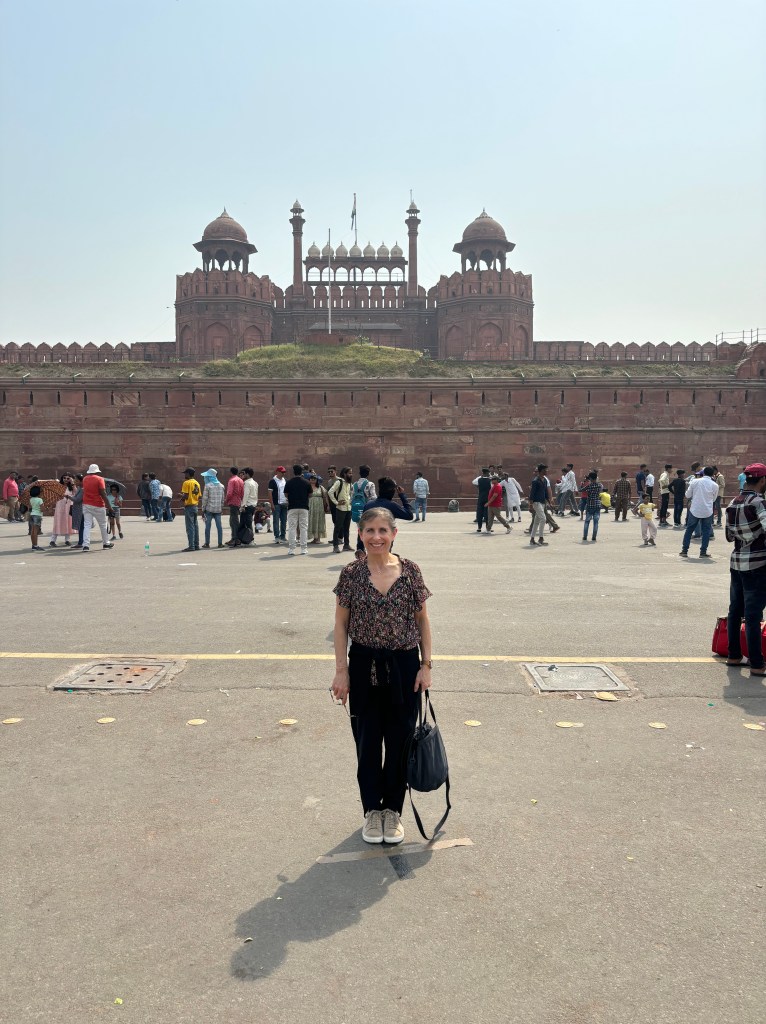
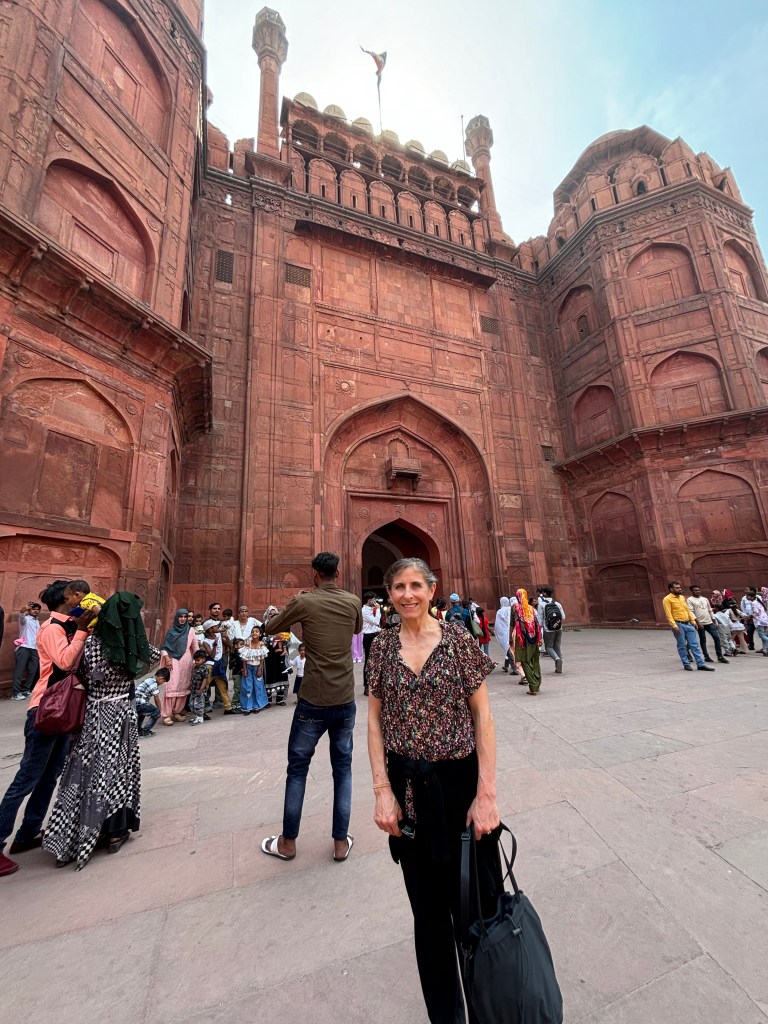
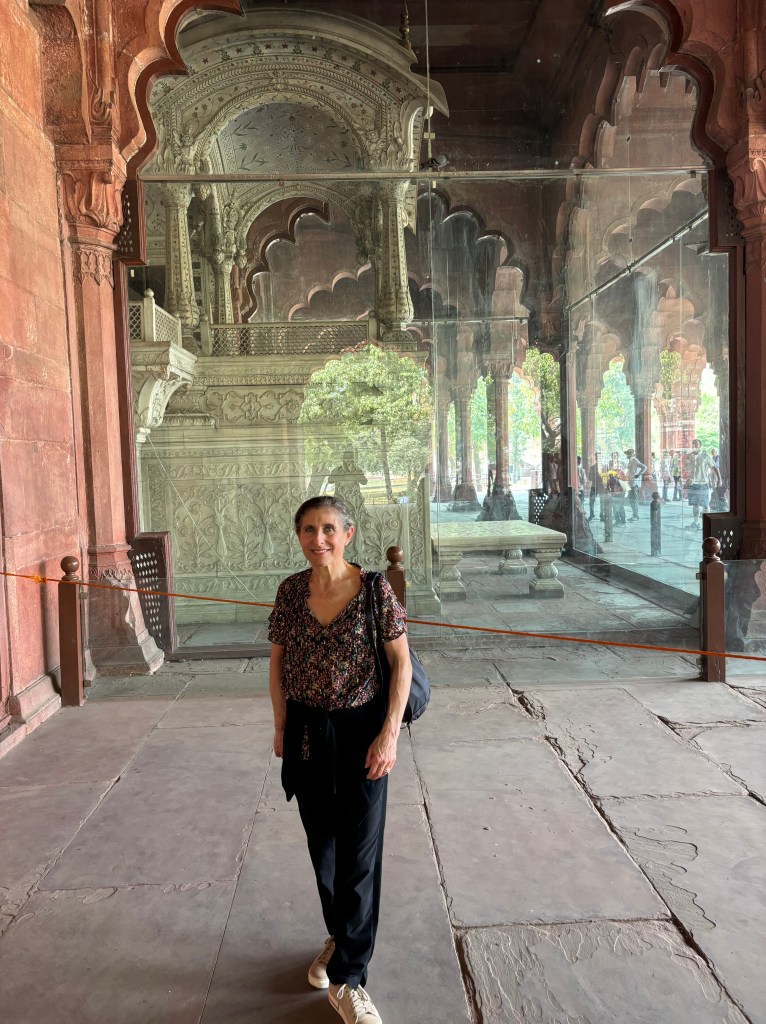
The Red Fort is a huge walled complex and palace that was built under Emperor Shah Jahan of Taj Mahal fame. Jahan moved his capital to Delhi during the mid 17th century. Inside are beautiful architectural structures of the Mughal style. The British used the fort during their colonization of India and it was the first place Indian independence was celebrated in 1947. Every Independence Day the Prime Minister speaks from this historical spot.
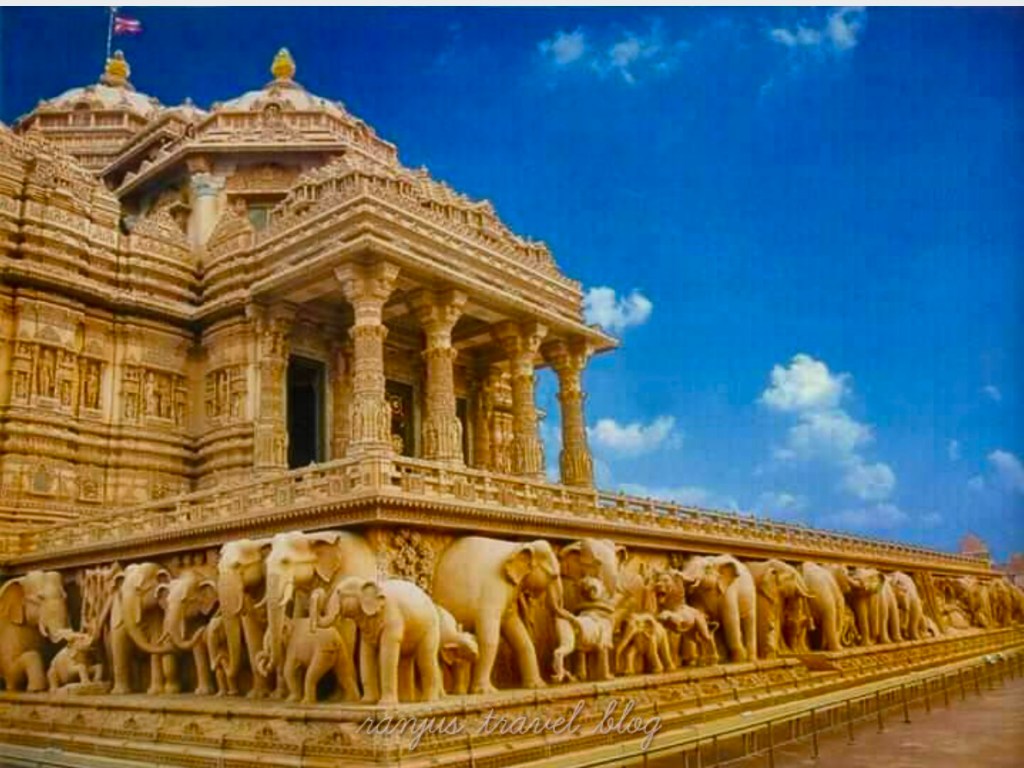
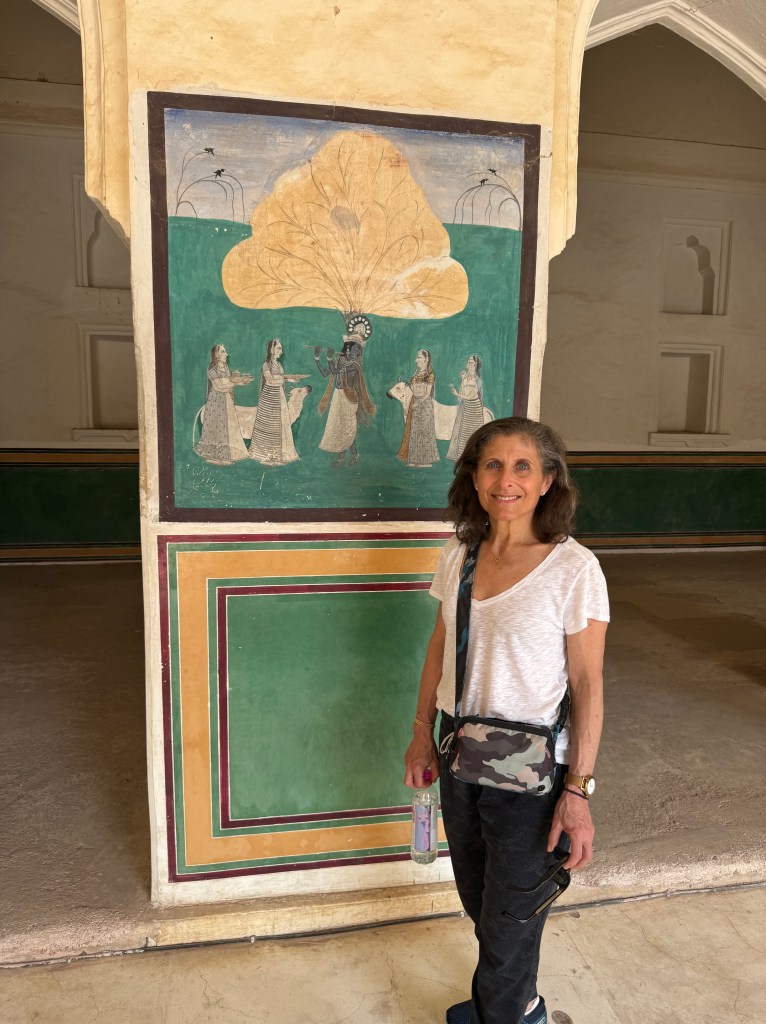
The Akahardham Temple was our next stop. This is a Hindu temple dedicated to Sahajanand Swami aka Swaminarayan (1781-1830 ) whose followers believe he was the reincarnation of Krishna. relatively new, constructed from 2000-2005.
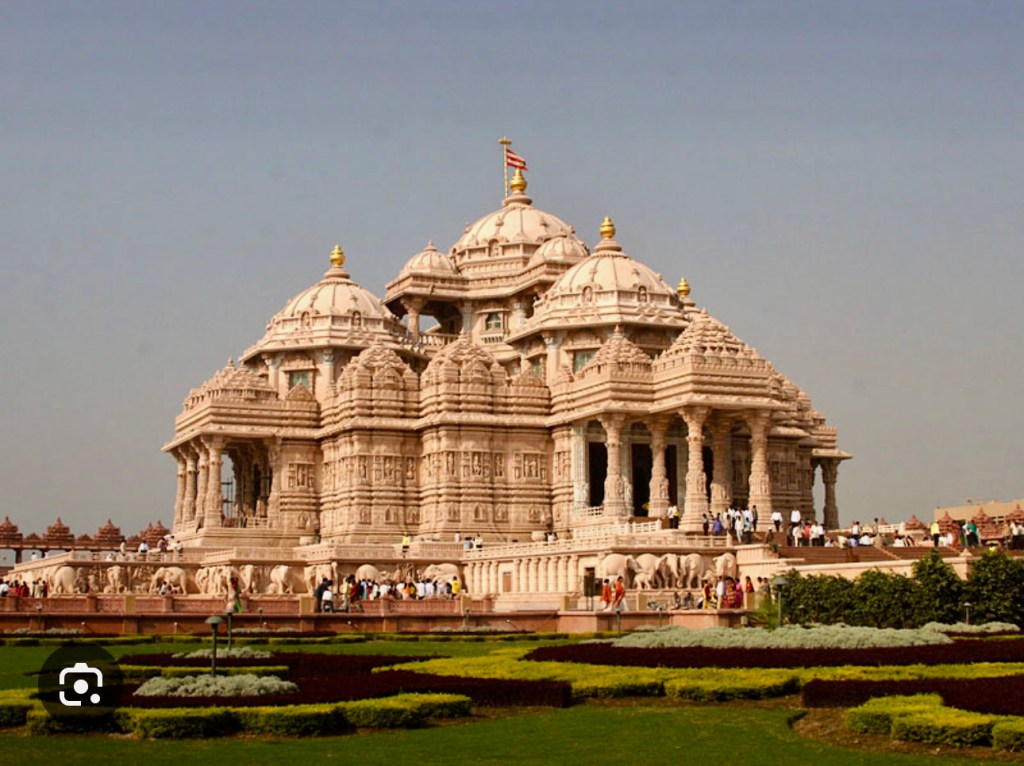
The workmanship inside and out is old-school ornate, with beautiful carvings inside and out. One must remove shoes and socks to enter and there was no photography allowed.
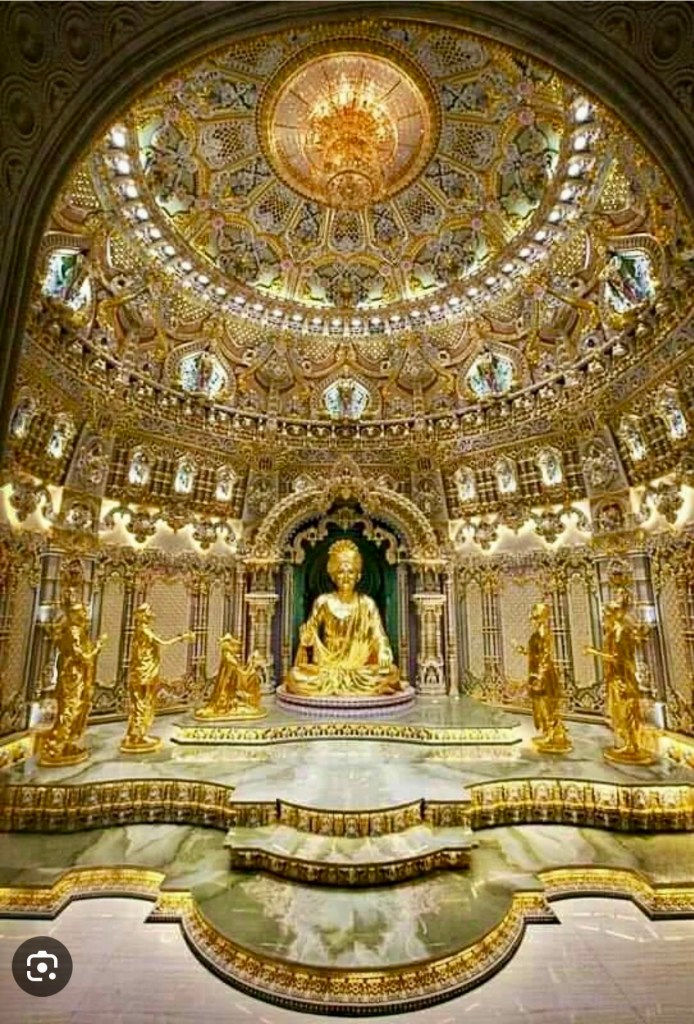
In spite of my interest in yoga, an ancient Hindu practice (I even know some words), I am just learning about Hinduism. Most Hindus whom I have met explain their religion as a philosophy, a way of life. There are many gods with three at the top of the pyramid: Shiva and then Vishnu and Brahma. Temples are named for different gods and Hindus choose the gods they worship based on many factors, including the energy associated with their time of birth. Hindus also believe in reincarnation with humankind the highest form to achieve. The most authentic Hindu I have learned about is Mahatma Gandhi, who gave up material things, including making a vow of abstinence, believing in nonviolence, with the goal of gaining independence for India and ending the caste system, especially for the Untouchables.
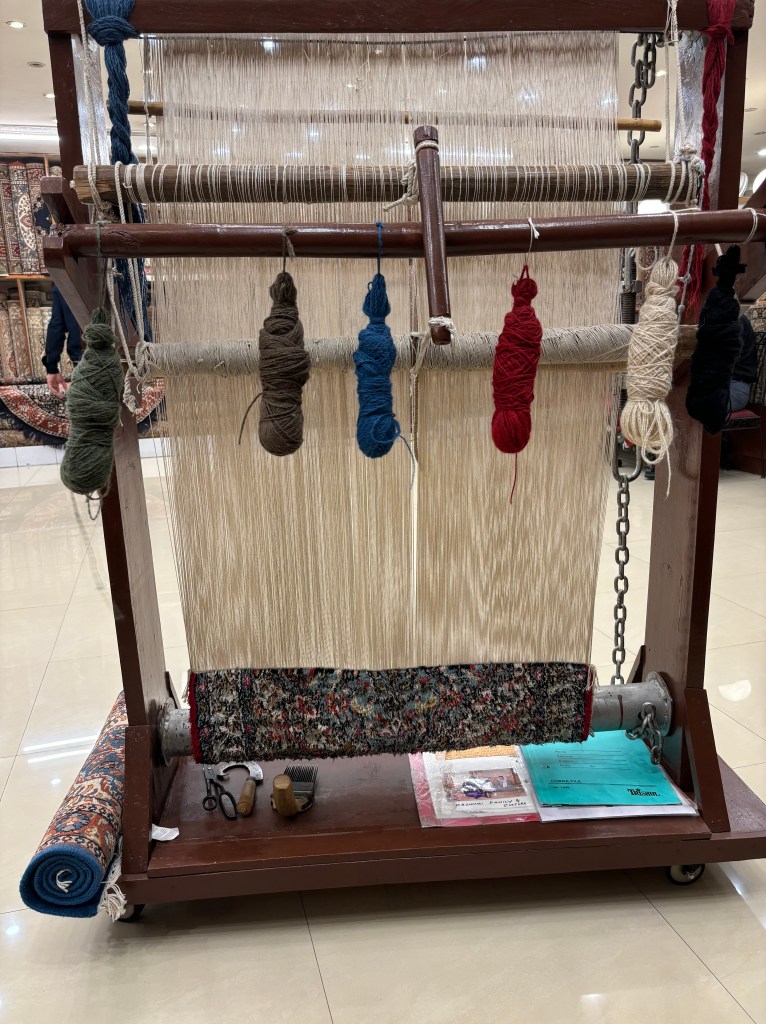
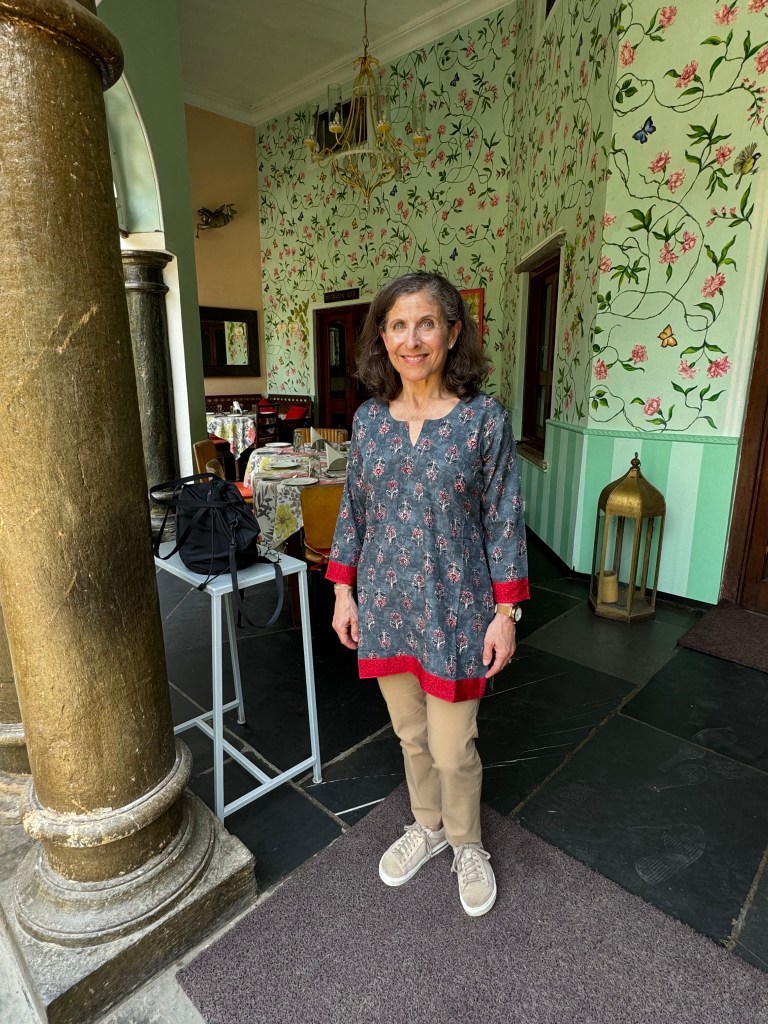
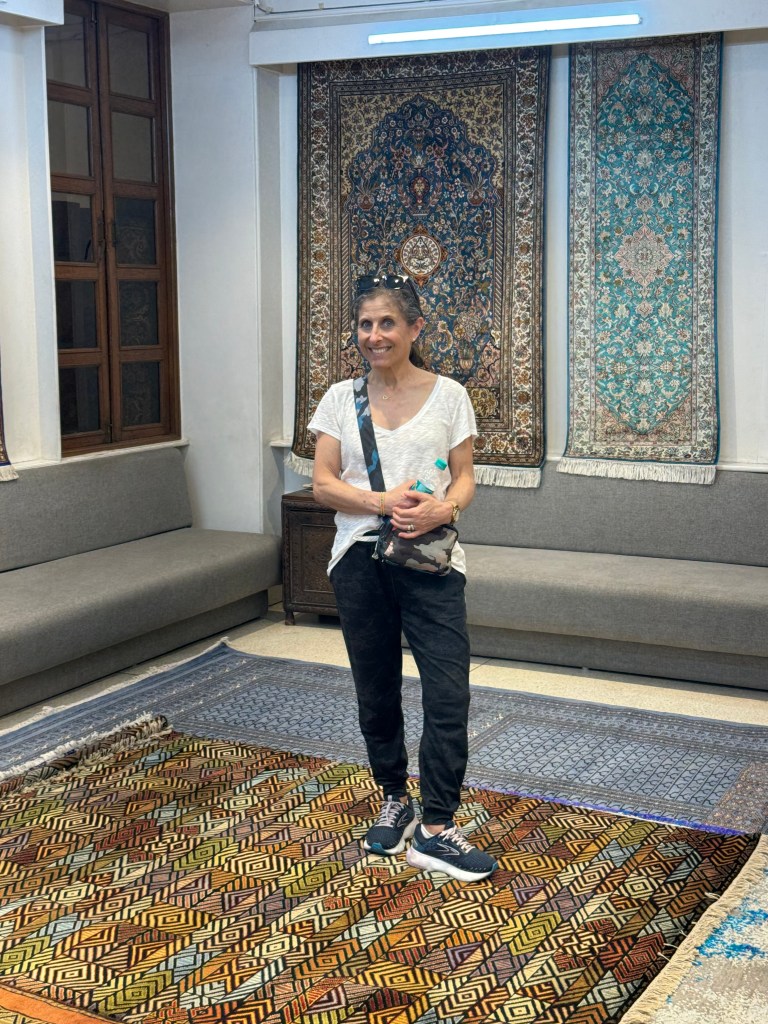
Of course, my Delhi tour included a shopping detour. I was ushered into a private demonstration of rug-weaving from a cooperative of workers way up in Kashmir. Now that I have gained so much knowledge of this artistry and craft, I will be sure to inspect my rugs (once we get them out of storage) for quality. Not wanting to disappoint these merchants, I bought a tunic and off we went.
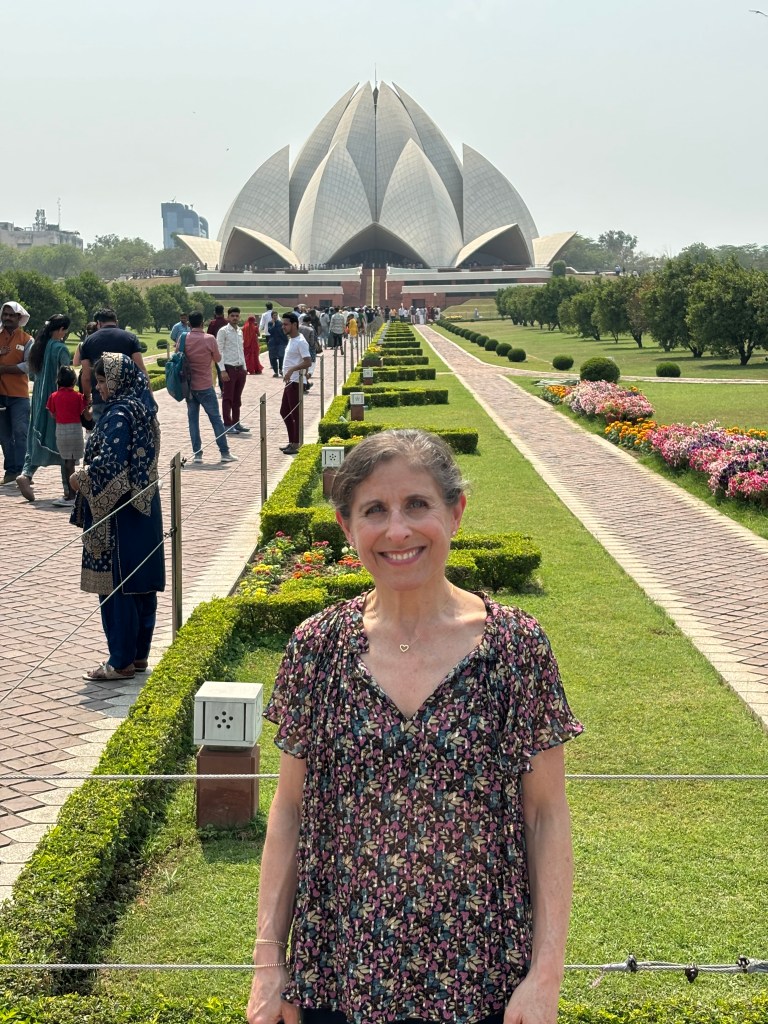
Lotus Temple (1986) is India’s main temple for the Baha’i religion (perhaps you have been to or heard about the Baha’i Gardens in Haifa, Israel). This temple has a stunning lotus flower 🪷 exterior of marble covered concrete but a very simple interior with pews (in juxtaposition to Hindu temples where prayer is on the floor).
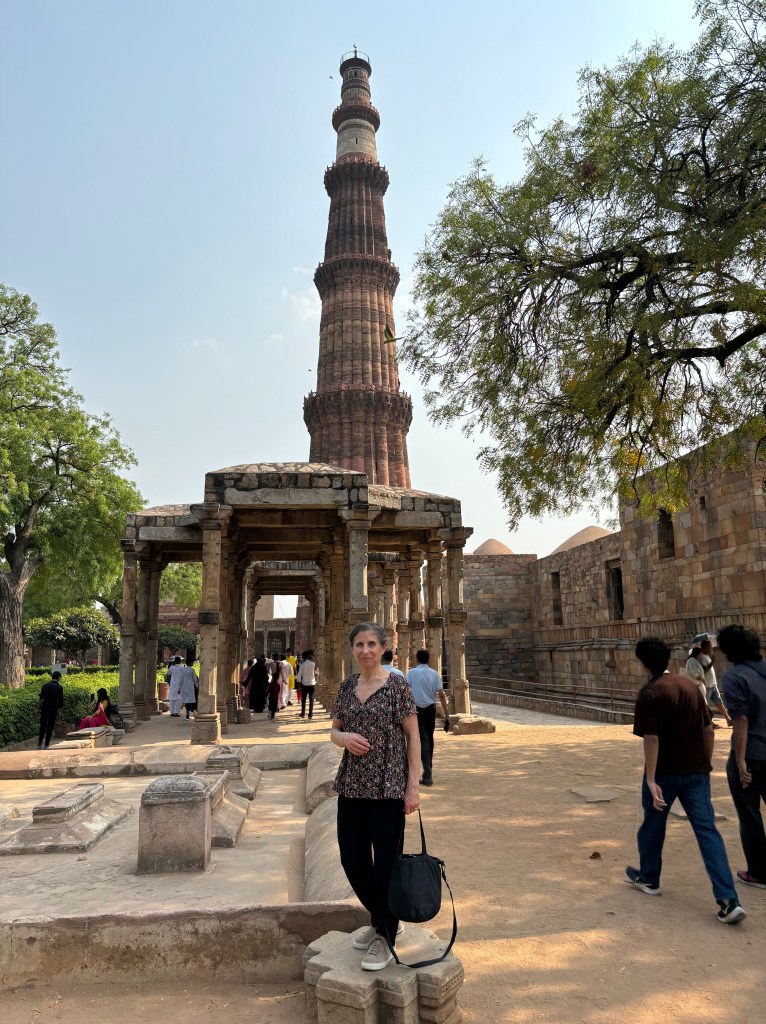
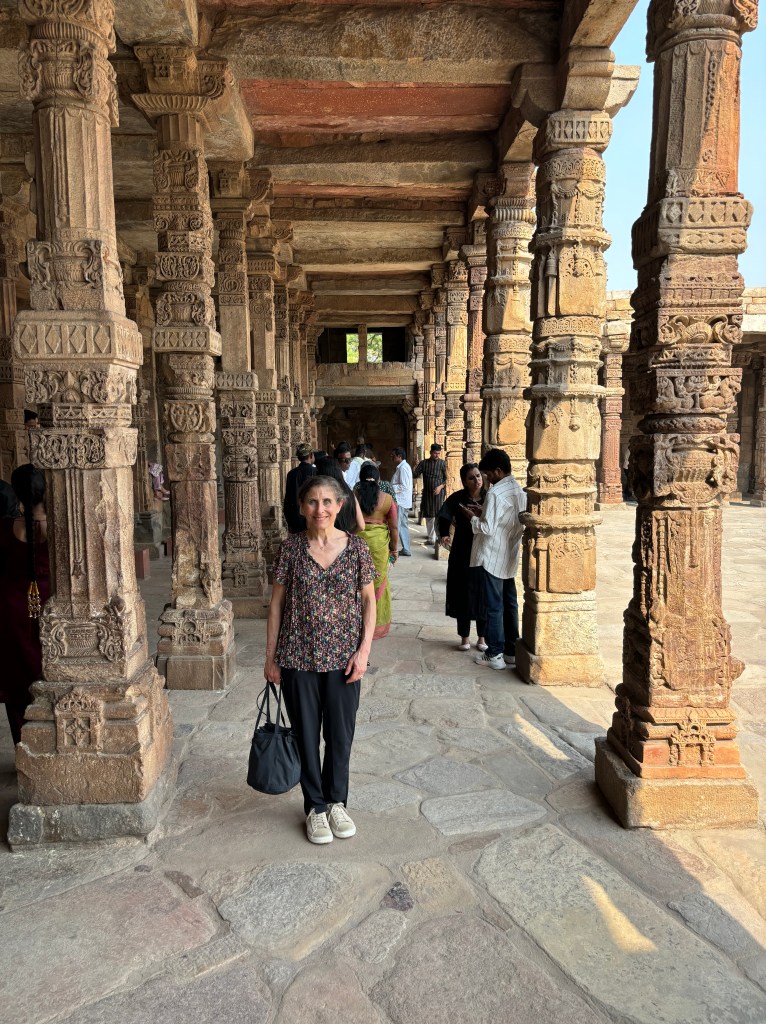
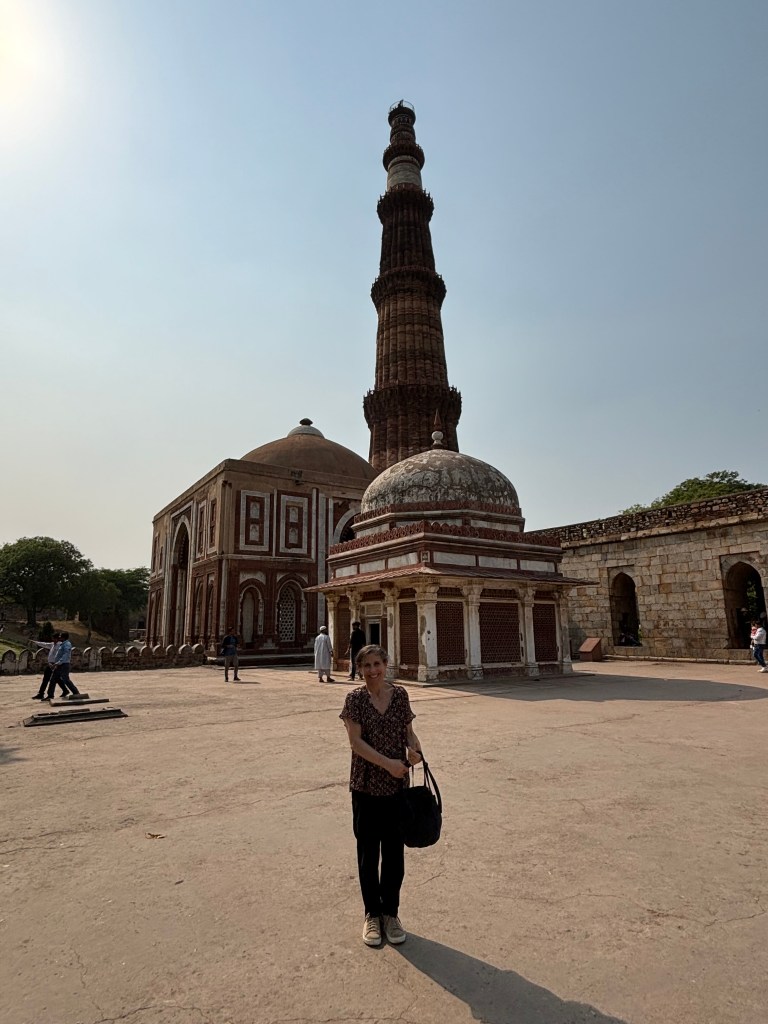
Qutb Minar: This site began as a Hindu temple but was destroyed and reconstructed in the 13th and 14th centuries by the Islamic Delhi Sultanate. The Qutb Minar is a 238 foot tall minaret and is the focal point here but also interesting were the old Hindu temple columns, repurposed here and the Quwwat-ul-Islam Mosque.
JAIPUR – Saturday, April 13 – Monday, April 15
I must share that Amanda Lobo from Ventours, a travel agency based in Mumbai prepared our itinerary from this point forward. Prior to contacting Amanda, we had a long list of recommended India destinations from Andy and my research and from Cynthia (who also checked into ChatGPT, which also produced a nice itinerary).
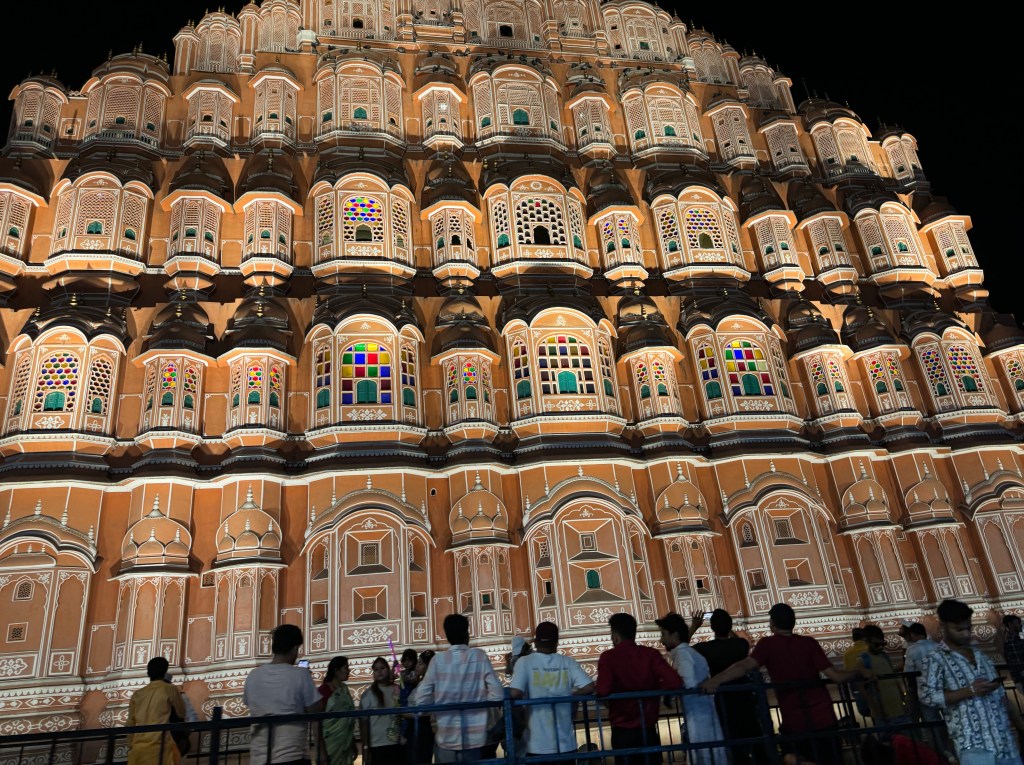
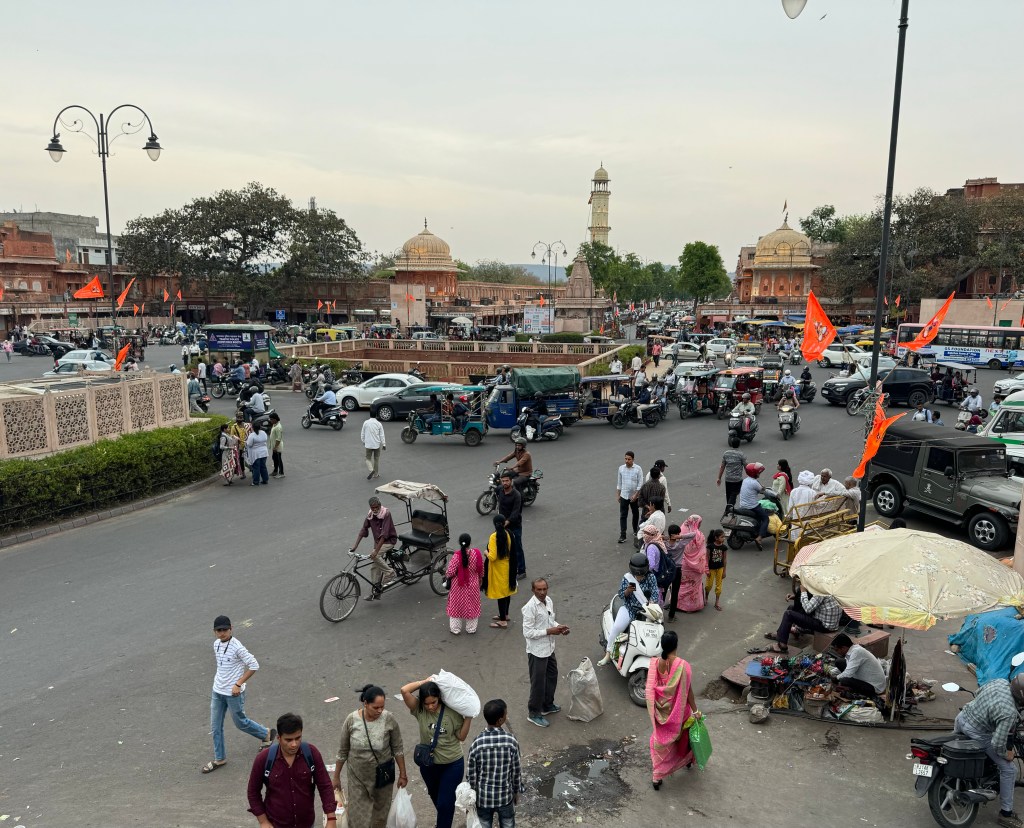
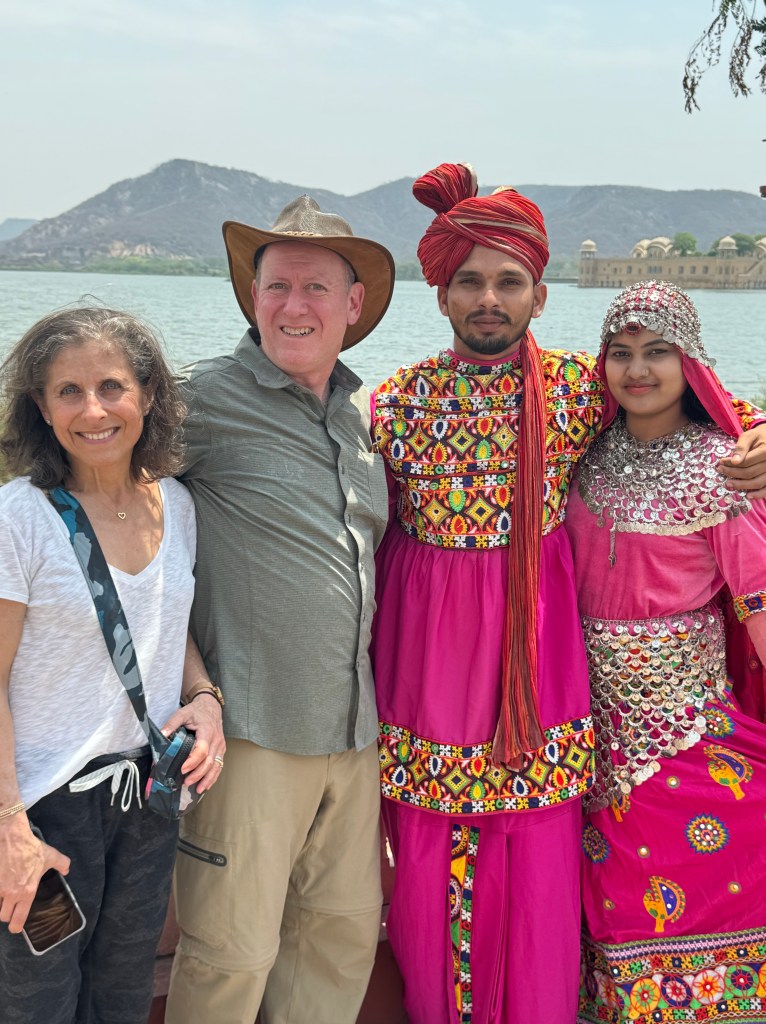
We flew from New Delhi to Jaipur, in the state of Rajasthan, and landed in New Jaipur, a modern city of business and apartment complexes and contemporary-shopping. But that’s not the Jaipur we came to know and love. We entered the hustle and bustle of Old Jaipur (1727), the pink city, founded by Jai Singh II, a Rajput king, through one of the walled city gates. The entirety of Old Jaipur is a UNESCO World Heritage Site. The streets are as colorful as the architecture and incredibly busy with the horns of all moving vehicles having a language of their own. Its pink shade appeared in 1876 to honor the visit of Prince Albert, the future King Edward VII and the color “stuck” (except for the royal palace which stands out for its yellow shade).
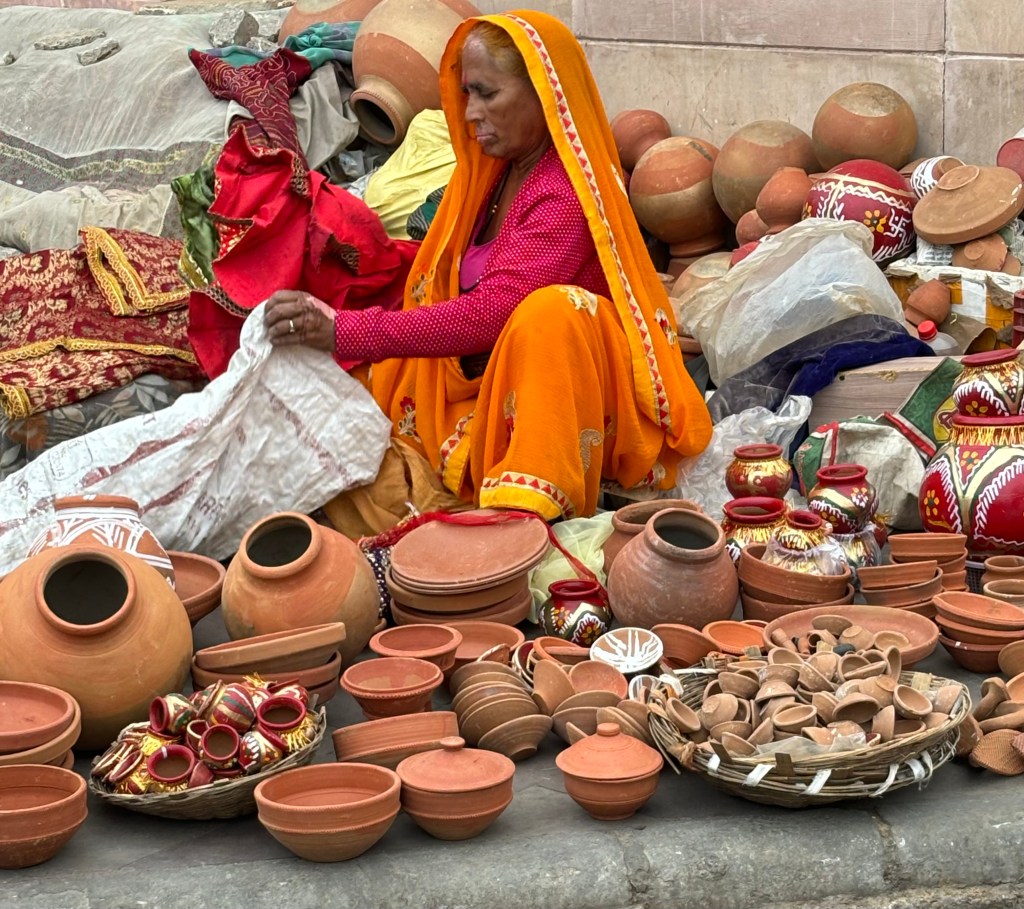
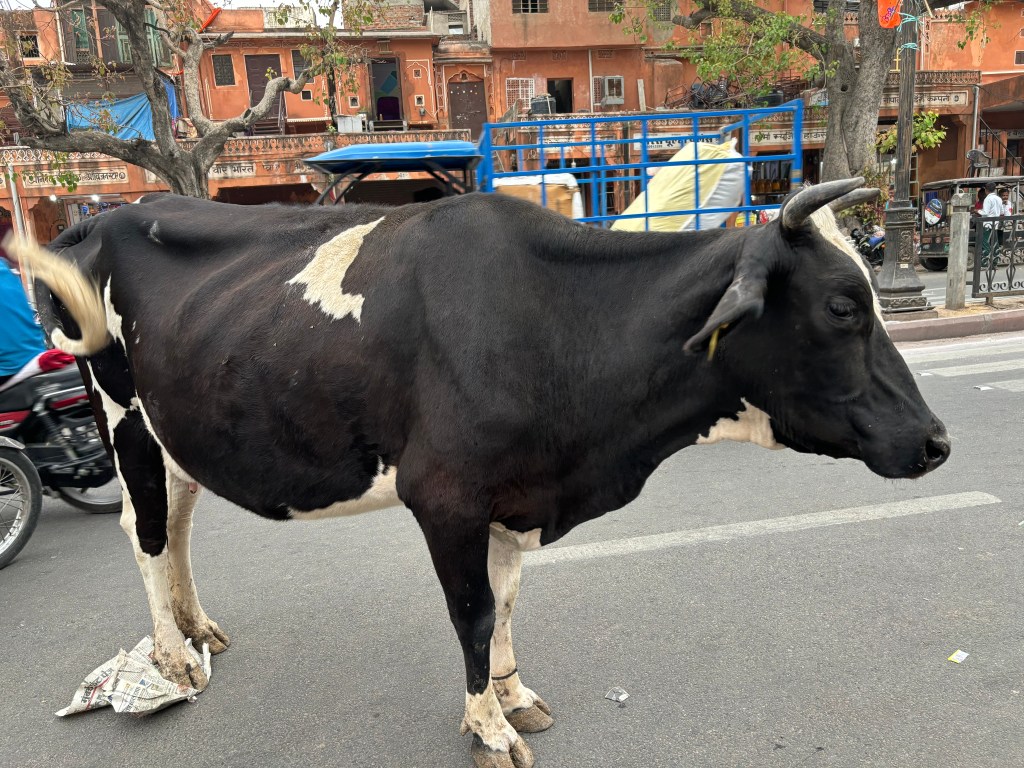
It is off-season in India now. While monsoon season has not yet begun (that will commence in mid-June), it is just plain hot, with daytime temperatures 96 and higher. Jaipur’s climate is dry so that helped make the heat less oppressive. The benefits of off-season include hotel room upgrades and fewer tourists at the main attractions.
Dogs, monkeys, cows (of course) and camels (only in the state of Rajasthan due to the arid climate), scooters, rickshaws, cars, trucks and people fill the streets. But, tucked away from it all was the Samode Haveli Hotel. This beautiful property was the home of one of the king’s ministers and generations later, the family has gone into the hospitality business. My hotel highlight were its decor and the grounds but also the 1:1 yoga class I took en plein air, where I was stretched to the max.
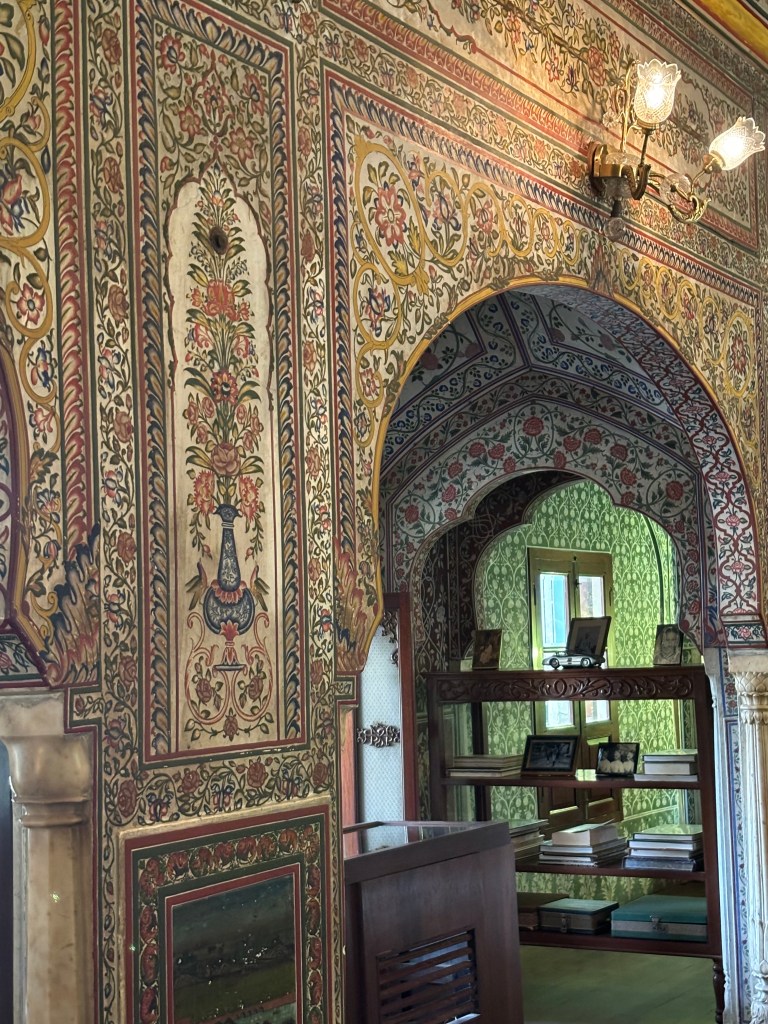
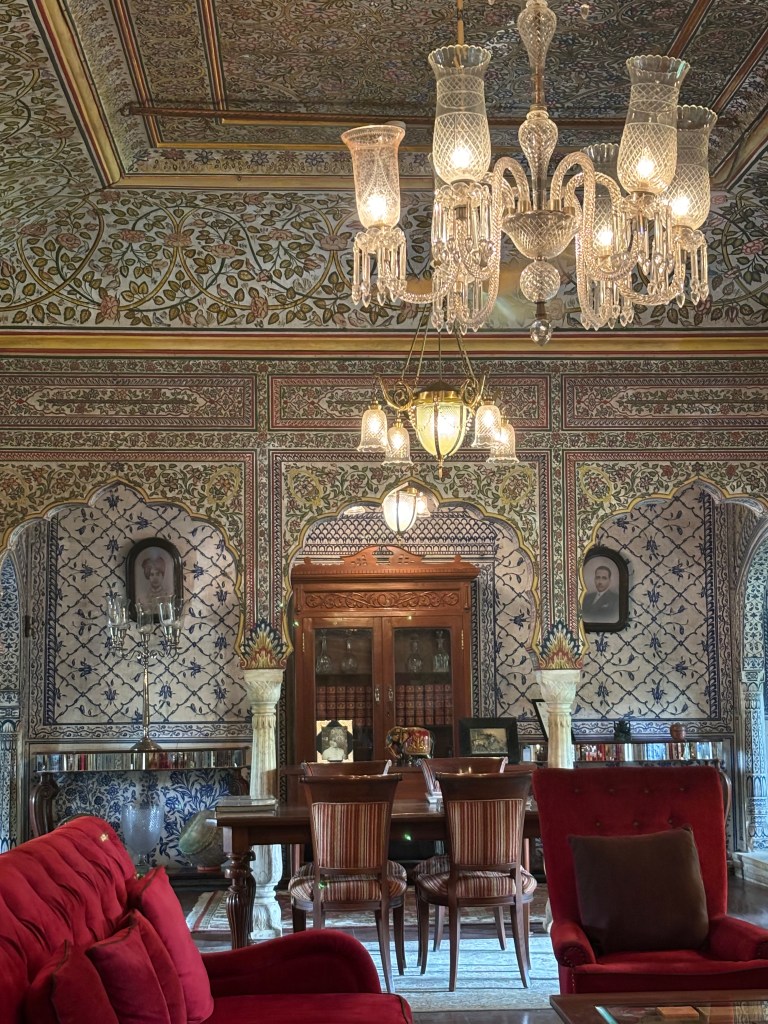
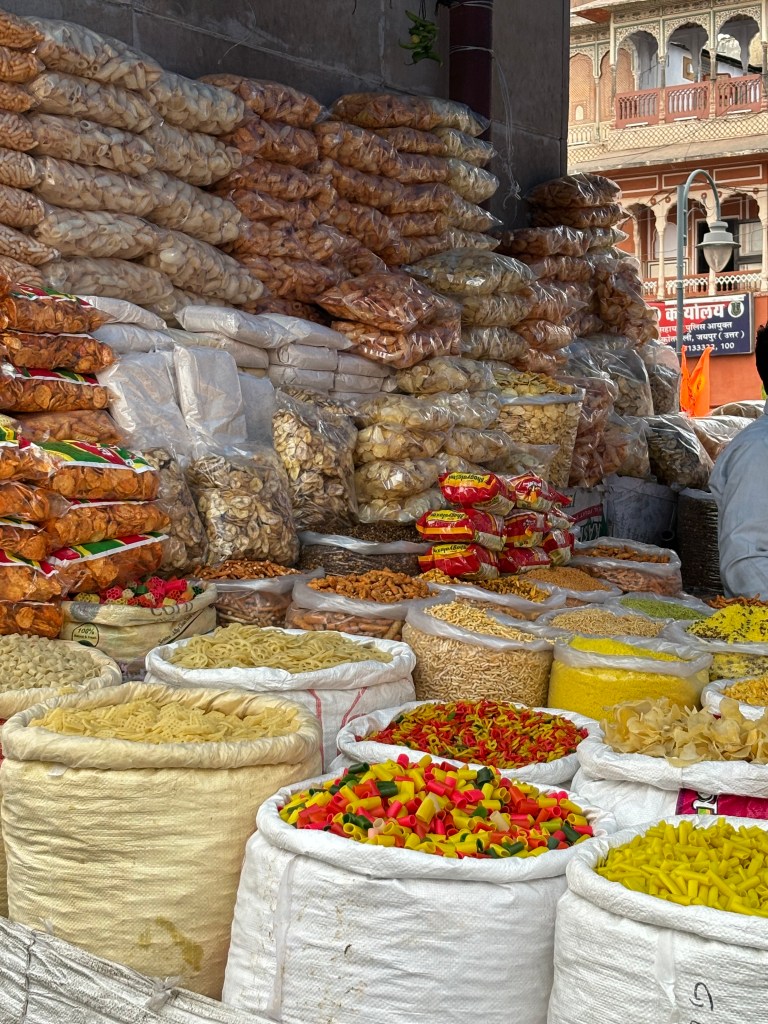
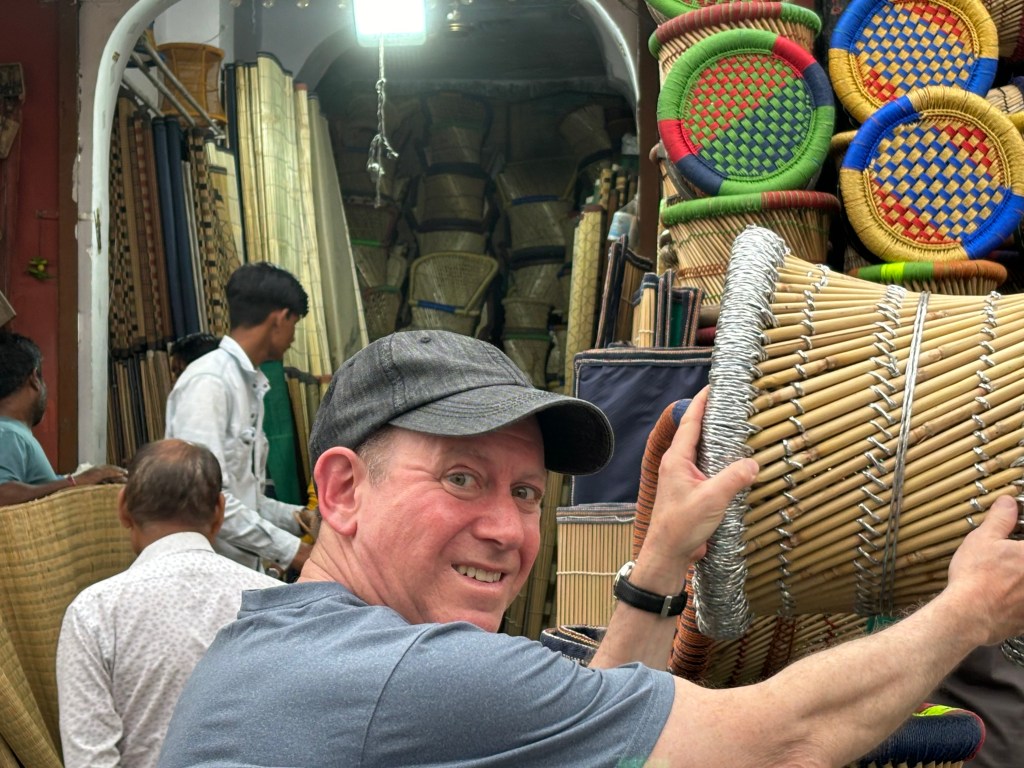
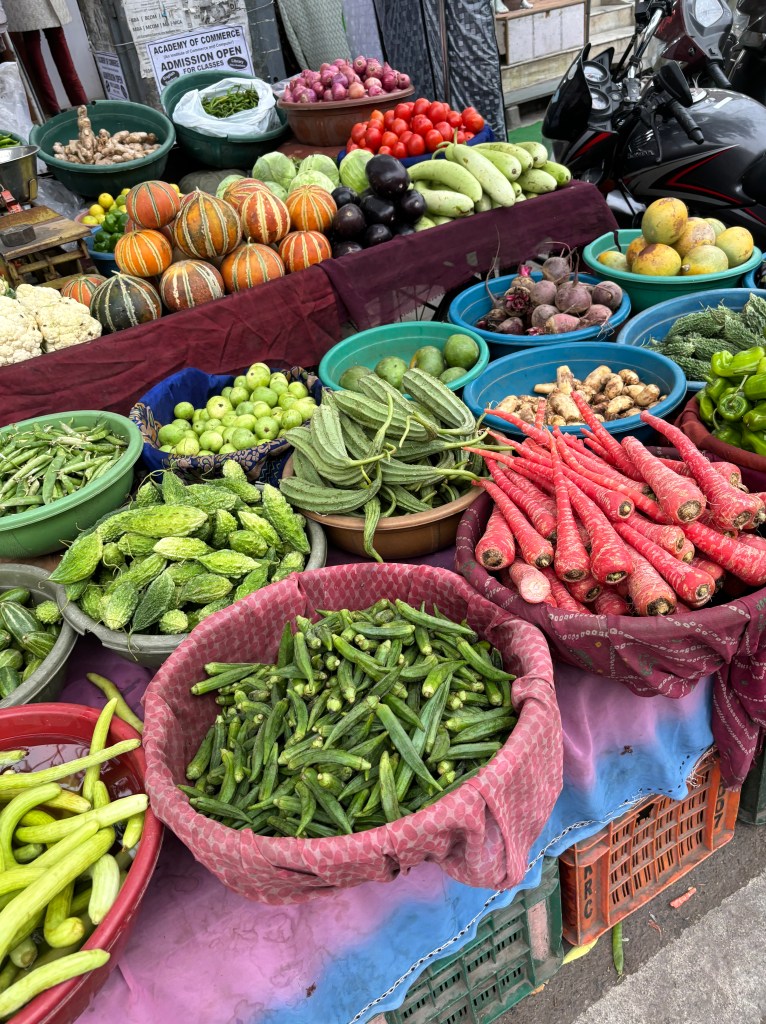
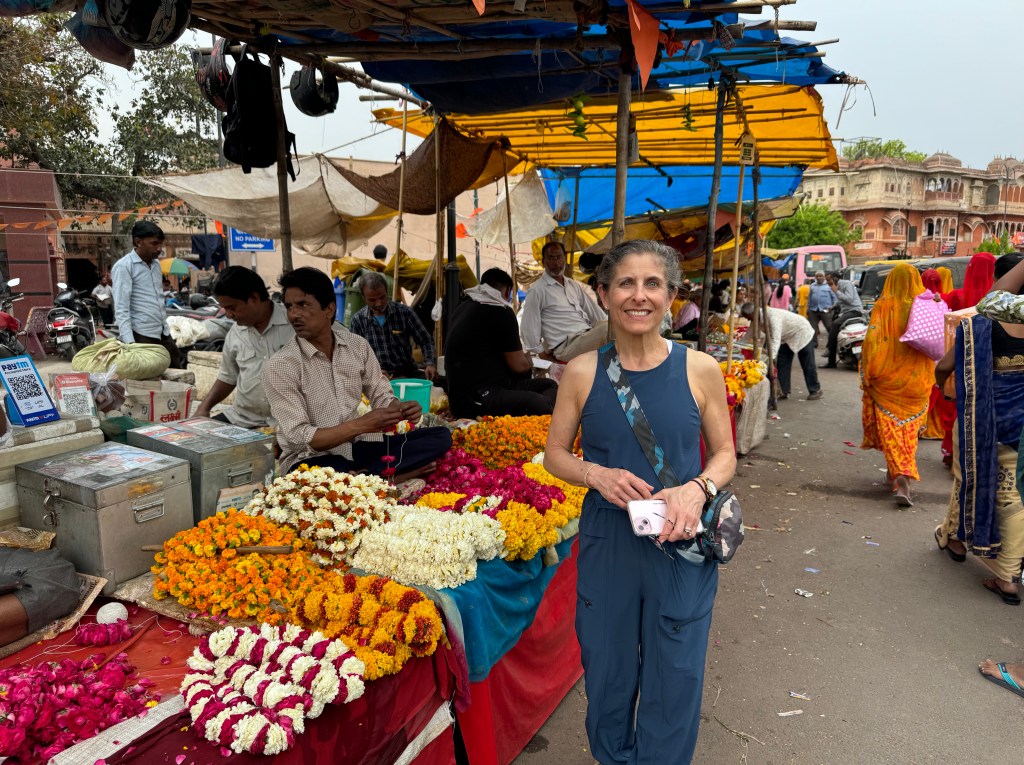
Our first afternoon in Jaipur, we met our guide Vinod, an amazing ambassador and historian of Jaipur. He walked us (and protected us at street crossings) through Old Jaipur with its interesting architecture and lively market scene.
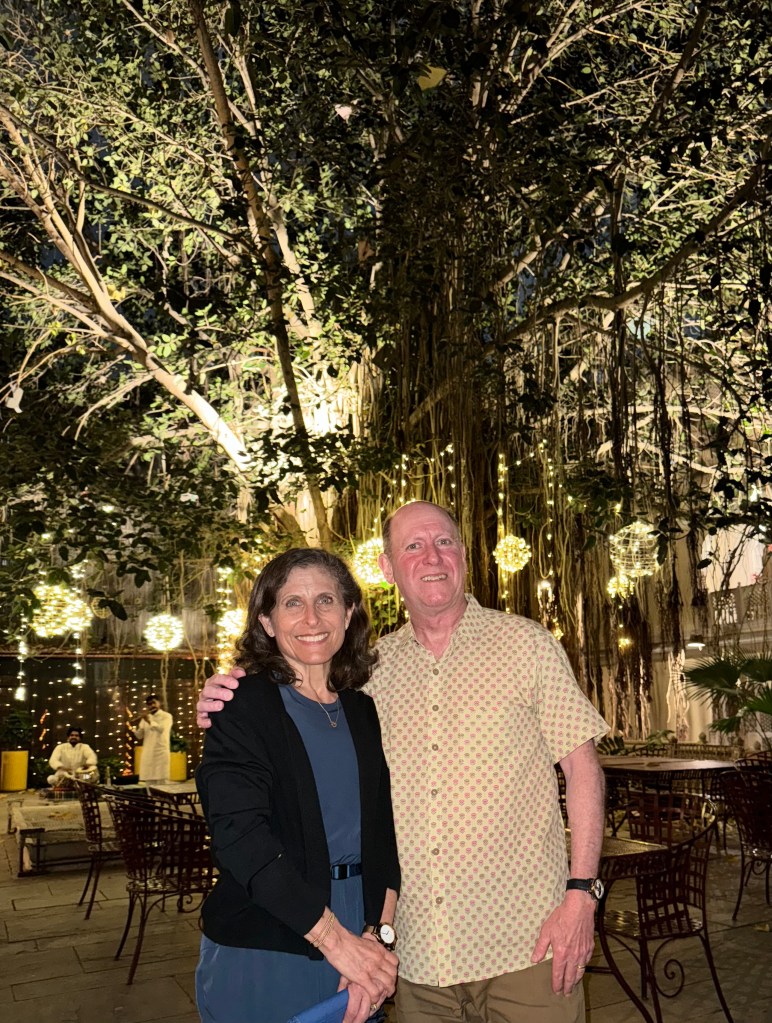
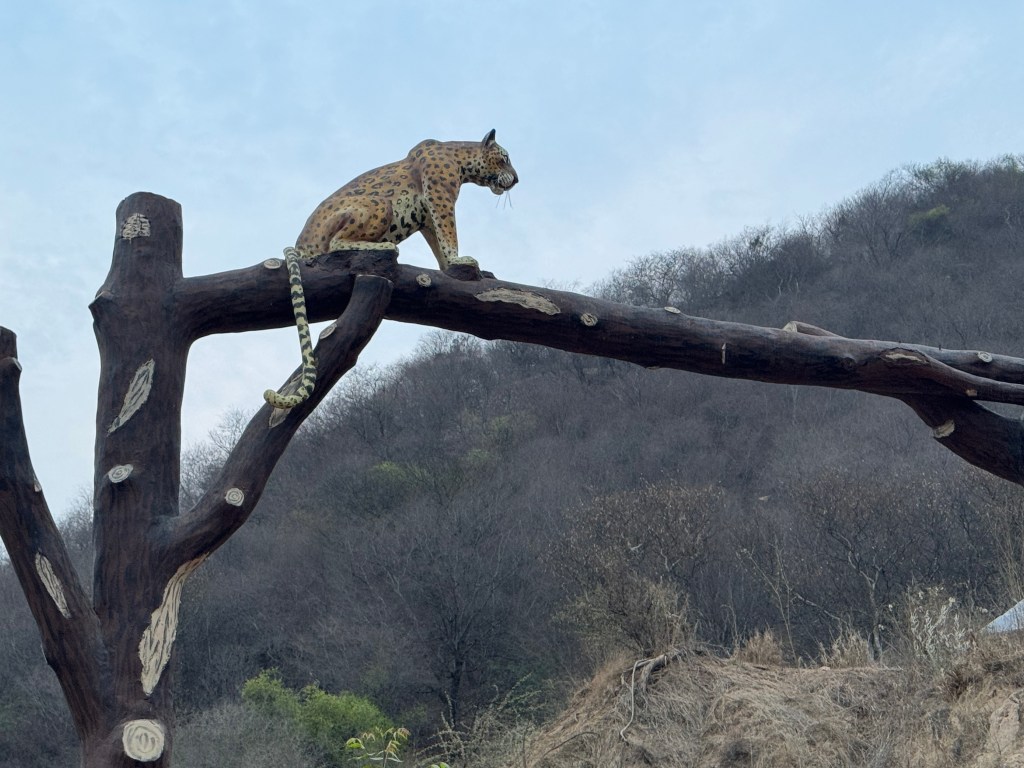
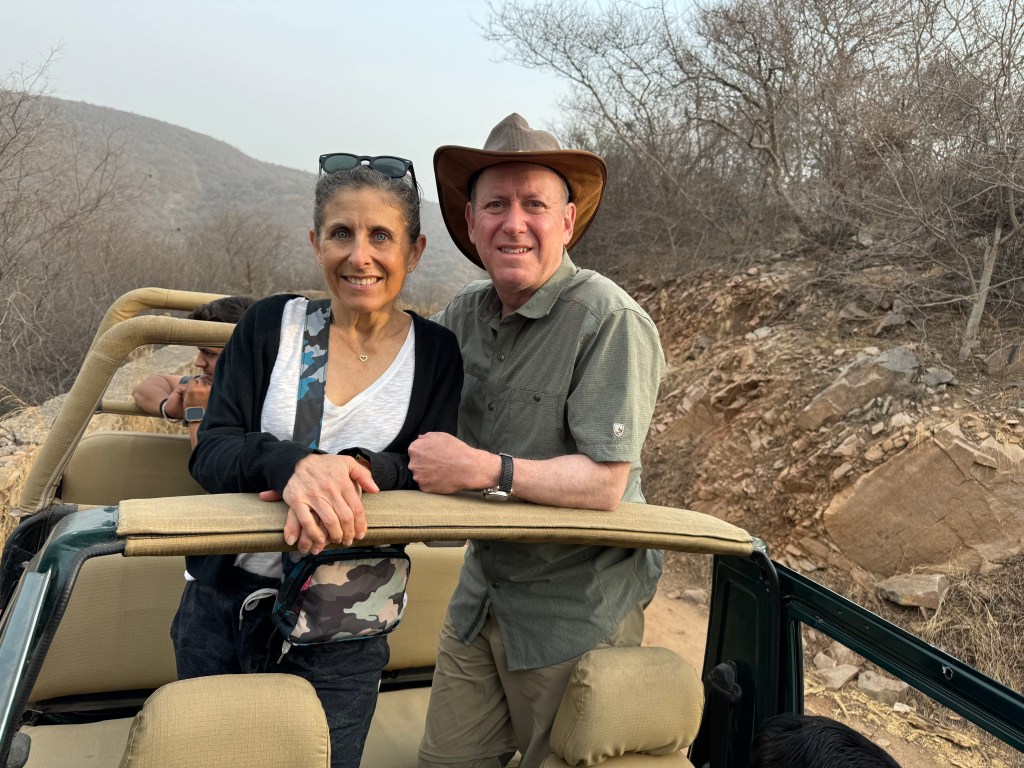
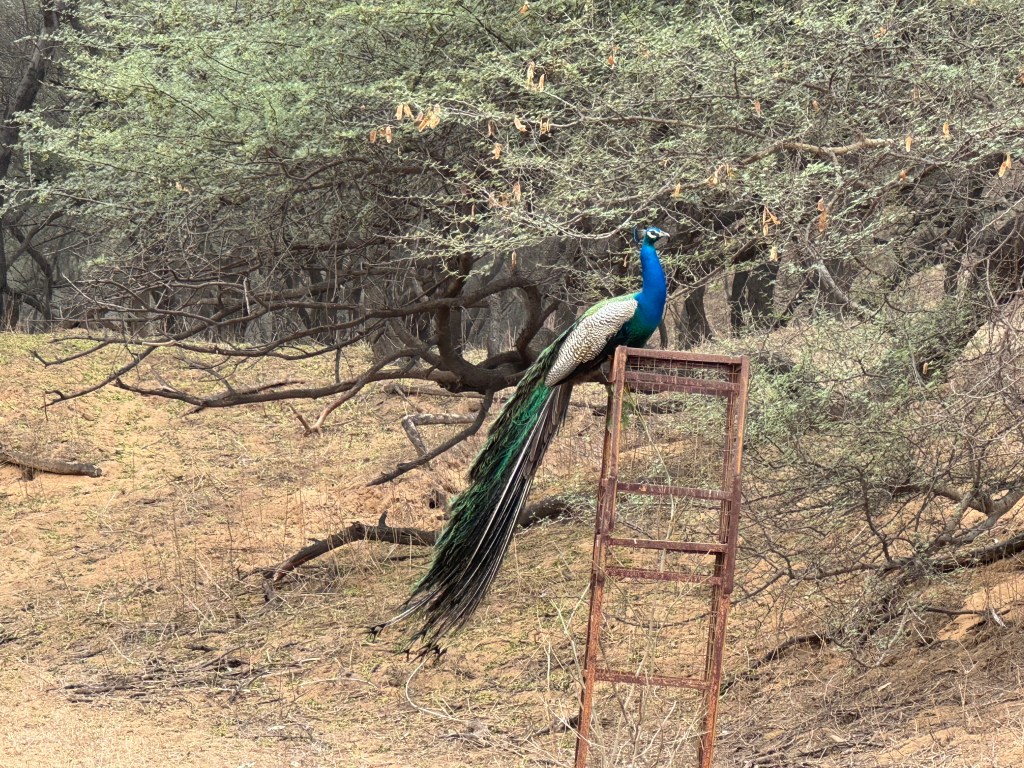
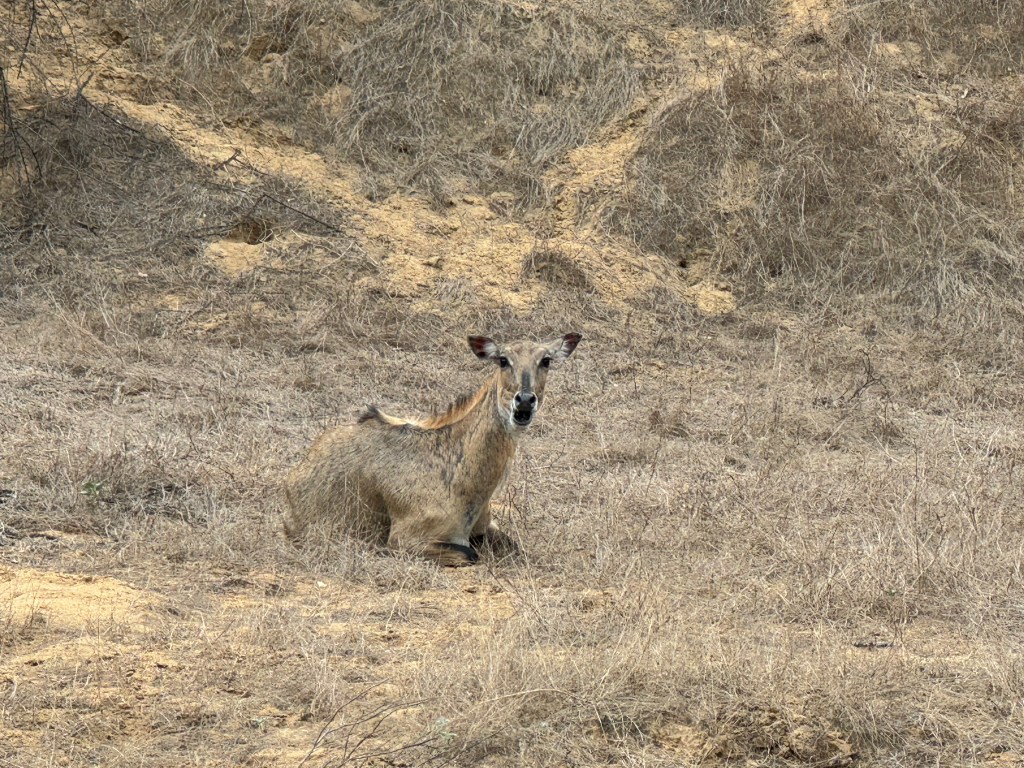
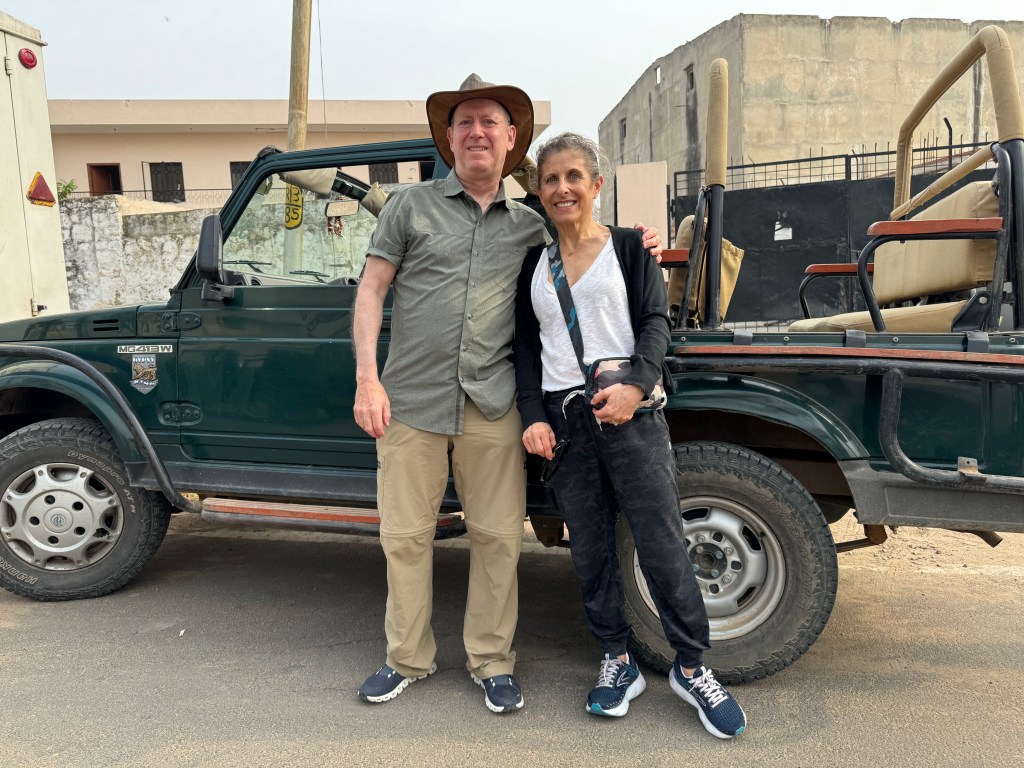
We woke up very early the next day and took a short drive to the Jhalana Leopard Safari Park (this was our consolation as we could not fit Ranthambore National Park for a tiger safari into our packed itinerary). We heard many bird sounds and saw gorgeous peacocks while trying to spot a leopard (hah!). Another jeep communicated to our jeep that a leopard was discovered, we had a jeep roller coaster ride to the location, only to find a sleeping leopard, too far away to see with the naked eye. What we did see was the remains of the poor dog this leopard had feasted on, which was how the safari guide found the leopard. We also saw hyena footprints and deer.
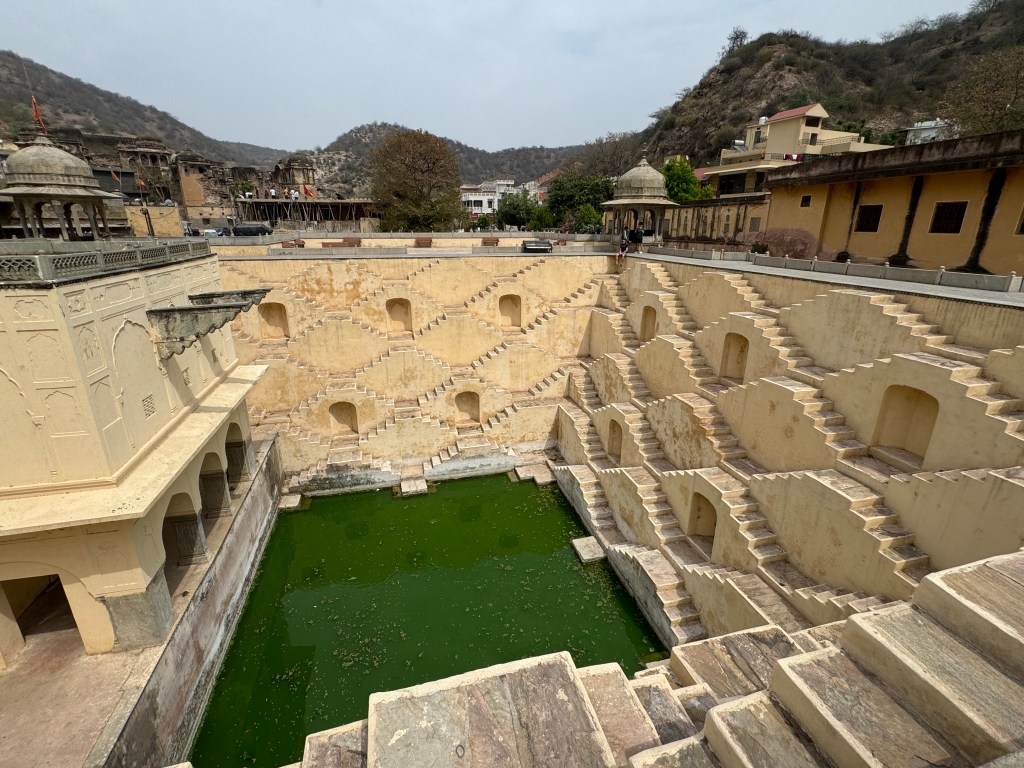
After breakfast, we visited the Panna Meena Steepwell, a 16th century water protector pool.
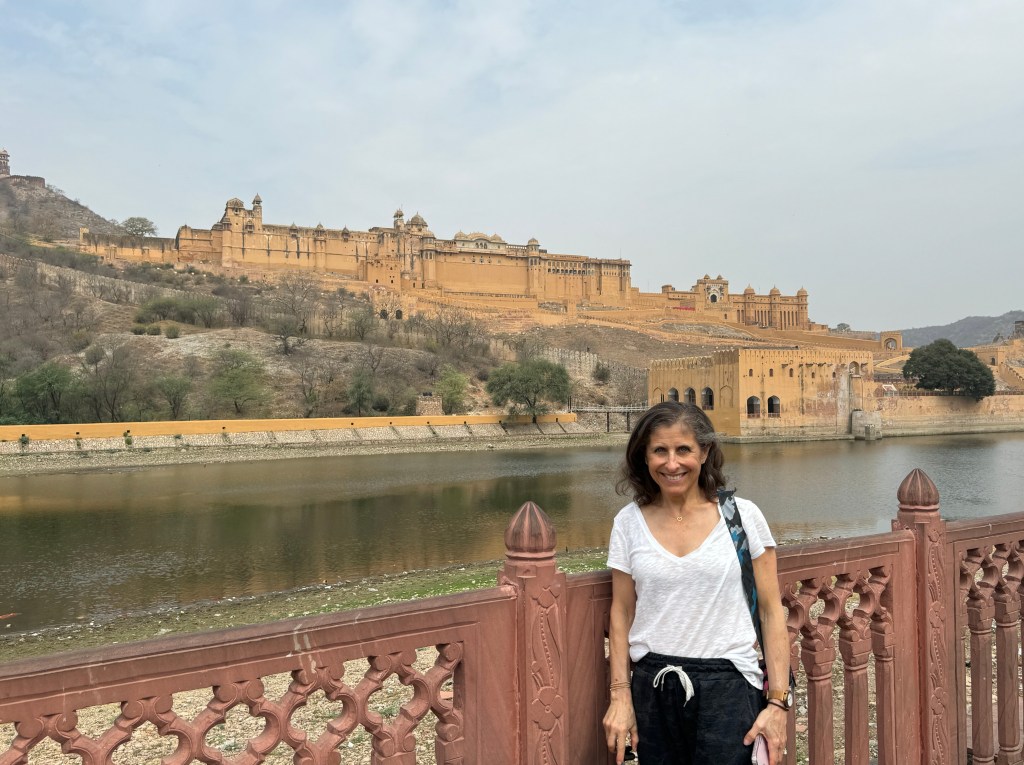
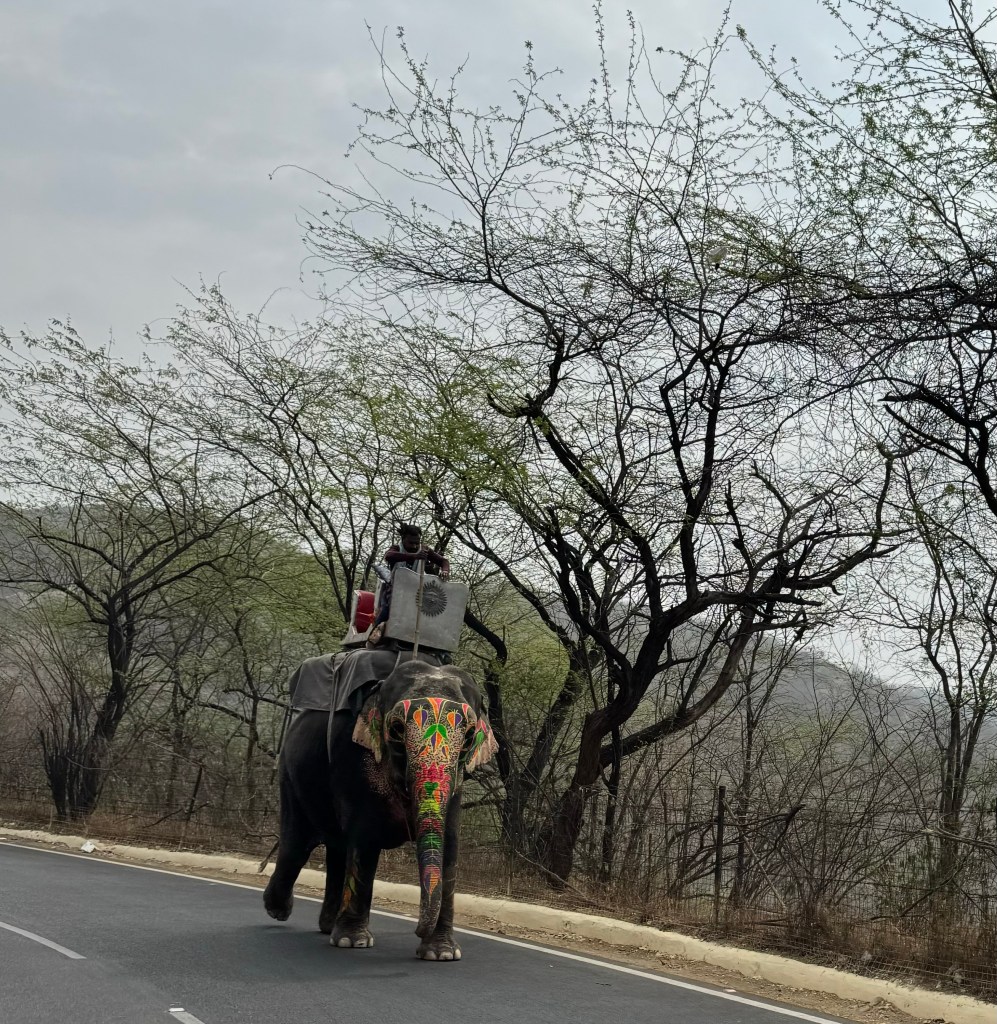
Our next stop was the Amber Fort. This has been a public space since Indian Independence of 1947 and today there were hundreds of Hindus lined up with offerings for the gods in the fort’s temples in celebration of the Hindu festival, Chaitra Navratri.
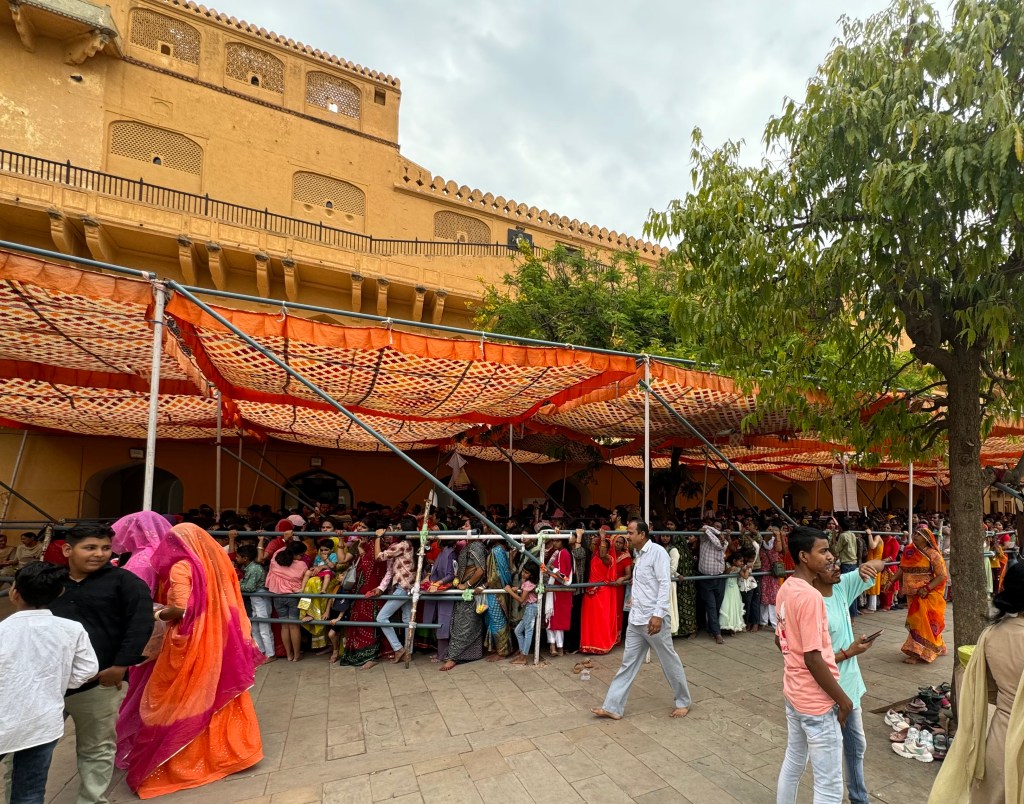
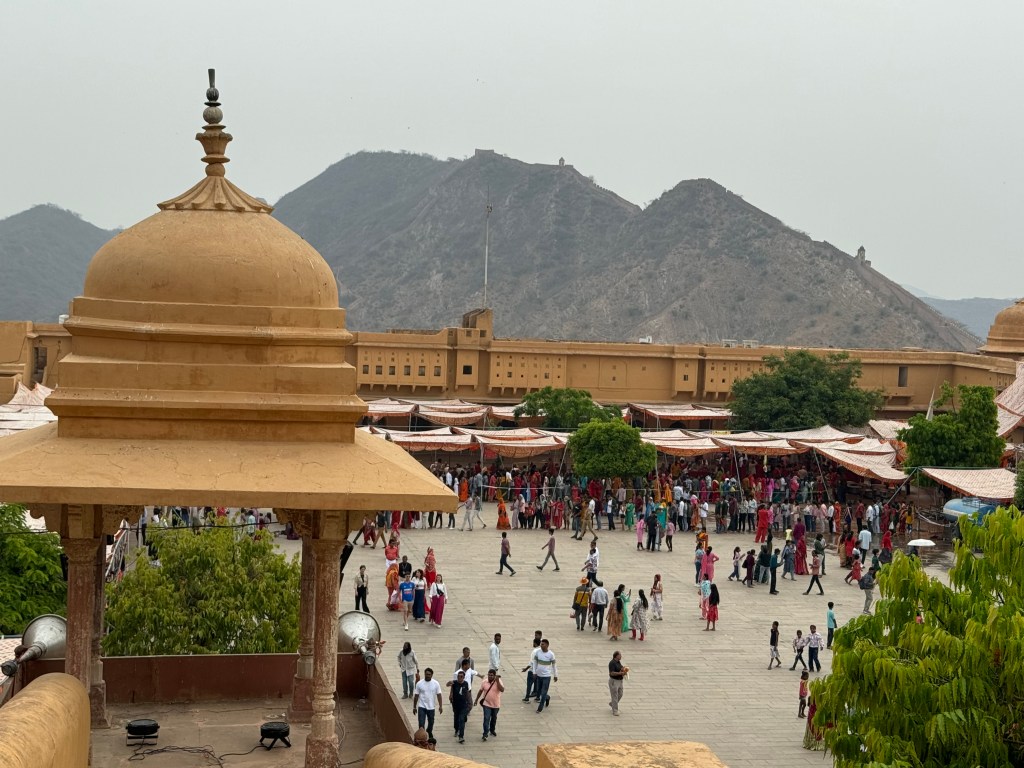
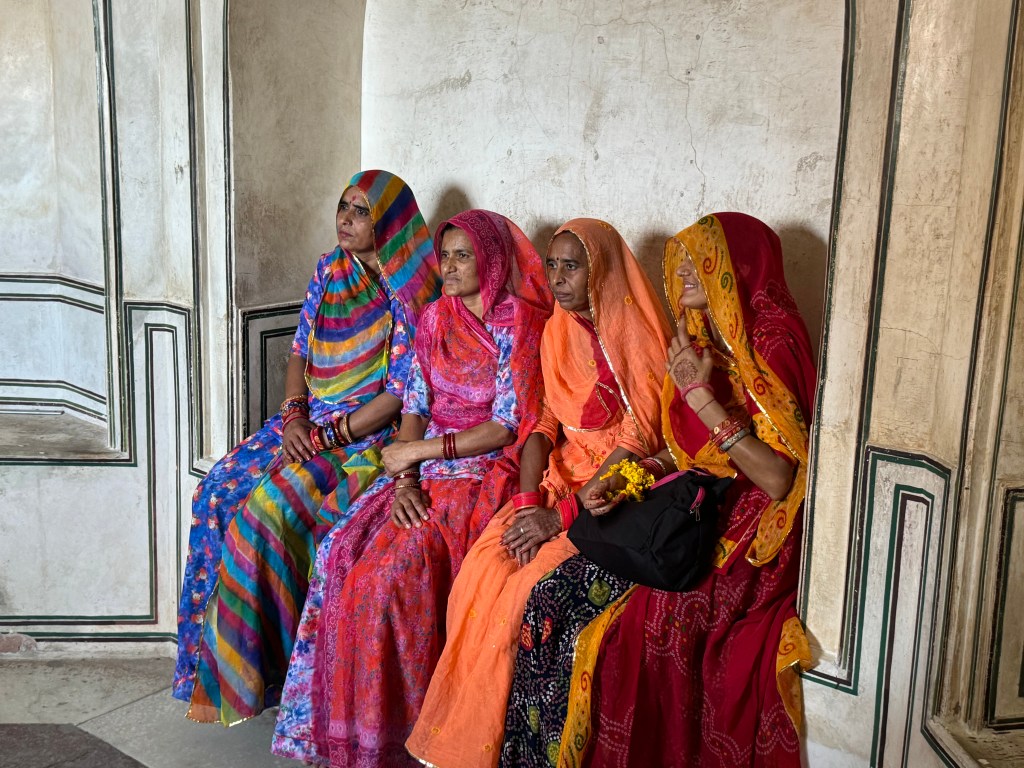
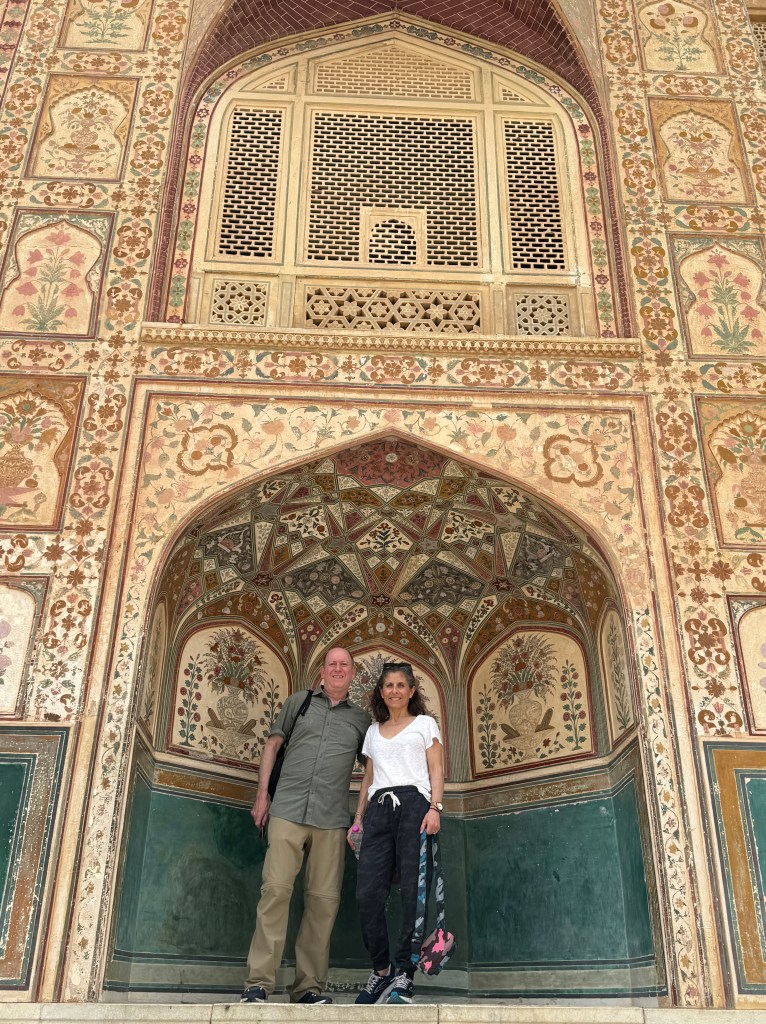
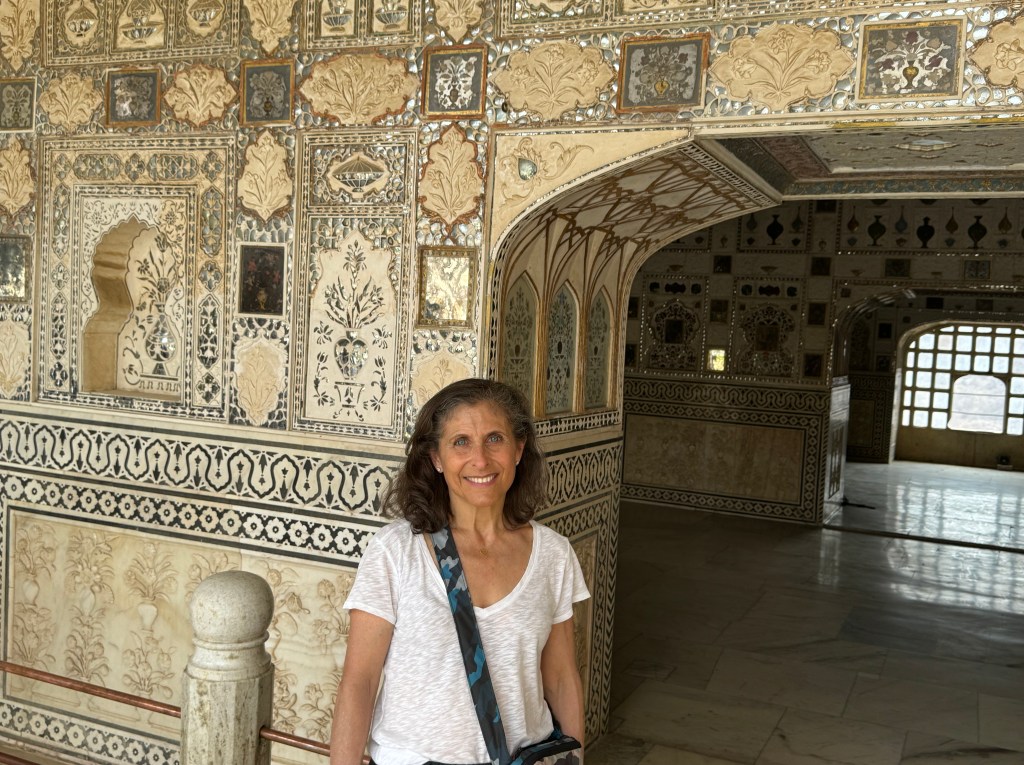
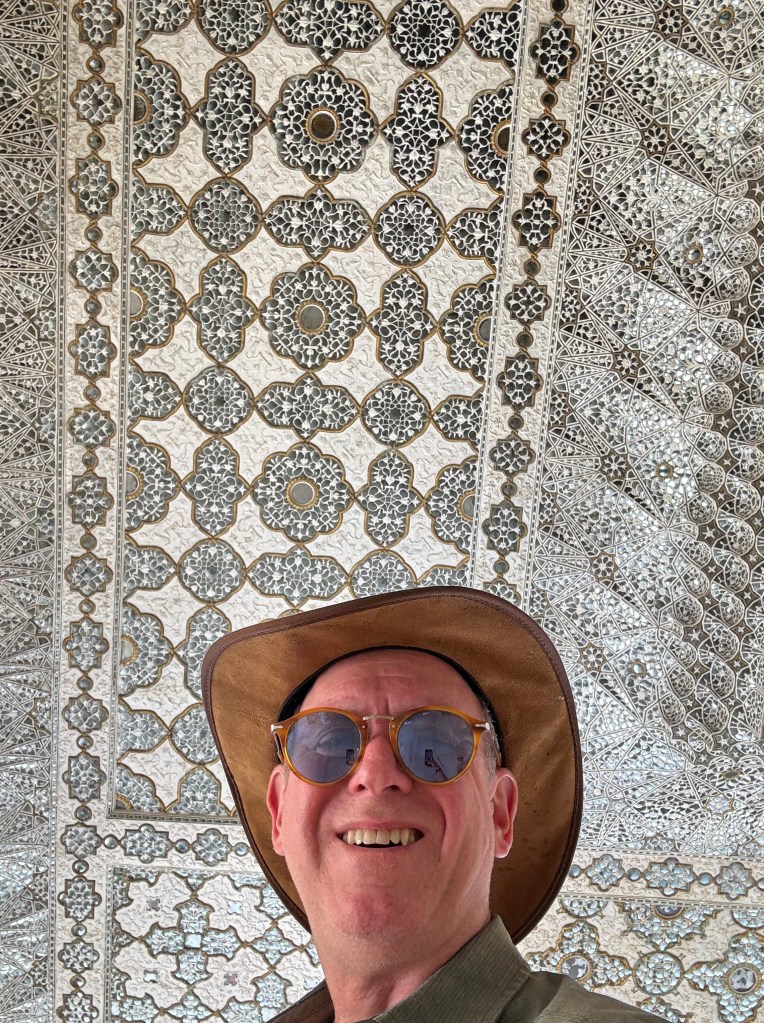
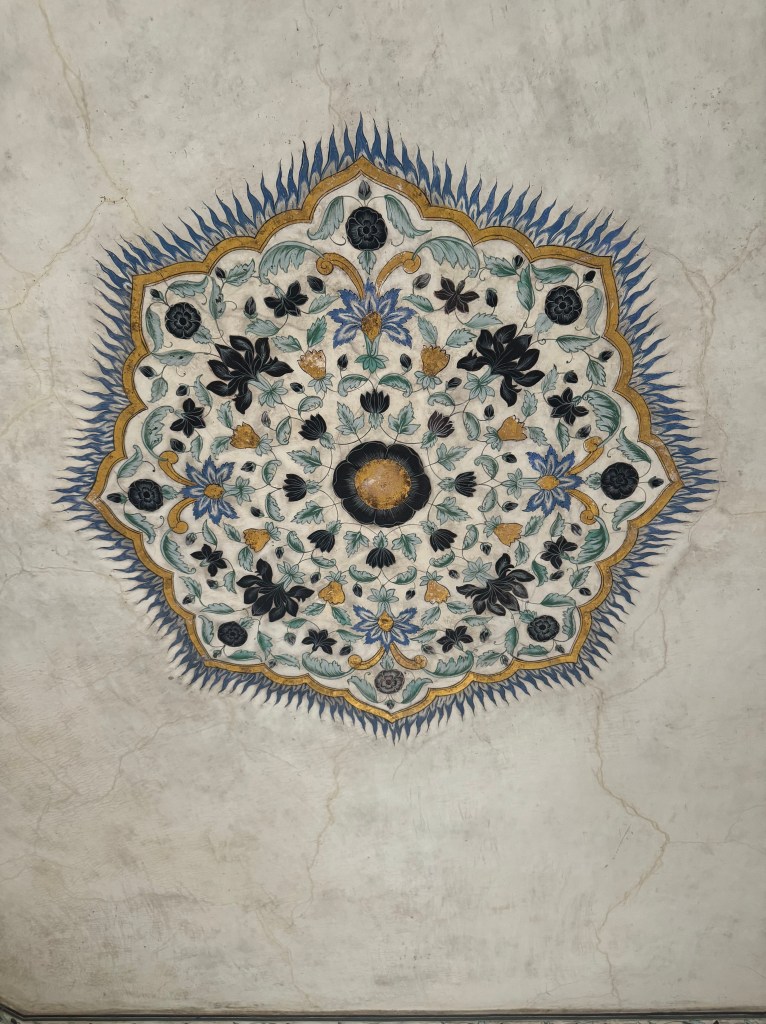
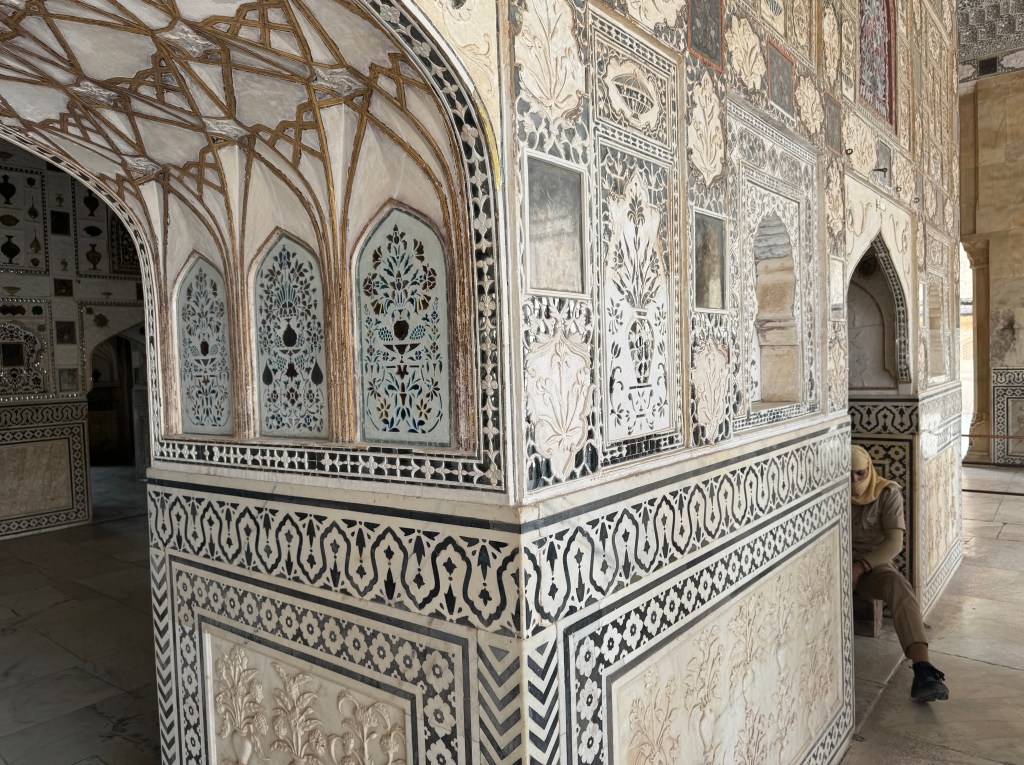
This palace and fortress preceded Jaipur as the home of the Rajput royals and his court and his twelve wives, 98 ladies in waiting and even more concubines. In the women’s section, the harem area was guarded by eunuchs. The women did not get out much and there were secret passageways for the king to visit the wife or concubine of the moment. On the men’s side of the palace, we saw the Hall of Mirrors, inlaid with gems and frescoes. It’s good to be the king.
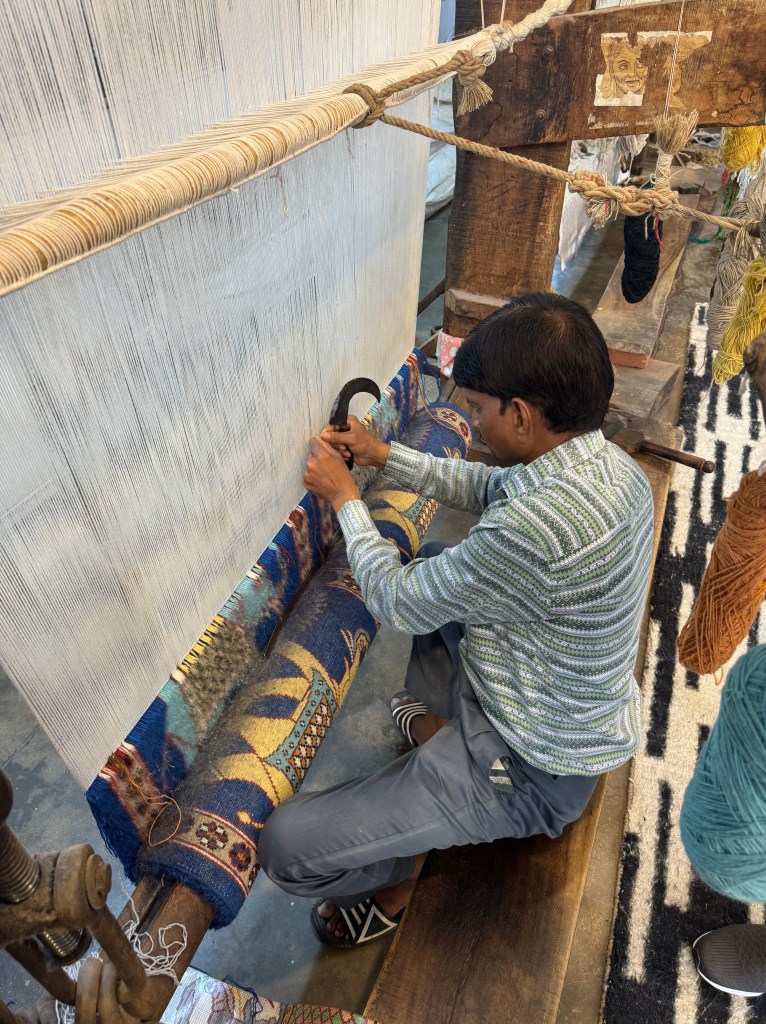
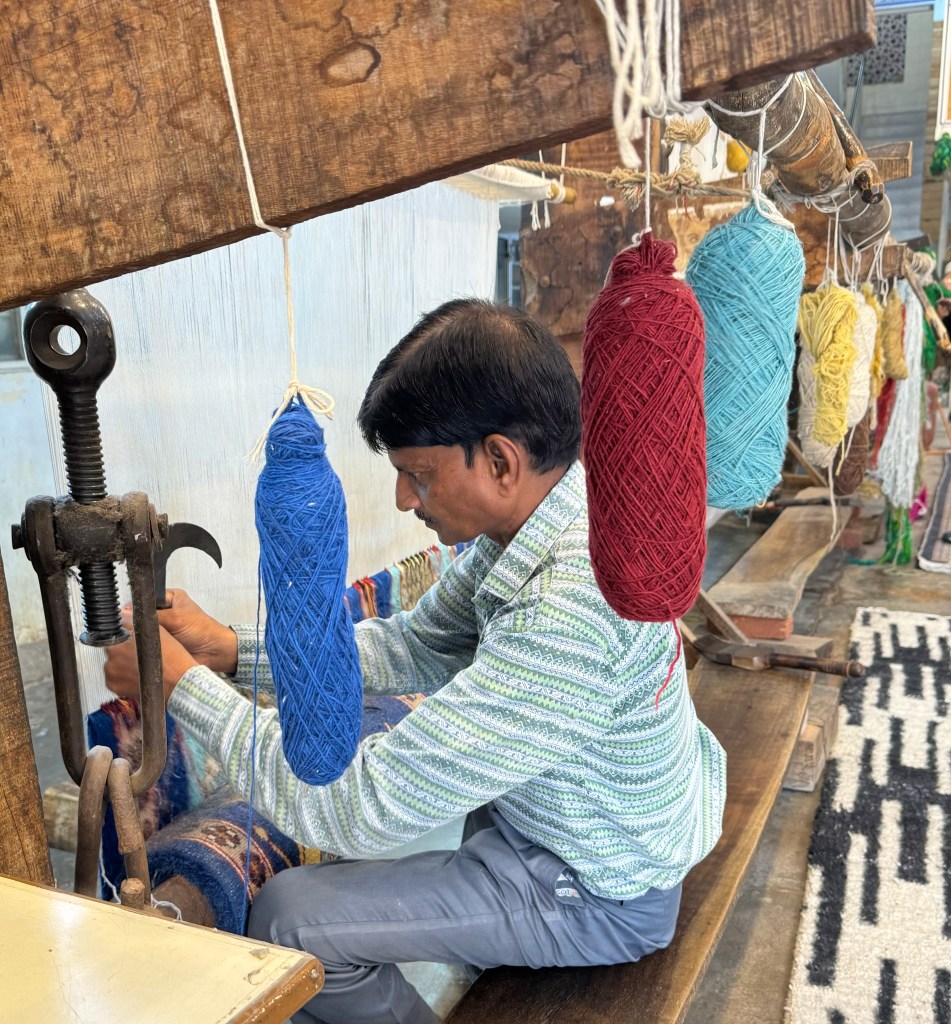
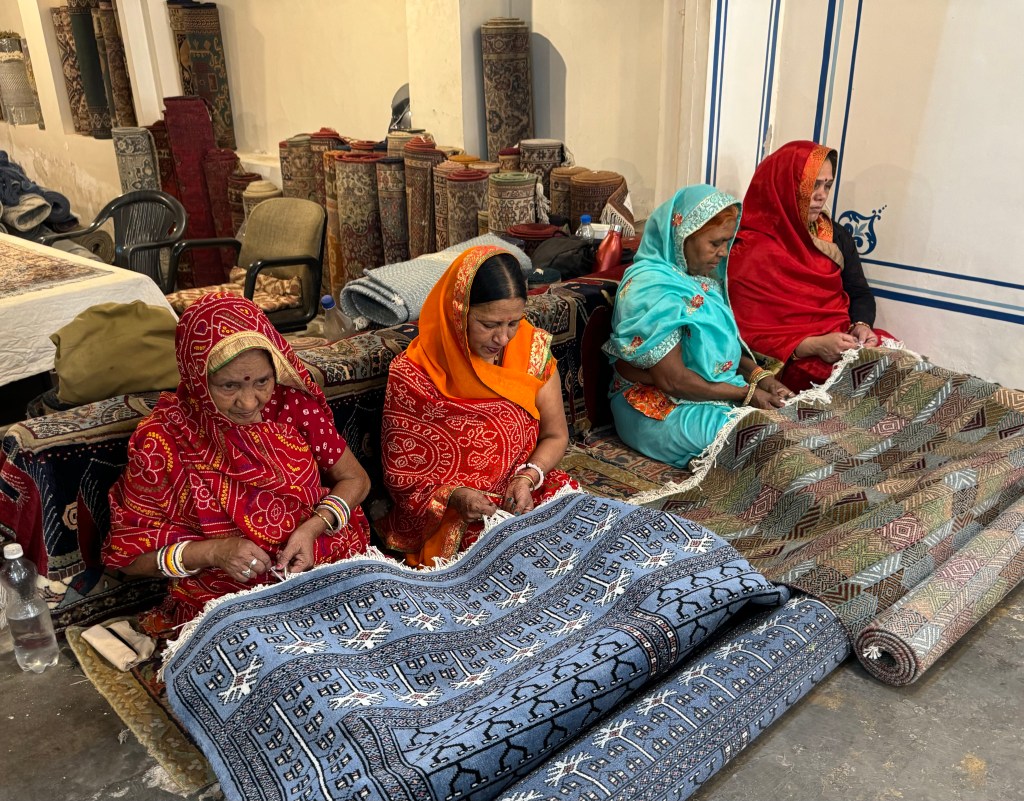
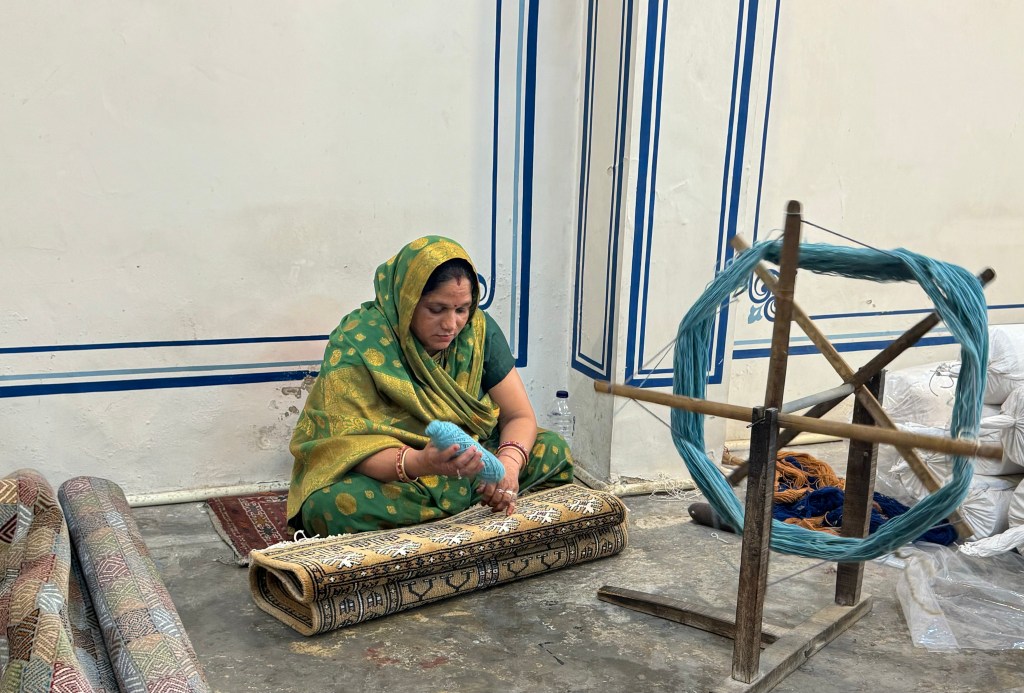
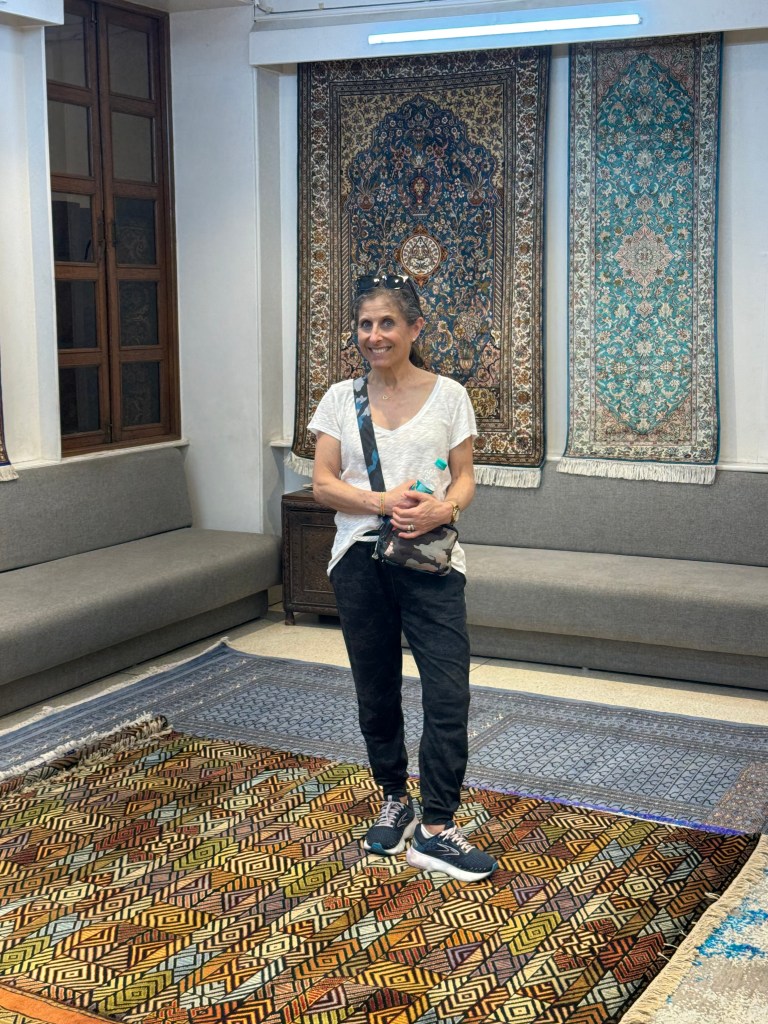
Our guide brought us to the Carpet and Textile House, a coop of rug weavers, block printers and retailers. We politely declined the purchase of a rug but bought some nice shirts and I was even able to have mine tapered right then and there.
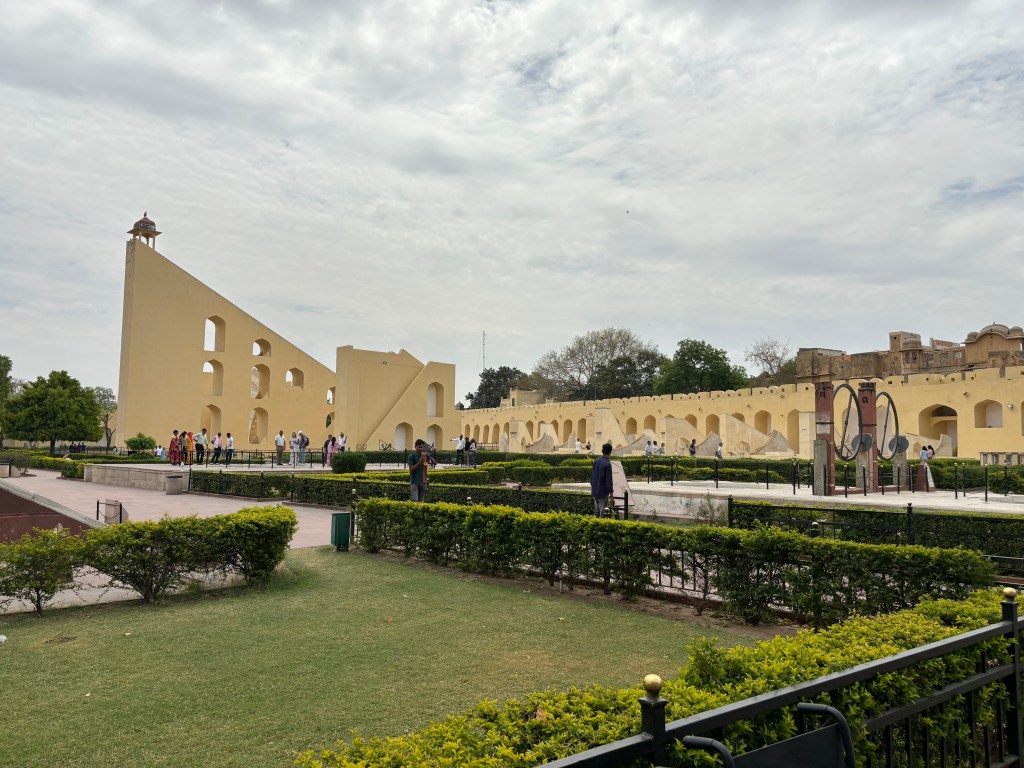
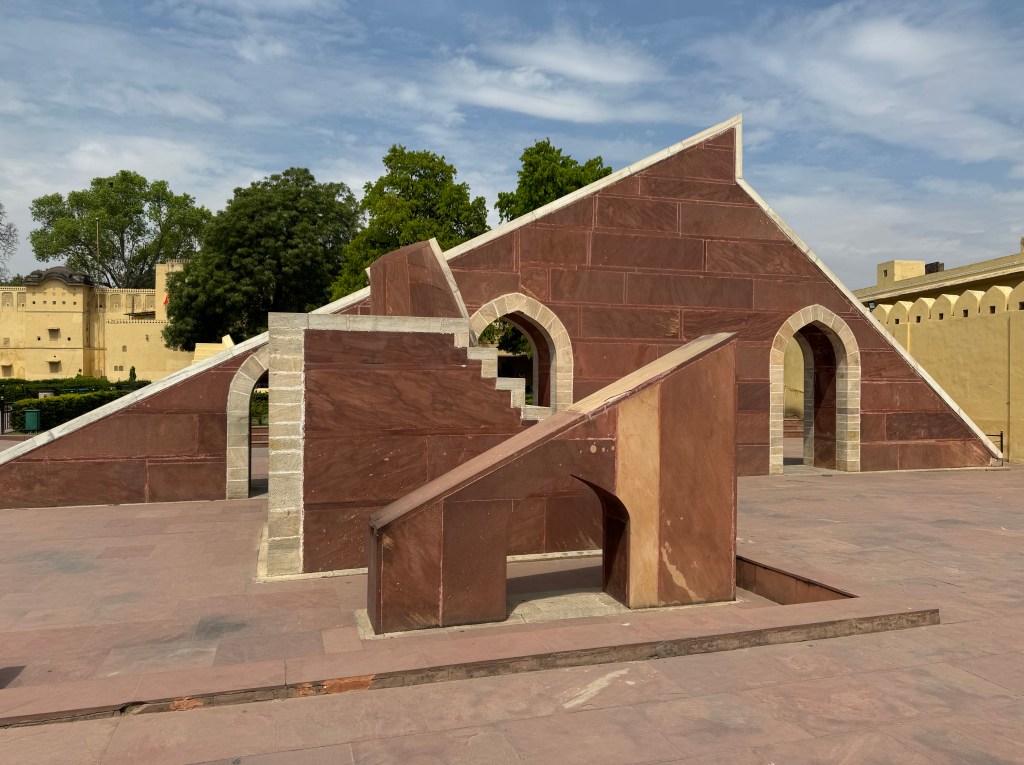
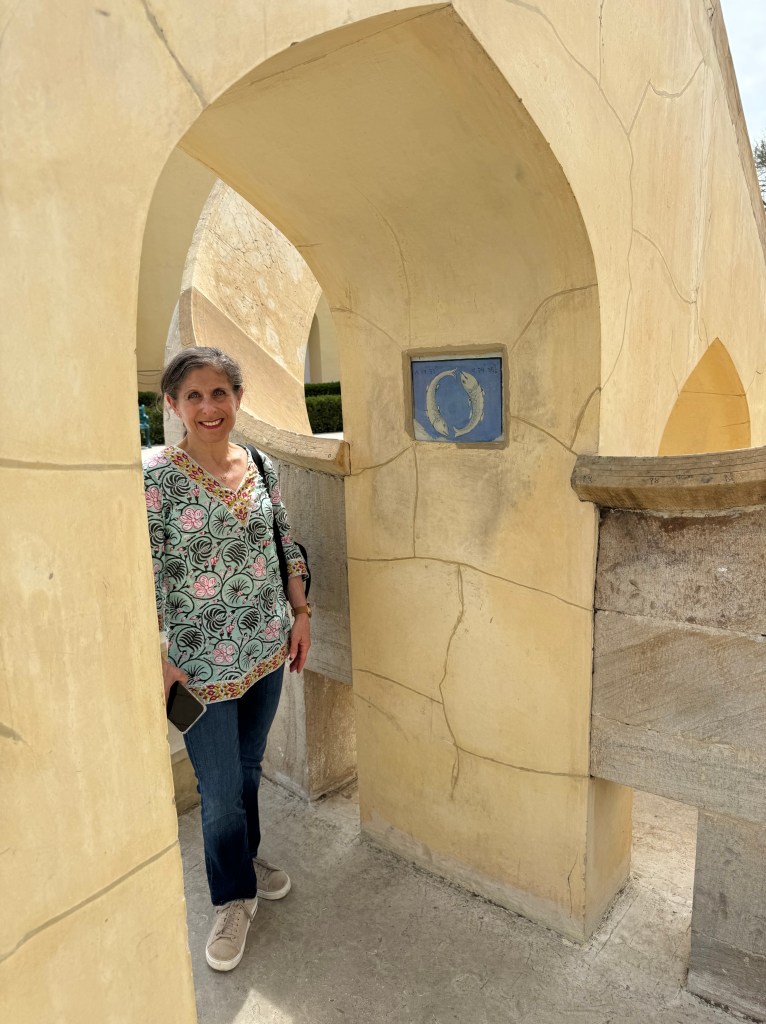
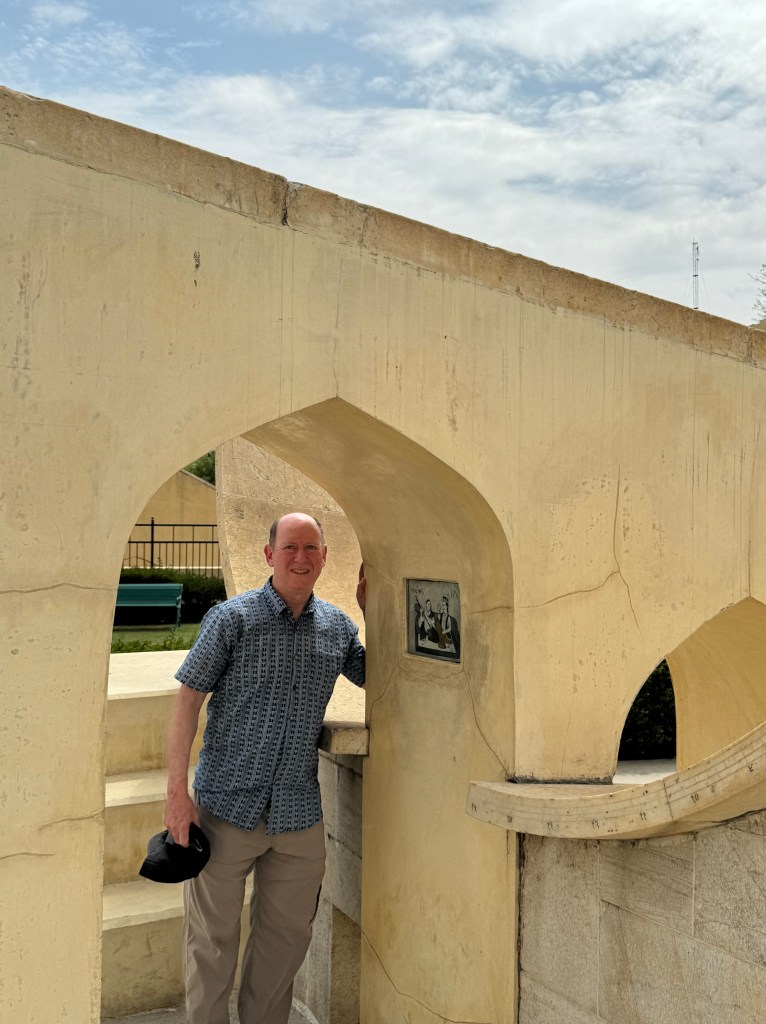
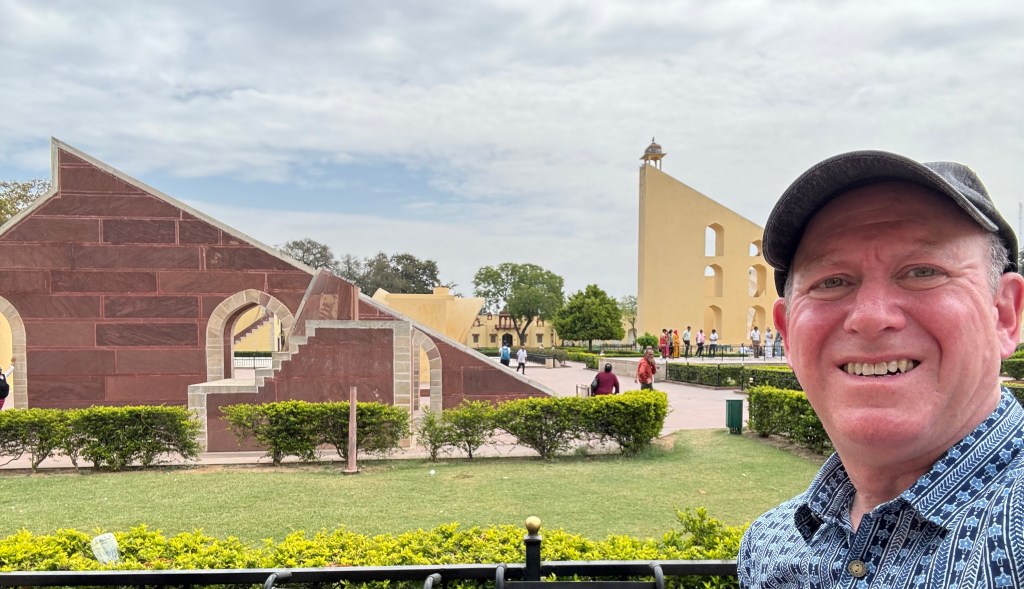
What a wonderful surprise to enter the gates of Jaipur’s Royal Palace and visit the Jantar Mantar, the Royal Observatory (1734). With assistance from the Portuguese, Maharaja Jai Singh (who moved from the Amber Fort), an astronomer, created nineteen astronomical instruments on over 4.5 acres. Each instrument’s accuracy is validated by another instrument. Among these instruments, precise measurements can tell time, predict eclipses, sunrise and sunset, identify zodiac calendar as well as coordination of stars, planets and constellations.
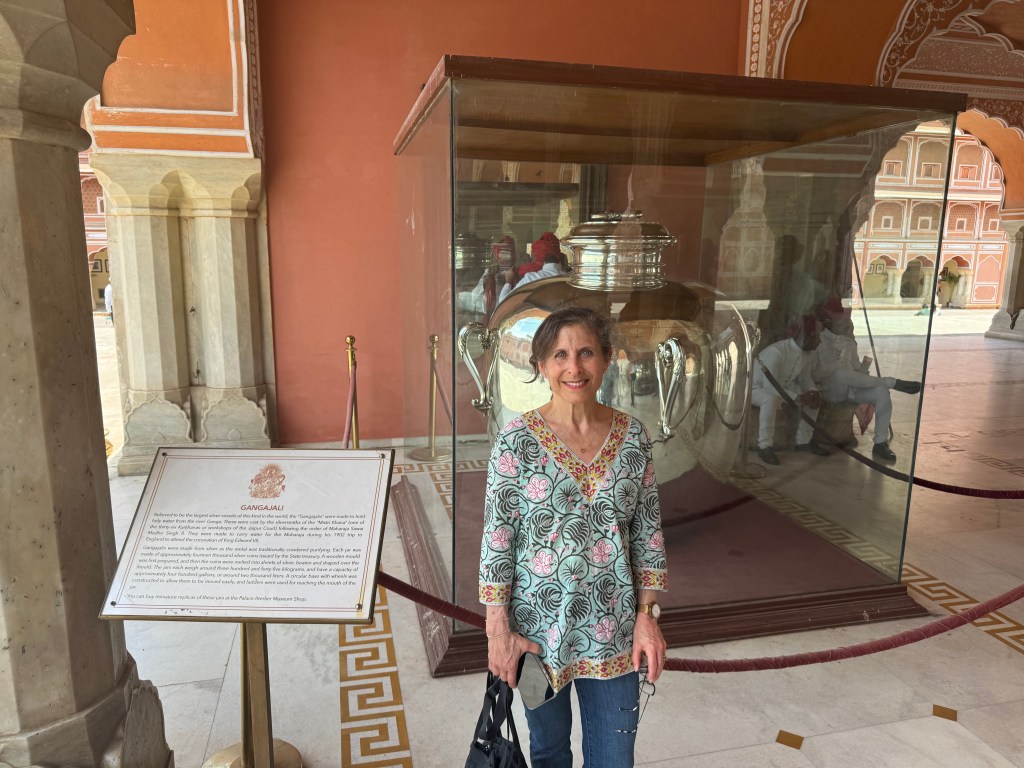
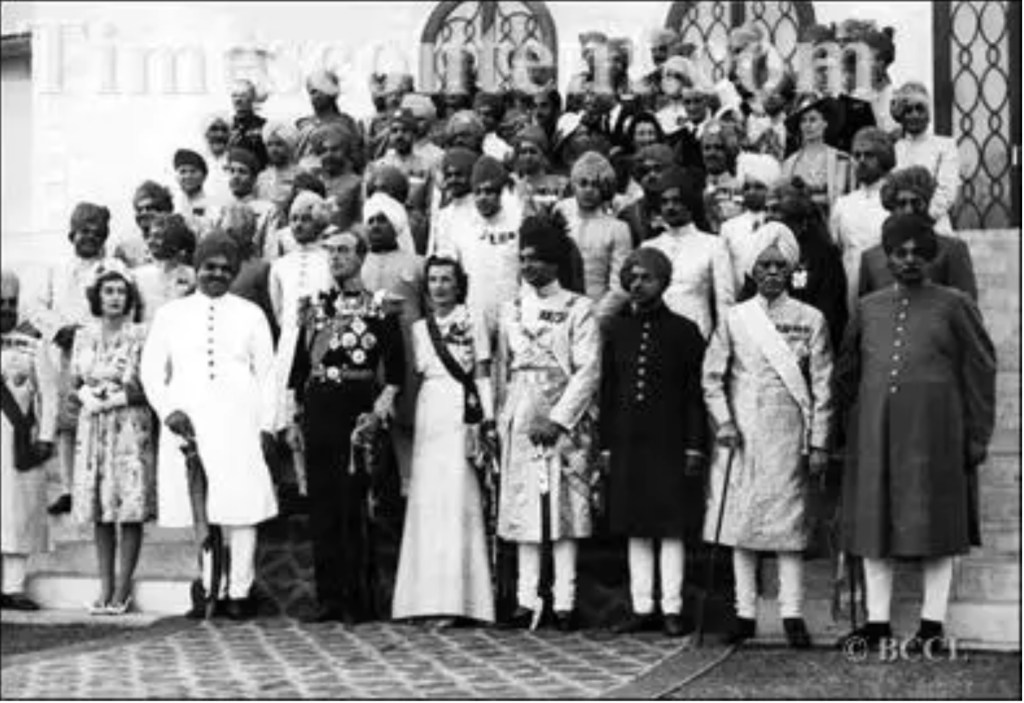
Our visit to the Royal Palace continued. This property includes a museum with years of history. We toured the hall where the Indian monarchs (most begrudgingly) voted for Indian independence August 15, 1947. Viceroy Earl Louis Mountbatten was responsible for both the events. All the 560 Princely States except for a handful, signed the Instruments of Accession.
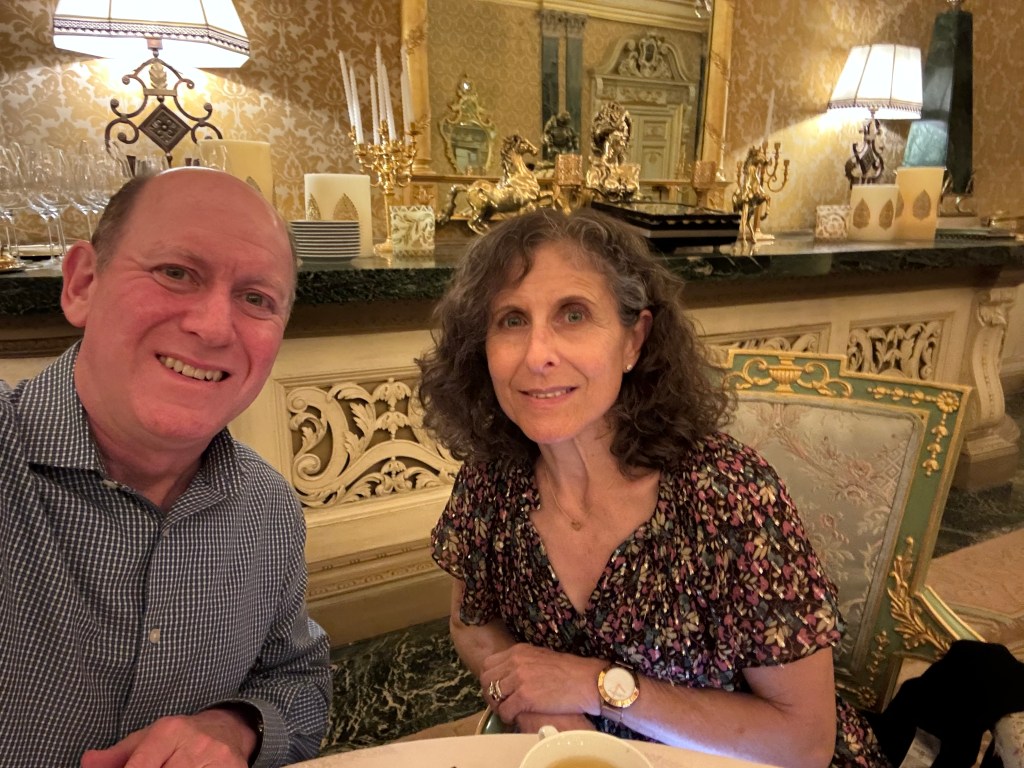
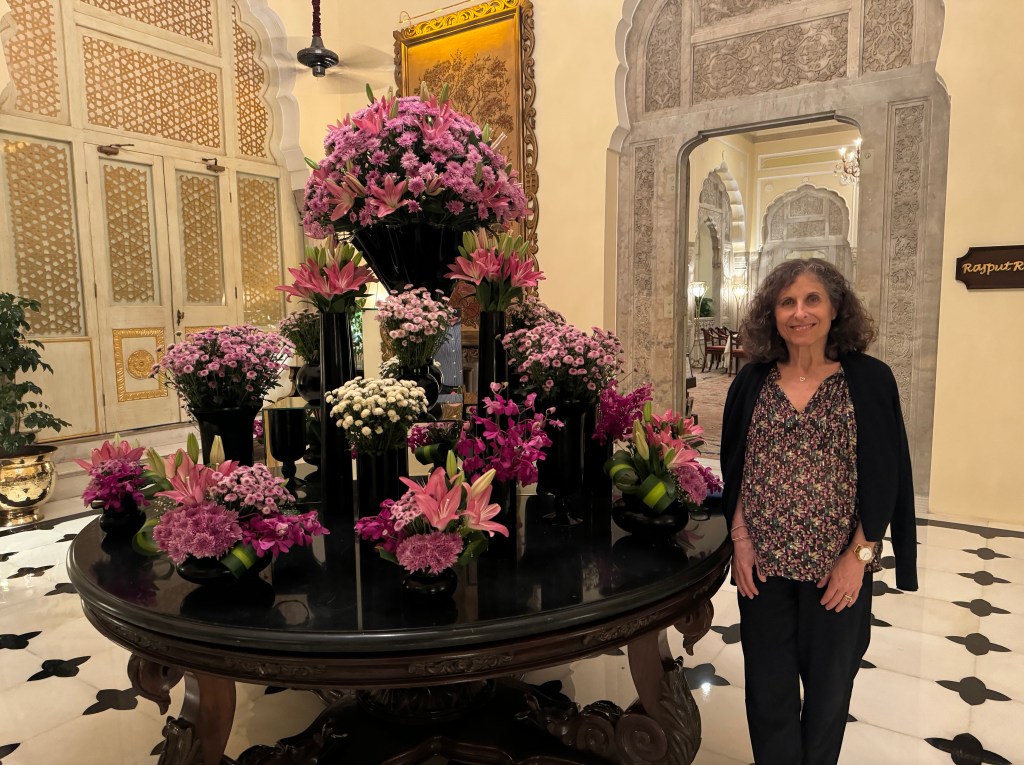
Not to worry about this once Royal Singh family of Jaipur They are still considered Royal and have celebrity status in India. They maintain a residence in the palace and own other properties such as the Taj Rambagh Palace Hotel, where we had enjoyed cocktails at the Polo Bar and a most elegant dinner at Suvarna Mahal.
Did you know that Jaipur’s is famous for its mining of gems and therefore it is a great place to buy sapphires, emeralds and rubies? No guided tour would be complete without a visit to browse or buy some stones. Our guide ushered us into the Silver & Art Palace where we immediately saw a demonstration of manual cutting and polishing gemstones, only to be taken into a room filled with extravagant jewelry. Unfortunately for them, I was not in the market for ornate jewels but we did make a purchase. Let’s just say thank you, Andy, a truly competitive negotiator.
After enjoying lunch at a local restaurant, we were whisked to the airport for our flight to Udaipur. Stay tuned for that post as Udaipur was another gem of a city.
I must finish this post with some India observations – it’s hard to generalize in a country that is so vast in both area and population but allow me to share some more takeaways.
Traditional men of India sport a mustache, a sign of masculinity, warrior.

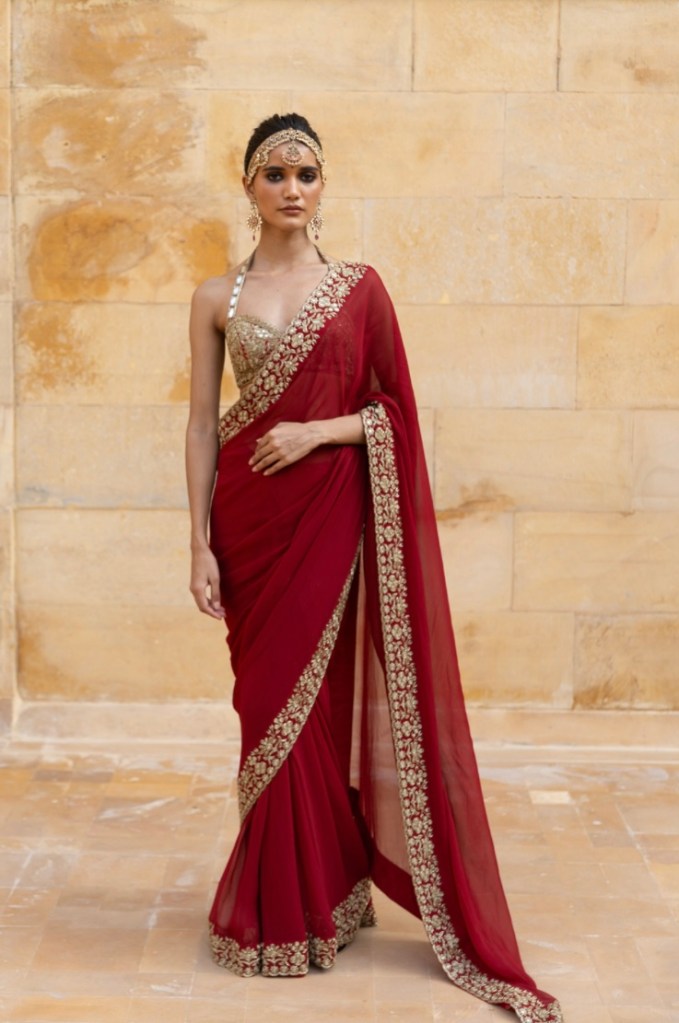
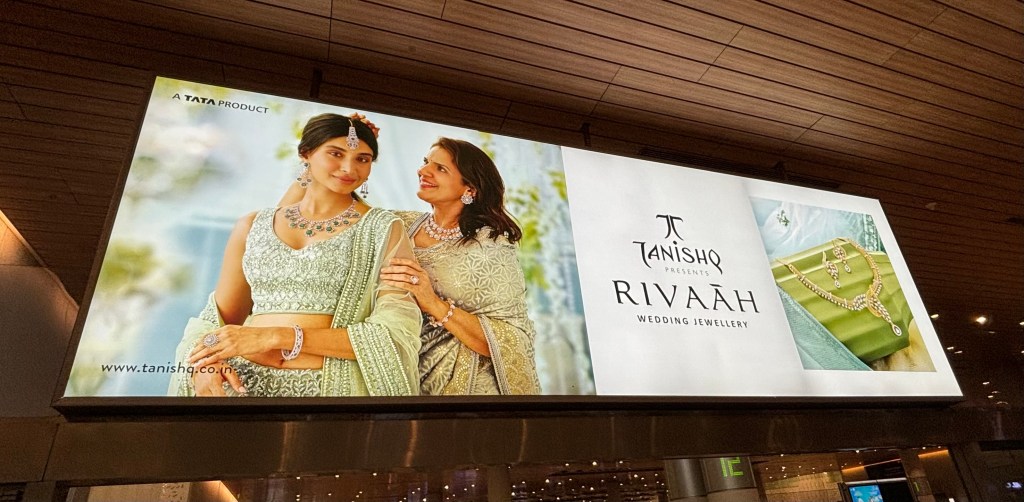
Women’s traditional dress of gorgeous, colorful and perfectly draped saris in India, is nothing I could imagine wearing. I juxtapose this with being an American in Paris, where this American woman only wanted to look Parisian. In India, I am mostly dressing for American comfort — mostly.
Let’s clear the air about leather in India. Yes, cows are sacred and they roam the streets. And, what I have seen out and about looks like leather but, when I went to a Birkenstock store in the Ambience Mall and inquired about the prices, the same style had two different prices, one for leather and one for faux leather. So I have determined that Hindus wear a lot of faux-leather, Hindus wear the leather of other animals and Hindus just plain wear leather (don’t ask, don’t tell)
Indian merchants are delighted to introduce you to their craft and offer free shipping, subsidized by the government, to keep these cottage industries from dying out. These include rugs, block-printed fabrics, miniature paintings, gemstones. We have been ushered into coops that represent generations of families who learn their craft from their elders, the gurus.
Many merchants are descended from generations and are members of the Jainism faith, a branch of Hinduism.
Smaller cities do not have much of a night life. We did not see night clubs or discotheques. There is not a lot of alcohol consumption, compared to the West and. Things quiet down at night. This is not necessarily the case in New Delhi or Mumbai.
Lots of Singhs:
•The name Singh is associated with the warriors of ancient India and those who fought the wars, and when victorious, became the kings (or Rajas or Maharajas).
•Male members of the Sikh religion, an offshoot of Hindu, share the last name Singh, which means lion. Sikh women use the last name Kaur, meaning princess. This distinction saw women as individuals, not identified by a man. These surnames equalized everyone, no matter their class or wealth. Sikhs came from Punjab and fought the Muslim Mughals. The Sikh Gurus sought to abolish the Indian caste system that assigned value and rights to individuals based on the families they were born into. Today Sikhs represent the fourth most practiced religion in India.
•The Muslim equivalent of emperor would be Padshah like Emperor Shah Jahan, of Taj Mahal fame, of the Mughal Dynasty.
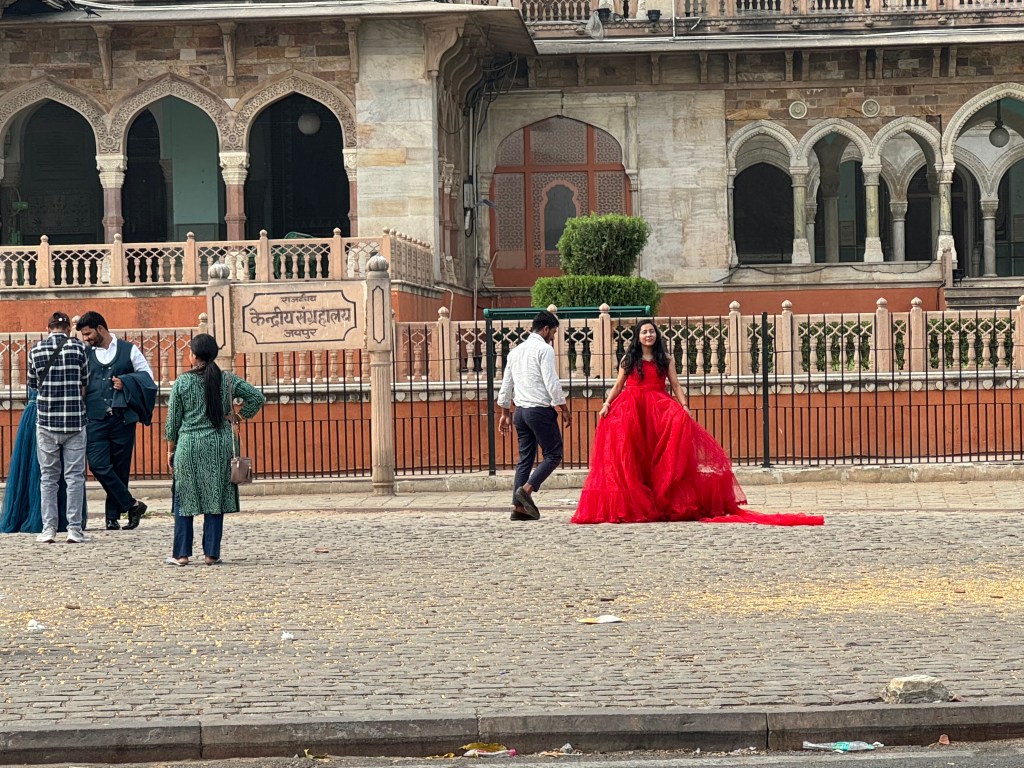
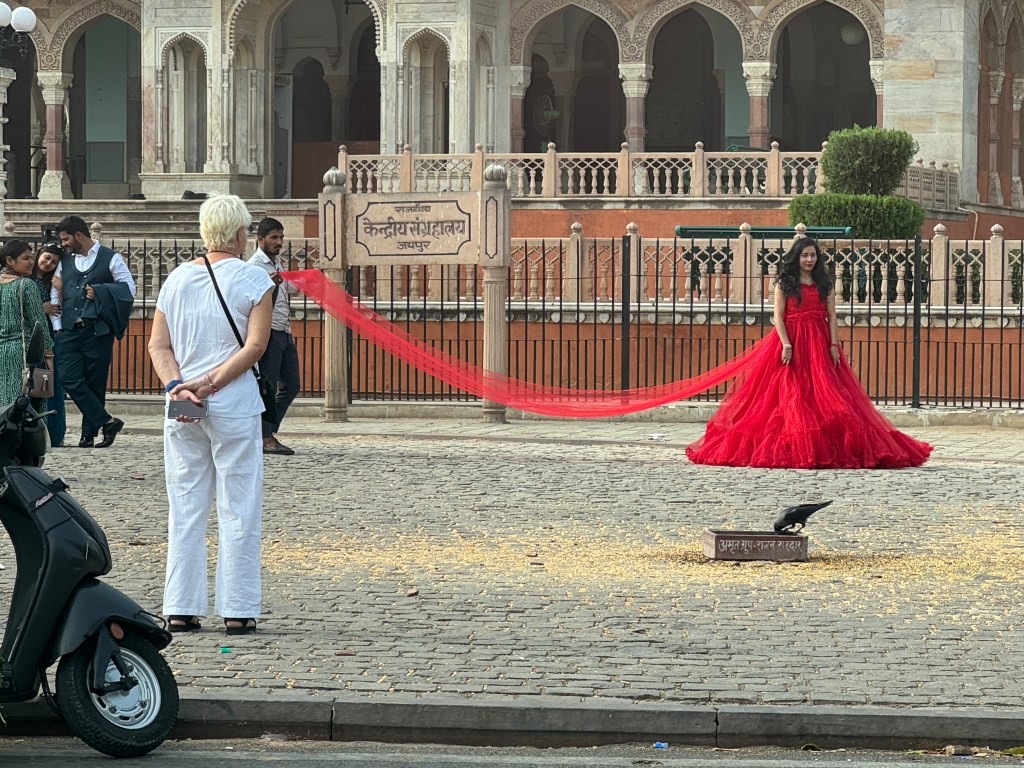
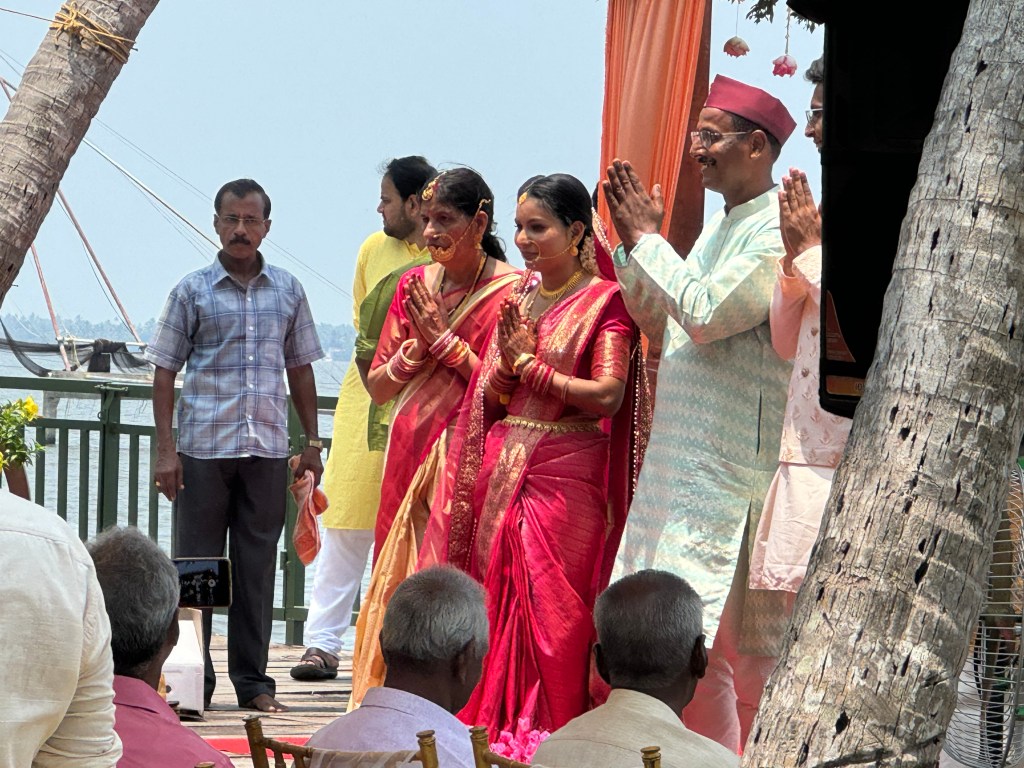
Weddings: Weddings are a big deal in India. We have visited some palaces that can be rented out for huge and ornate celebrations. There are days of ceremonies leading up to the nuptials. Brides are adorned and bejeweled in red or white saris while men’s attire is embroidered and bright. If a family needs to, they can rent wedding attire and jewels. At many landmarks, we saw wedding photo shoots.
Monogamy and Polygamy
Polygamy was abolished in 1956 for the non Muslim religions. Since the Muslim population observes their own laws, Shariat, some have continued to practice polygamy; however, in 2015, India’s Supreme Court ruled that “Polygamy was not an integral or fundamental part of the Muslim religion, and monogamy was a reform within the power of the State…”
Security – there is a presence of multiple security personnel everywhere. In order to enter a hotel, a monument, a religious site or a shopping mall, one must go through a metal detector, bags must be scanned and a female security guard (if you identify as female) checks you out with a wand.
According to a recent NY Times article, “India is the world’s most populous nation, with 969 million eligible voters. That’s more than one-tenth of the world’s population, or about four times the number of eligible voters in the next largest democracy, the United States.” Voting in India’s national election just began and will take weeks to complete. Here is what it looks like:
We have inquired with each of our tour guides about elections and have heard different but honest accounts on the political situation. One can read all about that in the American press. What I want to mention is the many “get out to vote” PSAs. There are flyers on domestic flights and announcements about the election from the crew. There are loud speakers blasting election announcements in the streets. Along with campaign posters, there are signs about voting. India is proud to be such a large democracy and owning one’s vote is everyone’s right here.
We have been ushered throughout this journey by excellent drivers who have kept us safe and on schedule.
It’s said that a driver in India needs three things: good brakes, good horn good luck!
The perfection of 108 in Hinduism. Just some of the reasons:
- The distance from the earth to the Sun is 108 times the diameter of the Sun.
- The Sun is 108 times the total diameter of the earth.
- There are the 12 signs of the zodiac (Aries to Pisces). Nine multiplied by 12 equals 108.
- In Vedic astrology, there are 27 constellations or nakshatras. Each of them can occupy a particular direction (North, South, East, or West). So, 27 multiplied by four equals 108.
- Vedic astrology is a lunar based tradition (Western astrology is based on the sun). The metal silver is correlated to the Moon. The atomic weight of silver is 108.
- There are ancient Sanskrit texts called the Upanishads. Upanishads translates as “sitting near God”. These books expound on the Vedas. Most scholars believe agree that there are 108 Upanishads.
- Many Indian deities have 108 names.
- In the Sri Yantra, there are marma points or energy centers where three lines intersect. There are 54 of these intersections. Each intersection has a male and female quality (known and Shiva and Shakti). 54 multiplied by two is 108.
Vedic Astrology, known as Jyotish, originated in ancient India based on the Vedas, the oldest sacred text of Hinduism. It focuses on the influence of celestial bodies on human lives. Vedic astrology tracks planets using stars or constellations, while Western astrology uses the position of the Sun.
Namaste and Chag Pesach Sameach!
 The Innocents Abroad, 21st Century Version