2 novembre 2023
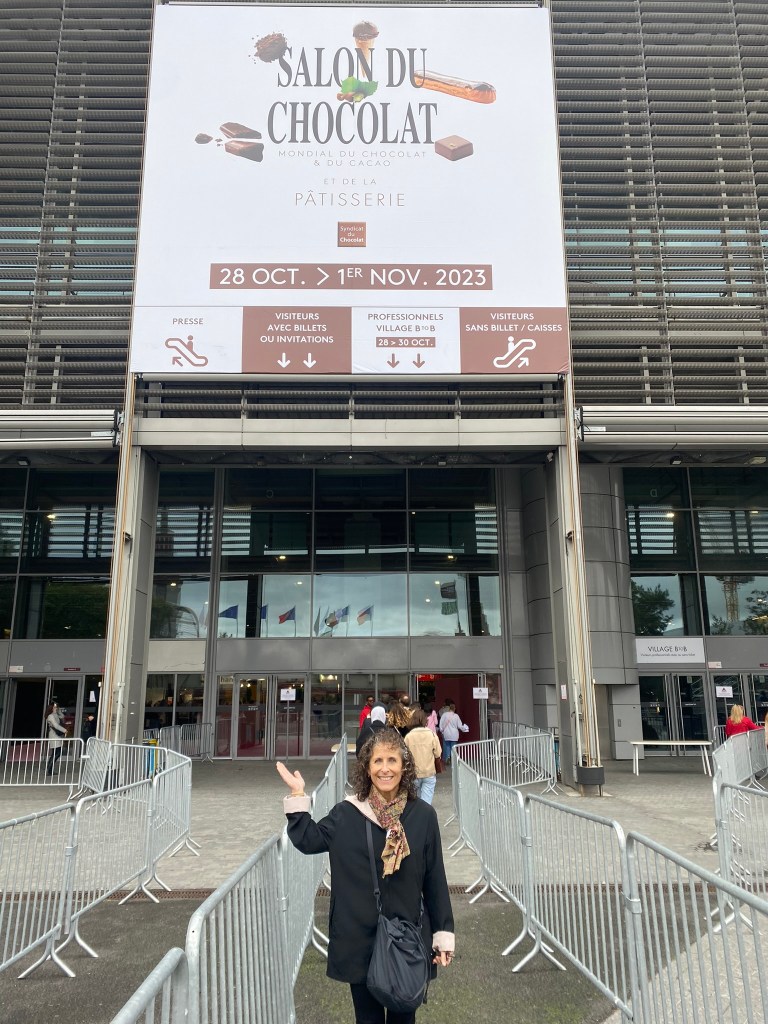
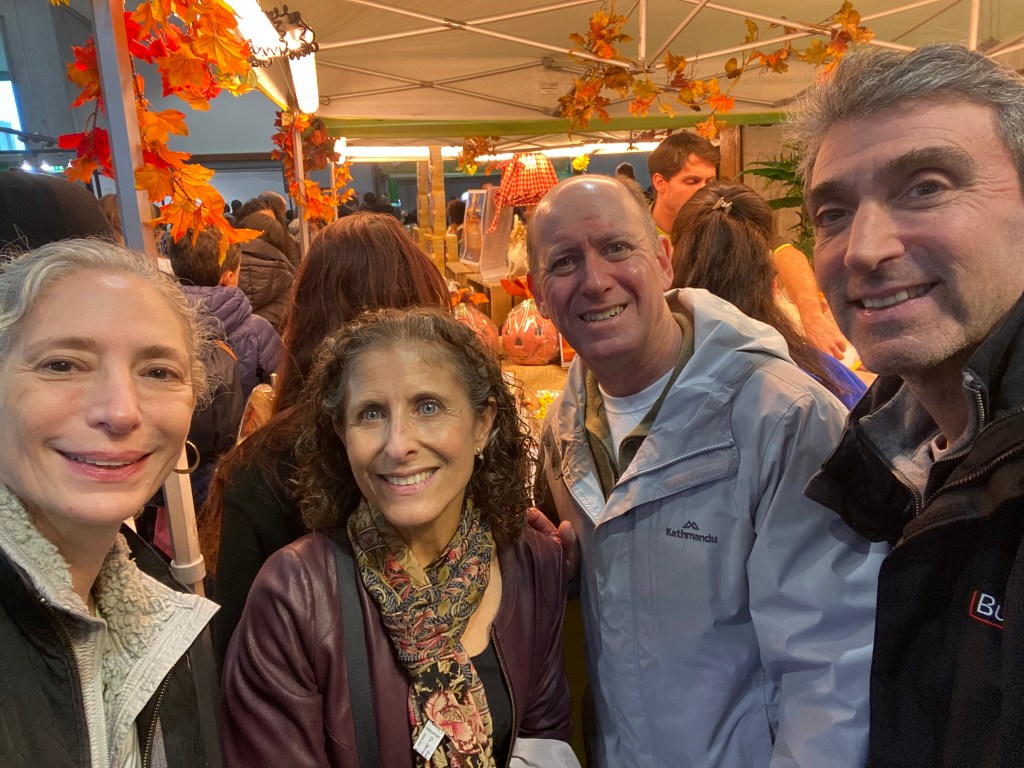
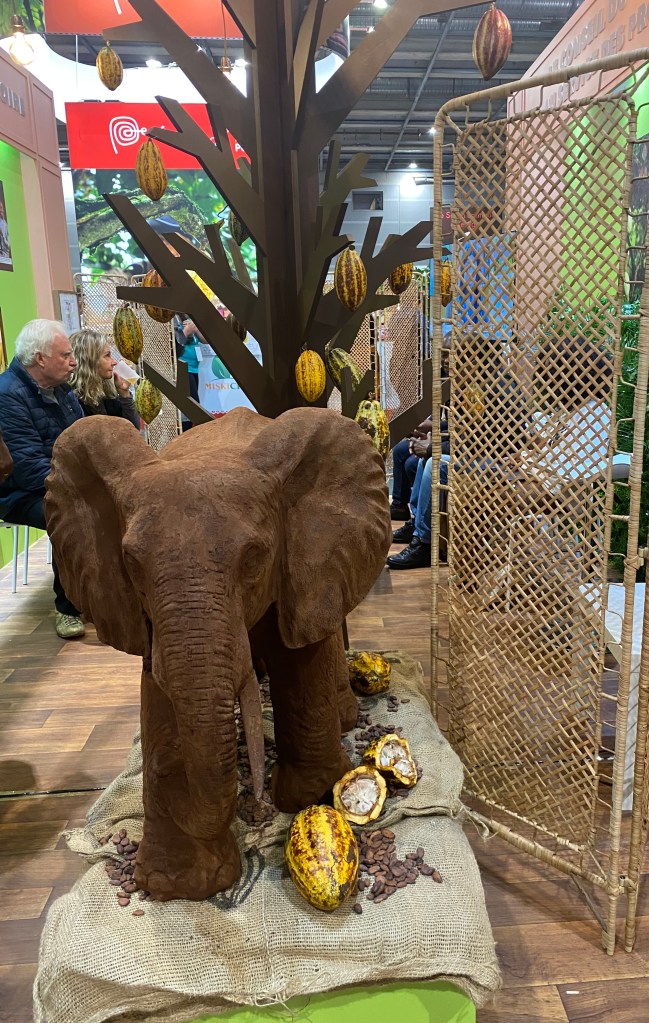
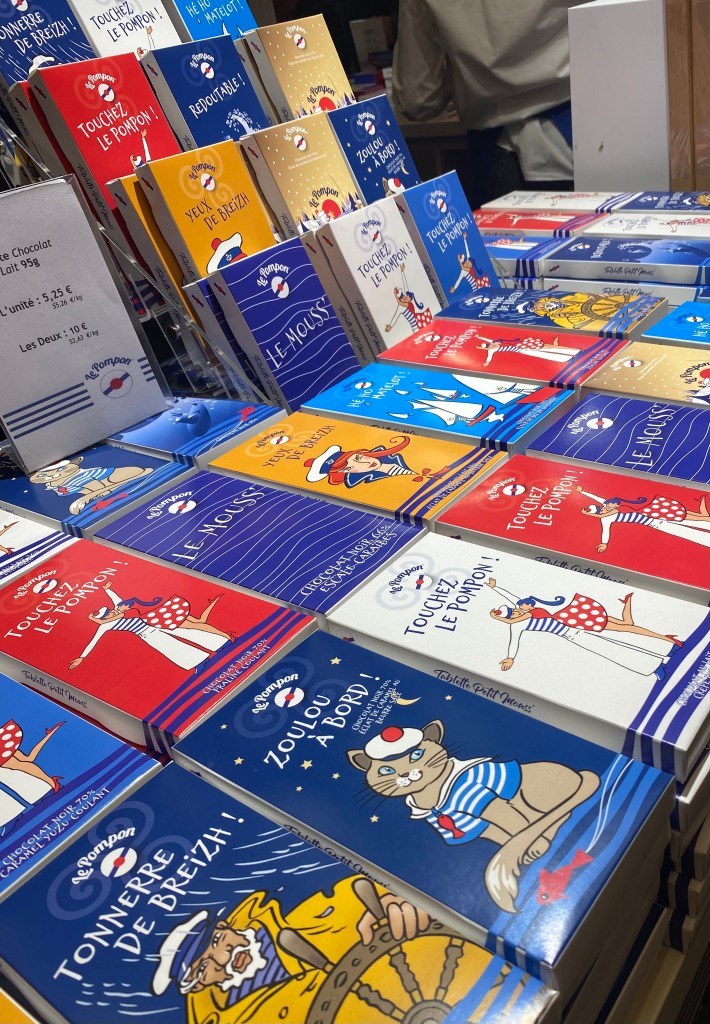
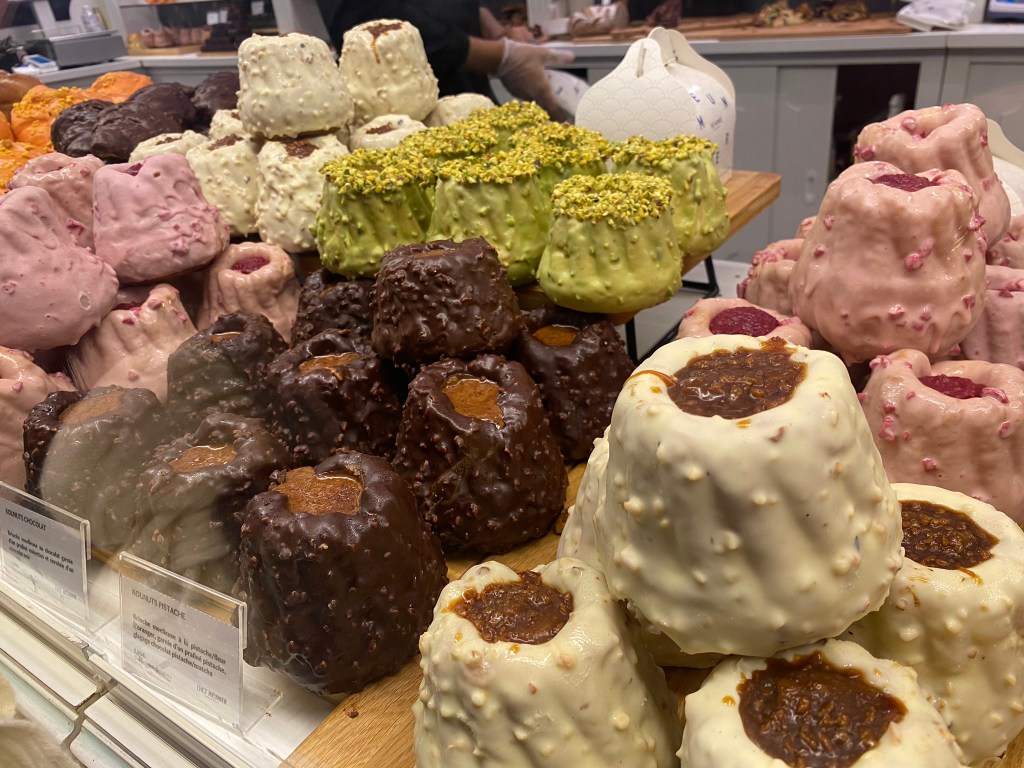
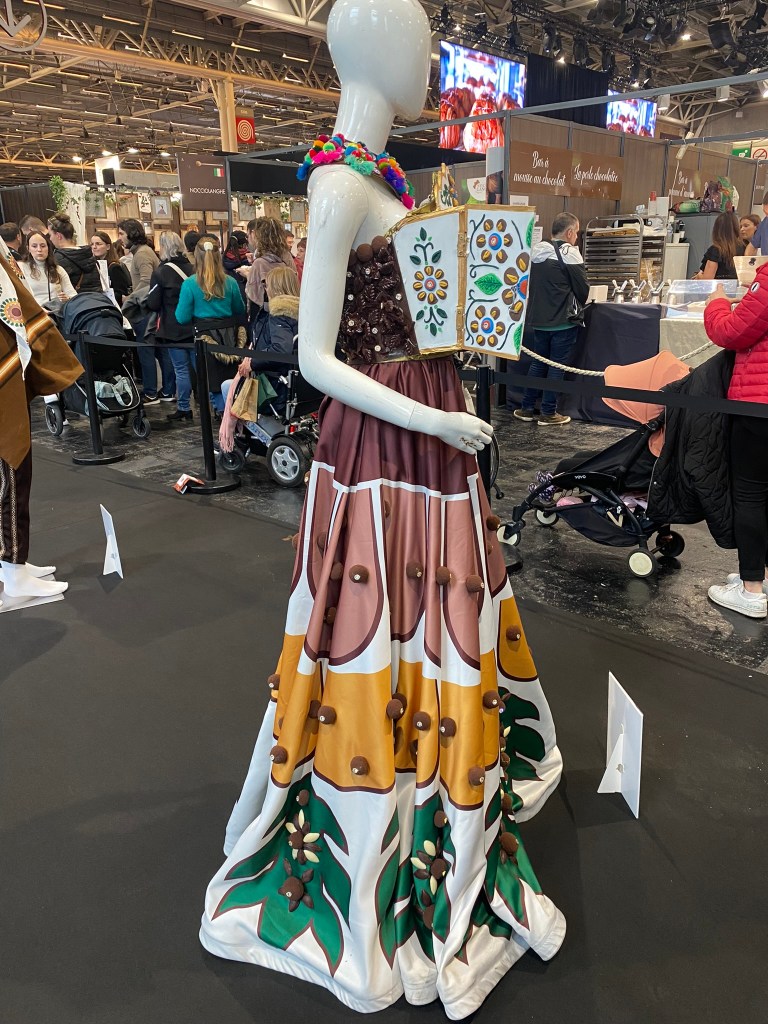
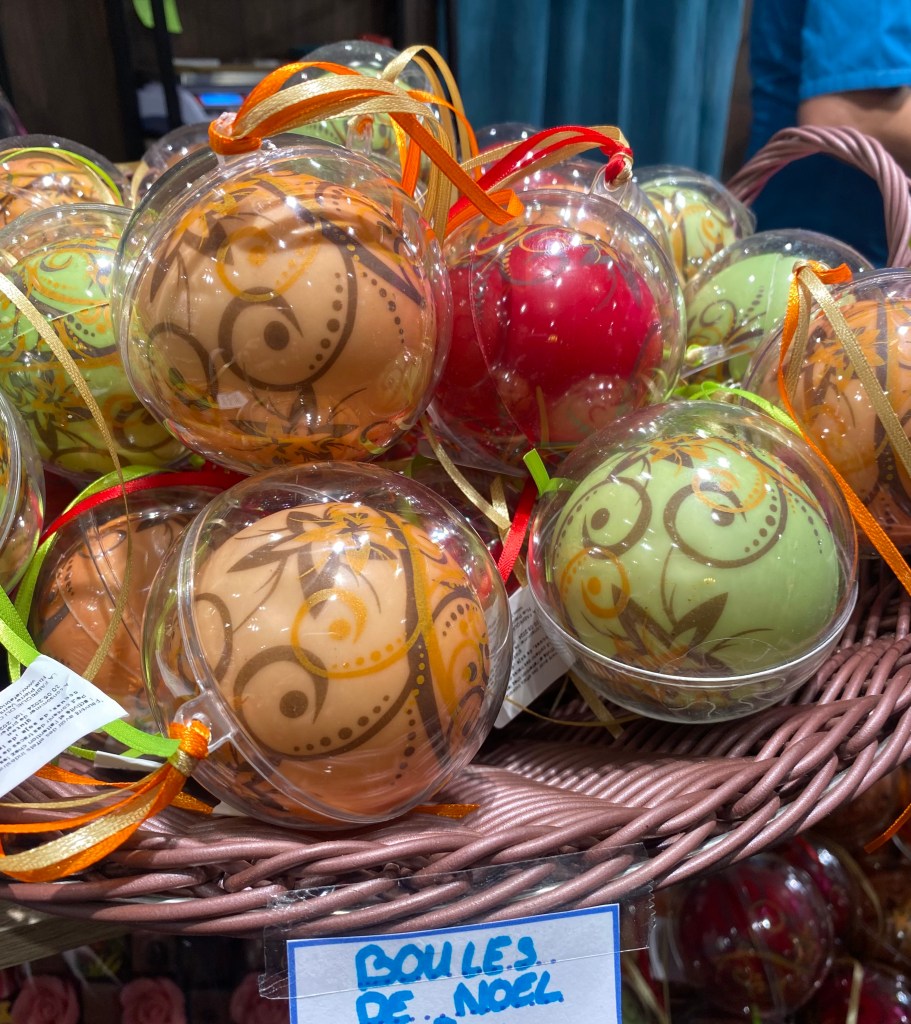
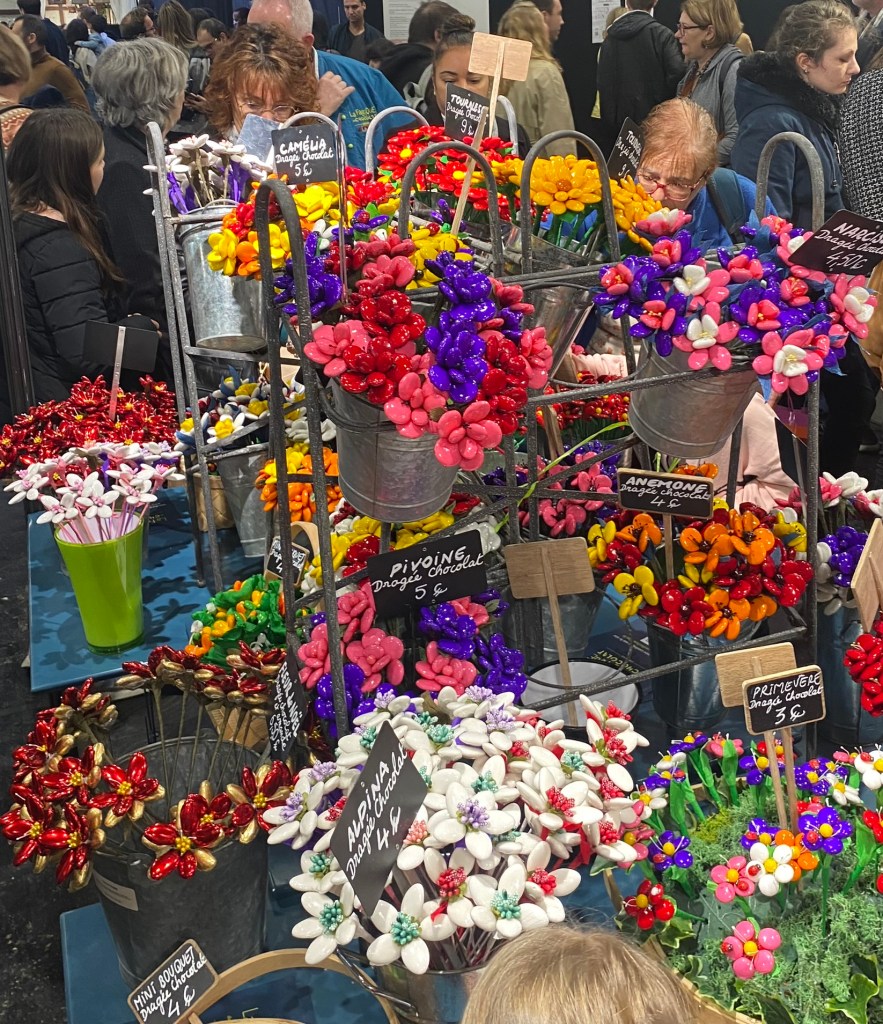
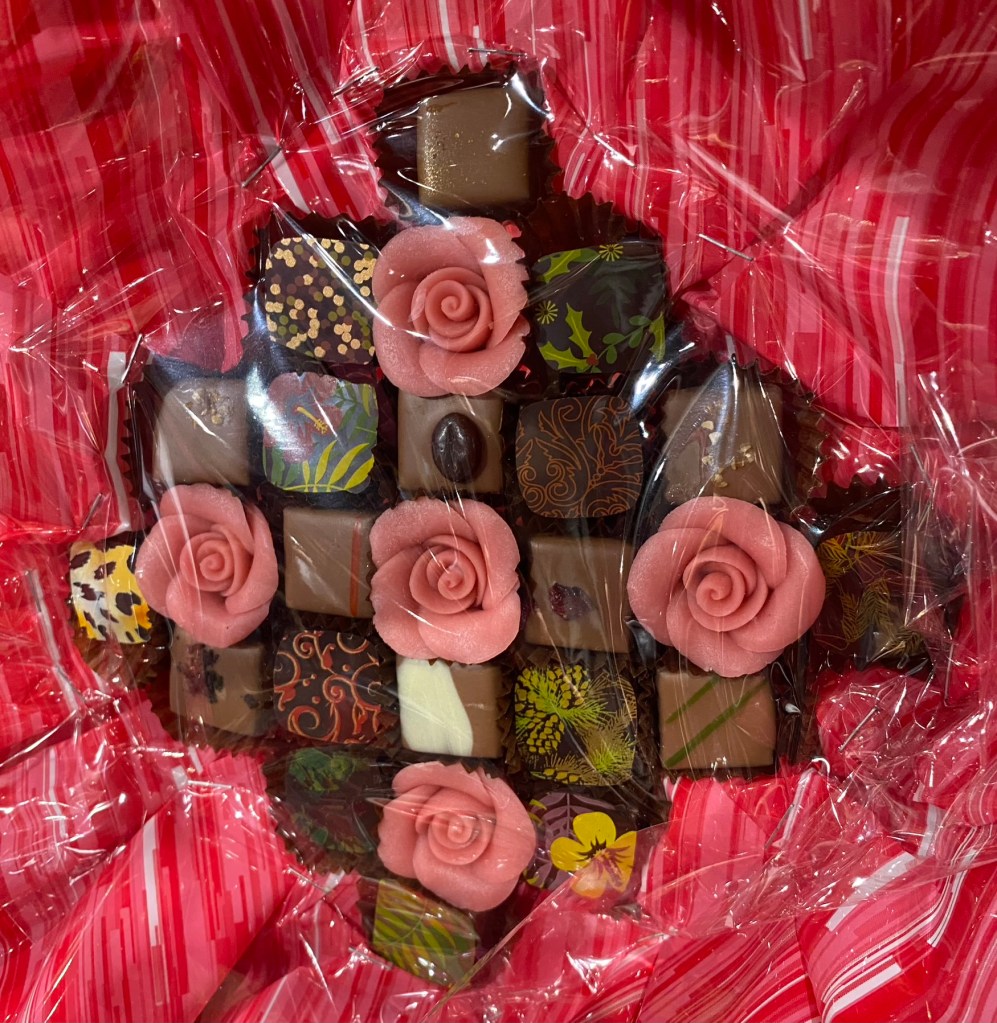
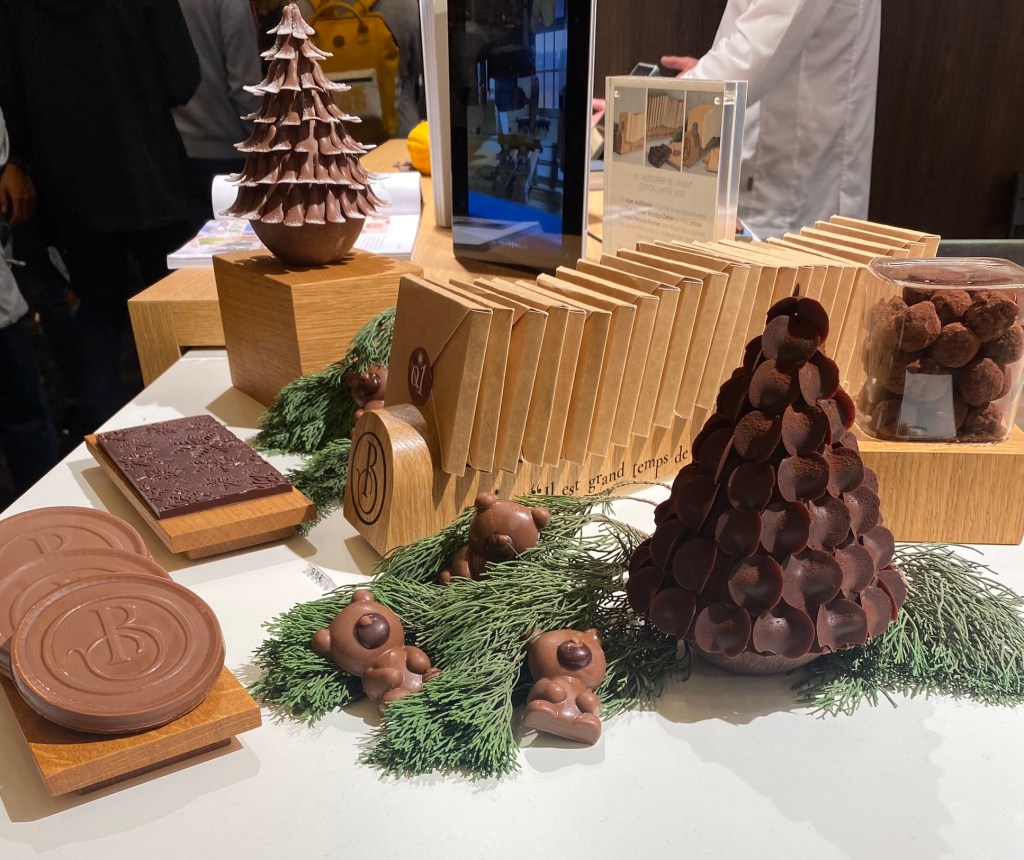
Our Paris neighborhood, Saint-Germain du Près, aka the 6th arrondissement, is reputed to have the best chocolate shops in all of Paris. We topped that last Saturday at Paris’s annual Salon du Chocolat 😋(eating our way through). Picture a French Javits Center with chocolate booths throughout. One level was international and another was devoted to French artisanal chocolatiers. We sampled solid chocolates, chocolate elixirs and chocolate pastries. We also purchased quite a bit of what we sampled.
French chocolatiers are so good because their craft is an art. It has to look good, taste amazing. Its presentation is part of the whole package and they take so much pride in their craft.
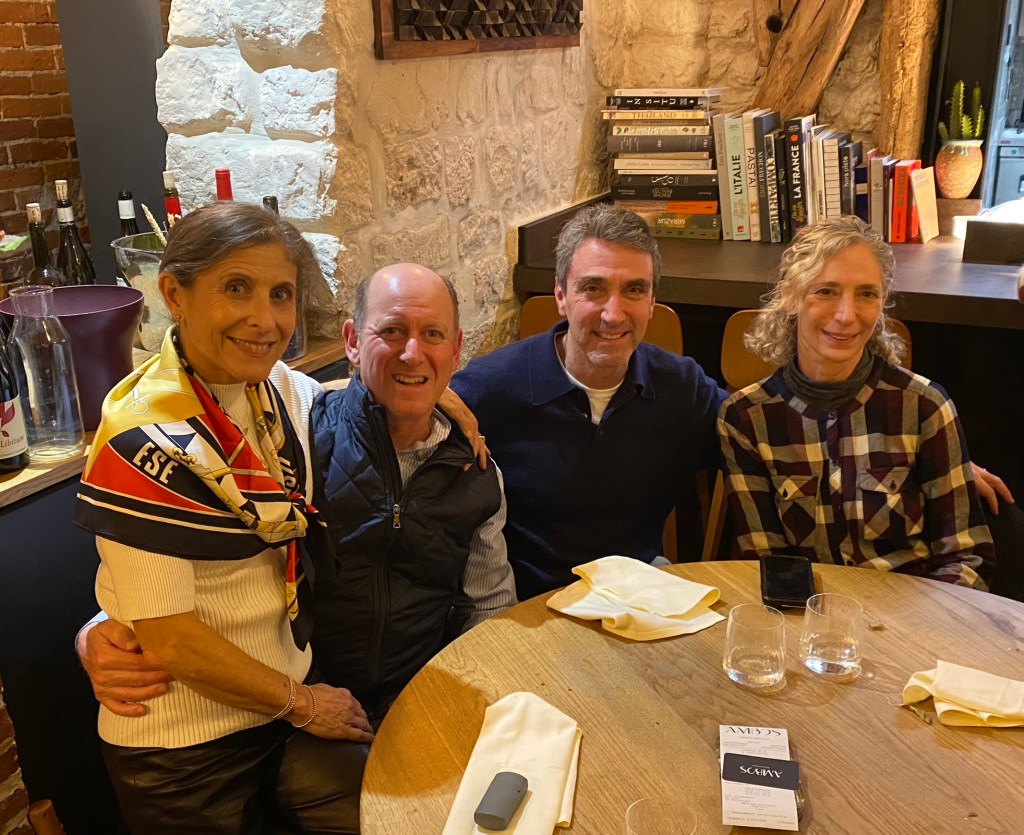
In preparation for this decadent afternoon, I broke out of the Luxembourg Gardens running routine and made it to the rive droite, through the Tuileries and back, six miles (thinking that exercise might ease my gluttonous guilt). We had dined with our guests Lorraine and Kenny at Ambos and had a special dinner for two planned for Saturday night at Pétrelle. Both meals were delicious. I am now quite grateful for the smaller offerings on a French dinner plate! Our meals and our desserts (and chocolates) have been fabulous. On Sunday, we went with our friends to the Picasso Museum (more about that in a future post) and back to the Marais for my third date with falafel.
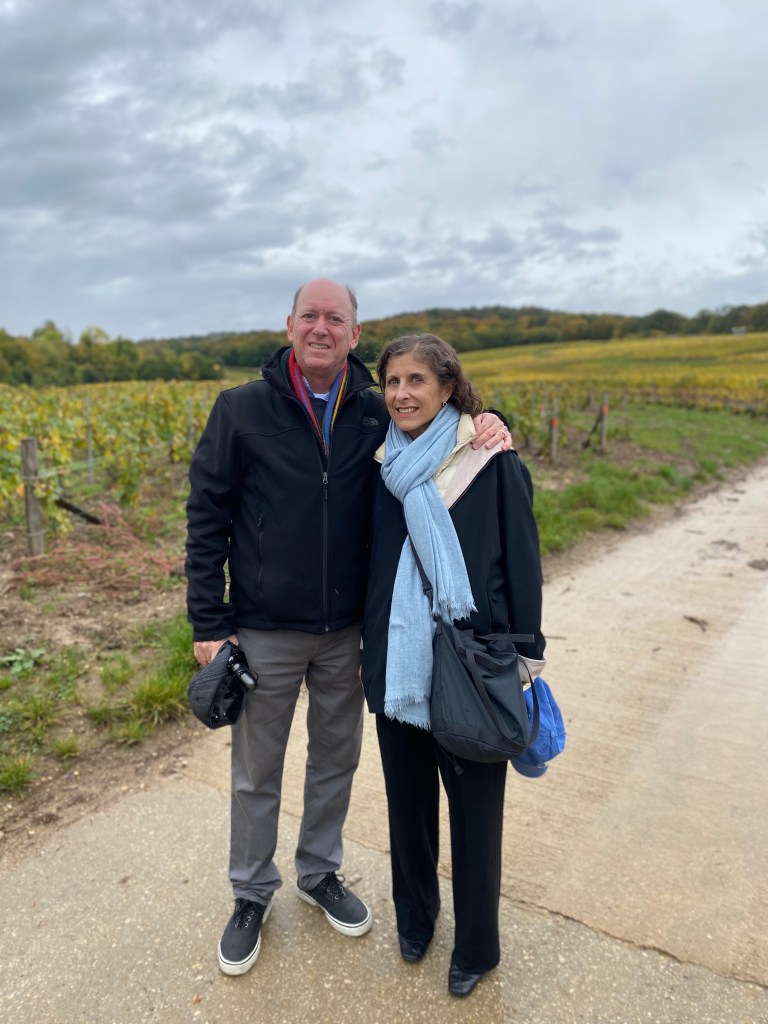
On Monday, Andy and I celebrated our thirtieth wedding anniversary! Seems like yesterday when it poured all day and everything was running late but we had a wonderful wedding and are still having a loving marriage. In honor of this special day, it poured all day, just like October 30, 1993, but Andy had arranged an outing to champagne country. We took a high speed train to Reims (pronounced “rance” 🤷♀️) and visited Champagne A. Margaine, a small family-owned artisan winemaker. Our tour was with Mathilde, the next in line and fifth generation of Margaines. Mathilda’s English was excellent — she spent some time living in Williamsburg, Brooklyn while repping some French wineries. We won’t find this champagne in US retail stores but it has been on the wine list of top NY restaurants like Eleven Madison Park and Jean-Georges. After a spectacular lunch at Brasserie Le Jardin at Domaine Les Crayères, we needed a bit more bubbly so off we went to Ruinart, the Première Maison de Champagne and now part of LVMH.
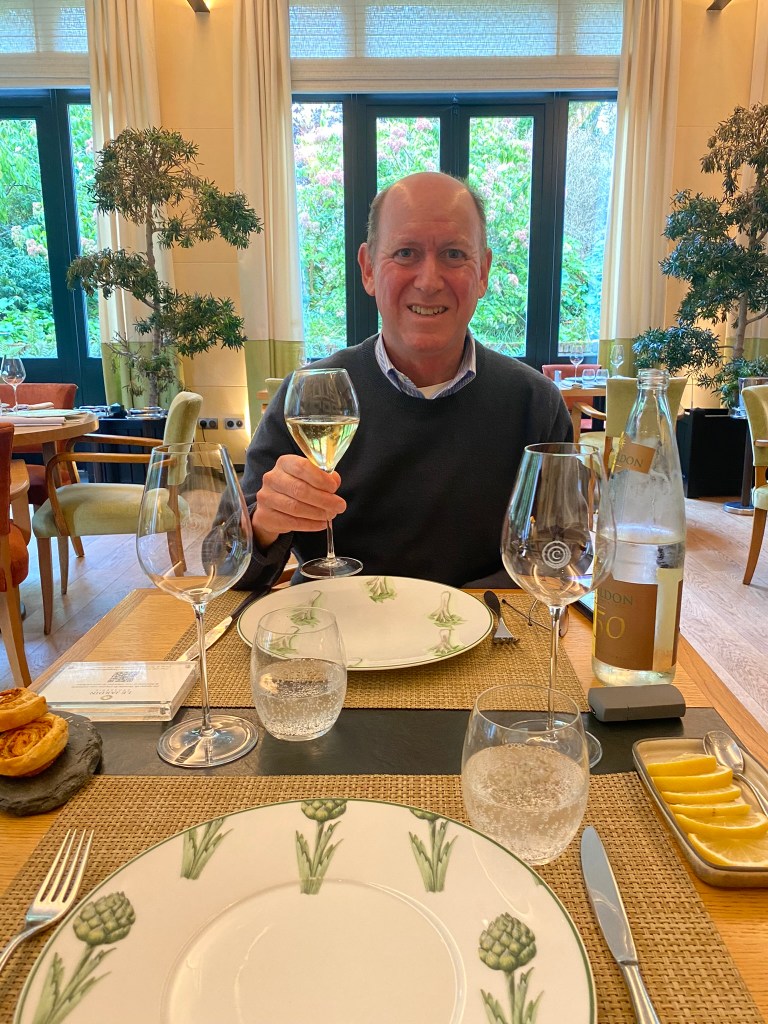
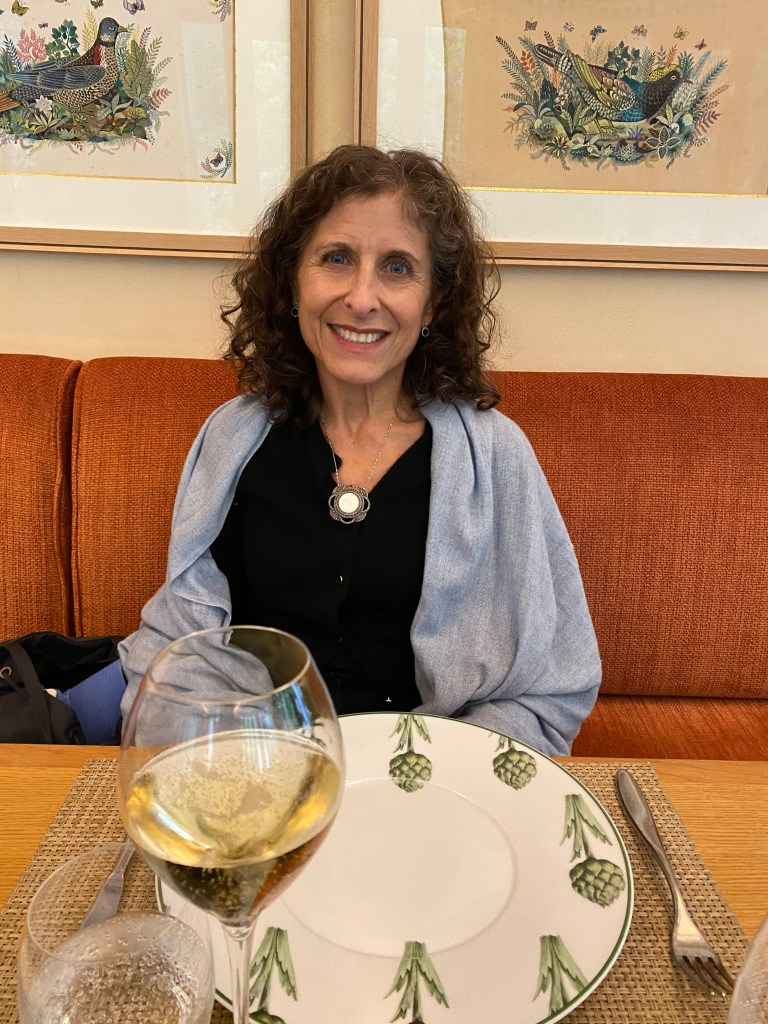
What I have known for a long time, thanks to Andy who is a student of wine, is that champagne goes with everything and can accompany an entire meal.
Between these two houses of champagne, I learned some new things.
•Champagne is only made with 3 kinds of grapes: Pinot noir, pinot meunier and white chardonnay, so labeled brut, blanc de blancs and rosé.
•These grapes needs chalky soil
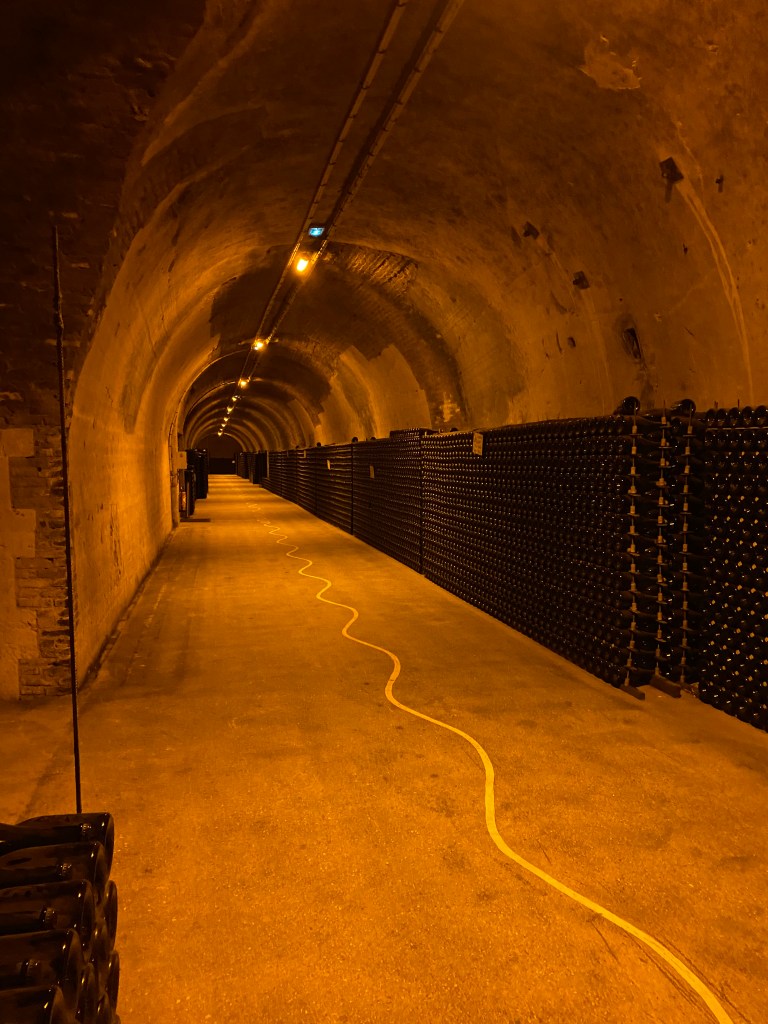
•The Romans dug chalk quarries which are now the crayères that create the perfect conditions to age champagne. These caves have been designated a UNESCO World Heritage Site. We went down to the depths of Ruinart’s crayères, forty meters deep.
•The process of making champagne is quite strict and regulated.
•There are two fermentations. The first is in casks and the second is in the bottle. In both fermentations, sugar (from local beets) and yeast are added. In the second fermentation, the champagne’s bubbles form. Sediment is then frozen in the bottle’s neck and removed. We watched a champagne taster sip from each bottle after the neck-freezing / sediment removing process, checking to make certain that standards were met. How would you like that job?
•The best glass shape for sipping champagne is one that has an in-curving top or tulip-shaped flute; these glasses enclose the aromas, better to enjoy champagne’s scent.
•And my best takeaway: when I inquired about bubbles (having read that more bubbles and smaller bubbles were an indication of finer bubbly) our guide said that champagne glasses that are too clean produce less bubbles! He suggested simply rinsing your champagne glasses (no soap) to achieve the perfect bubbly!



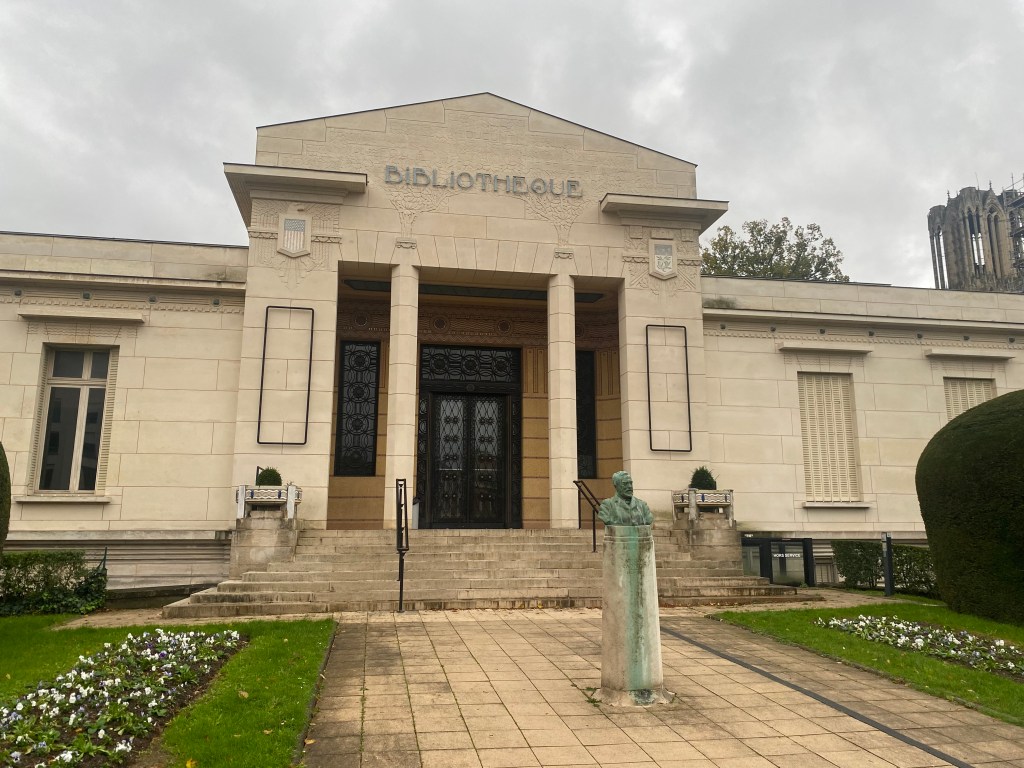
We could not drink all day, so we took a nice rainy stroll around Reims après champagne. The first building of note we passed was the Carnegie Library of Reims. Remember when I mentioned our visit to the American Library in Paris? One of the topics at our Library lecture included the expansion of American-style free lending libraries. Between 1883 and especially after WWI, up until the 1929 Stock Market crash, Andrew Carnegie funded the expansion of libraries worldwide and in the European countries of Belgium, France, Ireland, Netherlands, Serbia and United Kingdom. The Carnegie Bibliothèque of Reims has been open since 1928 and is one of the libraries Carnegie funded after WWI. He helped to restore libraries in cities that suffered tremendous damage during the Great War.
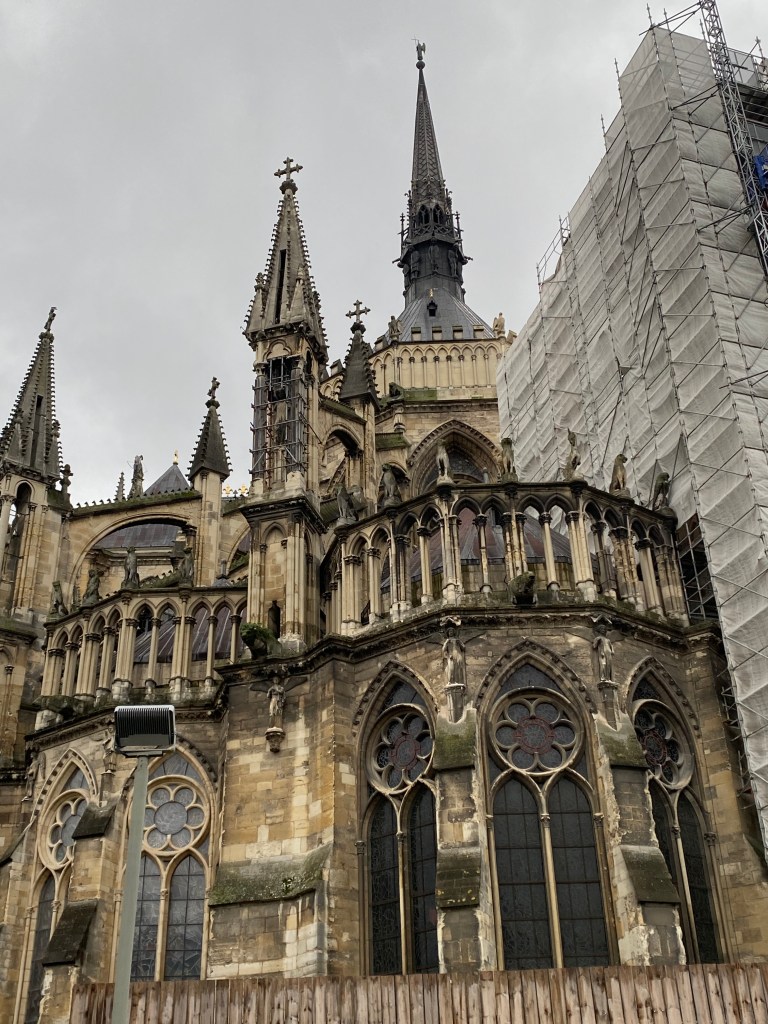
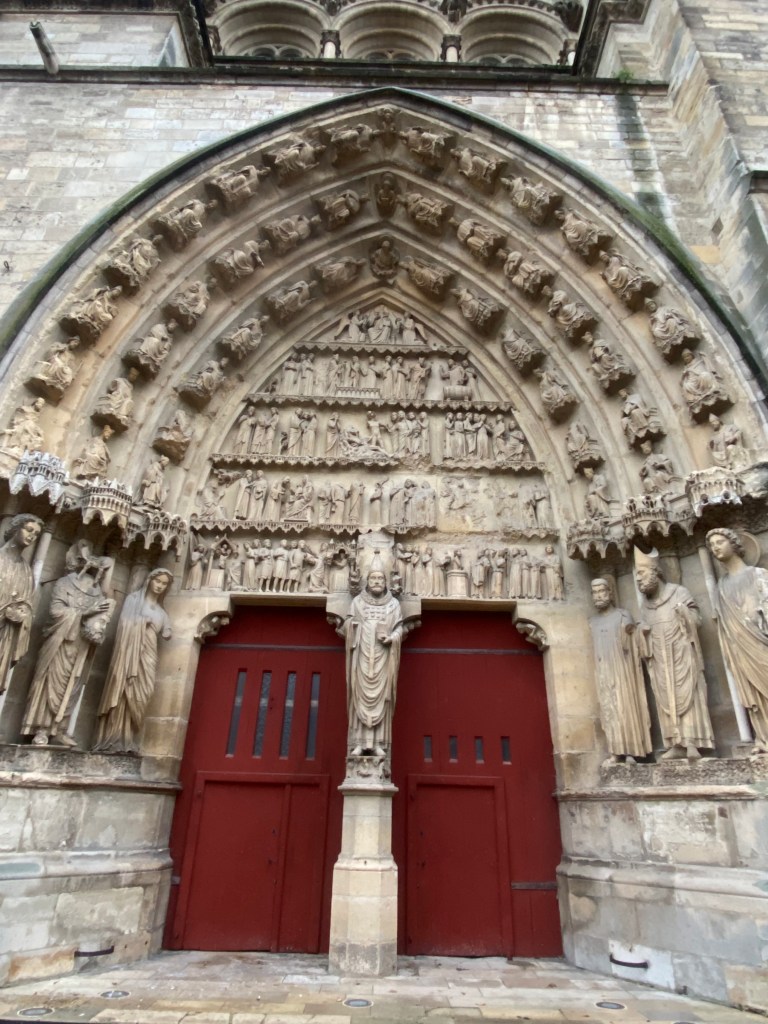
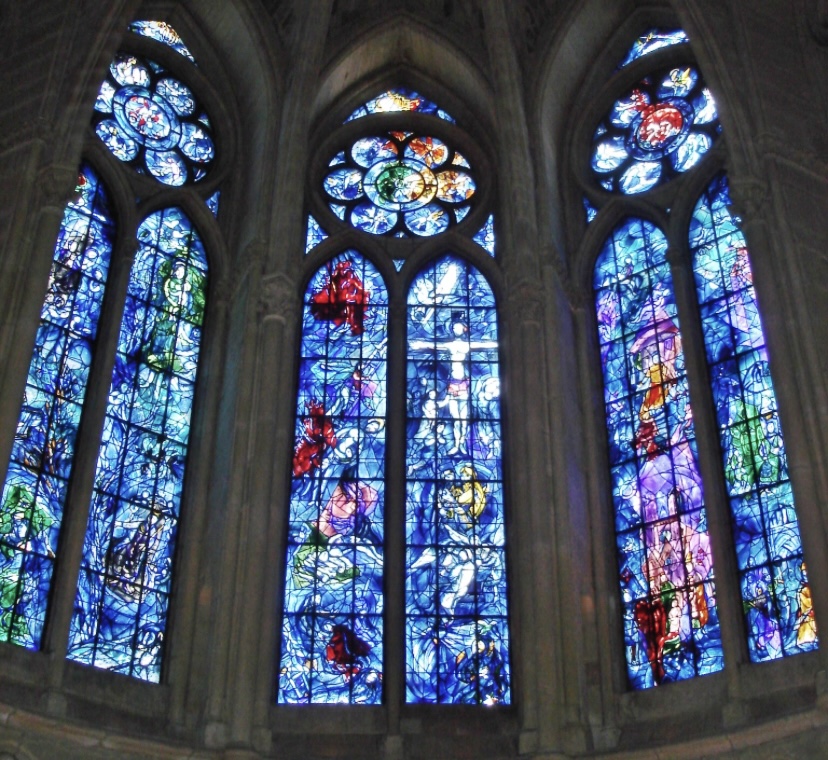
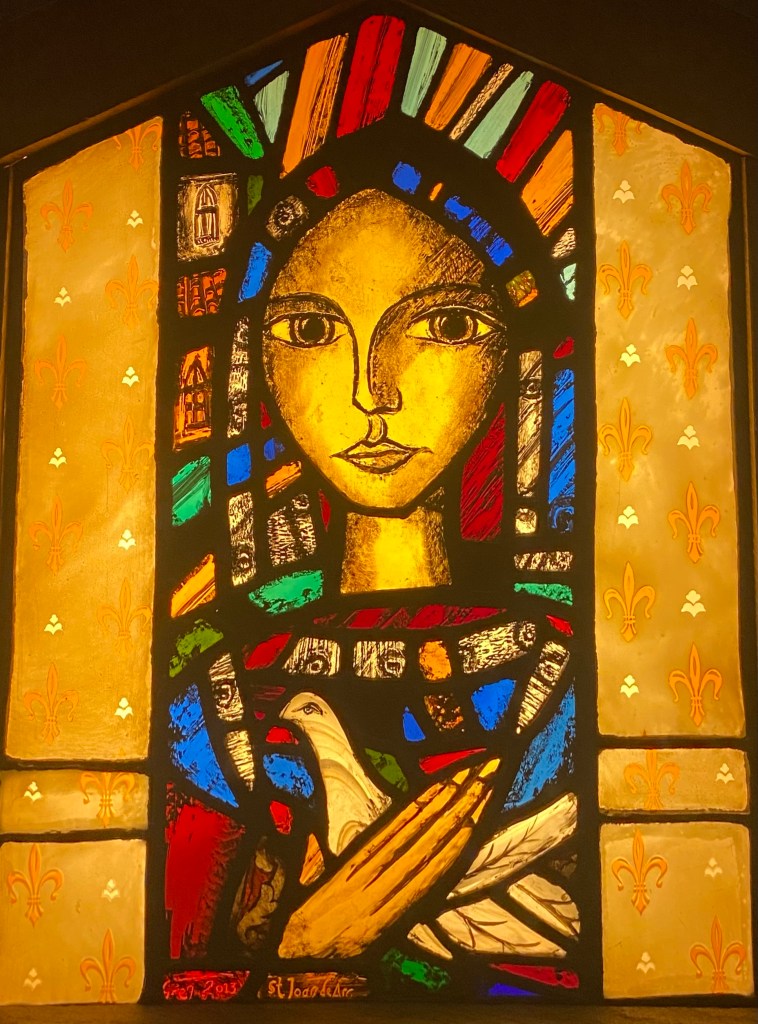
Around the corner is the Reims Cathedral and like every Cathedral that I have visited in France, it is aptly named Cathédrale Notre-Dame (complete with flying buttresses). This 800+ year-old medieval cathedral is the Westminster Abbey of France as it has hosted the coronations of 26 French monarchs and is the site of the birth of Christianity in France. John D. Rockefeller was instrumental in financing the repairs needed to this cathedral after WWI. These American industrialists were clearly in competition to get credit for rebuilding war torn Europe post WWI. The cathedral has stained glass depictions of the preparation of champagne as well as those by Marc Chagall, with symbols of the Hebrew and Christian bibles. I also loved the stained glass Joan of Arc, pictured below.
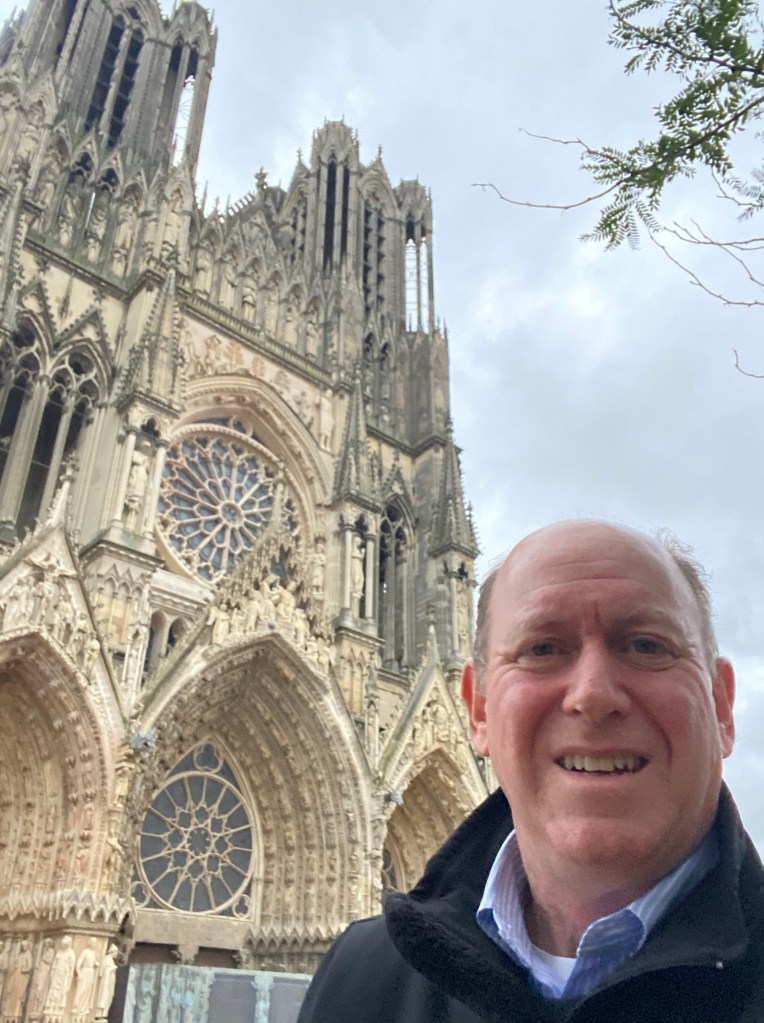
l’Chaim 🥂 and joyeux anniversaire à mon amour❣️
 The Innocents Abroad, 21st Century Version